How to Build a Biodigester Toilet: The Ultimate Guide to Modern Waste Management in Kenya
Are you tired of the constant headache and high costs associated with traditional pit latrines or the regular “exhausting” of your old septic tank?
Honestly, nobody enjoys the sight of an exhauster truck parked in their driveway every few months, and the smell?
Let’s not even go there.
If you are building a home or managing a commercial space in Kenya, it is time to think about a smarter, cleaner, and more sustainable way to handle human waste.
Enter the Biodigester.
At Bio Digester Kenya, we have seen firsthand how revolutionary this technology is.
It’s like having a mini-wastewater treatment plant right in your backyard.
But how exactly do you build one?
And why should you choose a Bio Septic Tank over the old-school concrete monsters?
In this guide, I’m going to walk you through everything you need to know about building a biodigester toilet that actually works.
Introduction: Why Say Goodbye to Traditional Septic Tanks?
Imagine your waste management system as a guest that never leaves.
A traditional septic tank is that guest who keeps eating and eating until they are full, and then you have to pay someone to come and carry them out.
It’s expensive, it takes up a massive amount of space, and if it leaks, it’s an environmental nightmare.
A biodigester septic tank, on the other hand, is like a guest who cleans up after themselves.
It doesn’t just store waste; it processes it.
It uses biological magic—well, science, actually—to turn waste into harmless water and gas.
Because of this, it never gets full in the traditional sense.
It’s the perfect solution for the modern Kenyan homeowner who values hygiene, cost-effectiveness, and the environment.
Plus, with the tight spaces in urban areas like Nairobi or Kiambu, a compact Biodigester is a literal lifesaver.
What Exactly is a Biodigester Septic Tank?
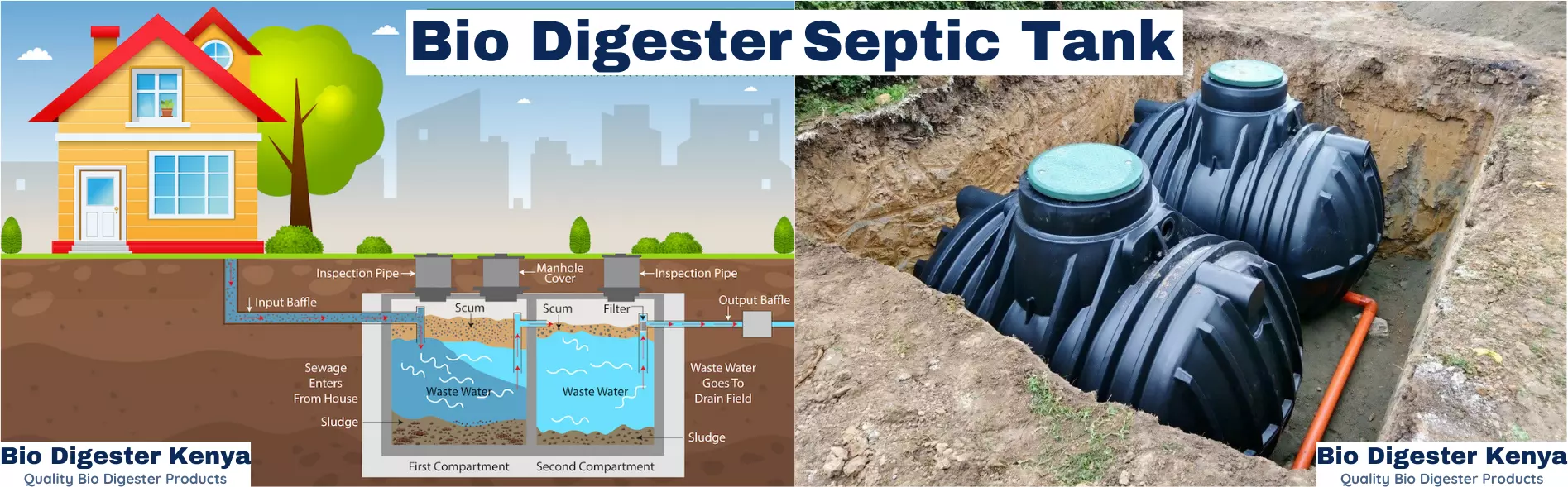
Think of a Bio Digester Septic Tank as a biological stomach.
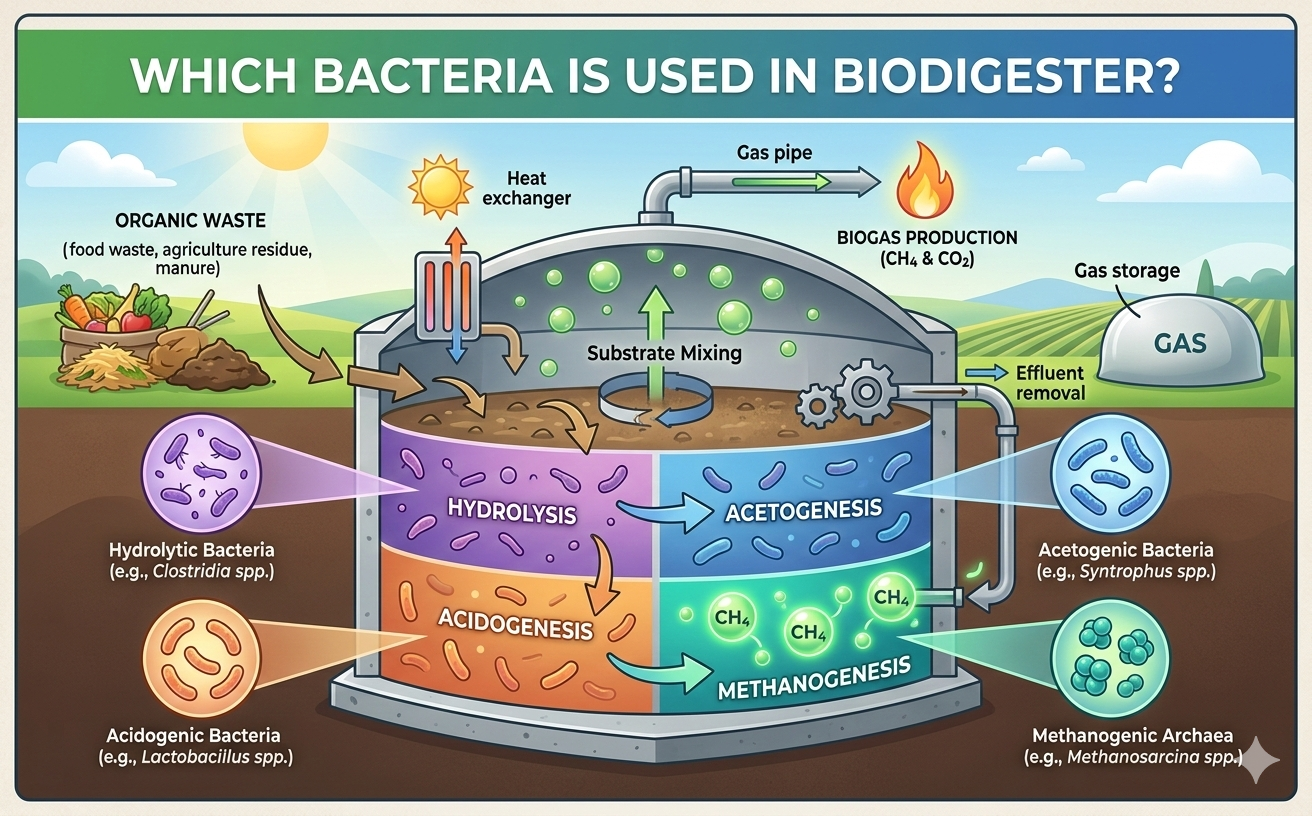
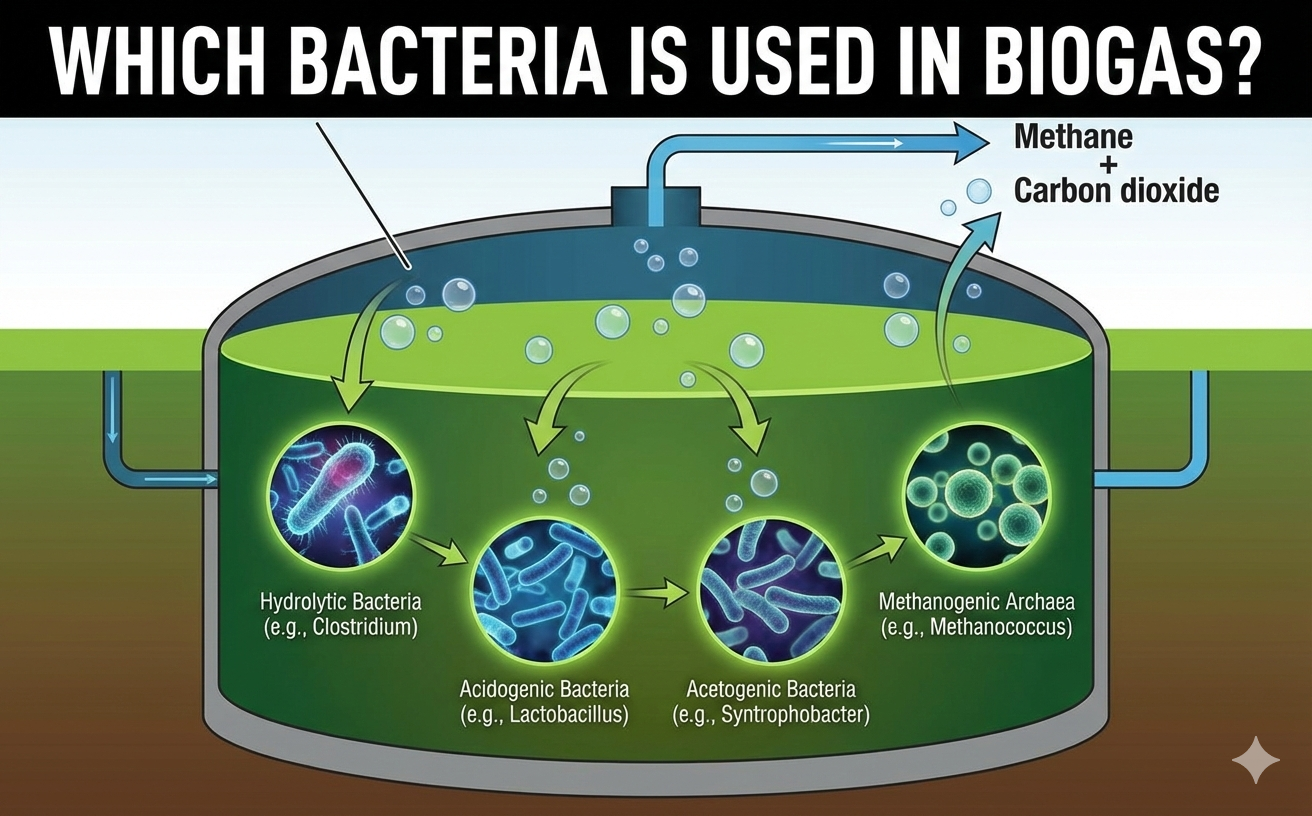
Just as your stomach uses enzymes and bacteria to break down food, a biodigester uses specialized Bio Digester Bacteria to break down human waste.
It is a closed system where waste is decomposed anaerobically (without oxygen).
The result of this process is three-fold: water, gas (mostly methane and CO2), and a tiny bit of inert sludge.
In Kenya, we primarily use these systems to produce clean water that can be safely absorbed into the ground through a soakage pit or used for irrigation.
It’s efficient, scent-free, and incredibly compact compared to those huge concrete tanks our grandfathers used to build.
Biodigester vs Septic Tank: Which One Wins?
If you are debating biodigester vs septic tank, let’s settle it once and for all.
Here is why the modern Biodigester wins every single time:
- Space: A traditional septic tank requires a massive area. A Bio Septic Tank is about 1/3 the size. This is perfect if you have a small plot.
- Cost: While the initial installation might be comparable, the long-term savings are huge. You will never spend a cent on exhauster services again!
- Smell: Traditional tanks smell. Period. A well-installed Biodigester from Bio Digester Kenya is completely odorless.
- Longevity: Concrete tanks can crack and leak. Biodigesters are designed to be resilient and handle waste efficiently for decades.
If you want to dive deeper into this comparison, check out our detailed post on biodigester vs septic tank: which is better for you?
The Science Behind the Magic: How Bio Digesters Work
You might be wondering, “Where does the poop go?” It doesn’t just vanish into thin air!
It’s a process of decomposition.
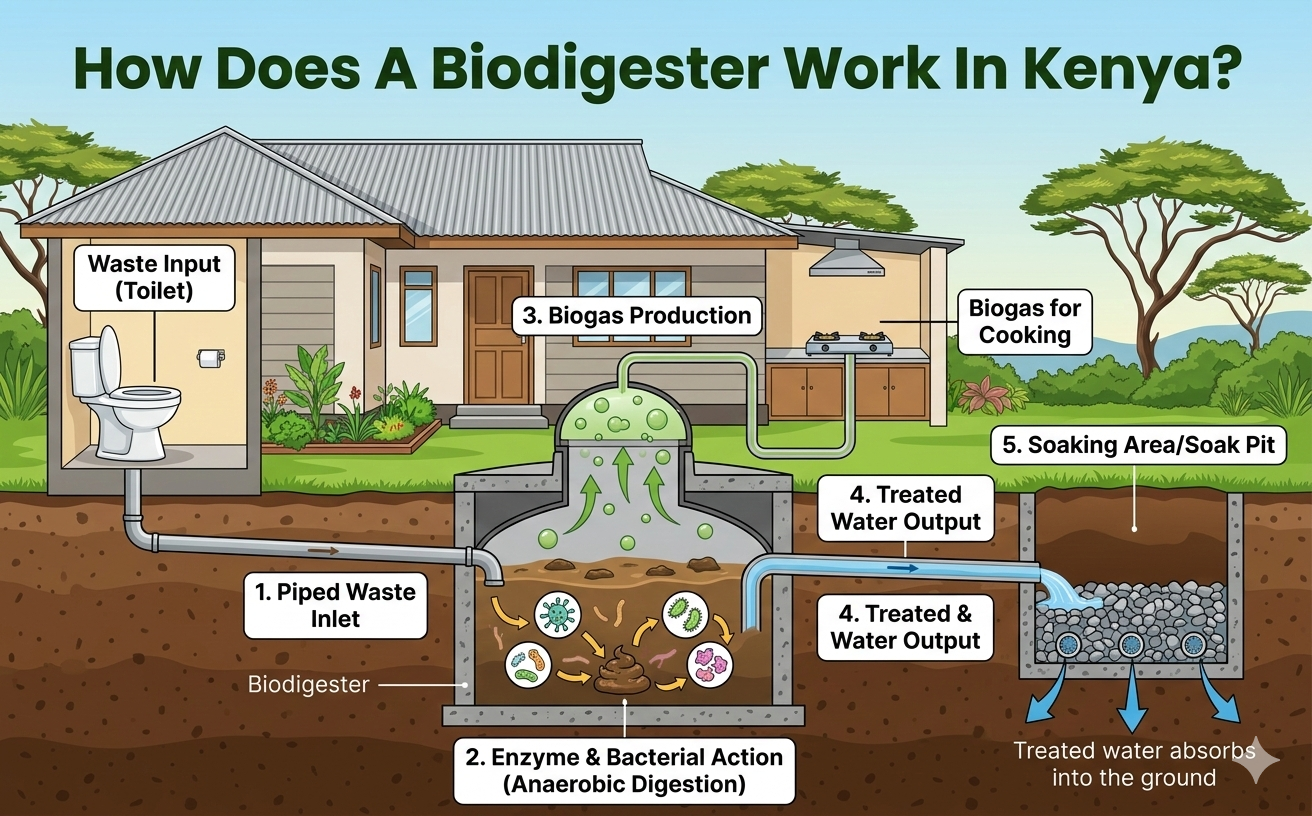
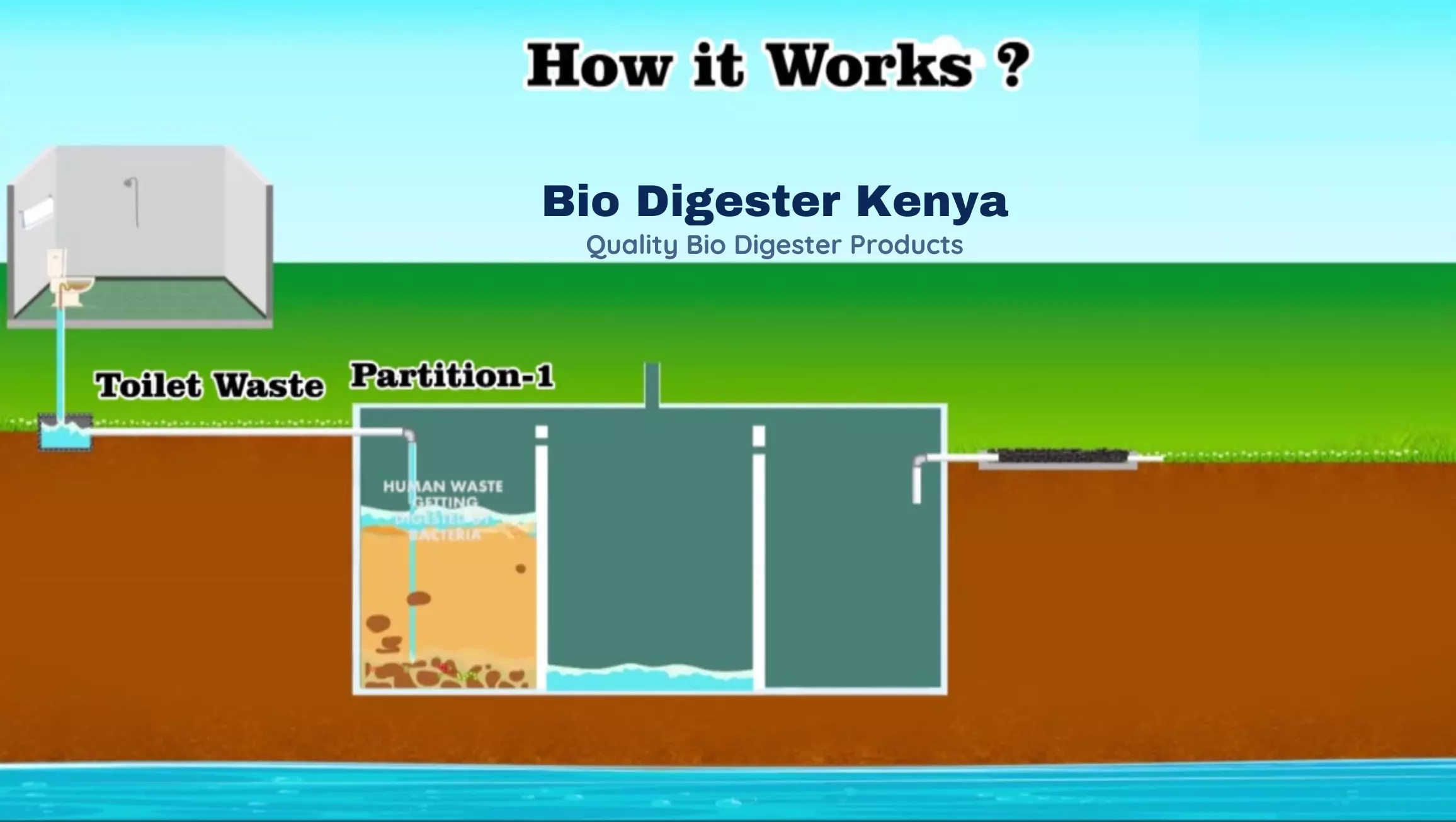
When waste is piped from your toilet to the biodigester septic tank, it enters a chamber where it meets billions of hungry microorganisms.
The Role of Bio Digester Bacteria
This is where the real work happens.
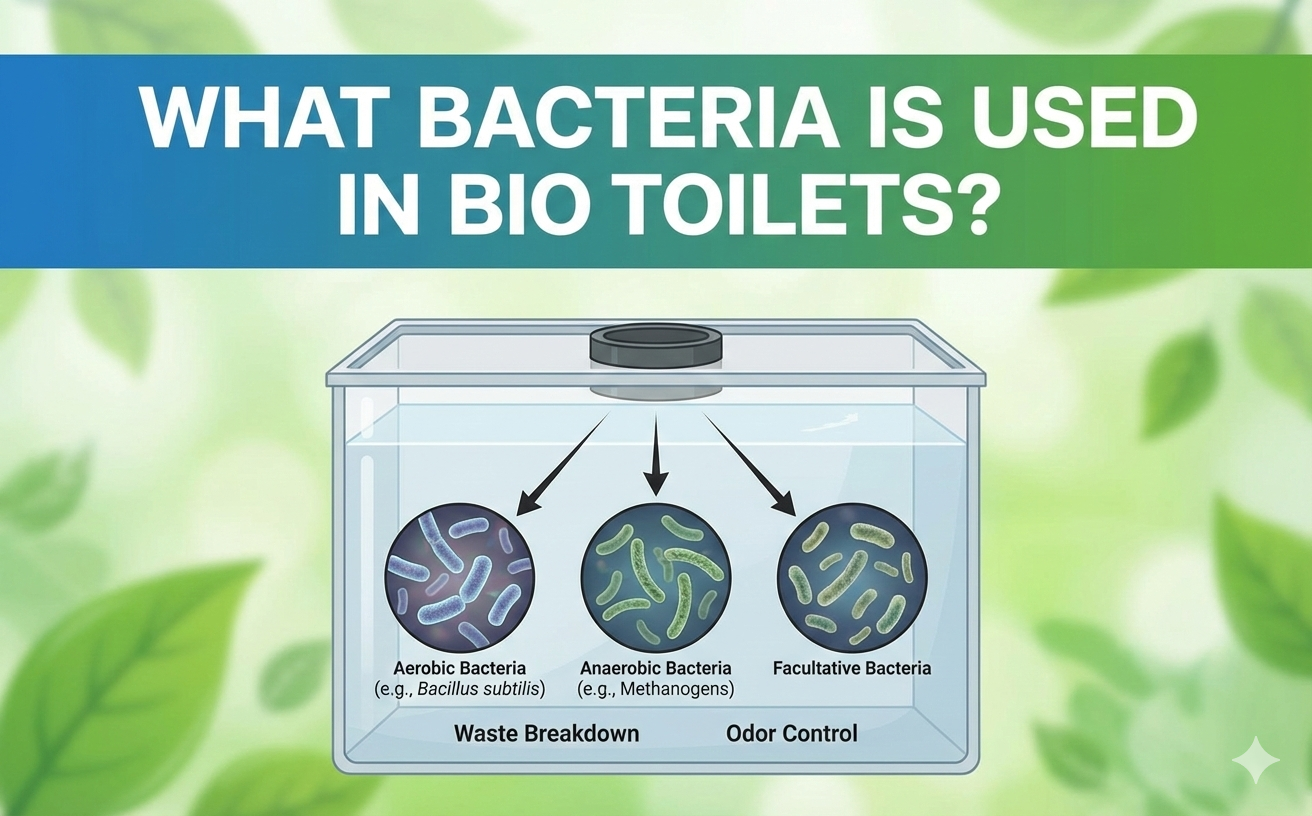
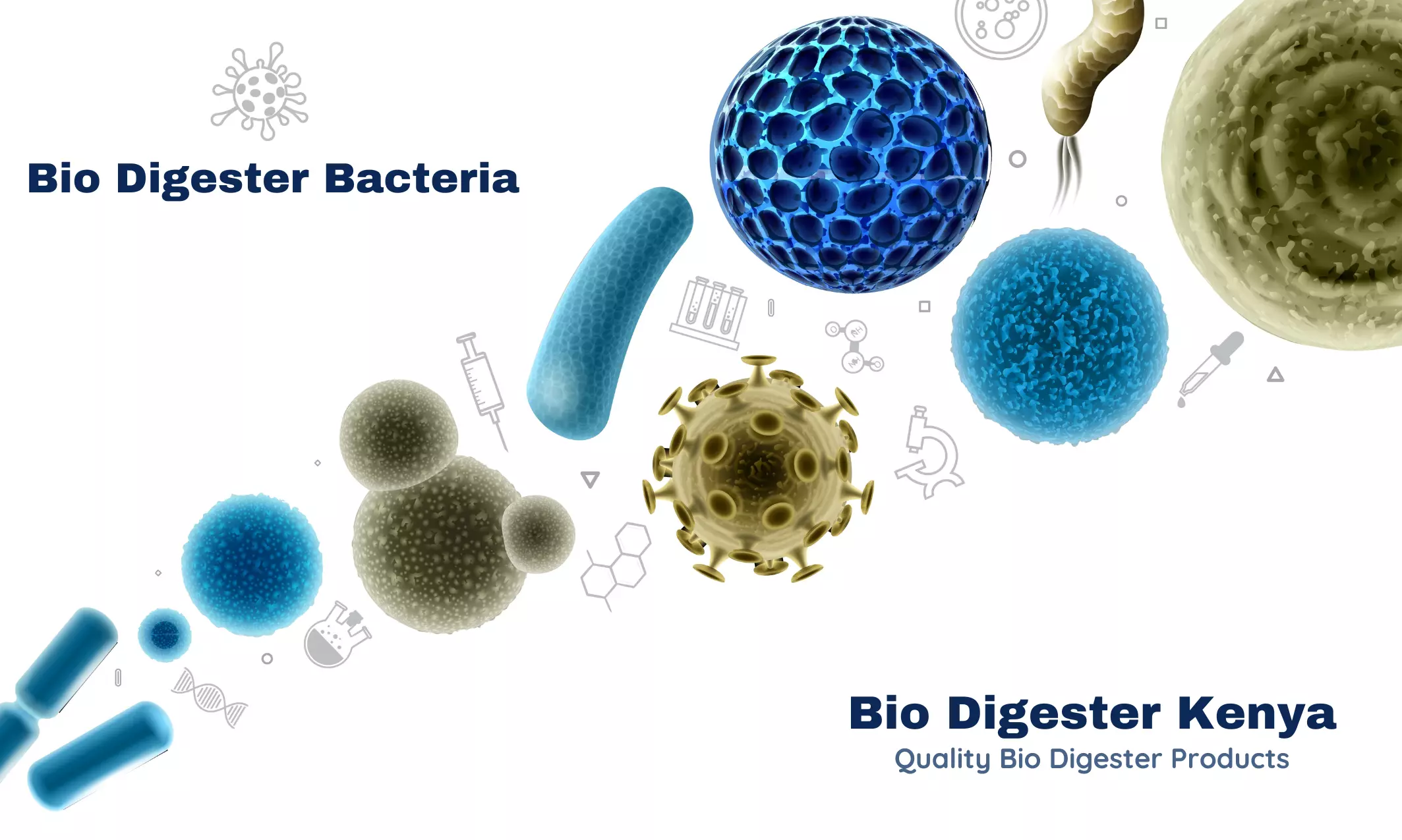
We use specialized Bio Digester Bacteria that are specifically bred to consume organic matter.
These little guys eat the solid waste, breaking it down into liquid and gas.
The liquid (effluent) then flows through a filtration system, leaving the tank as clear, odorless water.
Without these enzymes, the system is just a small tank that will eventually fill up.
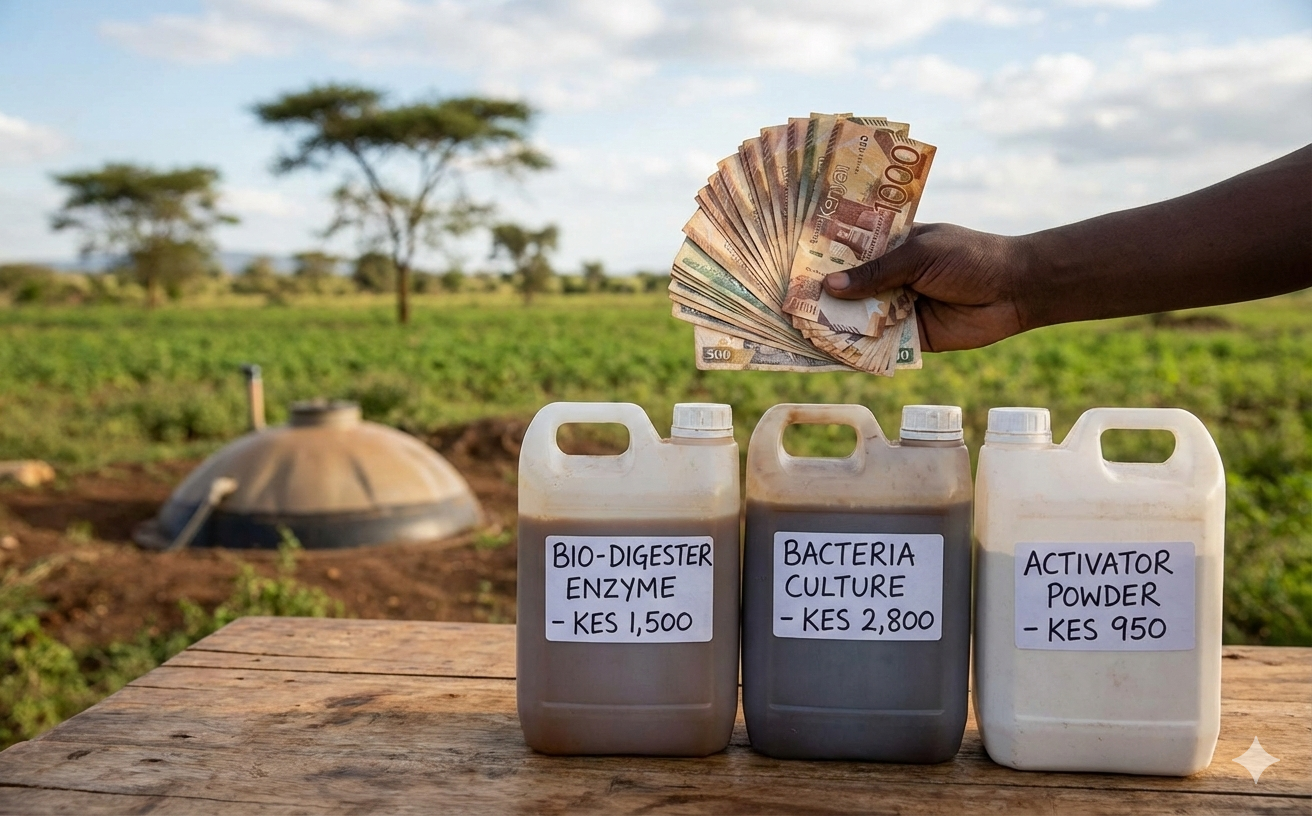
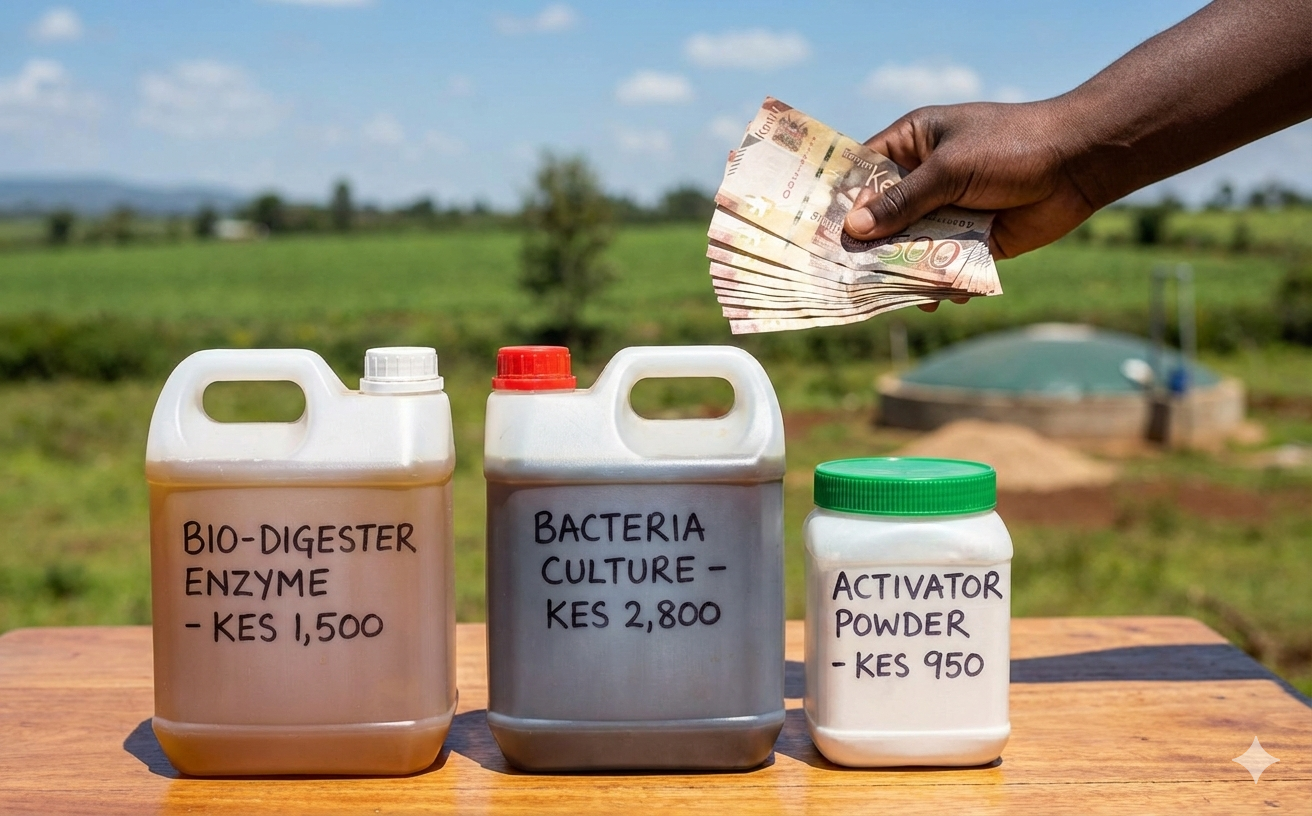
That’s why we at Bio Digester Kenya sell high-quality Bio Digester Bacteria – 400g and 5-litre liquid versions to keep your system running at peak performance.
It’s like giving your biodigester a probiotic boost!
Pre-Construction Planning: What You Need to Know
Before you grab a shovel, you need a plan.
Building a Biodigester isn’t just about digging a hole; it’s about engineering a waste treatment system.
You need to consider the number of users.
Is it for a 2-bedroom bungalow or a 20-unit apartment block?
Site Selection and Soil Assessment
The location is crucial.
You want the tank to be close enough to the house to minimize piping costs but positioned so that the soakage area can work effectively.
You also need to check the soil.
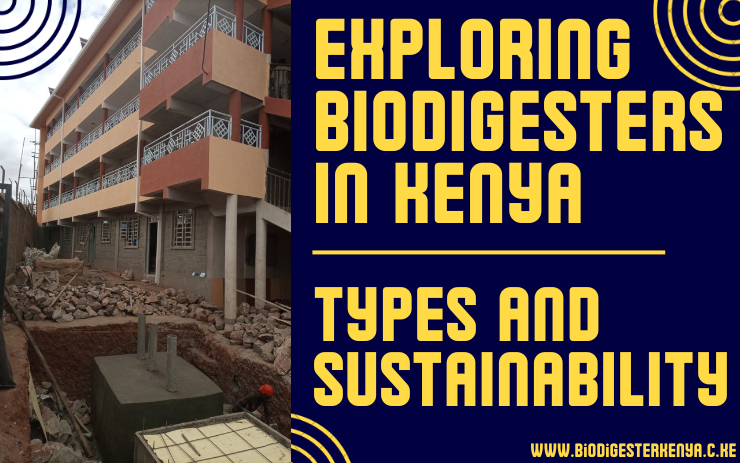
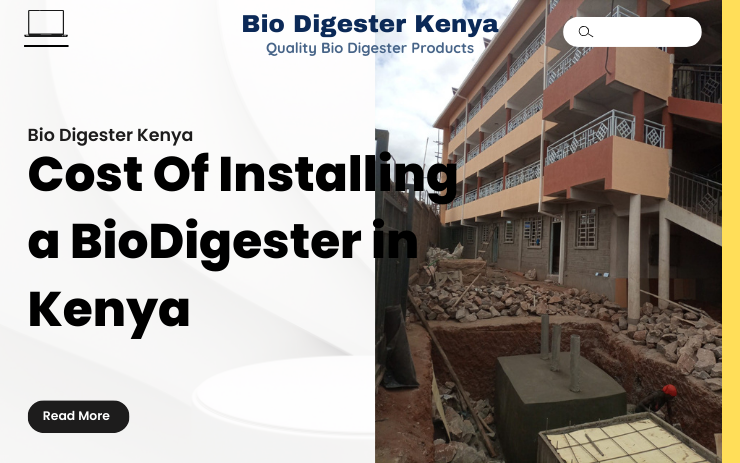
In areas with high water tables or rocky ground, you might need a Precast Bio Digester which is easier to install in tricky conditions.
Step-by-Step Guide: How to Build a Biodigester Toilet
Ready to get your hands dirty?
Here is the general workflow we follow at Bio Digester Kenya when we perform a Bio Digester Installation.
Step 1: Excavation and Ground Preparation
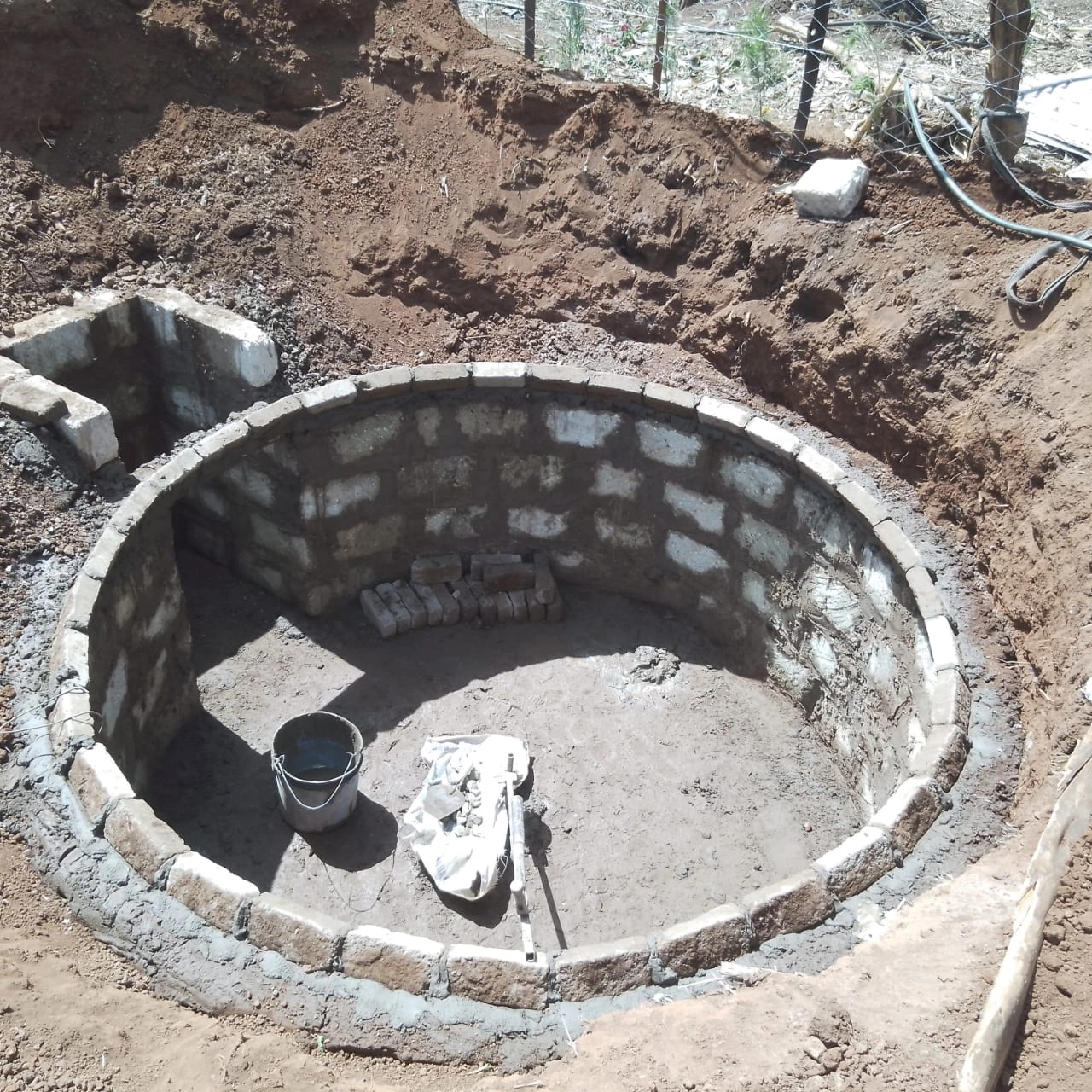
We start by digging a pit.
The size of the pit depends on the capacity of the tank you choose.
For a standard residential home, we often use a 2M³ Bio Digester.
The excavation must be level to ensure the tank sits perfectly.
Unlike a septic tank that requires a massive crater, this pit is surprisingly small.
Step 2: Choosing Between On-Site Masonry and Precast Bio Digesters
You have two choices here.
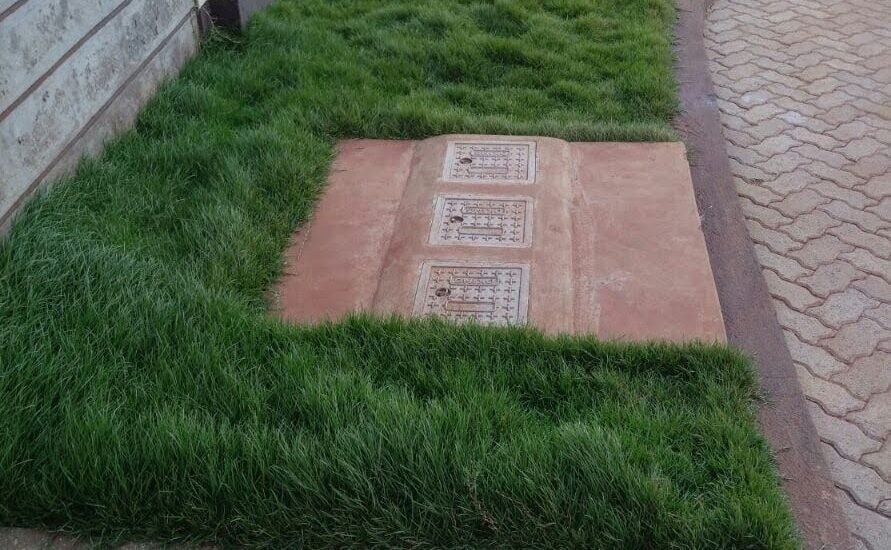
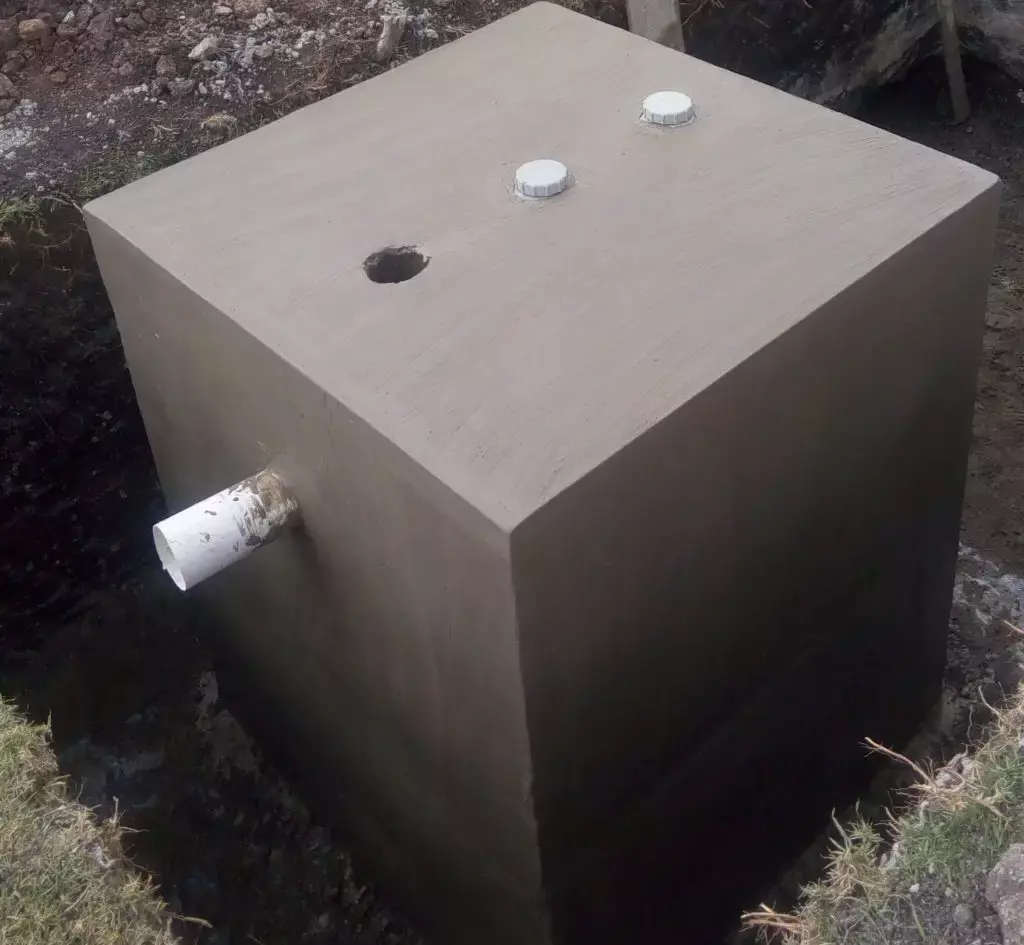
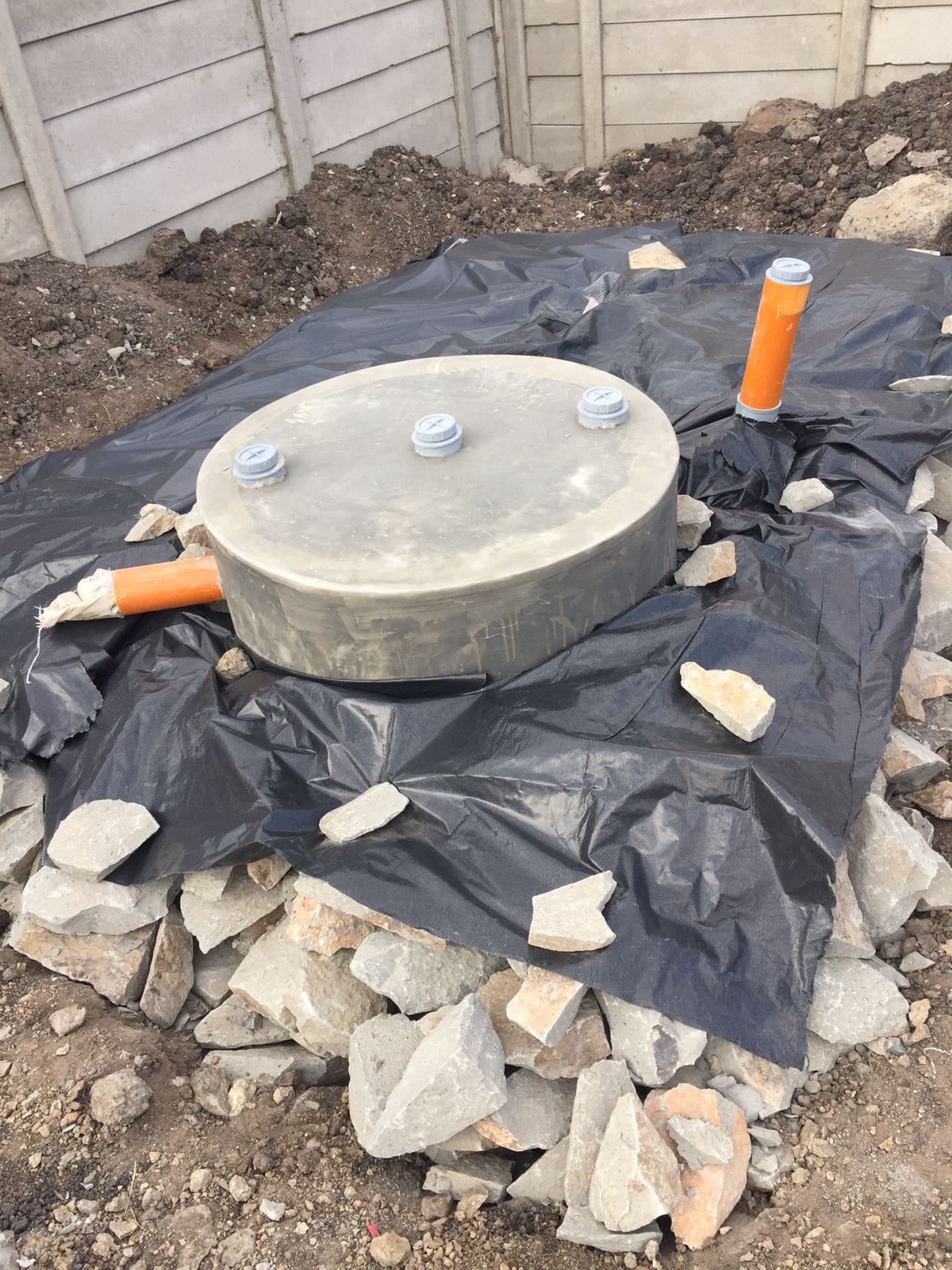
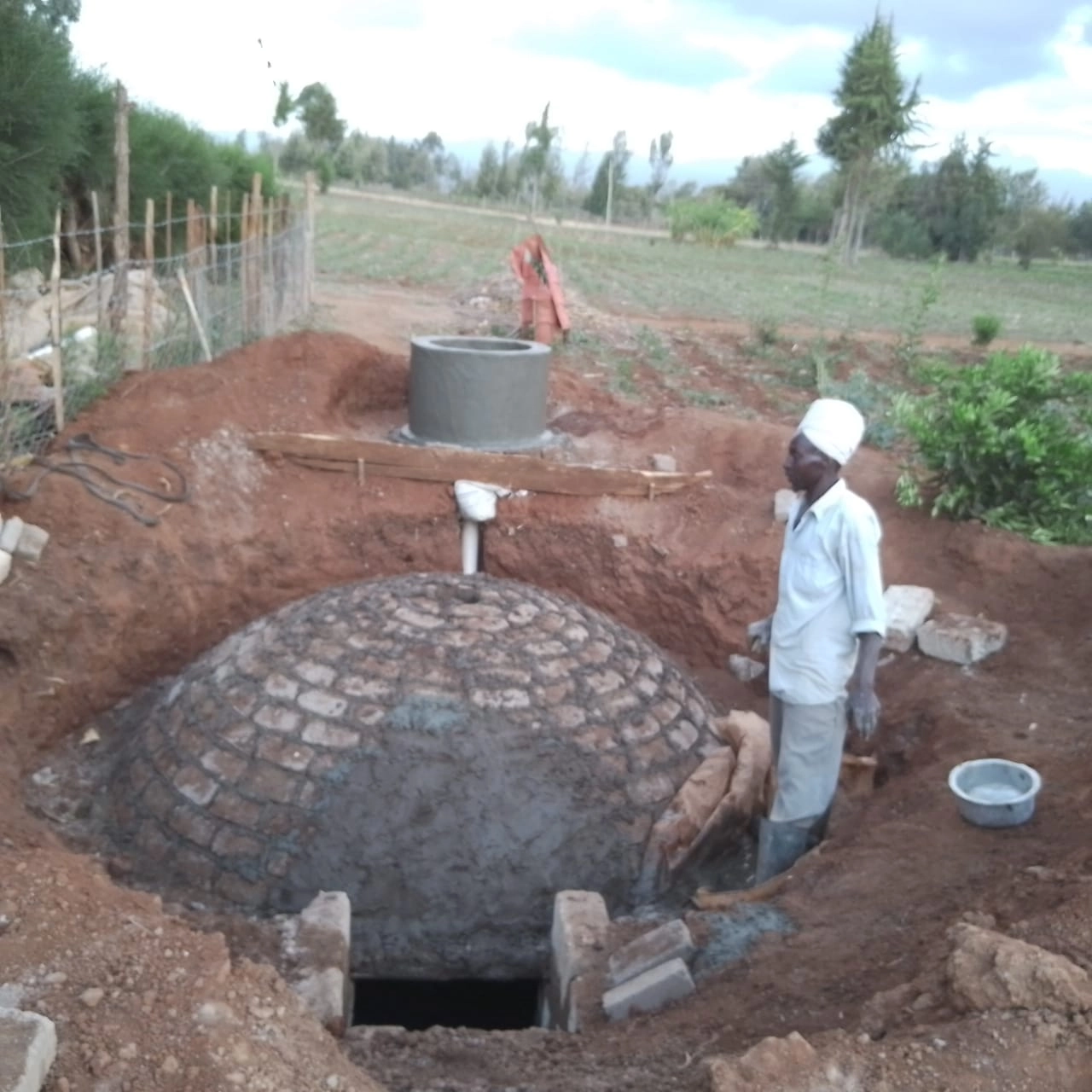
You can build the tank walls using stones and waterproof cement (masonry), or you can use a Precast Bio Digester.
At Bio Digester Kenya, we often recommend precast models because they are manufactured in a controlled environment, ensuring they are 100% leak-proof and can be installed in a single day.
Check out our Bio Digester Gallery to see how these look.
Step 3: Laying the Piping and Drainage System
Proper plumbing services are the backbone of a good waste system.
The waste pipe from the house must have a specific gradient (slope).
Too steep, and the water flows too fast leaving solids behind; too flat, and everything clogs.
We pipe the waste into the first chamber of the Biodigester.
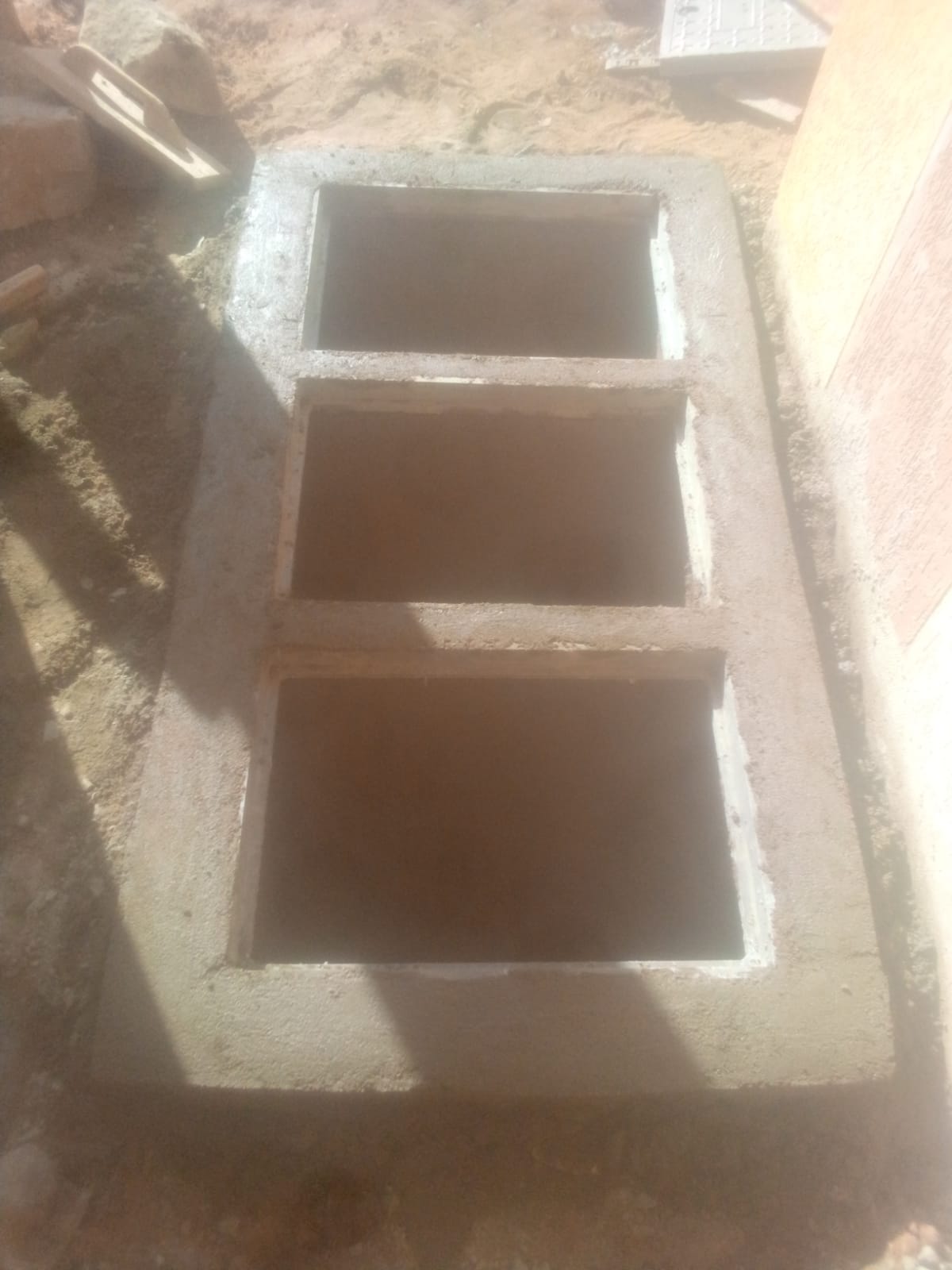
Step 4: Installing the Biodigester Chamber
This is the heart of the system.
The chamber is designed with internal baffles or compartments.
These compartments slow down the flow of waste, giving the Biodigester septic tank enzymes enough time to “attack” and digest the solids.
It’s a game of patience—the longer the waste stays in the tank, the cleaner the water that leaves it.
Step 5: Constructing the Soakage Area
Once the waste is digested, the resulting water needs a place to go.
We construct a “soak-away” or French drain.
This is essentially a trench filled with hardcore stones and gravel.
The treated water flows here and is slowly absorbed by the surrounding soil.
Since the water is already treated by the enzymes, it doesn’t pollute the groundwater.
It’s nature at its best!
Activating Your System: The Importance of Biodigester Enzymes
Once the construction is finished, you can’t just start using it immediately without “seeding” it.
You need to jumpstart the biological process.
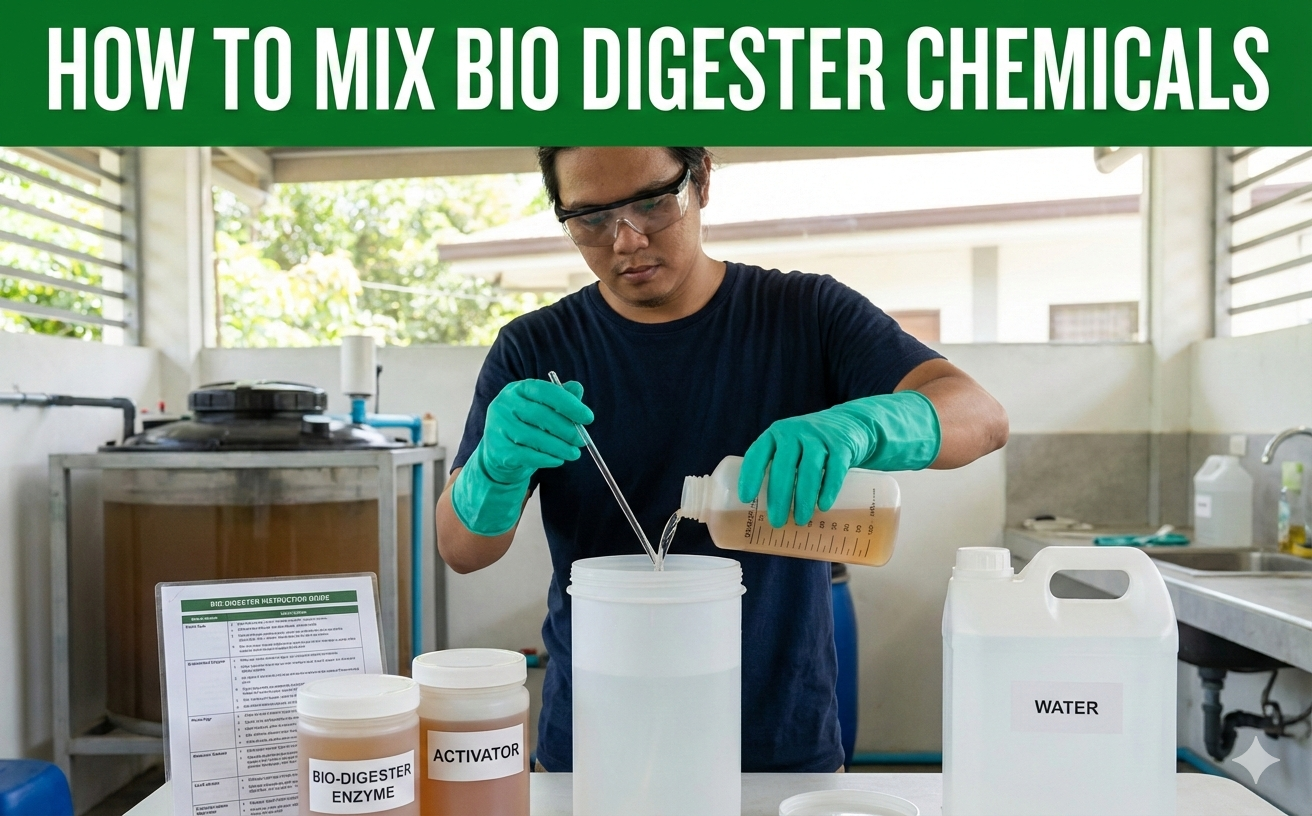
This is where our Septic Tank Bacteria come in.
You simply flush the enzymes down the toilet.
They travel to the tank, wake up, and start multiplying.
Within a few days, your Biodigester is a living, breathing waste-eating machine.
If you skip this step, you’re just building a very small, very expensive pit latrine that will smell and fill up quickly.
Don’t be that person!
Get your bacteria from our shop today.
Maintenance Tips for a Long-Lasting Bio Septic Tank
One of the biggest myths is that a Biodigester needs zero maintenance.
While it’s low maintenance, it’s not “no maintenance.” Here are three golden rules:
- Avoid Harsh Chemicals: Using too much bleach or strong acid cleaners will kill the Bio Digester Bacteria. If the bacteria die, the digestion stops. Use biodegradable cleaners instead.
- Don’t Flush Non-Biodegradables: Your biodigester is not a trash can. Plastic, pads, and wipes cannot be “digested” by enzymes. They will clog the system.
- Regular Enzyme Top-ups: We recommend adding a fresh dose of Septic Tank Cleaner – 2KG once or twice a year to keep the microbial population healthy and strong.
For more details, read our guide on Septic Tank Maintenance.
Why Work with Bio Digester Kenya?
Building a Biodigester septic tank is a technical job.
If the levels are wrong or the tank isn’t airtight, you’ll end up with a mess.
That’s why you should trust the experts.
At Bio Digester Kenya, we don’t just dig holes; we provide complete waste management solutions.
We operate all over Kenya, helping families and businesses transition from outdated septic systems to modern Bio Septic Tanks.
Whether you need a small 1M³ Bio Digester for a tiny house or a large 4M³ system for an apartment complex, we have the expertise to design and install it for you.
Ready to upgrade? Call us today at +254 712 660 245 or email us at info@biodigesterkenya.co.ke.
You can also visit our Contact Us page to book a site visit.
Let’s make your home a cleaner, greener place!
Conclusion
Building a biodigester toilet is one of the smartest investments you can make for your property in Kenya.
It saves you space, protects the environment, and eliminates those annoying exhauster costs forever.
By understanding the process—from excavation to the vital role of biodigester enzymes—you are now better equipped to make an informed decision.
Remember, the success of your Biodigester depends on two things: professional installation and the quality of the bacteria you use.
Don’t settle for shortcuts.
Trust Bio Digester Kenya to do it right the first time.
Visit our website at www.biodigesterkenya.co.ke to explore our services and products.
Frequently Asked Questions (FAQs)
1.
How long does it take to install a Biodigester?
If you choose a Precast Bio Digester from Bio Digester Kenya, the installation can often be completed in just 1 to 2 days!
Masonry versions might take about a week.
2.
Does a Bio Septic Tank ever get full?
Under normal conditions and with the right Bio Digester Bacteria, it should not get full.
The solids are converted into water and gas, which leave the system continuously.
However, if non-biodegradable materials are introduced, they will need to be removed manually.
3.
Can I use a biodigester for my kitchen waste?
Yes!
However, you should install a Grease Trap first.
Fats and oils can clog the system, but we have specialized bacteria to handle those too!
4.
Is the water from the biodigester safe?
The water (effluent) is safe to be absorbed into the ground or used for sub-surface irrigation of lawns.
It is not safe for drinking or cooking, as it still contains some dissolved minerals.
5.
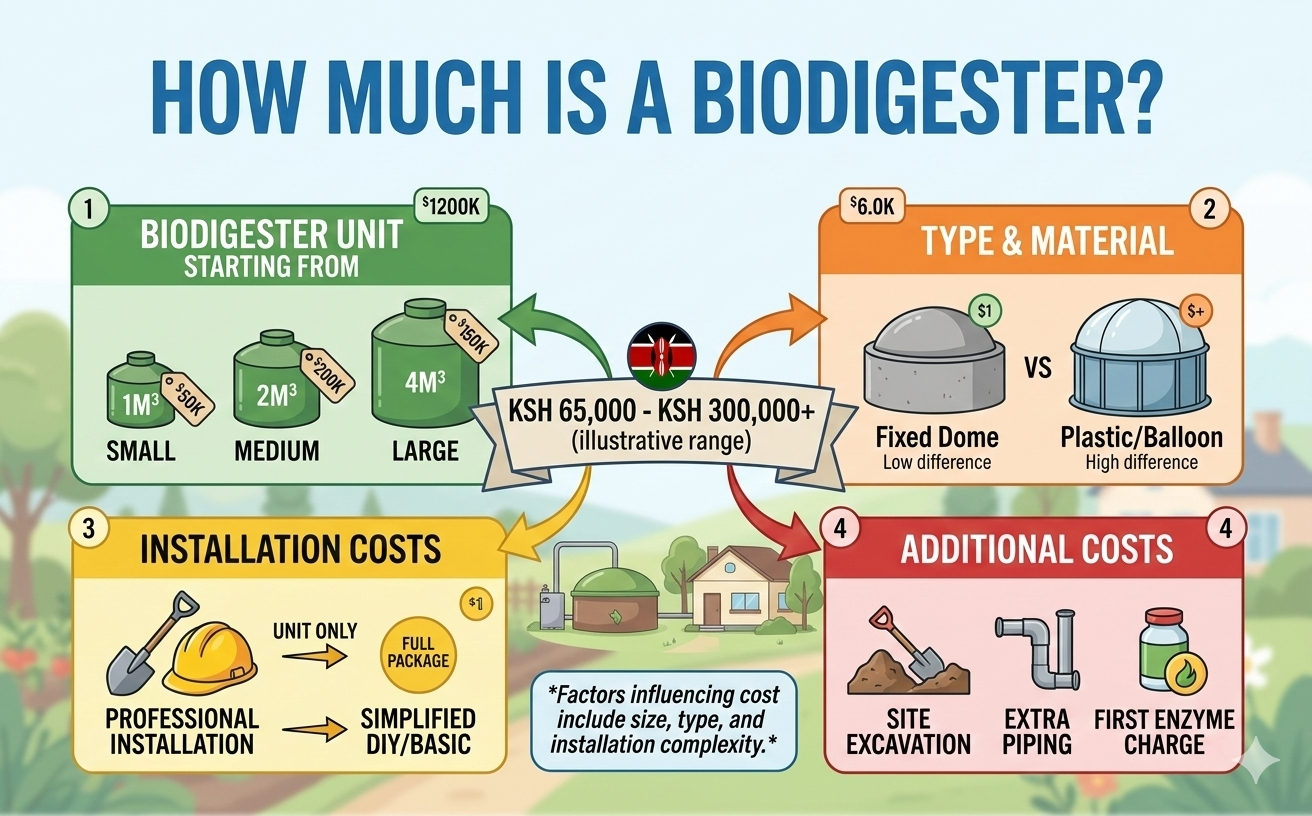
How much does a Biodigester cost in Kenya?
The cost varies depending on the size and the site conditions.
A standard residential system is very affordable, especially when you consider you’ll never pay for an exhauster again.
For a specific quote, contact us today!