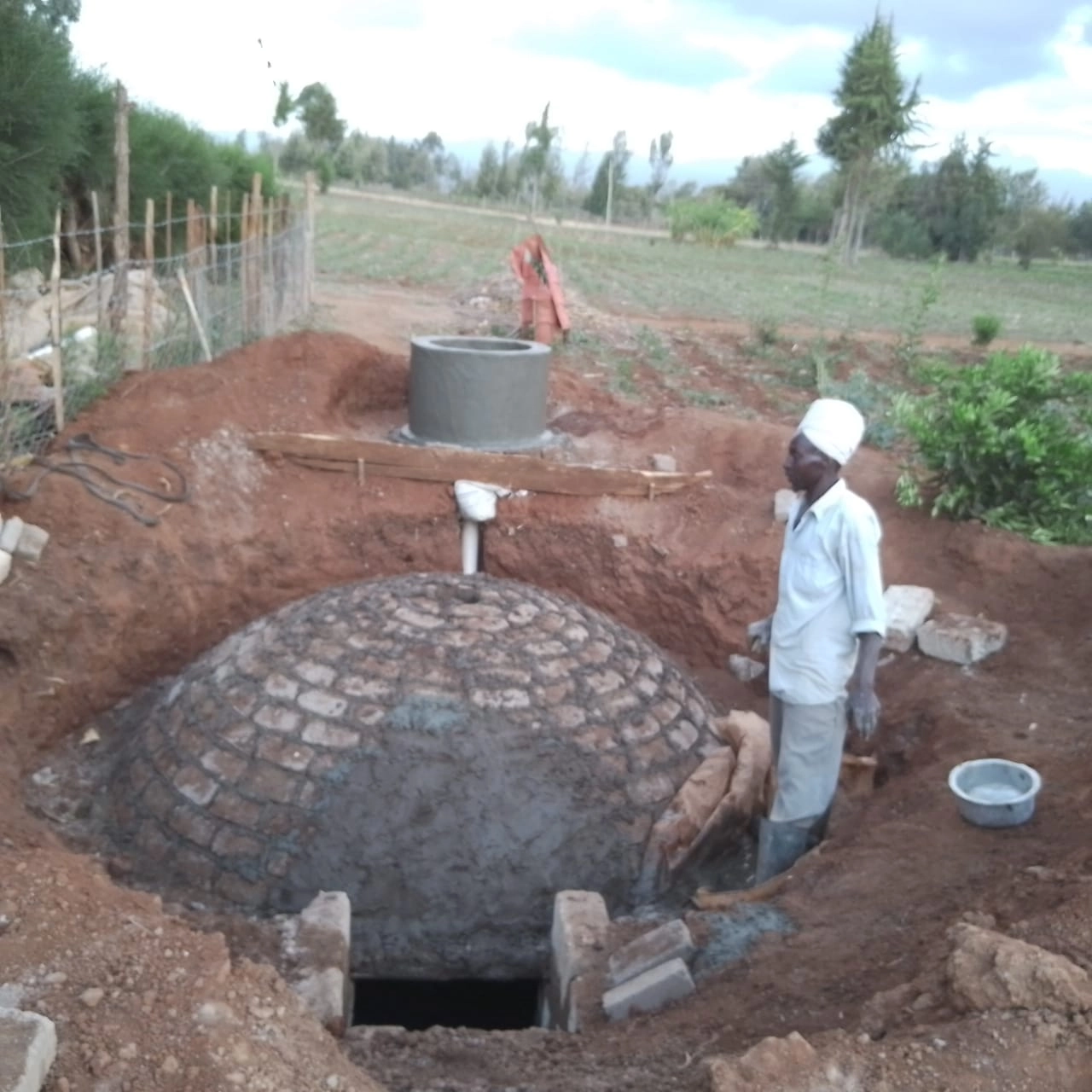
Have you ever stopped to wonder what happens after you flush the toilet?
It’s not exactly dinner table conversation, is it?
But for us at Bio Digester Kenya, it’s our passion.
We live and breathe waste management—not because it’s glamorous, but because it’s vital for a clean, sustainable environment.
When we talk about biogas and efficient waste breakdown, we aren’t just talking about big tanks; we’re talking about a microscopic universe teeming with life.
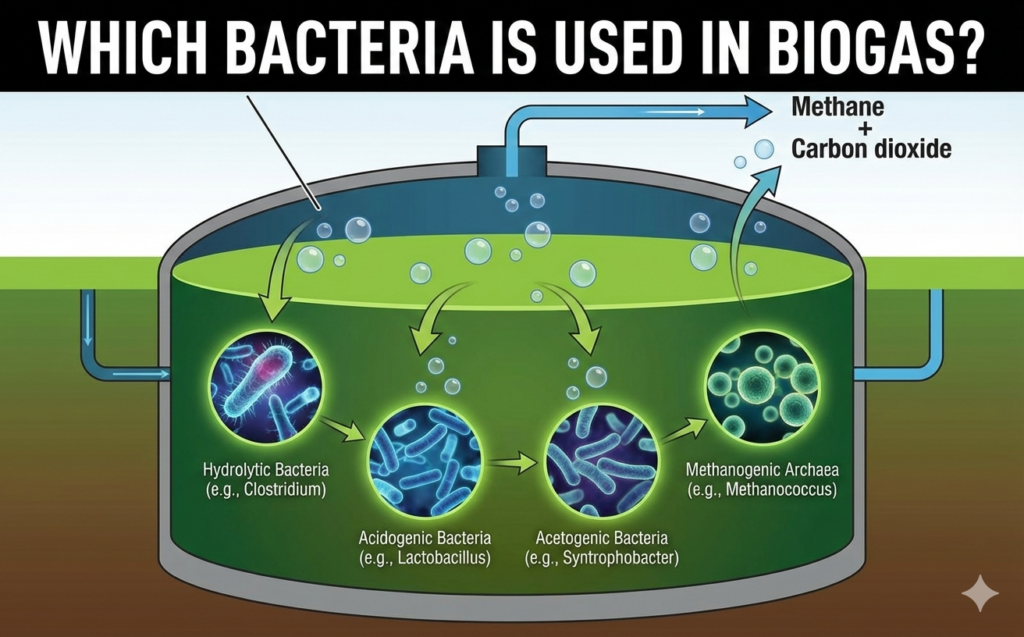
So, which bacteria is used in biogas?
Let’s pull back the curtain on these invisible workers that turn your waste into something useful.
Introduction to the Microscopic Heroes of Waste
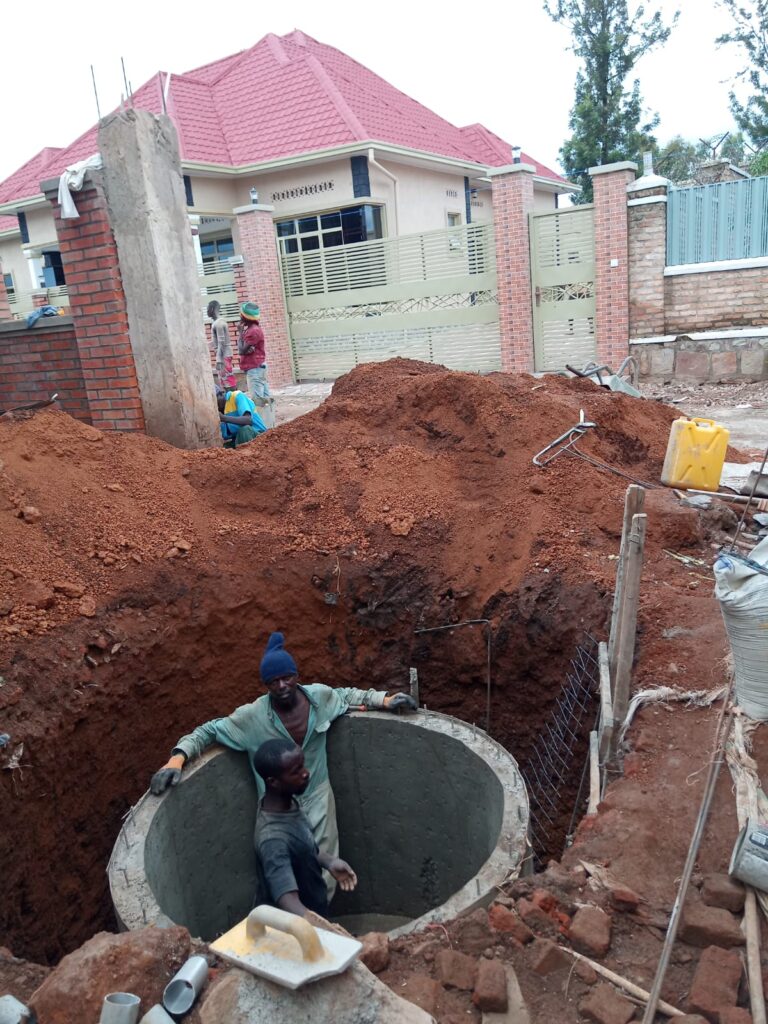
Just like your body uses enzymes and bacteria to break down the food you eat, a Biodigester uses specialized microorganisms to feast on organic waste.
In Kenya, we are seeing a massive shift from old-school, smelly pits to the sleek biodigester septic tank.
But this transition isn’t just about the concrete and pipes; it’s about the biology happening inside.
Without the right bacteria, your waste would just sit there, becoming a breeding ground for disease and bad odors.
Instead, with the right “bugs,” we turn that waste into water, air, and even energy.
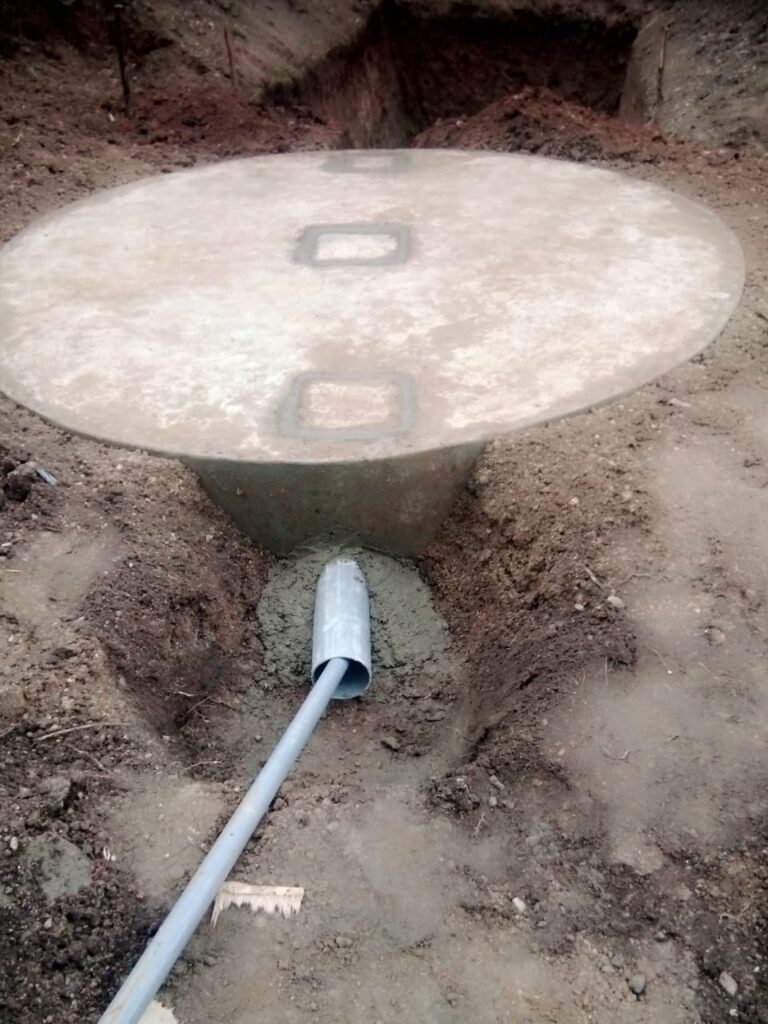
What Exactly is a Biodigester?
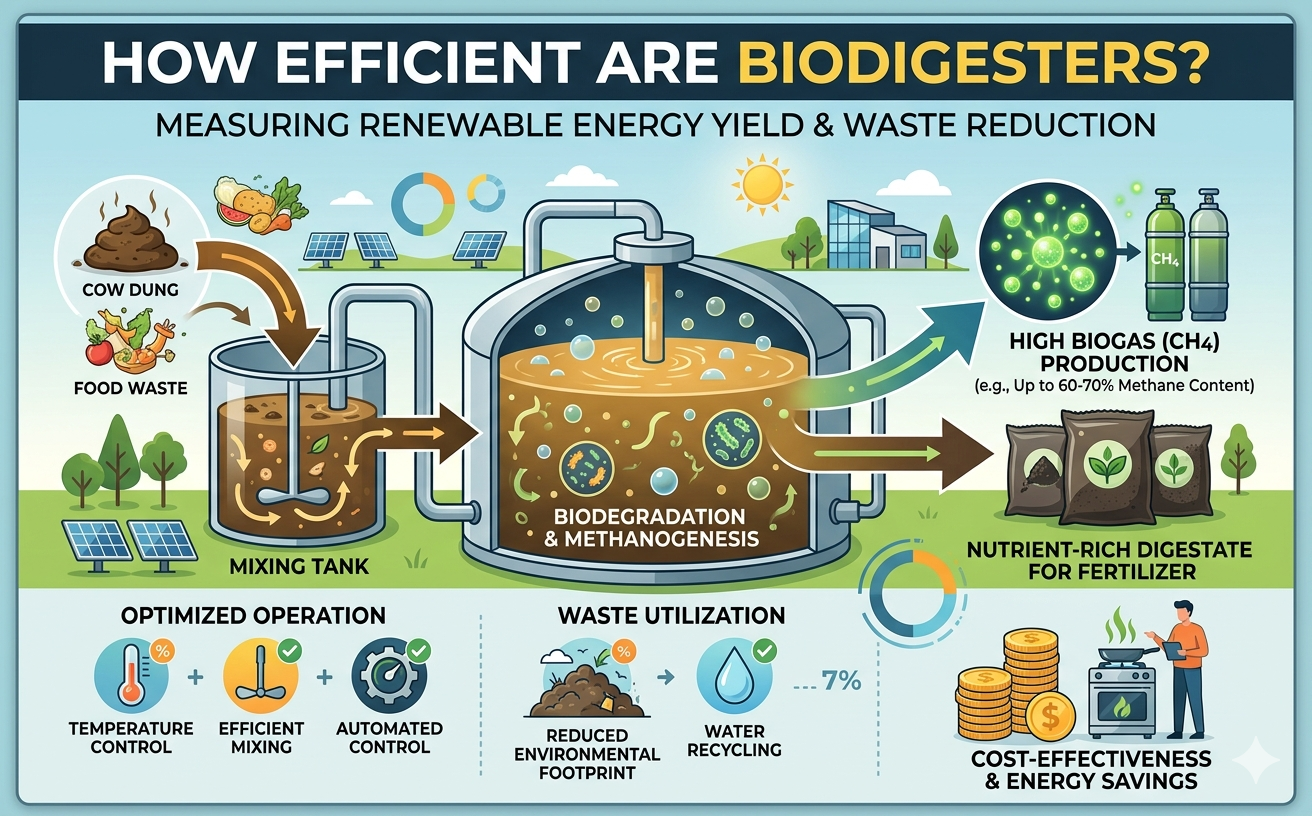
This process is known as anaerobic digestion.
At Bio Digester Kenya, we specialize in designing and installing these systems across the country.
Whether it’s for a small residential home in Karen or a massive commercial apartment block in Roysambu, the principle remains the same: use nature to clean up after ourselves.
Biodigester vs Septic Tank: The Modern Evolution
If you are building a house, you’ve likely asked yourself: biodigester vs septic tank, which one should I choose?
Traditional septic tanks are basically large holding boxes.
They fill up, they smell, and they eventually need to be exhausted by an expensive vacuum truck (exhausters).
On the flip side, a Bio Septic Tank is an active biological treatment plant.
It’s smaller, requires less space, and because of the Bio Digester Bacteria we use, it rarely ever needs exhausting.
It’s the difference between a static warehouse and a 24/7 recycling factory.

The Science of Anaerobic Digestion: How it Works
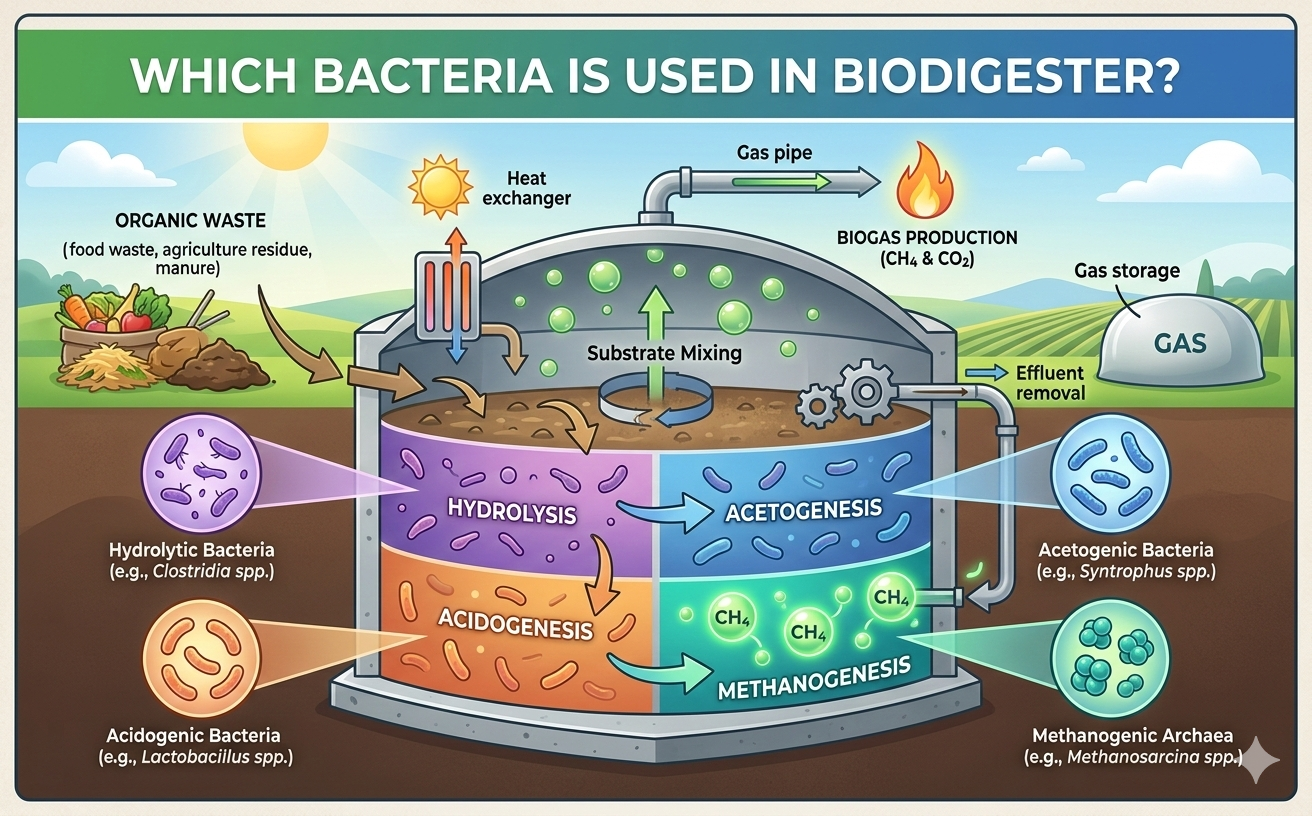
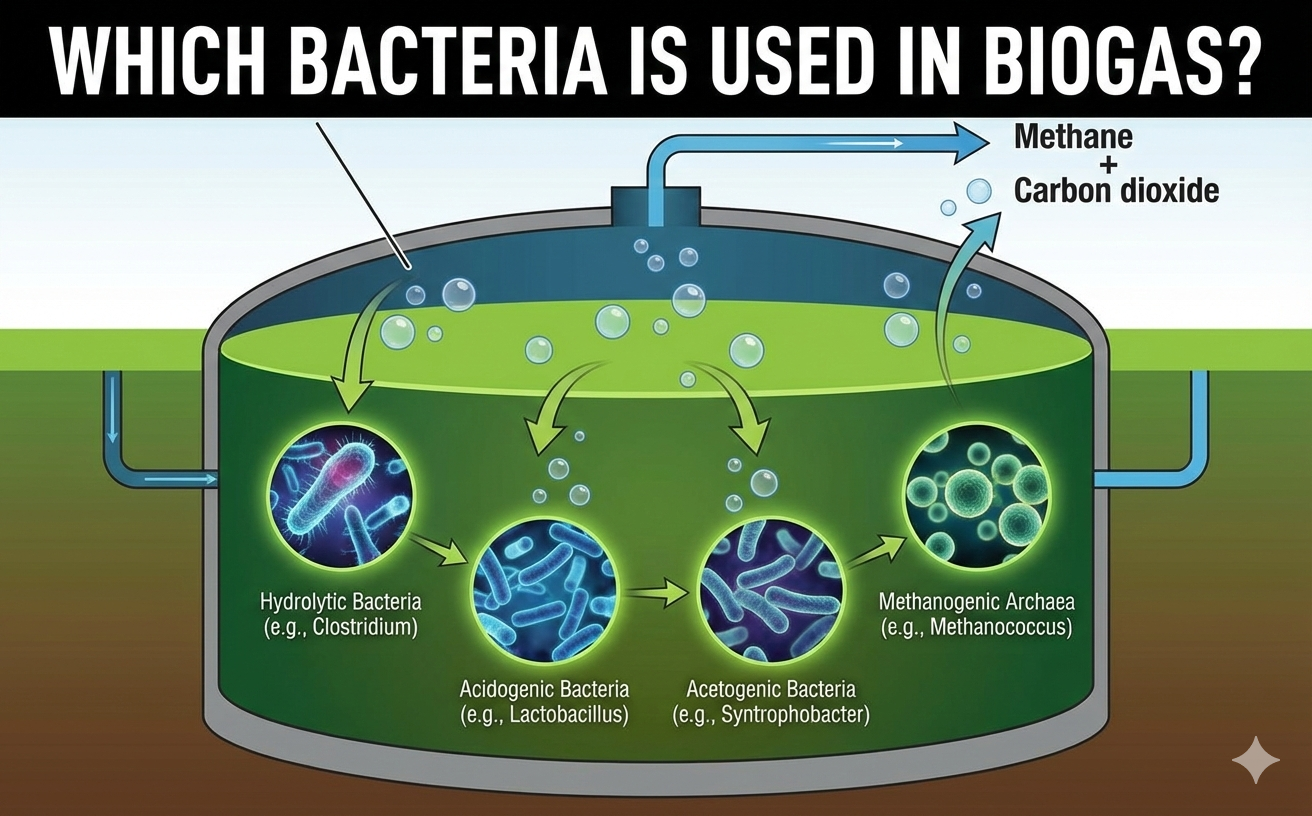
It’s a four-act play, and each act features a different cast of bacteria.
These microorganisms work in a relay race, where the “waste” of one group becomes the “food” for the next.
This is why having a healthy population of Bio Digester Bacteria is so important.
If one group fails, the whole system stalls, and that’s when you get those nasty smells we all want to avoid.
Stage 1: Hydrolytic Bacteria (The Breakdown Crew)
Imagine trying to eat a whole watermelon in one bite.
Impossible, right?
You need to cut it into pieces first.
That is exactly what hydrolytic bacteria do.
They take complex organic polymers—like proteins, fats, and carbohydrates found in human waste—and break them down into simpler monomers like amino acids and sugars.
They are the “prep cooks” of the Bio Digester Septic Tank, making the waste small enough for the next group to handle.
Stage 2: Fermentative Bacteria (Acidogenesis)
Once the prep work is done, the acidogenic bacteria step in.
They take those simple sugars and amino acids and convert them into organic acids, alcohols, and some gases like carbon dioxide and hydrogen.
If you’ve ever smelled something “sour” in a compost bin, you’re smelling the work of these guys.
They are incredibly efficient and set the stage for the more delicate bacteria that follow.
Stage 3: Acetogenic Bacteria (Acetogenesis)
Now things get specific.
Acetogenic bacteria take the products from the second stage and turn them into acetic acid (basically vinegar), along with more hydrogen and carbon dioxide.
This stage is crucial because the final gas-producing microorganisms are very picky eaters—they primarily want acetate.
These bacteria are the bridge that connects raw waste to usable biogas.
Stage 4: Methanogenic Archaea (The Gas Makers)
Finally, we reach the stars of the show: the Methanogens.
Technically, these are “Archaea” rather than bacteria, but they are the ones that produce methane (the main component of biogas).
They consume the acetate and hydrogen produced in the earlier stages.
This is the ultimate recycling act.
In a Biodigester septic tank, these methanogens ensure that the organic matter is fully converted, leaving behind very little solid residue.

Bio Digester Kenya: Revolutionizing Waste in East Africa
Kenya’s growing population needs better sanitation solutions.
Traditional systems are failing, but our Bio Digester Septic Tank solutions are stepping up.
We provide a clean, odor-free, and permanent solution for human waste management.
Whether you are in Nairobi, Nakuru, or Kisumu, we are here to help you upgrade your home’s infrastructure.
How Our Biodigester Septic Tank Systems Function
So, how does it look in practice?
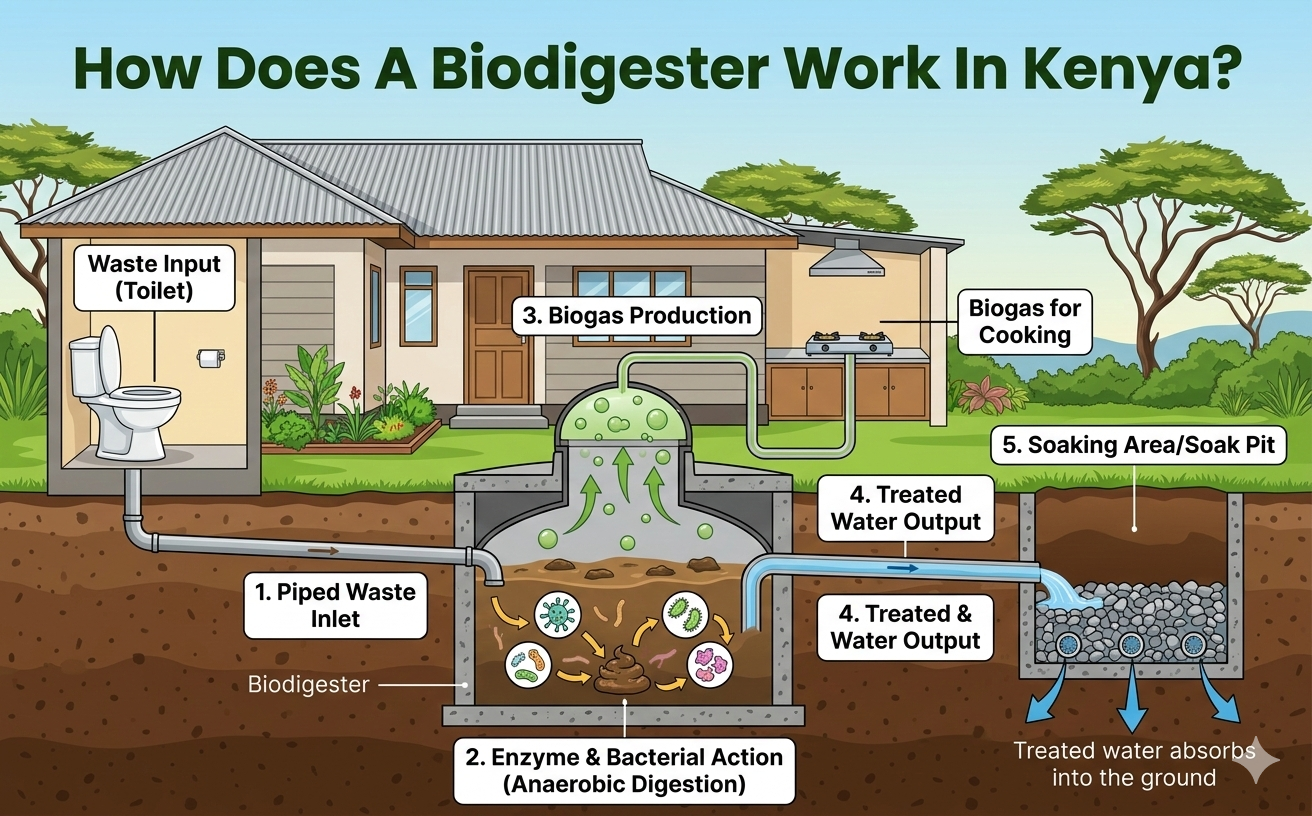
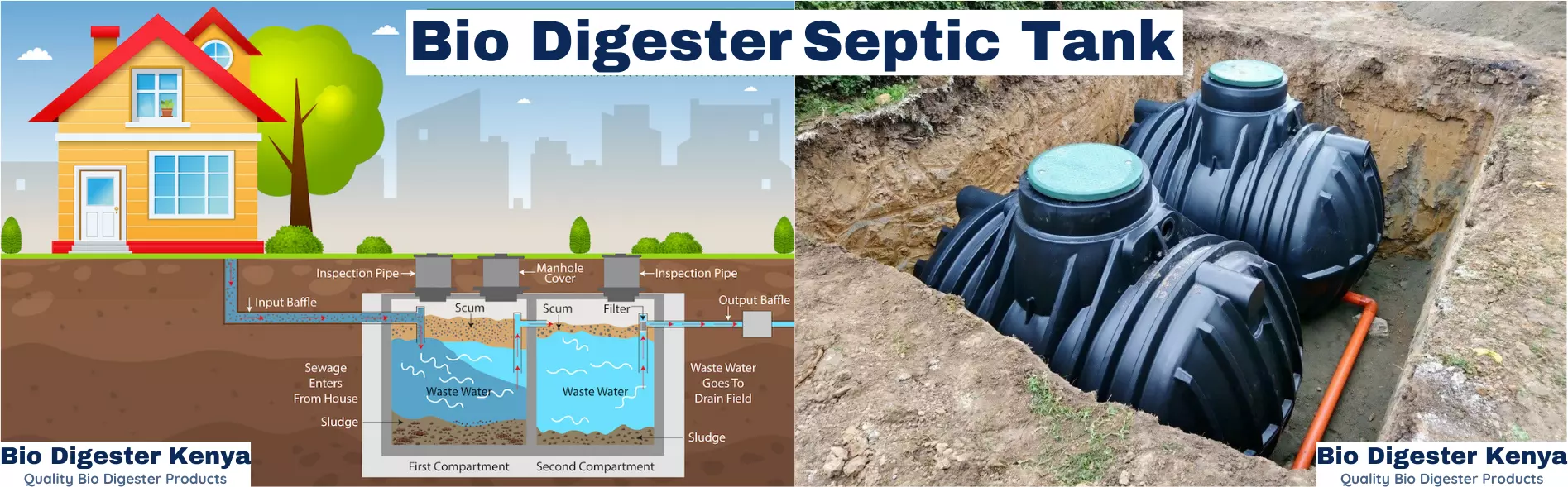
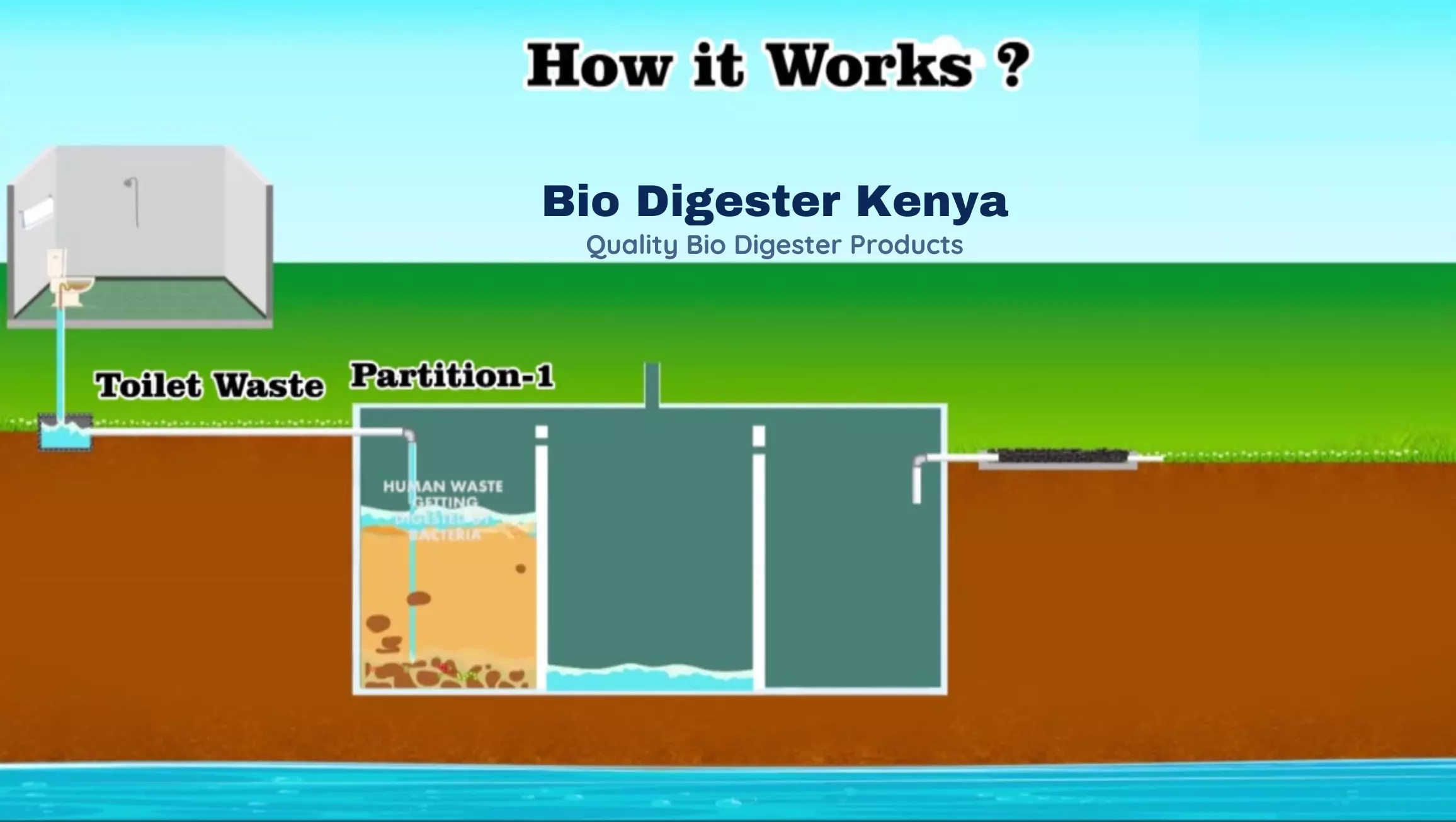
Your human waste is piped directly from your toilets into the Biodigester.
Inside, the environment is perfectly balanced to support the growth of the bacteria we just discussed.
We don’t just leave it to chance, though.
We use high-quality Bio Digester Bacteria – 400g packs to jumpstart and maintain the system.
The bacteria “eat” the waste, and the end result is simply water and air.
No sludge, no smell, no mess.
The Magic of Bio Digester Enzymes
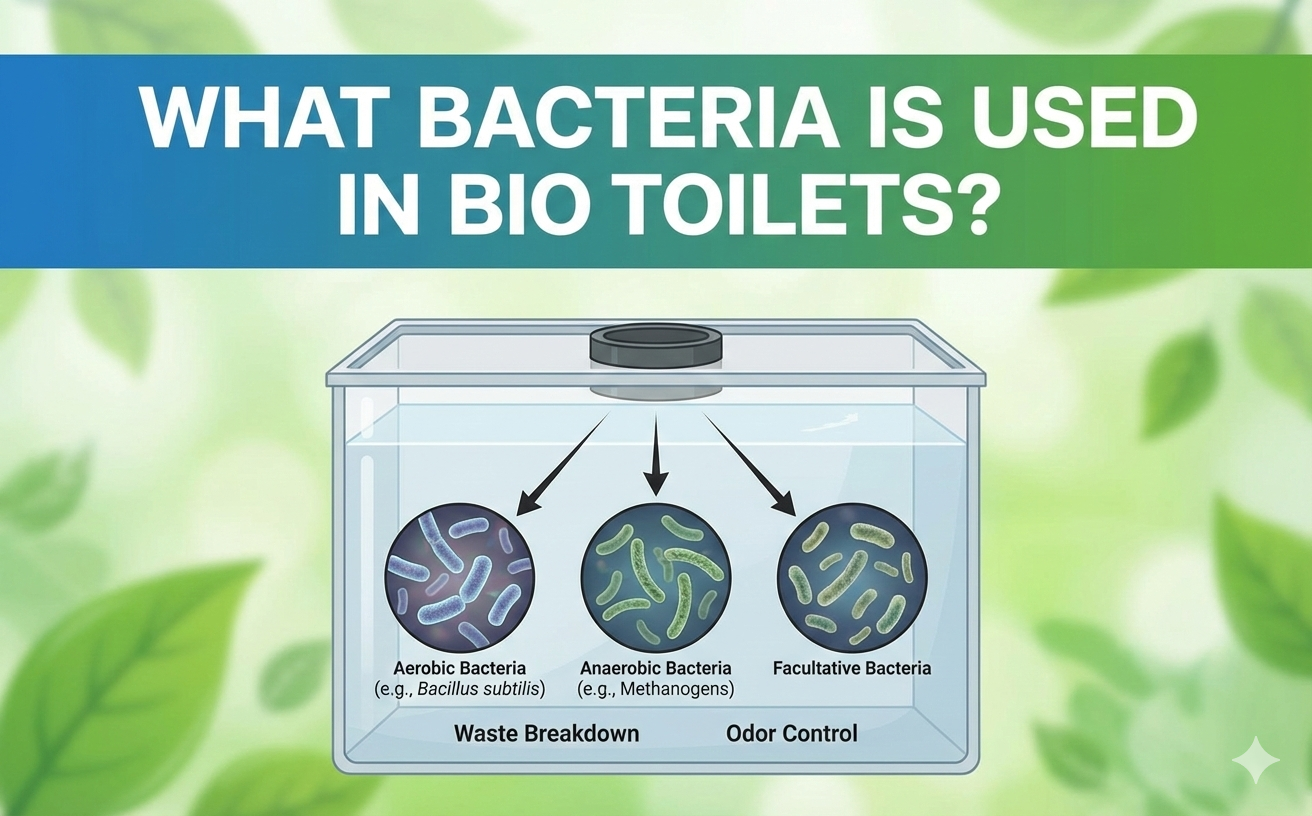
You might hear people use the terms “bacteria” and “enzymes” interchangeably.
While they work together, enzymes are like the tools the bacteria use.
To speed up the breakdown of tough solids, we recommend our customers use Bio Digester Enzymes.
These biological catalysts chew through waste at an incredible rate, ensuring that your Bio Digester Installation remains efficient for decades.
You can find these in our online shop.
Human Waste Management Solutions for Homes and Businesses
Our systems are versatile.
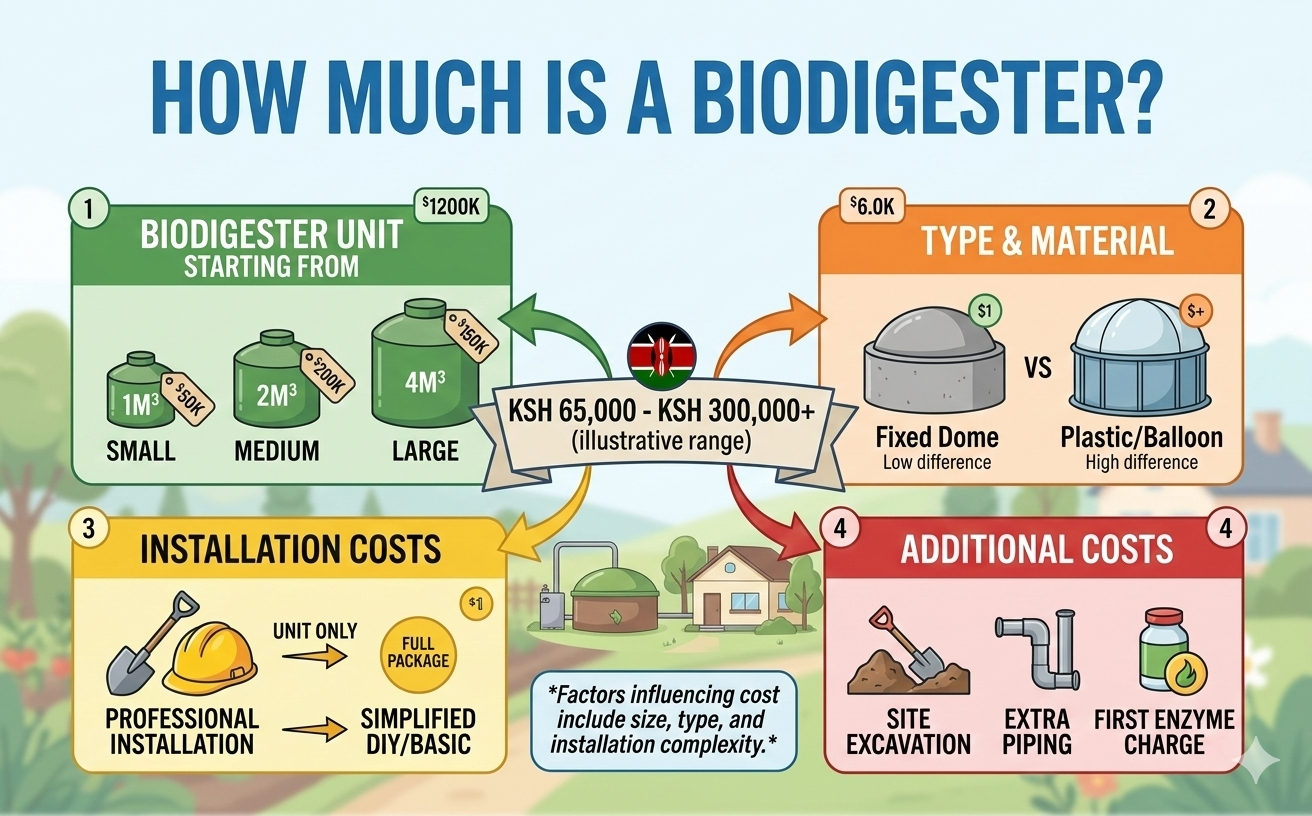
For residential homes, a 1M³ Bio Digester might be enough.
For larger commercial spaces like schools or hotels, we scale up to 4M³ Bio Digester units or larger.
The beauty of the Biodigester septic tank is that the water produced is clean enough to be sent to a soaking area where it is absorbed back into the ground safely, without polluting groundwater.
The Critical Role of Bio Digester Bacteria
It’s that simple.
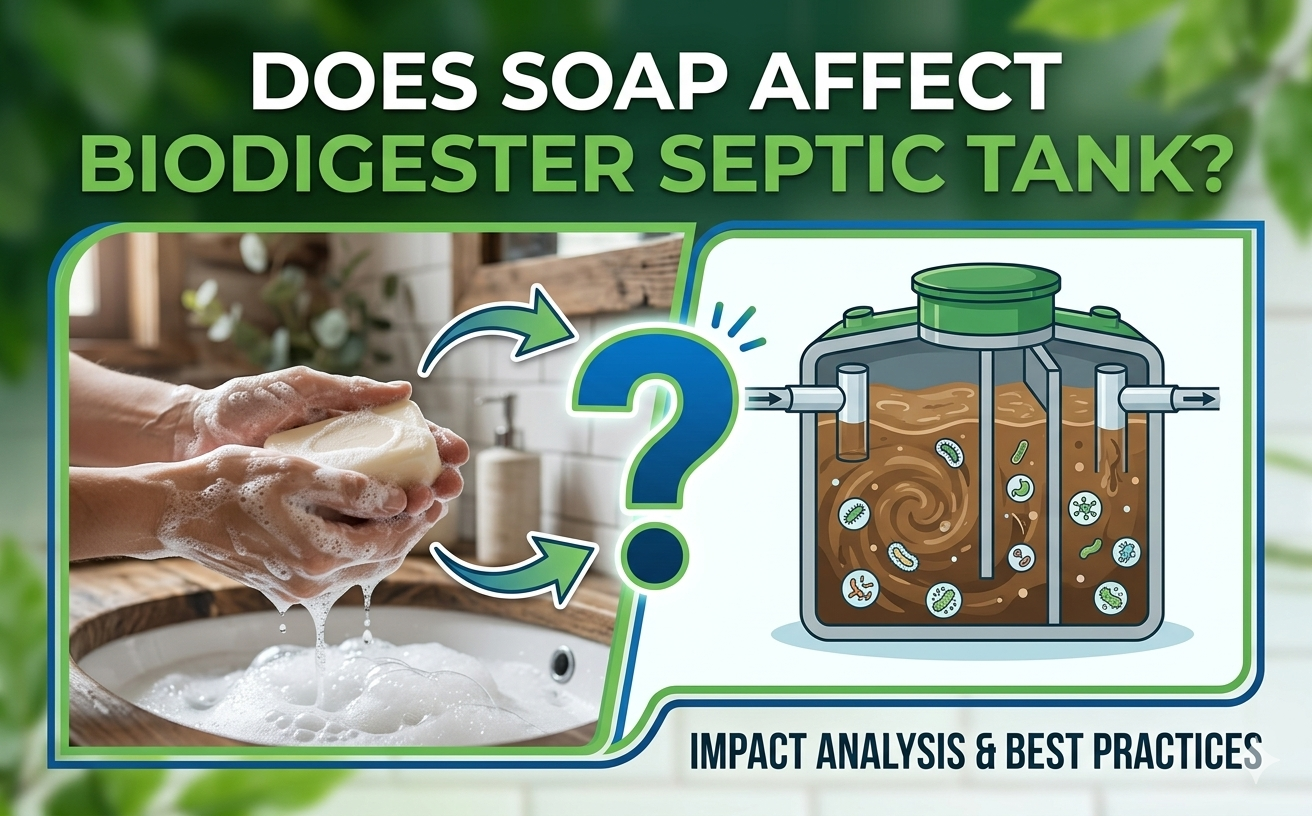
Common household chemicals like bleach or strong disinfectants can kill the “good bugs” in your Bio Septic Tank.
That’s why we always educate our clients on Septic Tank Maintenance.
If you notice your system slowing down or a slight odor emerging, it’s usually a sign that your bacterial colony is struggling.
Why You Should Use Bio Septic Tank Bacteria
Why leave things to nature alone?
By adding our Bio Digester Bacteria – 200g or our Septic Tank Bacteria – 250g, you are introducing a concentrated army of waste-eaters.
These products are specifically formulated to survive the harsh conditions of a waste tank and get to work immediately.
It’s like giving your biodigester a probiotic boost!
Maintaining Your Biodigester Septic Tank for Longevity
Maintenance is a breeze when you have the right partner.
Every few months, adding a sachet of Septic Tank Cleaner – 2KG can prevent grease build-up (especially if kitchen waste is involved).
Remember, a biodigester septic tank is an investment in your property’s value and your family’s health.
Don’t let it go to waste by neglecting the biology inside.
Benefits of Choosing a Bio Digester Over Traditional Systems
- Space Saving: A biodigester is much smaller than a traditional septic tank.
- Cost-Effective: No more paying for “honey suckers” to empty your tank.
- Eco-Friendly: It protects the environment by treating waste on-site.
- No Smell: Because the bacteria fully digest the waste, there are no foul odors.
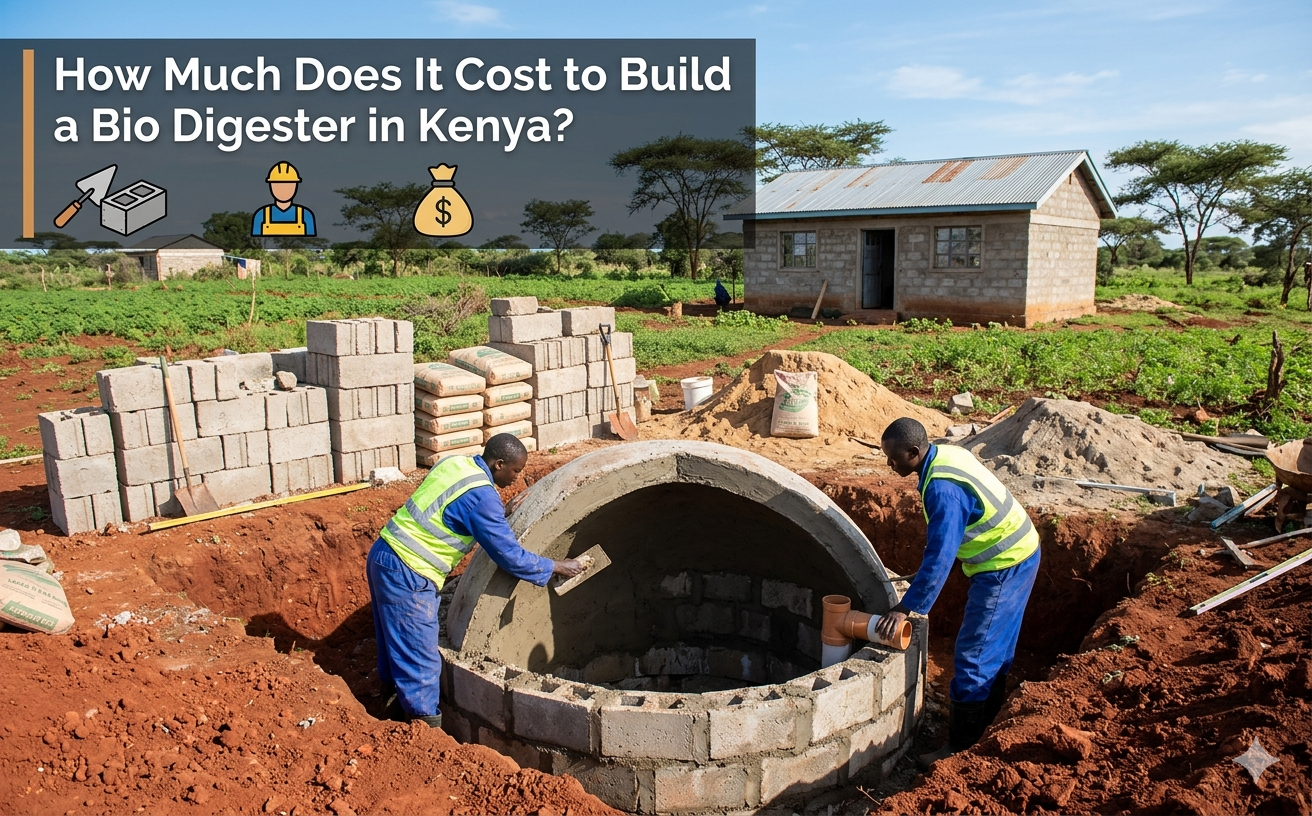
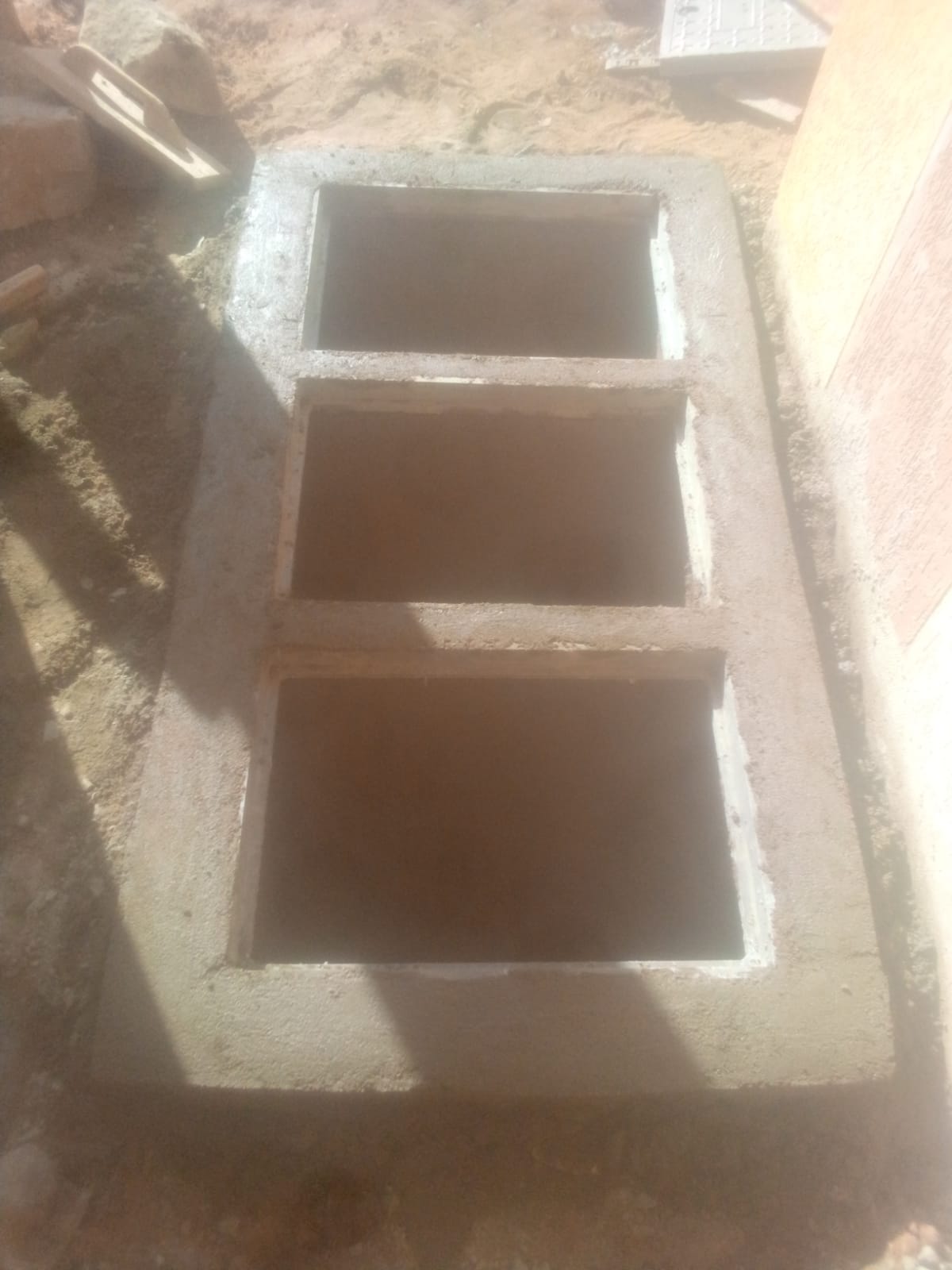
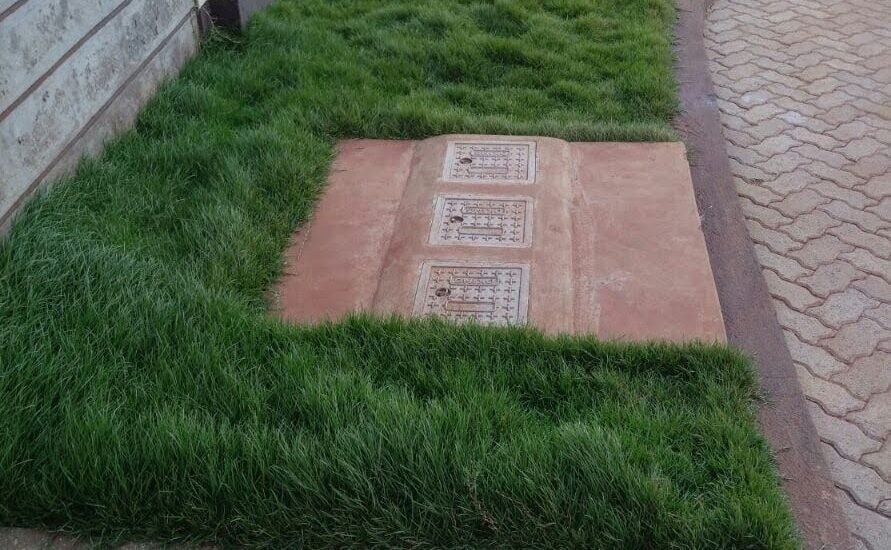
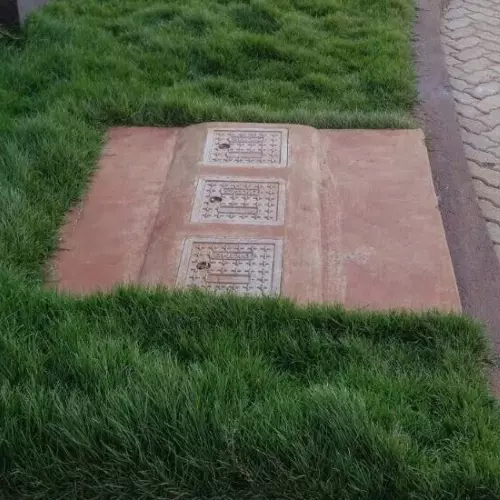
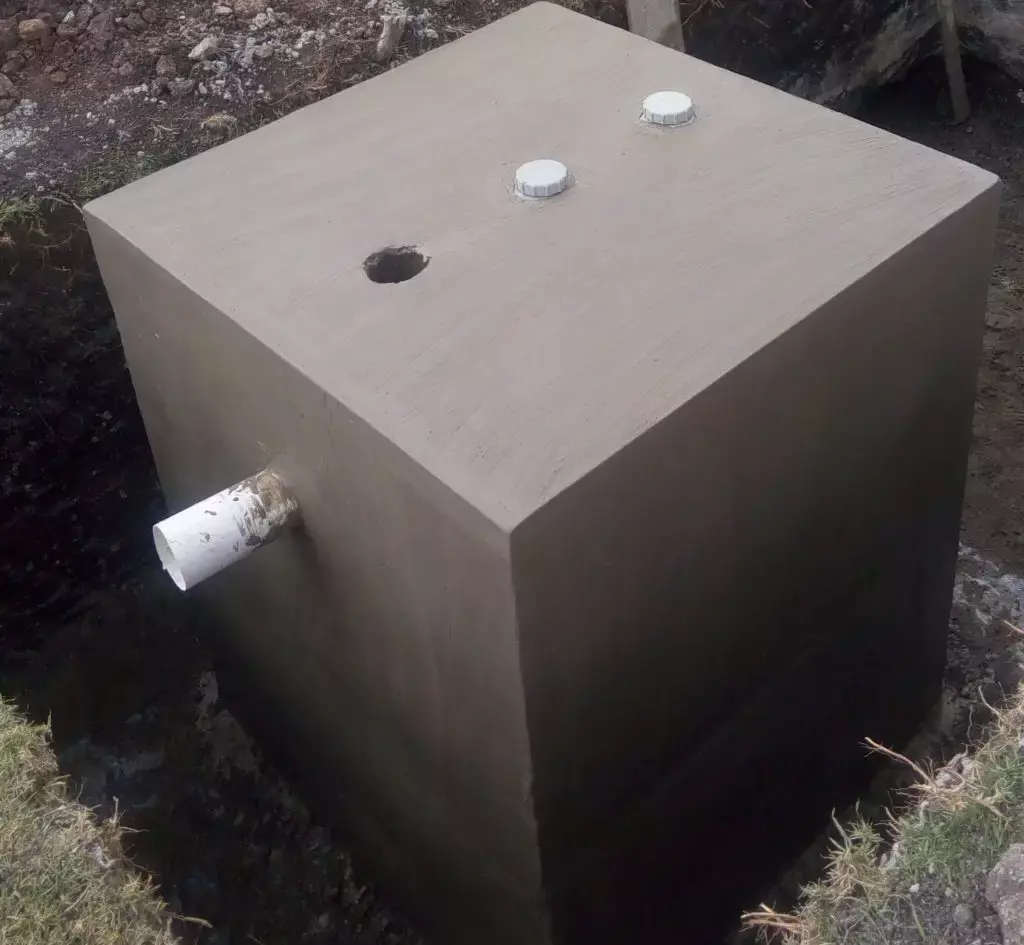
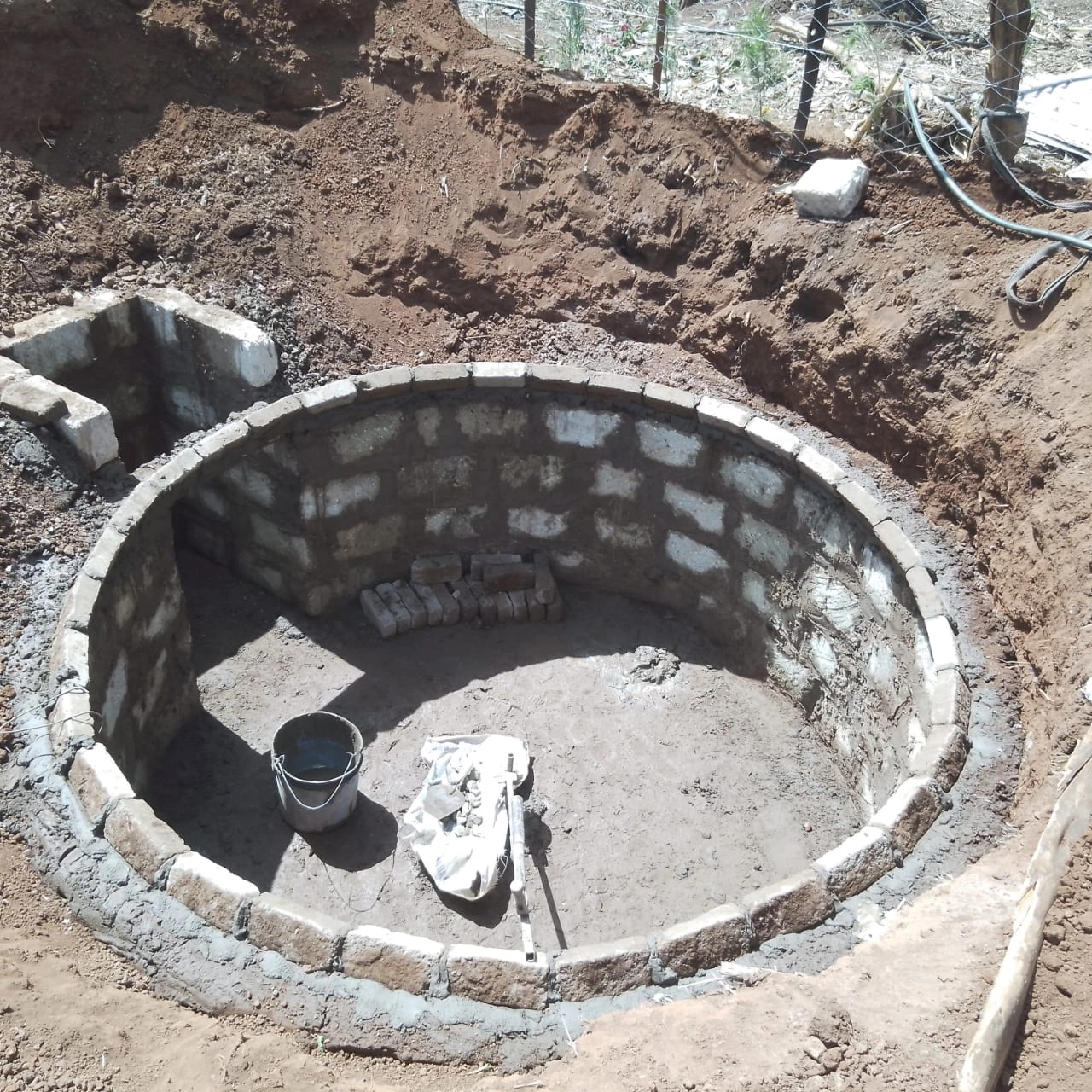
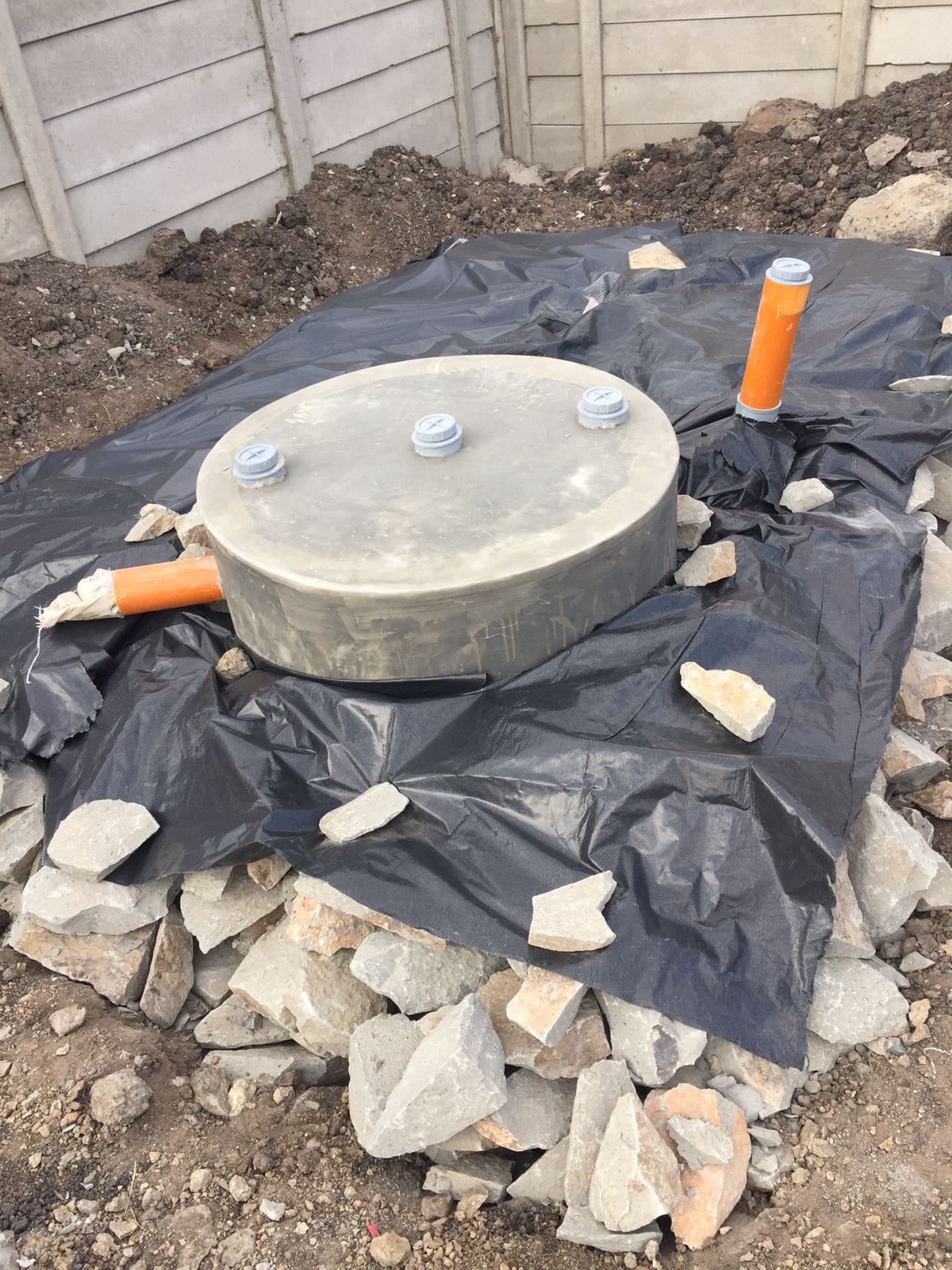
- Quick Installation: We can install a Precast Bio Digester in just a couple of days.
Conclusion
By understanding which bacteria is used in biogas, you can appreciate the complex work happening under your feet.
At Bio Digester Kenya, we are committed to providing the best services and products to keep your home or business running smoothly.
Don’t settle for outdated, smelly septic systems.
Choose the modern, biological way to handle waste.
Ready to make the switch?
Whether you need a new installation or the best Bio Digester Bacteria in the market, we’ve got you covered.
Check out our gallery to see our work in action!
Contact Us Today:
Phone: Call +254 712 660 245
Email: Email info@biodigesterkenya.co.ke
Website: www.biodigesterkenya.co.ke
FAQs
Unlike a traditional septic tank, a properly maintained biodigester septic tank does not get full of solid waste. The bacteria consume the waste, turning it into water and gas. Only a small amount of inorganic residue remains over many years.
2. Can I use toilet cleaners with my biodigester?
You should avoid harsh chemicals like bleach or strong acids, as they kill the Bio Digester Bacteria. We recommend using biodegradable cleaners or regularly topping up your system with our Bio Digester Bacteria – 5L liquid to keep the colony healthy.
3. Does the system smell?
No! A healthy biodigester is virtually odorless.If you smell something, it’s usually a sign that the bacterial balance is off, which can be easily fixed with our enzyme products.
4. How long does installation take?
At Bio Digester Kenya, we can usually complete a standard residential installation within 2 to 4 days, depending on the site conditions.
5. Where does the water go?
The treated water exits the biodigester and is directed to a soak pit or a “french drain,” where it safely soaks into the soil. It is clear, odorless, and environmentally safe.