Are you building your dream home in Kenya and wondering what to do about waste management?
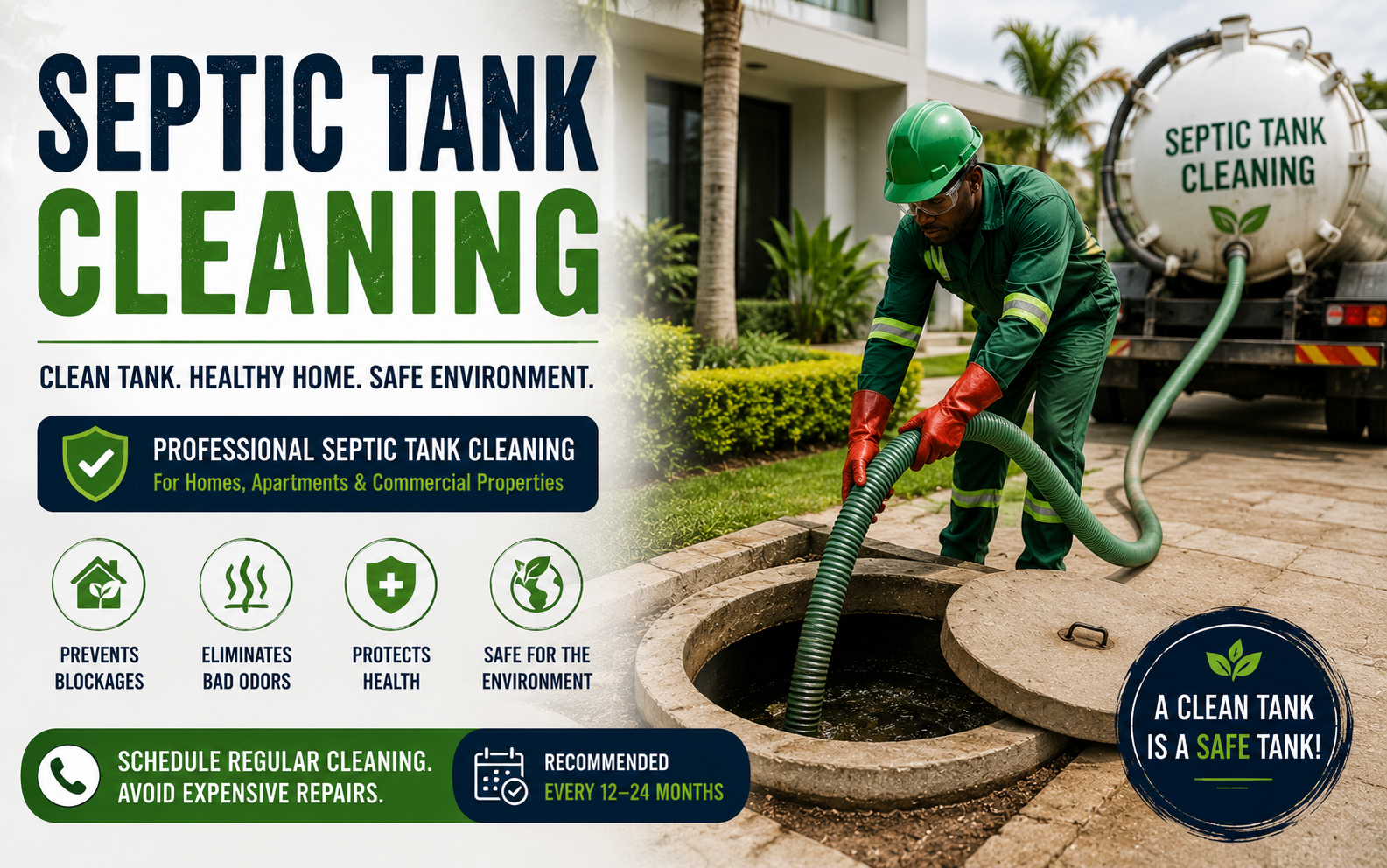
Or perhaps you are tired of the constant, nasty bills associated with exhausting your old, smelling concrete septic tank.
If you have been searching for a modern, cost-effective, and eco-friendly alternative, you have probably run across the term Biodigester.
But here is the million-shilling question: What is the actual cost of installing a biodigester in Kenya?
Let’s face it, we all want to build smart.
Nobody wants to keep throwing money down the drain (literally) to pay exhauster trucks every few months.
In this comprehensive guide, we will break down the exact costs of installing a biodigester septic tank in Kenya, compare a biodigester vs septic tank, and show you why partnering with Bio Digester Kenya is the absolute best decision you can make for your wallet and the planet.

What on Earth is a Biodigester? (And How Does it Work?)
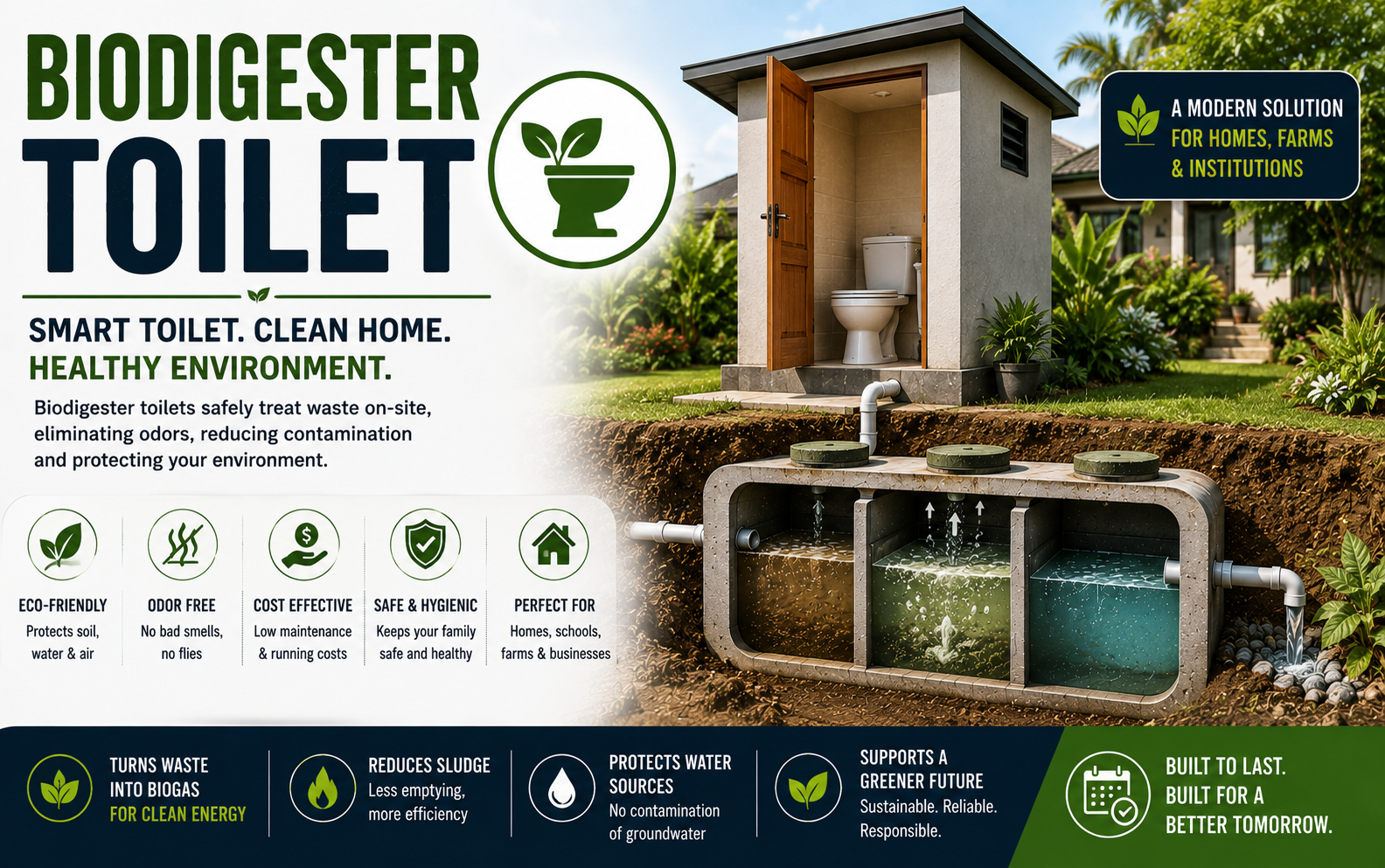
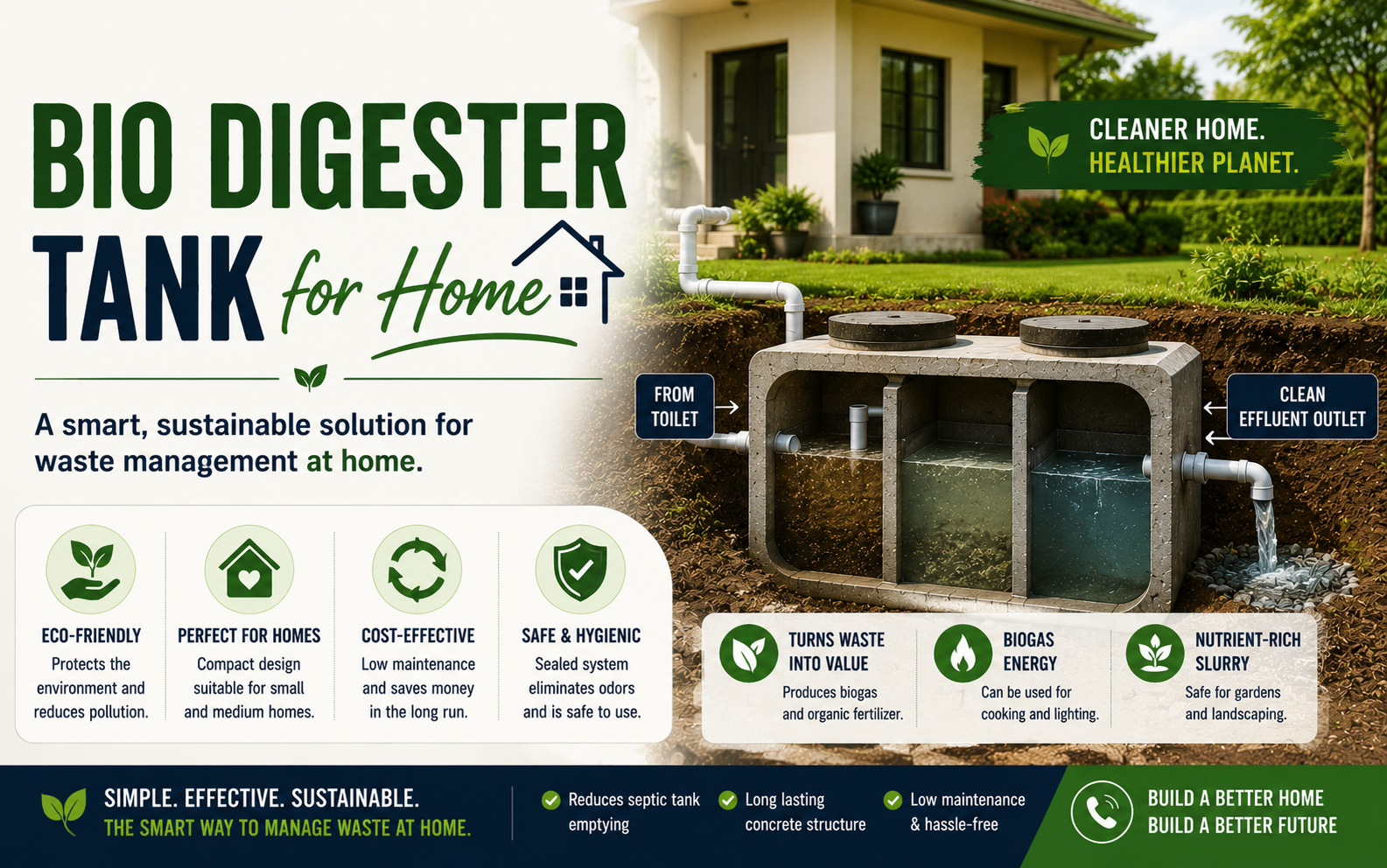
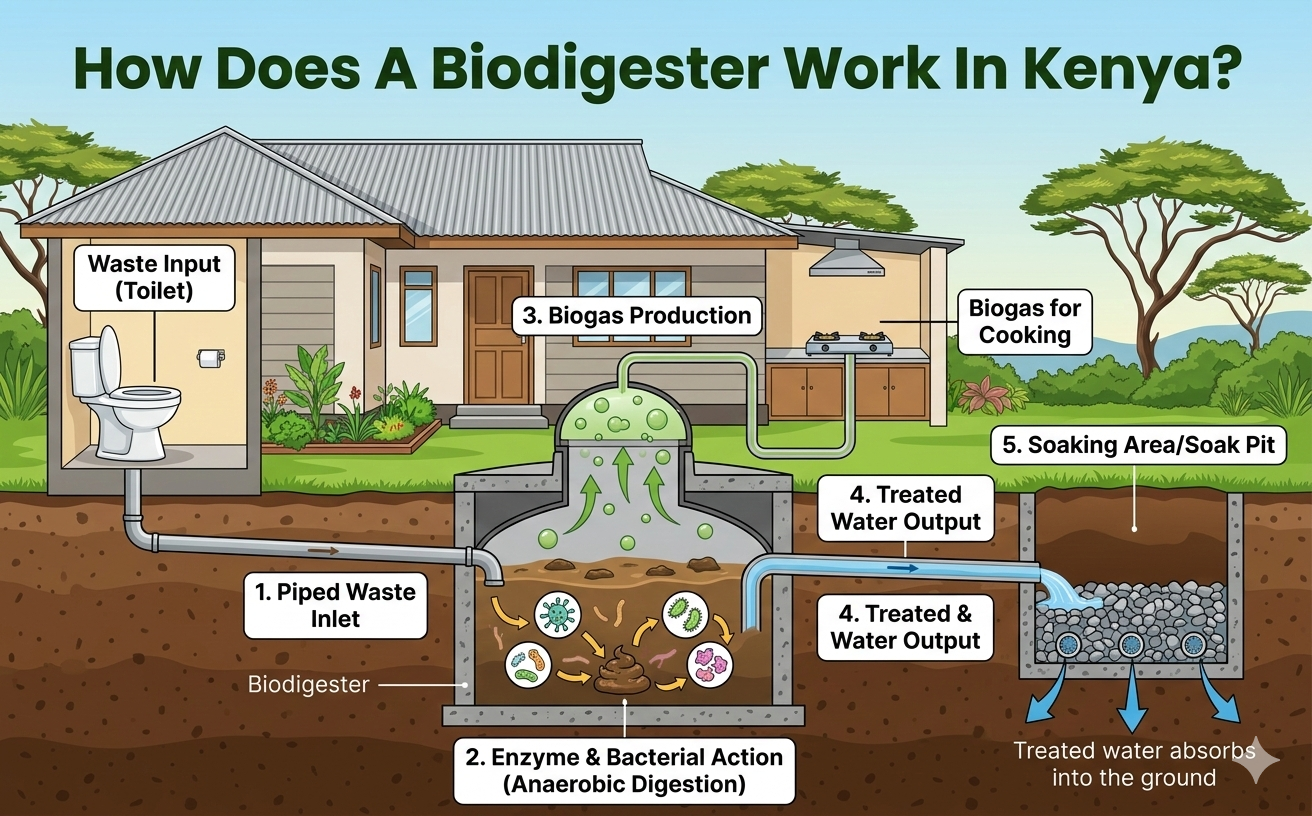
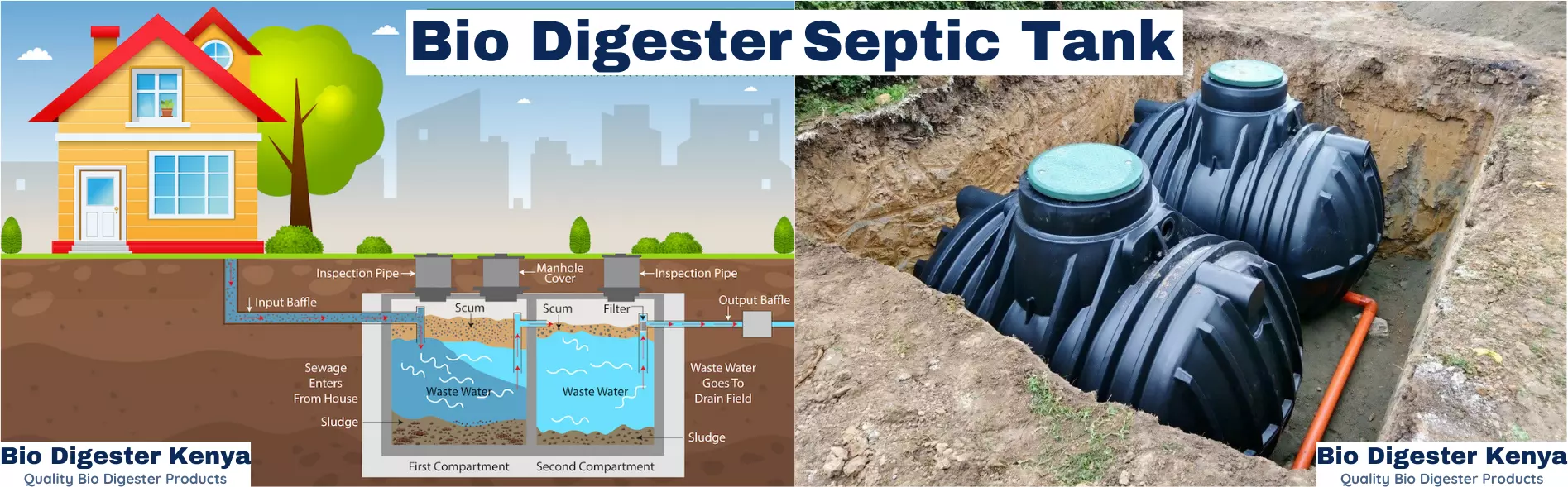
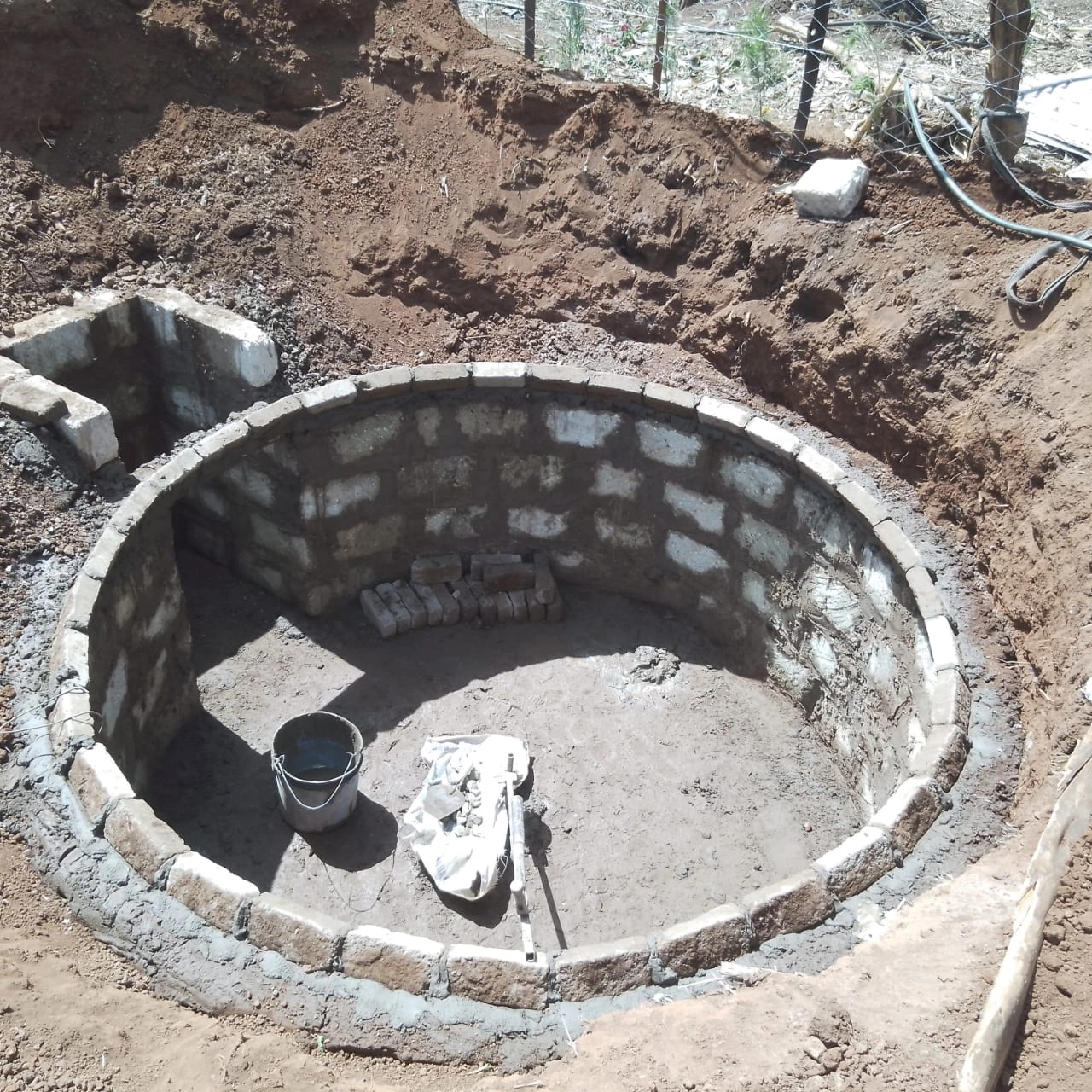
Before we dive straight into the Kenya shillings and cents, let’s explain exactly what a Biodigester is. Think of it as a small, highly efficient biological stomach buried in your backyard.
The Science Simplified: Waste, Meet Enzymes
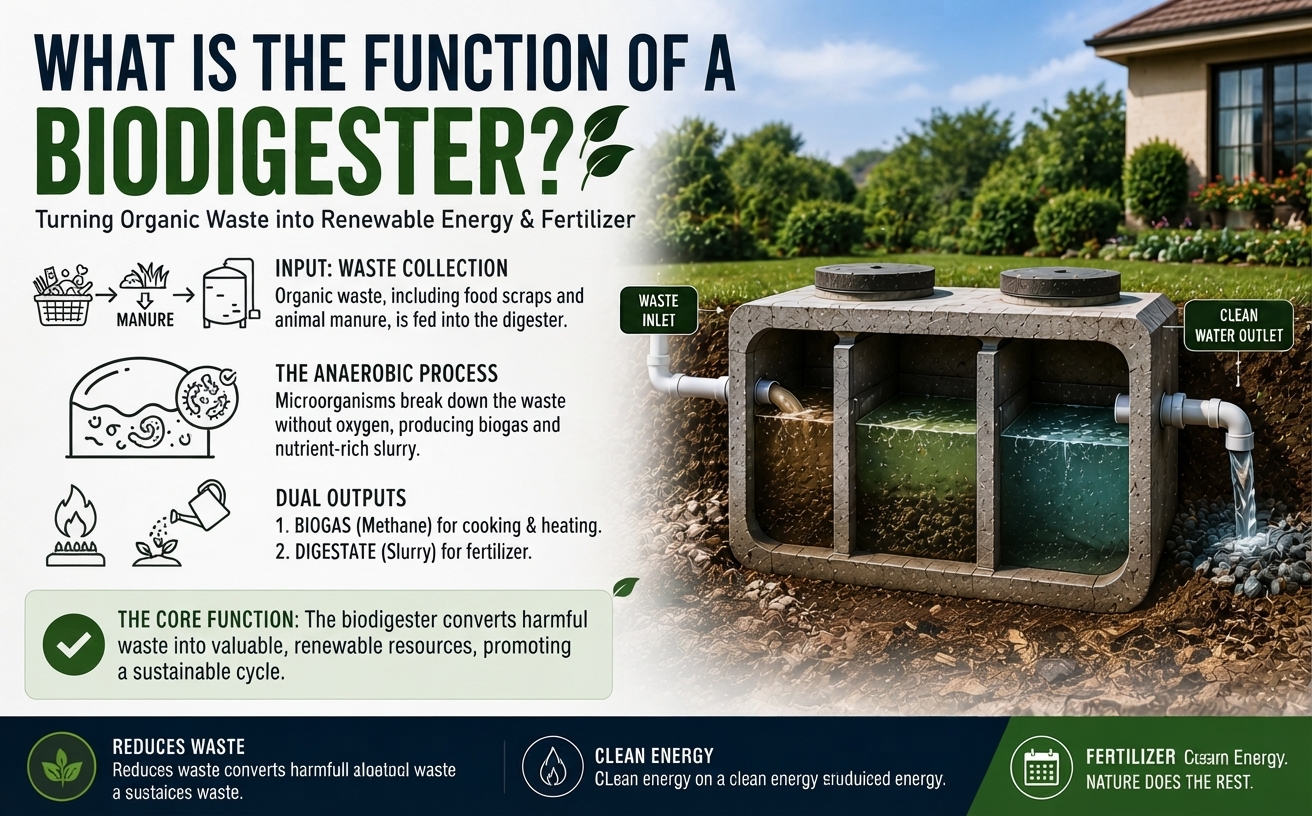
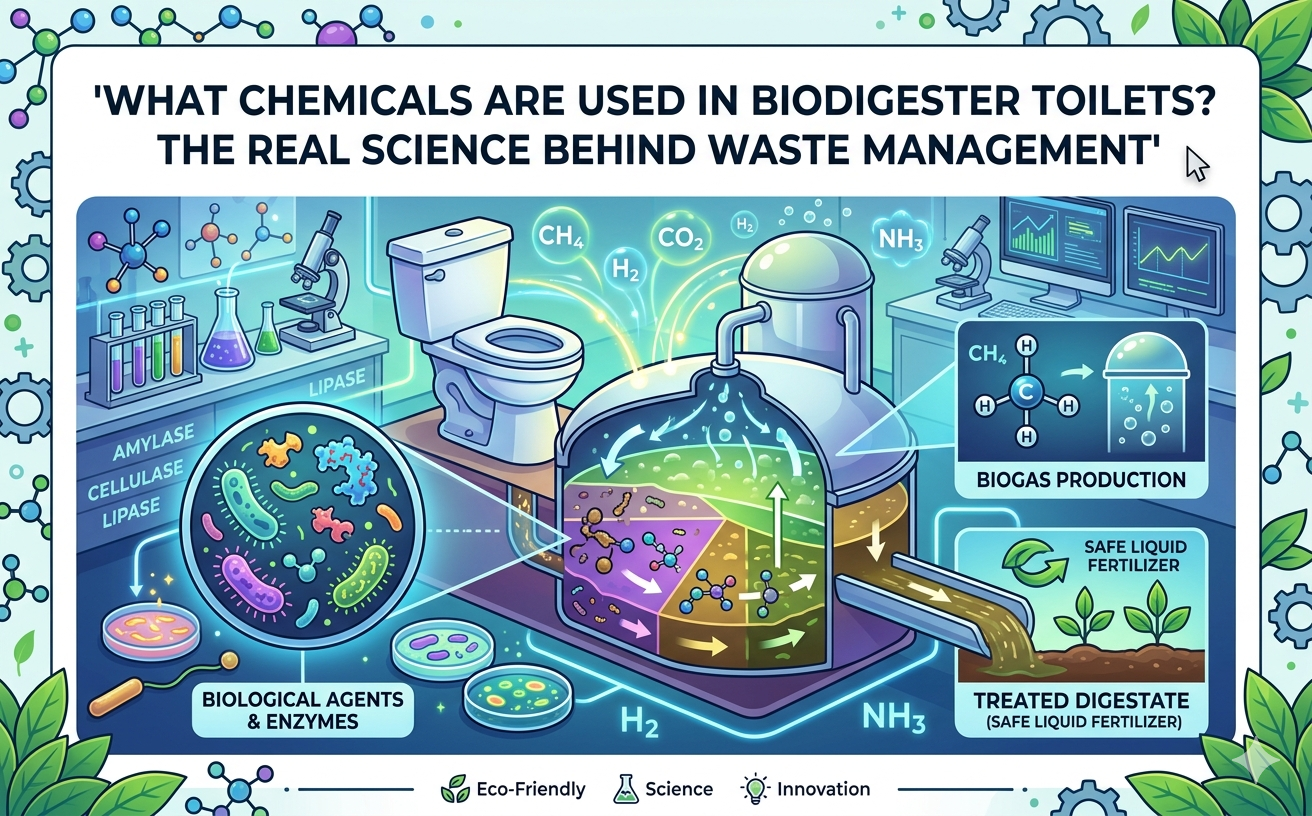
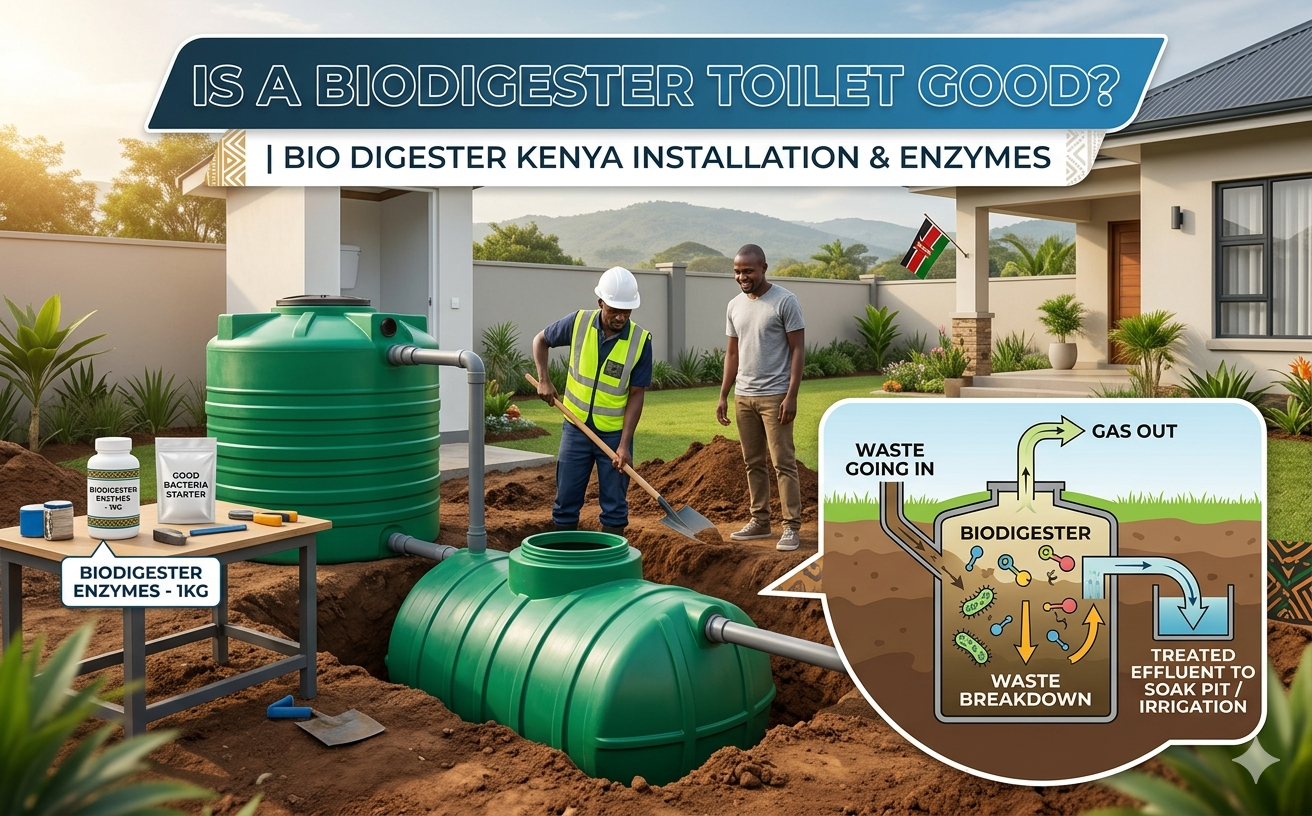
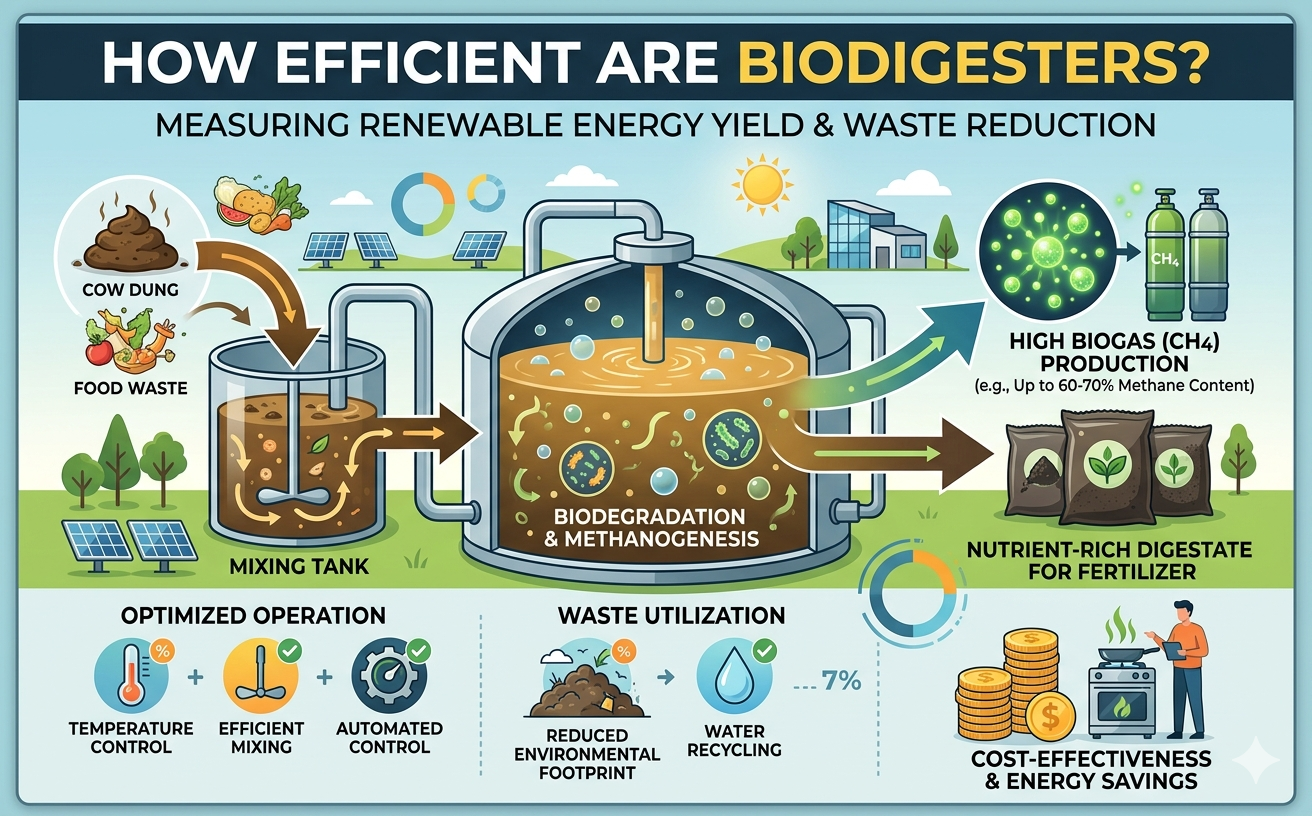
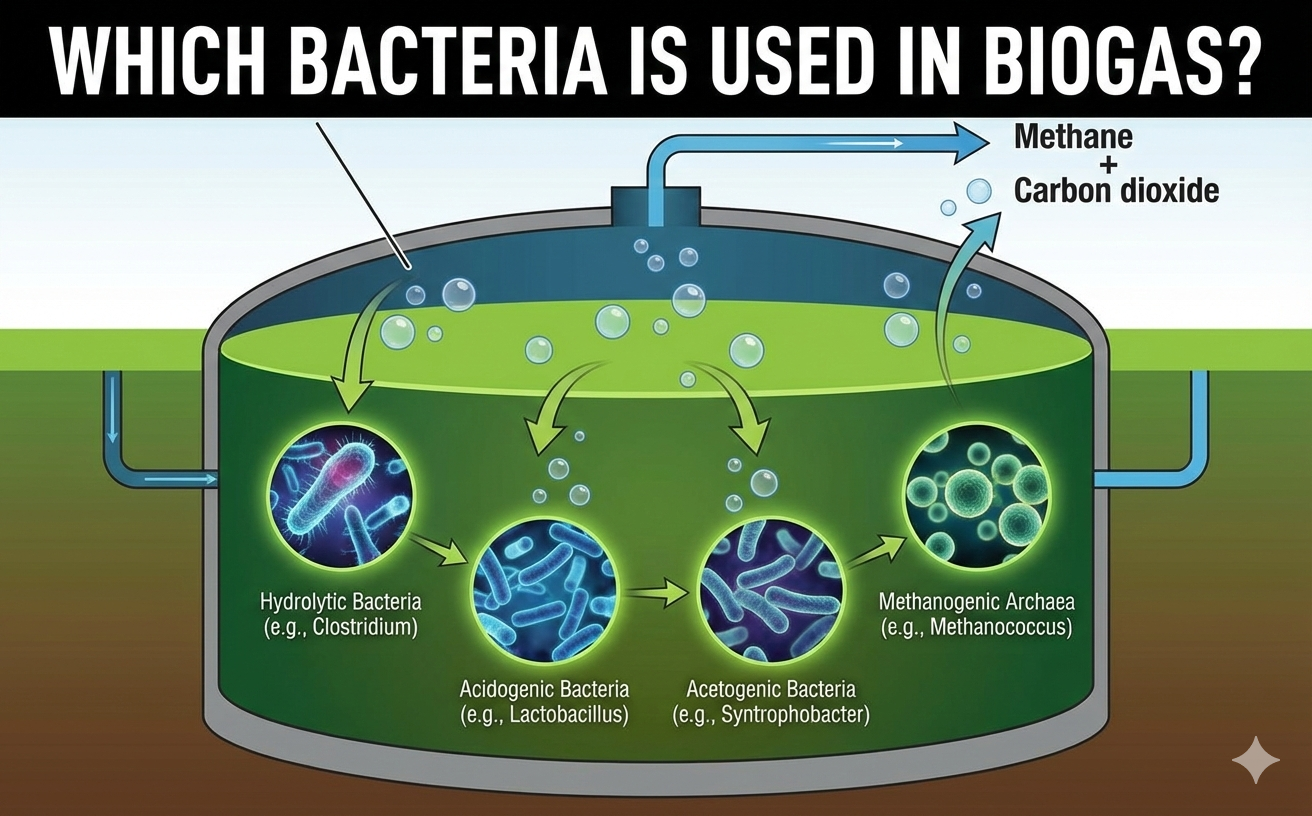
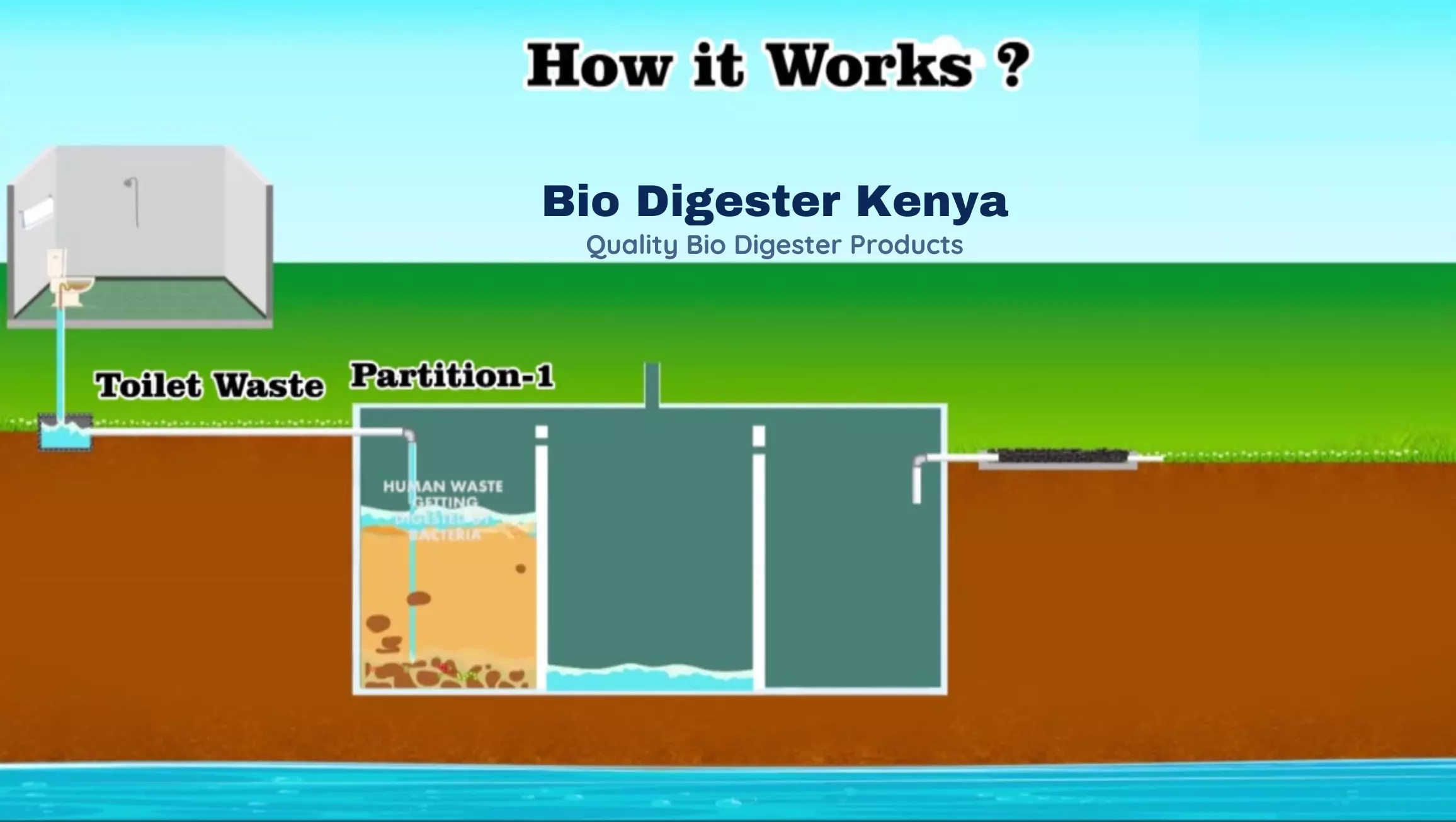
When you flush your toilet or wash your dishes, the waste flows down your pipes directly into the biodigester chamber. Instead of just sitting there and rotting like it would in a traditional pit or concrete tank, it meets specialized, super-hungry micro-organisms.
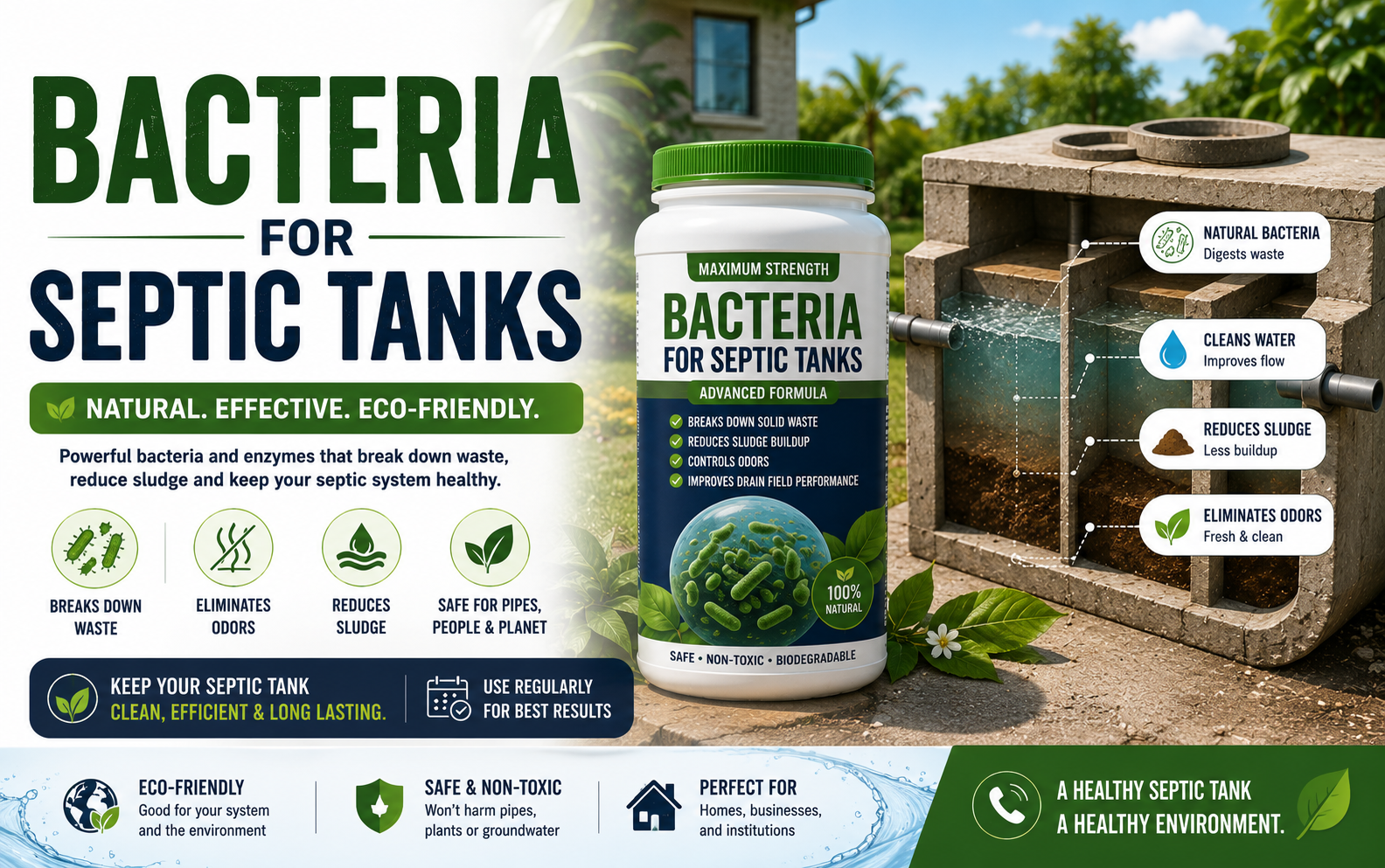
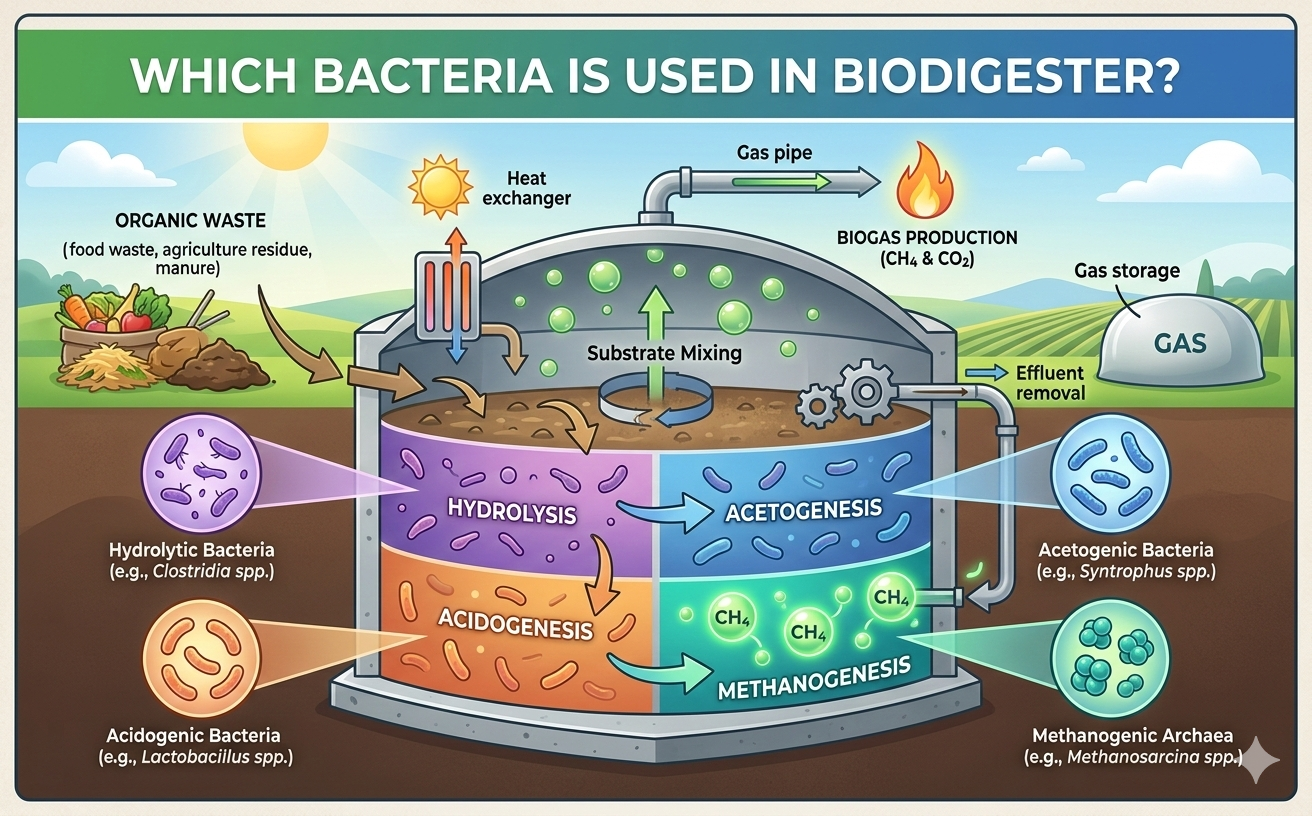
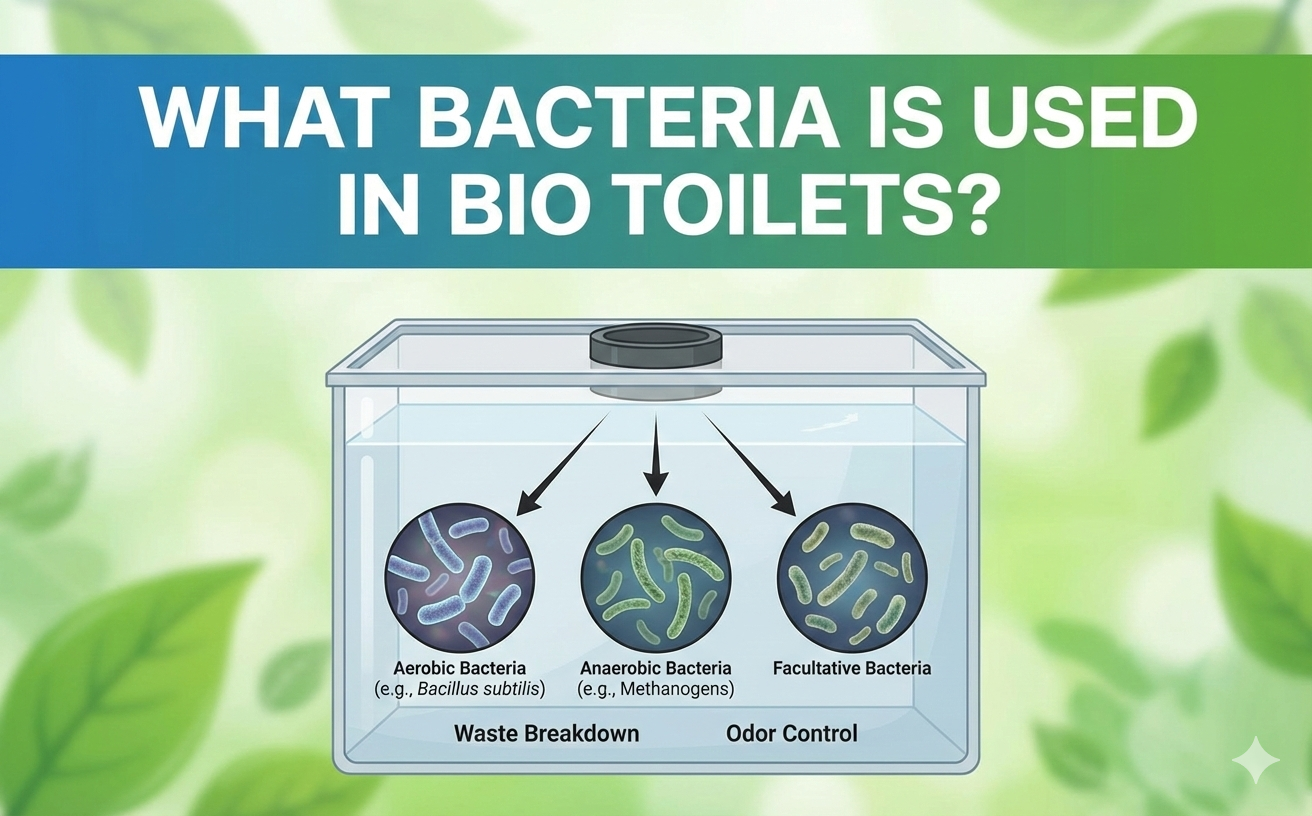
We seed the system with powerful biological agents. These Bio Digester Bacteria and enzymes instantly get to work. They chew up, digest, and completely break down all organic human waste.
The Ultimate Output: Water and Air
Do you know what the best part is? The end result of this biological feast is incredibly clean:
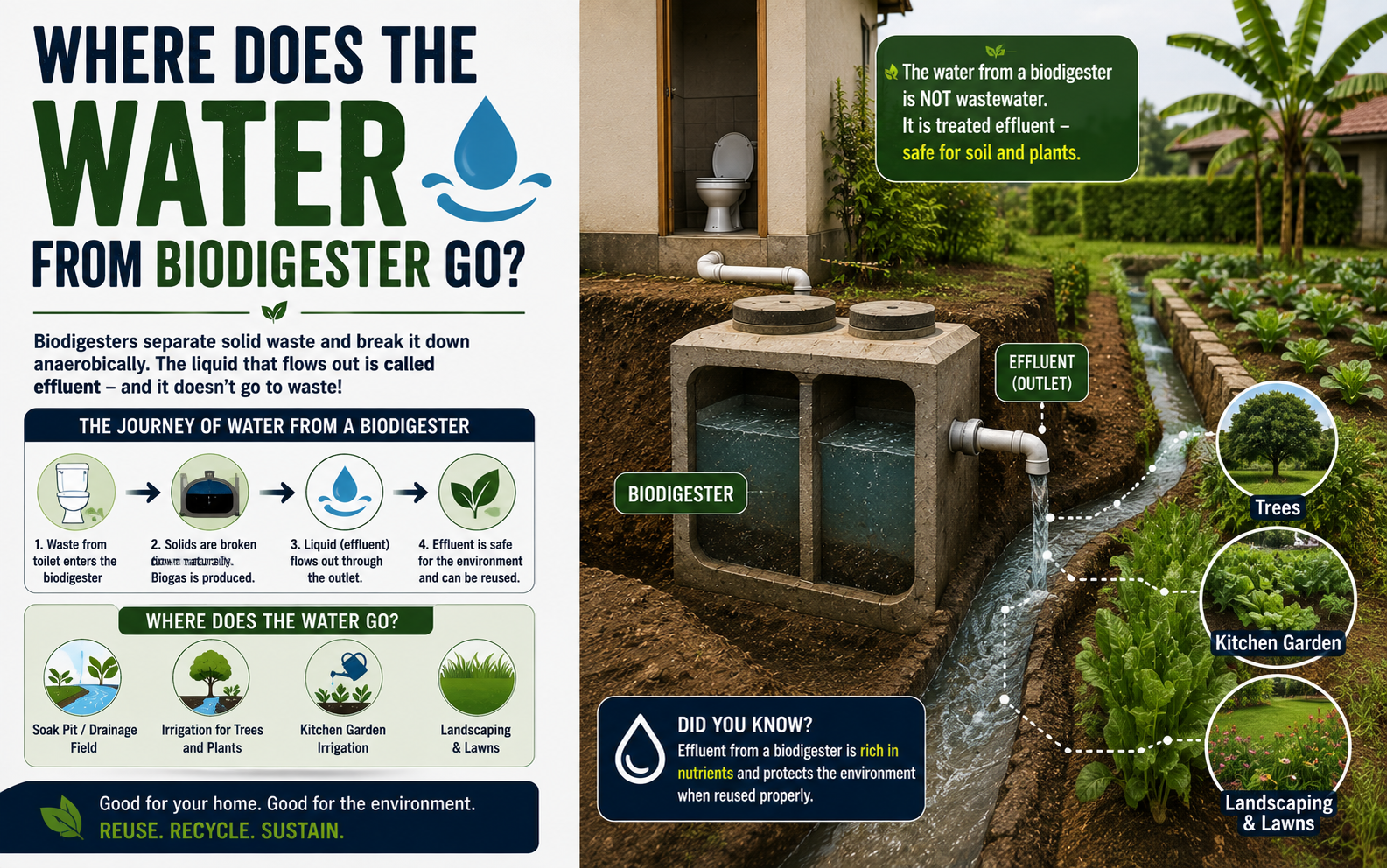
- Water: Treated, odorless wastewater that is piped into a soaking area (soak pit) and easily absorbed into the surrounding ground.
- Air: Harmless, odorless gases that vent out safely.
No sludge. No horrible smells. No need for an exhauster truck. It is a completely self-sustaining, continuous cycle!
Biodigester vs Septic Tank: The Ultimate Showdown
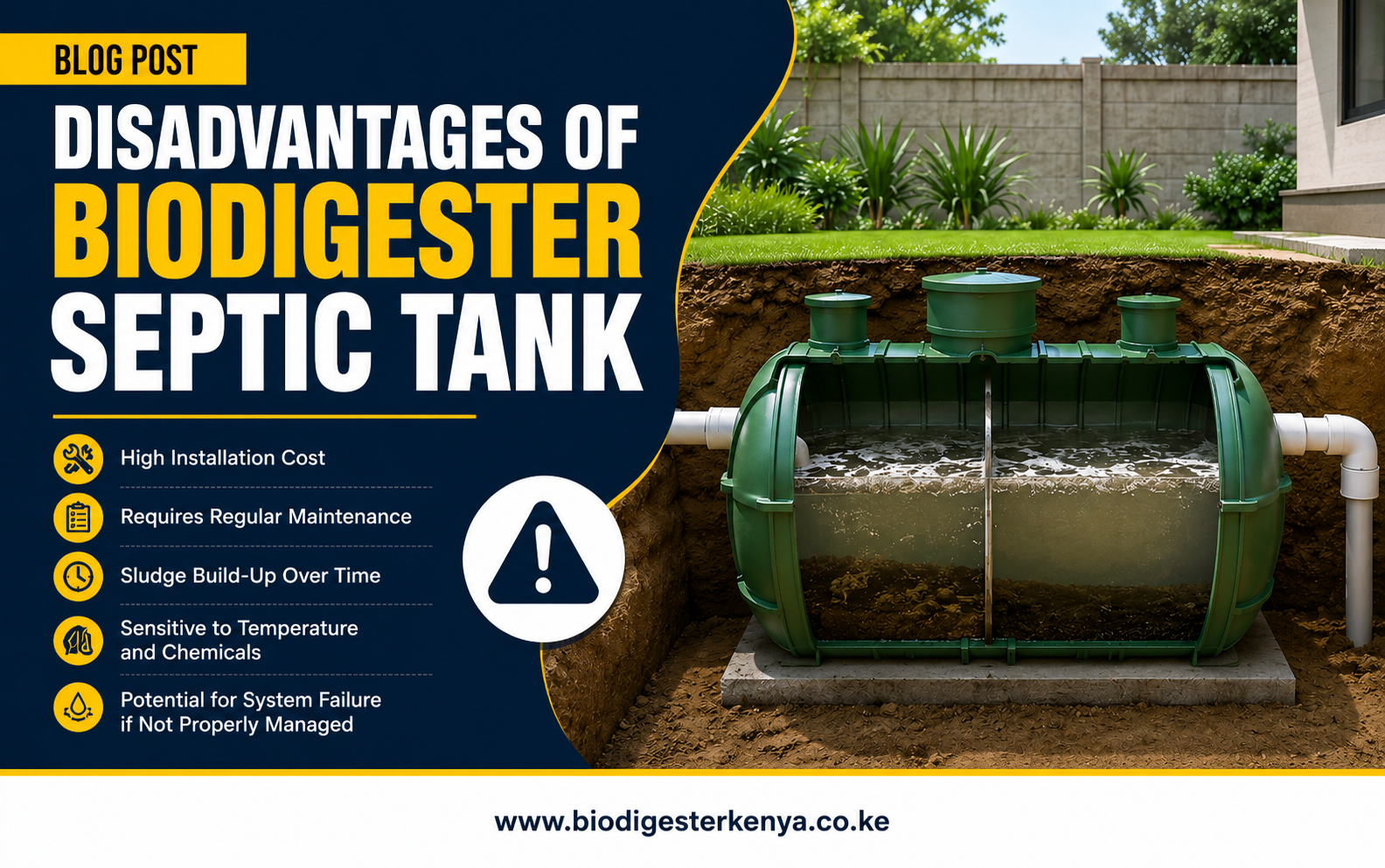
If you are still on the fence about whether to build a traditional concrete septic tank or buy a modern Bio Septic Tank, let’s lay down the facts. We even wrote a deeply detailed guide on biodigester vs septic tank to help Kenyan developers choose wisely.
| Feature | Traditional Septic Tank | Biodigester Septic Tank |
|---|---|---|
| Space Required | Massive space needed (requires deep excavation) | Extremely small footprint (compact) |
| Exhausting / Pumping | Required every 6–24 months (expensive!) | Never requires exhausting if properly maintained |
| Odour | Often smelly, especially during hot seasons | Completely odorless |
| Installation Time | 2 to 3 weeks of masonry and curing | 1 to 3 days flat |
| Environmental Impact | High risk of underground water contamination | Zero pollution; completely eco-friendly |
Let’s be honest: a traditional concrete tank is like a huge bucket with a slow leak. Eventually, it fills up, and you have to pay thousands of shillings to have it pumped out. A Bio Digester Septic Tank, on the other hand, is a treatment plant. It processes the waste on-site, returning clean water back to the soil.
Why Choose a Bio Septic Tank for Your Kenyan Property?
Whether you are constructing a cozy 2-bedroom bungalow in Kikuyu, a multi-story apartment block in Ruiru, or a commercial office space in Nairobi, the benefits of a Biodigester are unmatched.
- Say Goodbye to Exhauster Trucks: This is easily the biggest selling point. You will save hundreds of thousands of shillings over the lifespan of your property by avoiding those noisy, smelly exhauster vehicles.
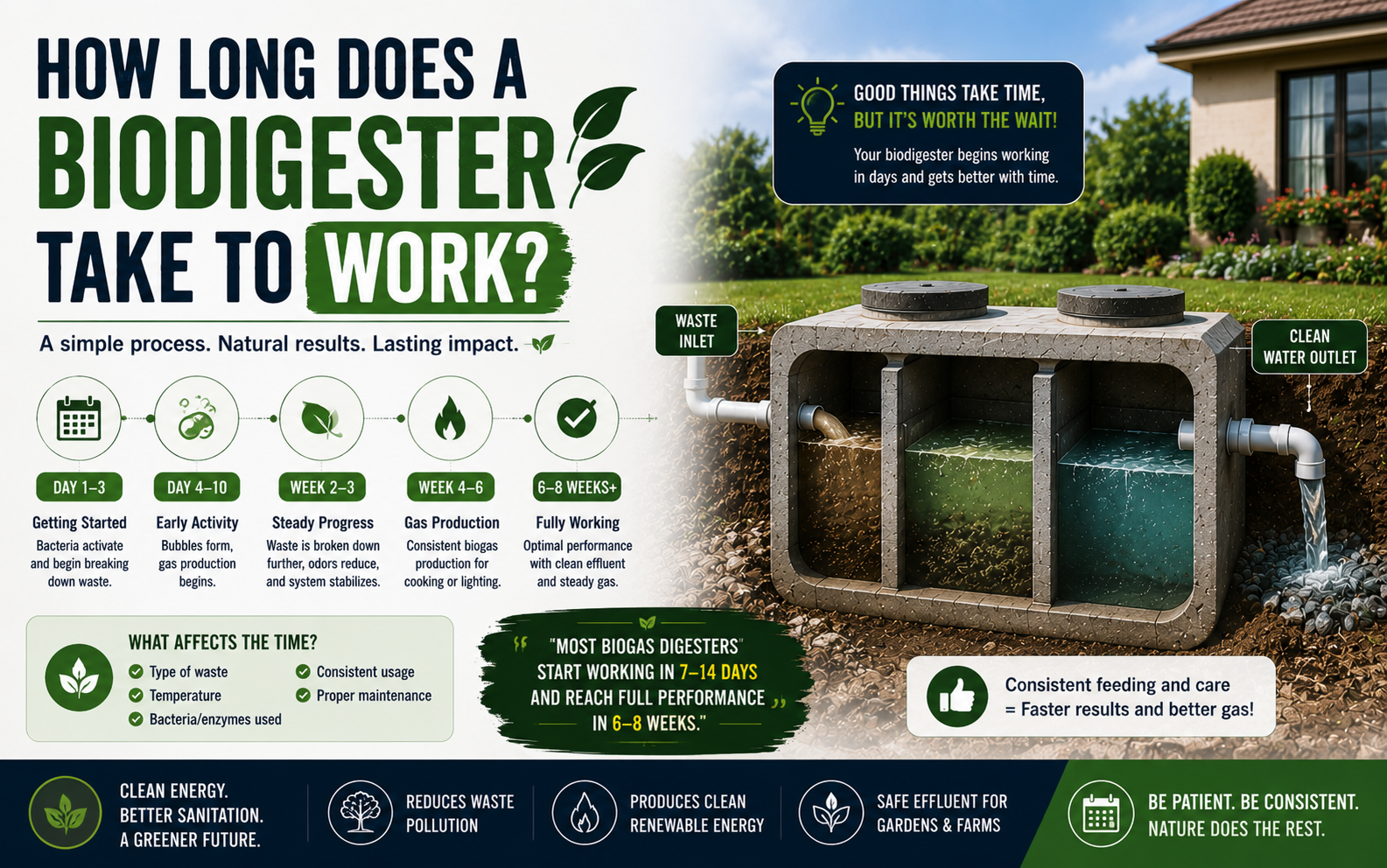
- Rapid Installation: Standard masonry septic tanks take weeks to build. Our team at Bio Digester Kenya can install a precast system and have it fully operational in just 24 to 48 hours!
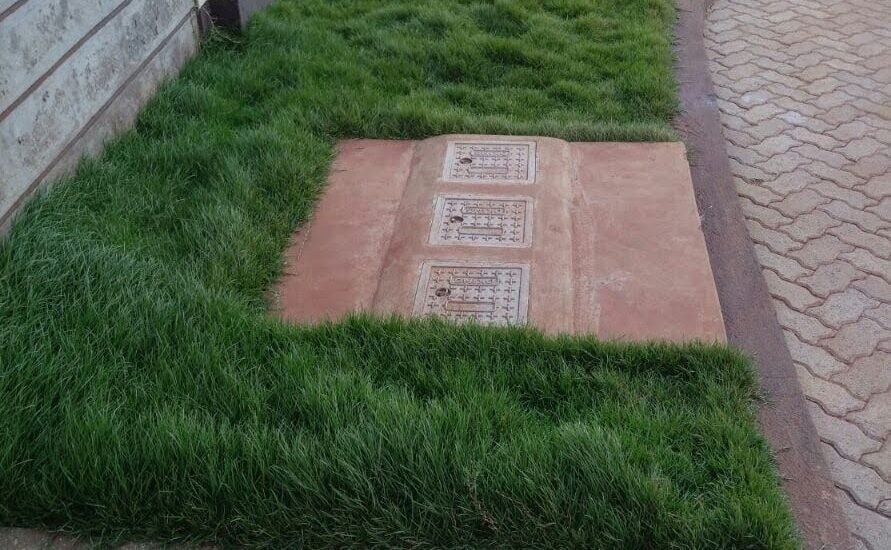
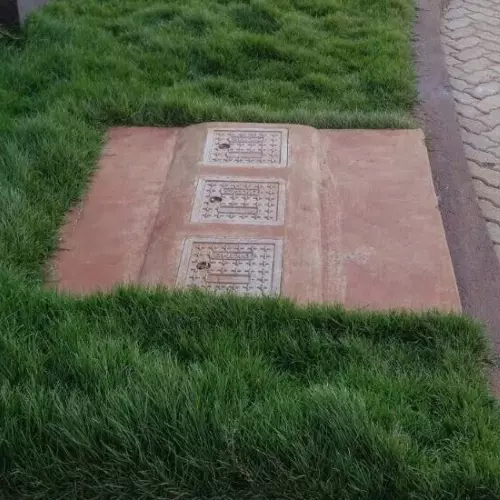
- Aesthetic Preservation: Since the system is small and buried underground, you don’t lose precious yard space. You can plant a beautiful green lawn right over it.
How Much Does it Cost? Cost of Installing a Biodigester in Kenya
Now, let’s talk numbers. What are you actually going to pay to get this revolutionary system up and running?
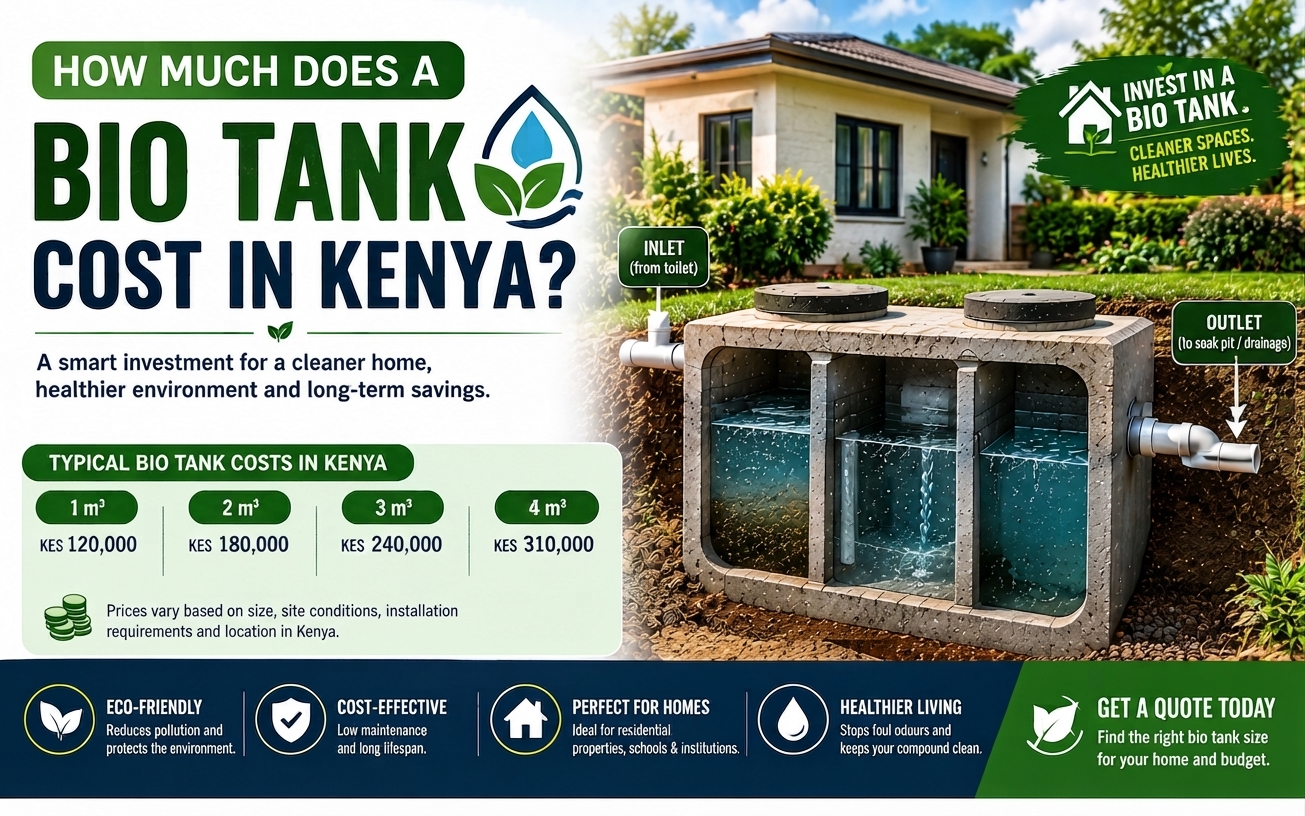
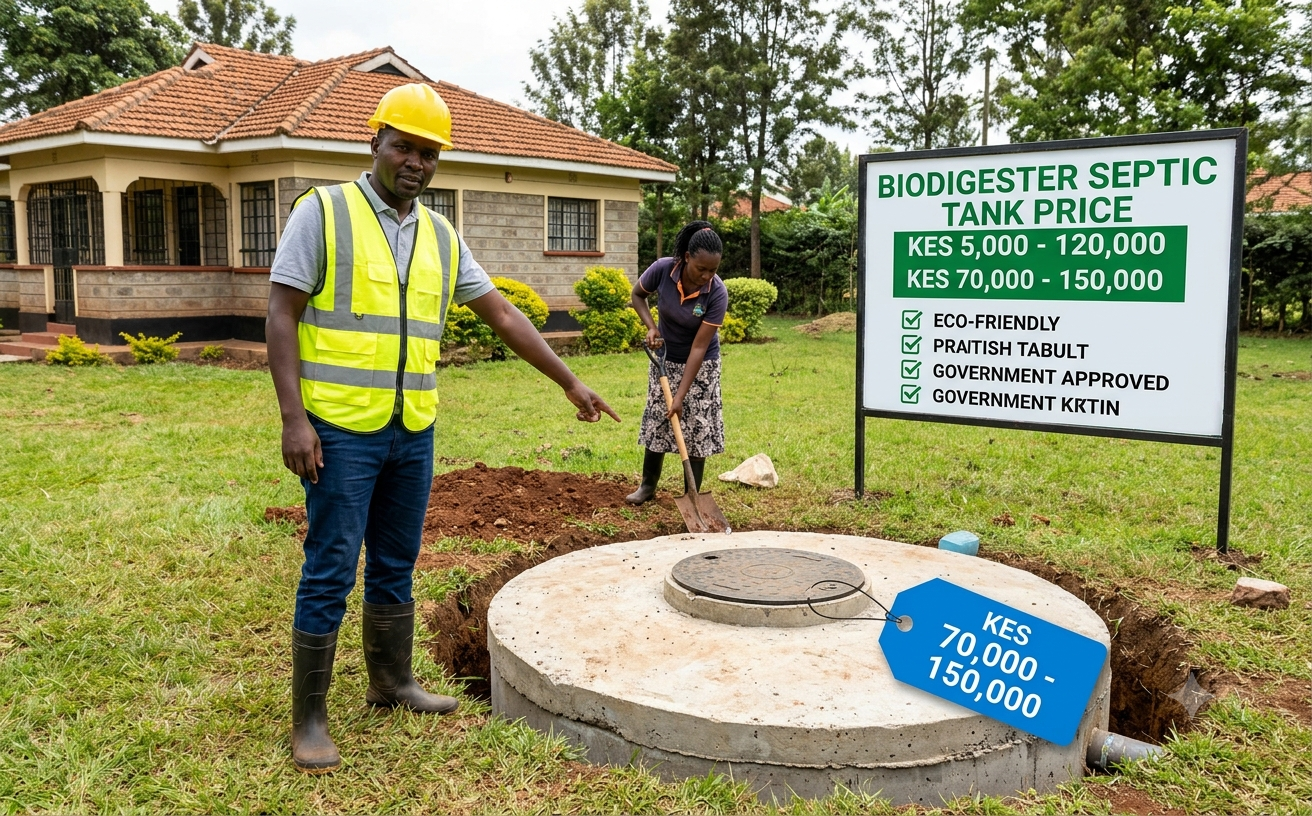
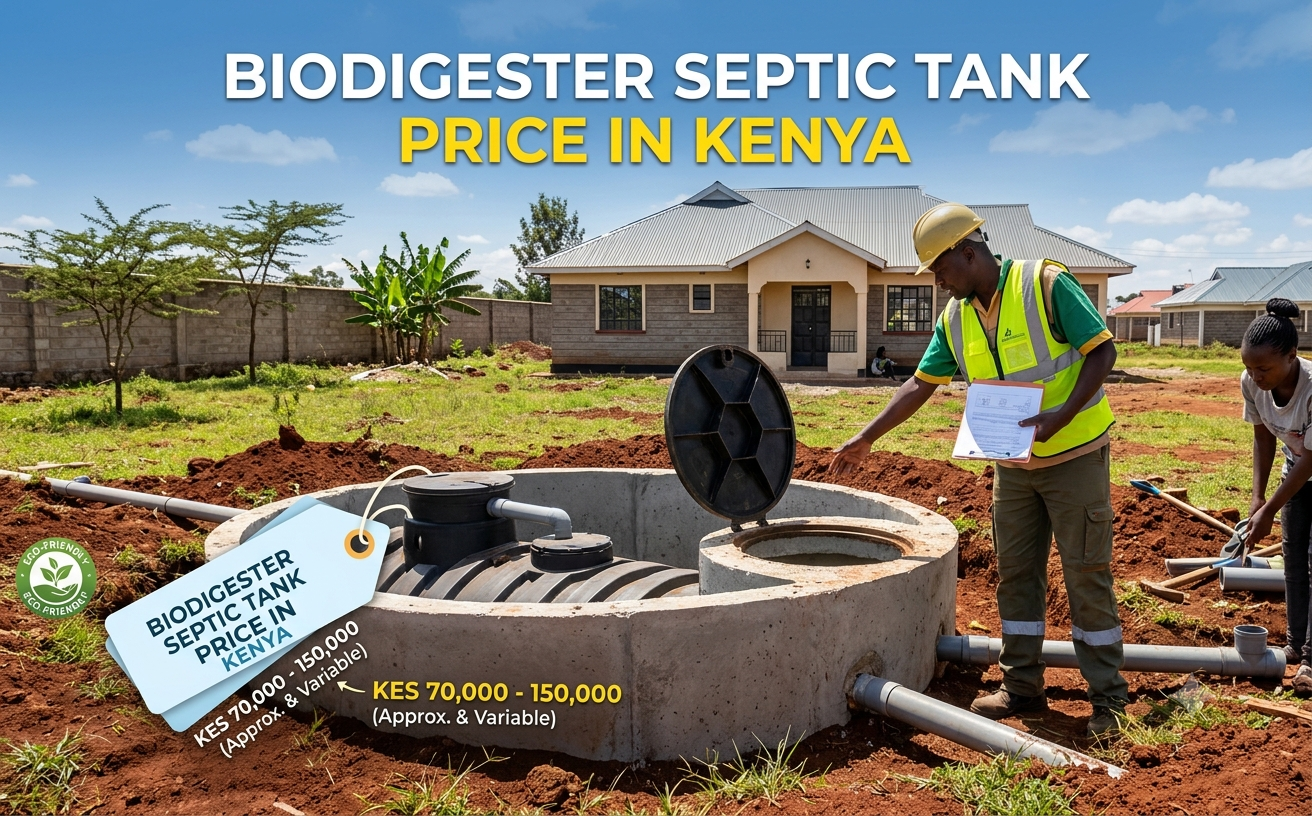
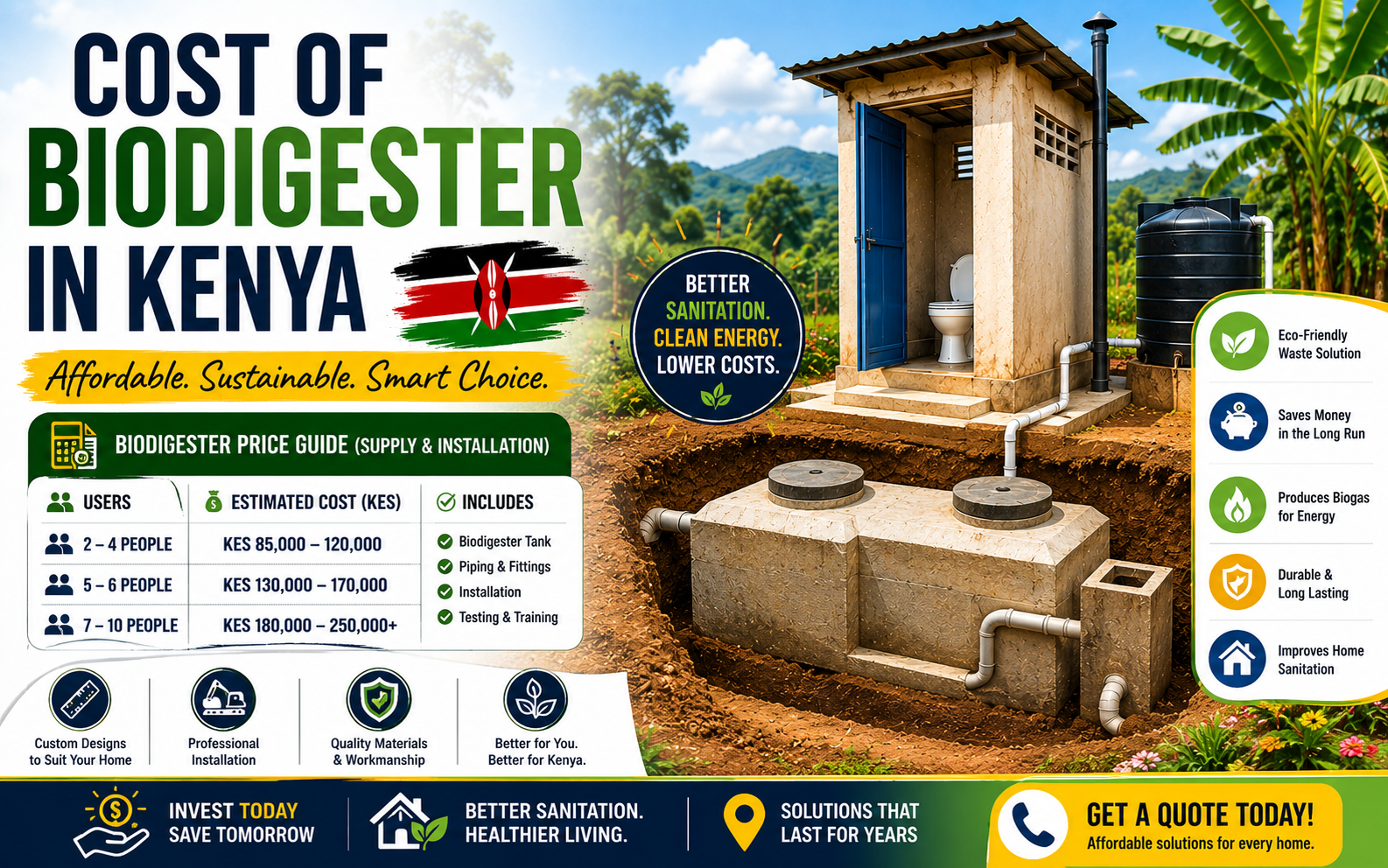
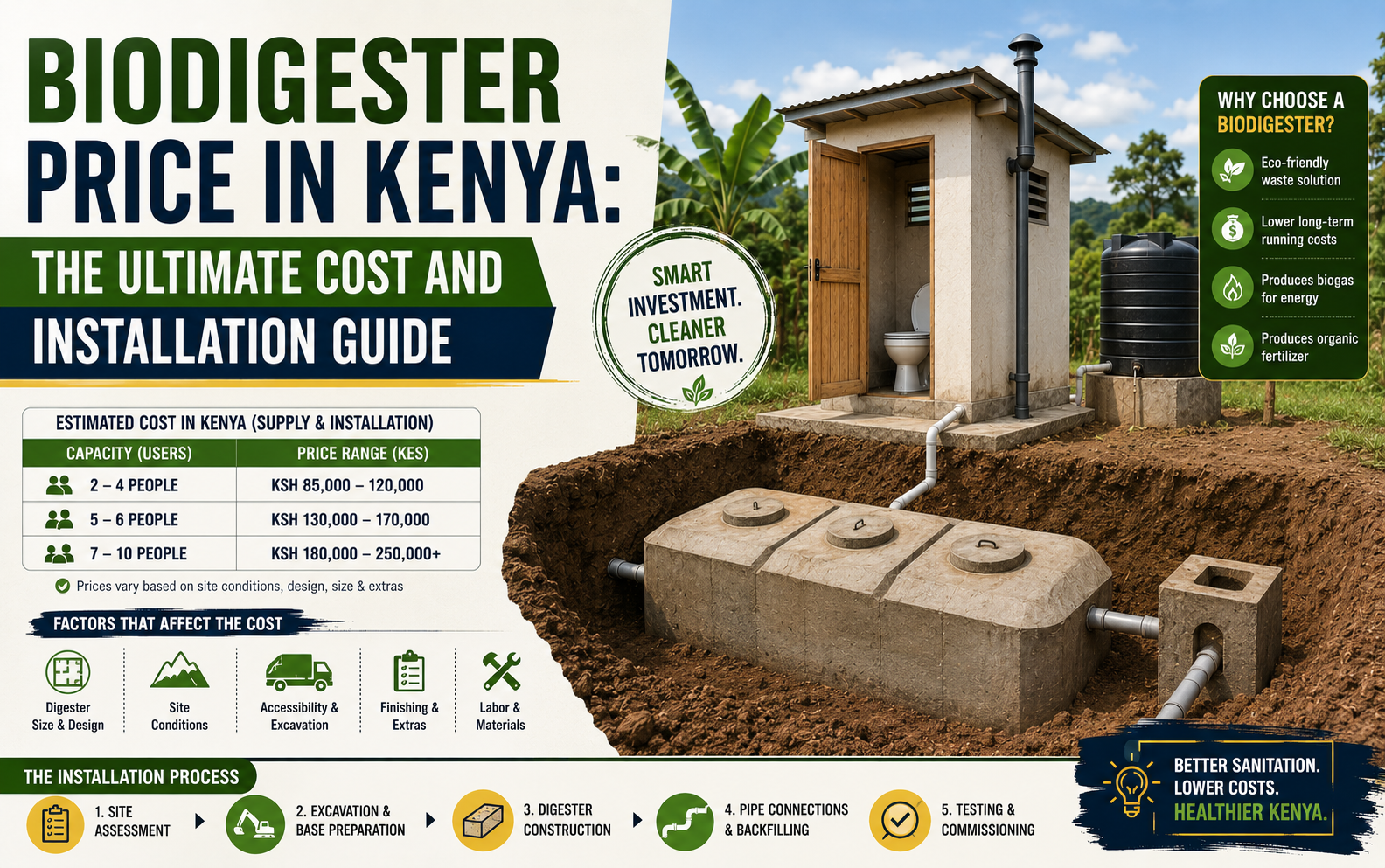
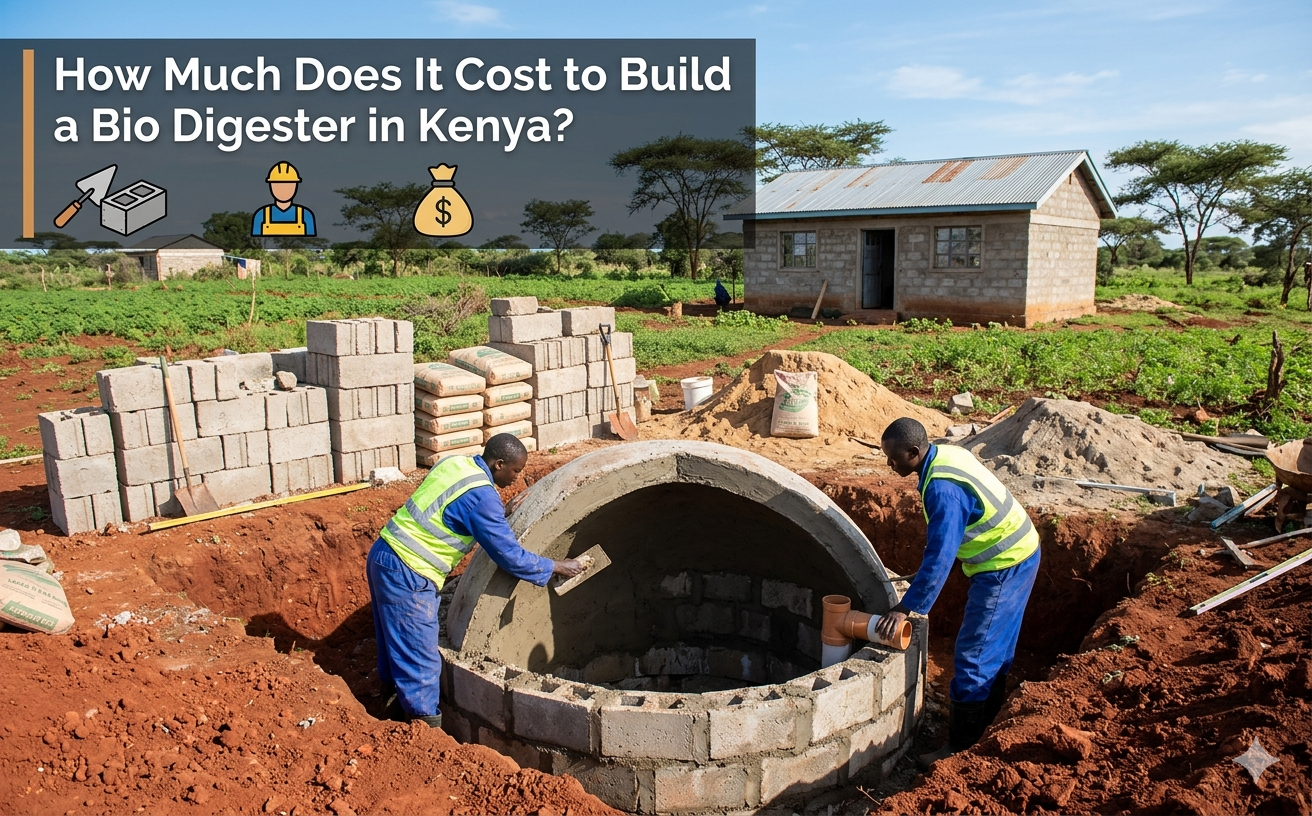
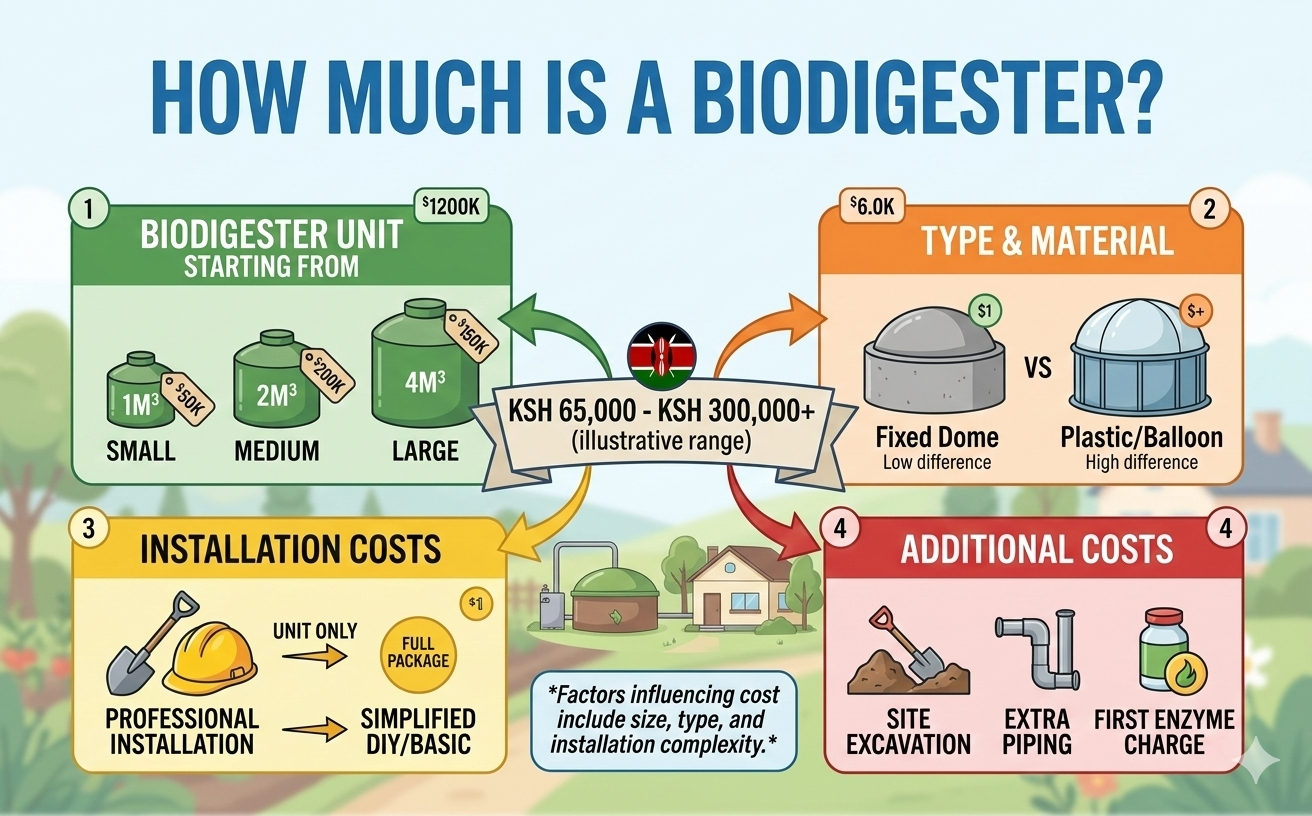
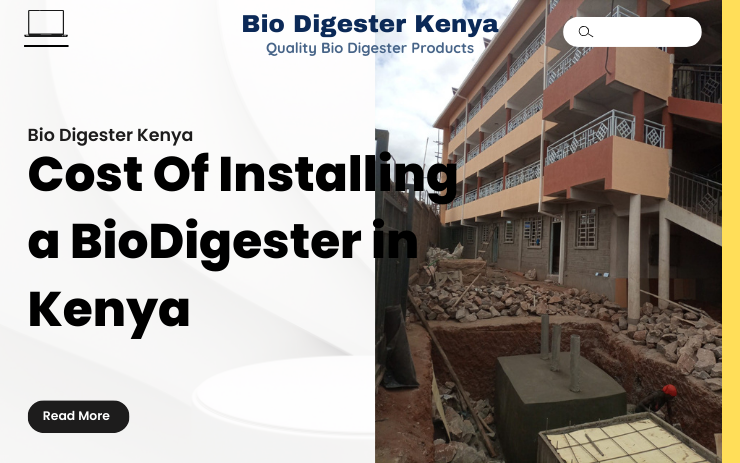
The cost of installing a biodigester septic tank in Kenya generally ranges from KES 95,000 to KES 280,000 for standard residential properties. Commercial systems, school installations, and massive apartment complexes can go higher depending on the custom scale required.
Let’s break down the general pricing based on system capacity.
The General Price Range for Residential Homes
For most residential homes, the size of the system is determined by the number of active users (residents). Here is a quick breakdown of our high-quality options available on our Shop:
- 1M³ Bio Digester (Up to 10 users): Perfect for a small residential home, a 2-bedroom cottage, or a small family. The starting installation cost is KES 95,000. Check out our 1M³ Bio Digester page.
- 2M³ Bio Digester (Up to 20 users): Ideal for medium-sized residential homes, a 4-bedroom villa, or a small plot of flats. The installation cost is KES 160,000. See our 2M³ Bio Digester.
- 3M³ Bio Digester (Up to 30 users): Great for larger apartments, small schools, or commercial office blocks. The cost is KES 220,000. Visit our 3M³ Bio Digester.
- 4M³ Bio Digester (Up to 50 users): Suited for large commercial properties, schools, or gated community estates. Price is KES 280,000+. Check out our 4M³ Bio Digester.
Note: These prices are estimates and can vary based on specific site assessments, soil conditions, and your location within Kenya.
Commercial Spaces: Scaling Up the System
For commercial projects, we custom-design large-scale systems to handle heavy daily usage. Because commercial waste contains different loads (and often kitchen grease), we integrate advanced grease traps alongside our massive systems to prevent clogging.
If you have a commercial project, please reach out to us directly for a custom site survey and quote via our Contact us page.
Key Factors Influencing the Cost of Installation
Why does one homeowner pay KES 95,000 while another pays KES 280,000? Let’s peel back the layers and look at the real variables that affect your final invoice.
1. System Size and Capacity
As shown in our price breakdown, the bigger the volume of waste your property generates, the larger the tank you will need.
Installing an undersized biodigester to save money is a recipe for disaster; the bacterial enzymes won’t have enough time to digest the incoming waste before it gets pushed out into the soaking area.
2. Ground Conditions, Soil Type, and Soak Pit Prep
The effluent (treated water) from the system goes to a soak pit. If your property is in an area with highly absorbent, sandy soil (like parts of Coastal Kenya or Nakuru), digging a small, simple soak pit is cheap and fast.
However, if your property is located in an area with heavy, non-porous black cotton soil (like Kitengela, Syokimau, or Ruai), we have to build a more extensive, gravel-lined French drain or a larger soaking field to ensure the ground successfully absorbs the water. This added labor and materials will slightly raise the installation price.
3. Type of Biodigester: Precast Bio Digesters vs. In-Situ
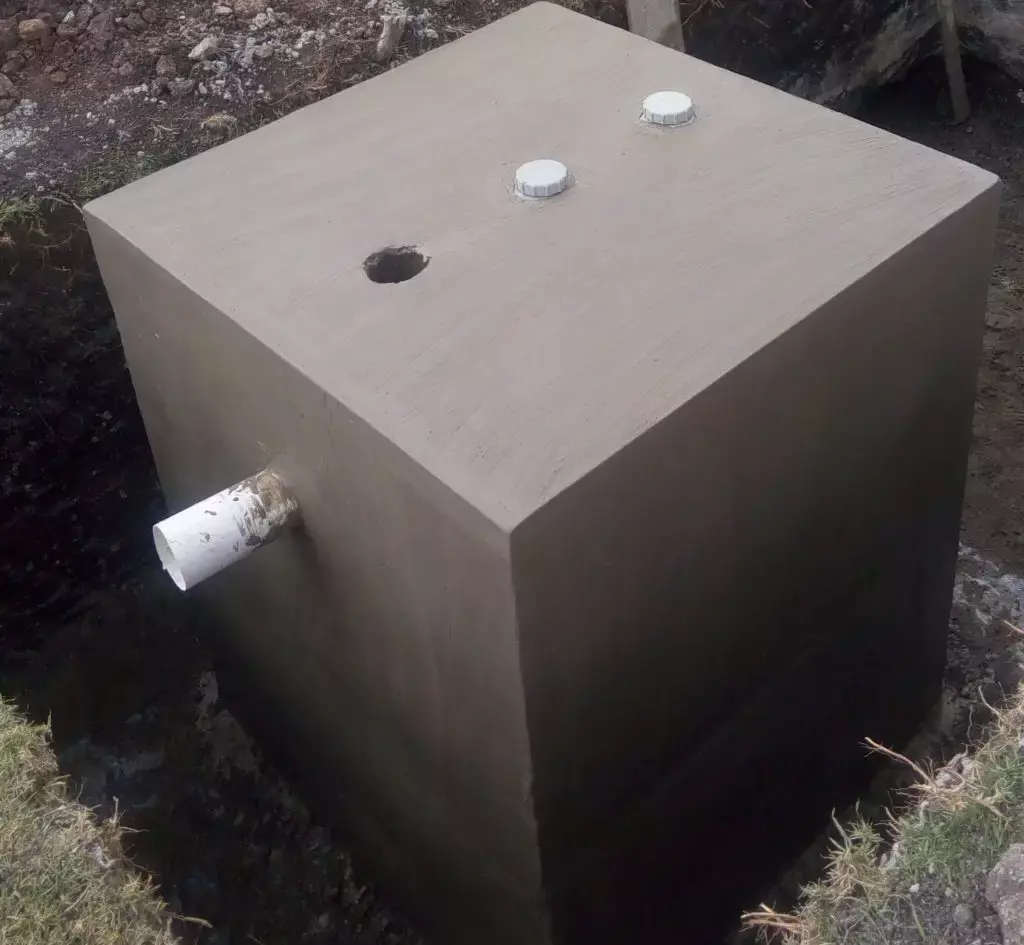
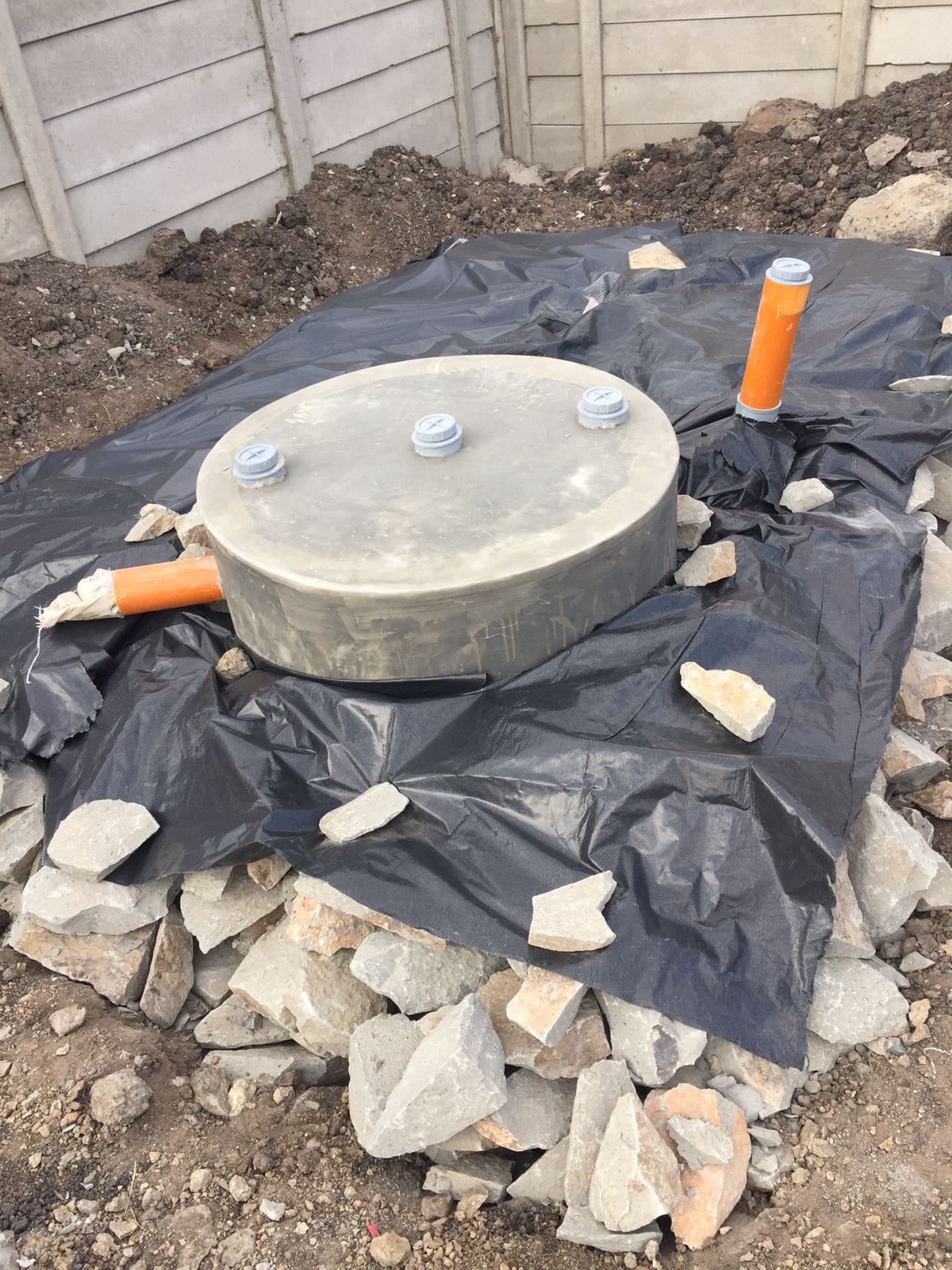
At Bio Digester Kenya, we specialize in ultra-durable, engineered Precast Bio Digesters.
These are manufactured under strict factory quality controls and delivered to your site ready for drop-in installation.
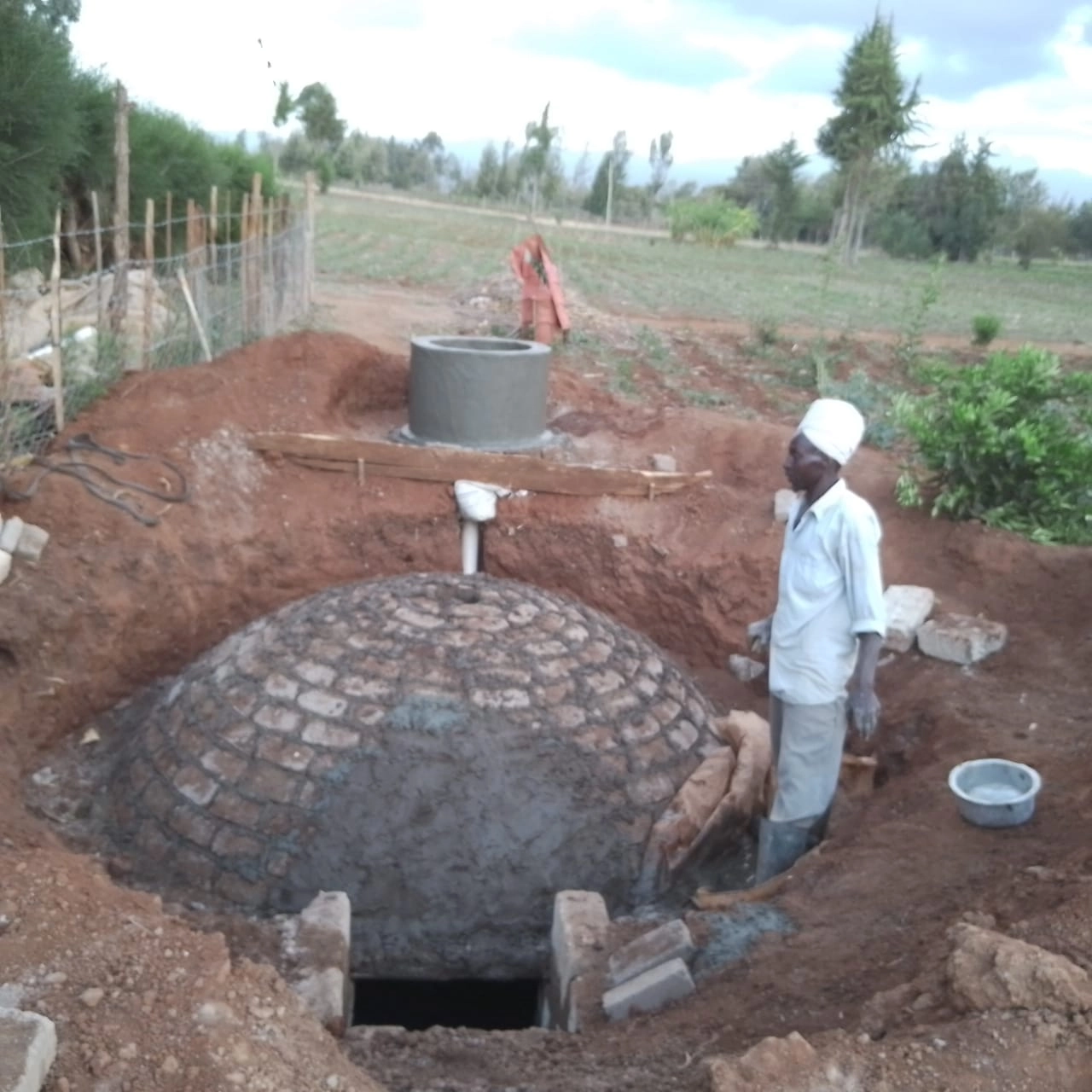
They are structurally stronger, leak-proof, and faster to install than systems cast directly on-site (in-situ), which require extensive masonry work.
4. Labor, Plumbing, and Transport
If your construction site is far from Nairobi, transport costs for the precast concrete slabs or heavy tanks will play a role in the total price.
Additionally, if you require comprehensive Plumbing Services to redirect your existing sewer pipes from an old septic tank to the new biodigester, that labor will be factored into the final quote.
The Maintenance Secret: Keeping Costs Low with Bio Digester Bacteria
One of the coolest things about a biodigester septic tank is how incredibly cheap it is to run. Unlike traditional septic systems that demand costly exhaust trucks, a biodigester only needs a regular supply of biological helpers to stay healthy.
Over time, heavy household chemicals, bleach, disinfectants, and harsh soaps can kill off the natural micro-organisms living inside your tank. When this happens, the waste stops breaking down, and bad odors can begin to develop.
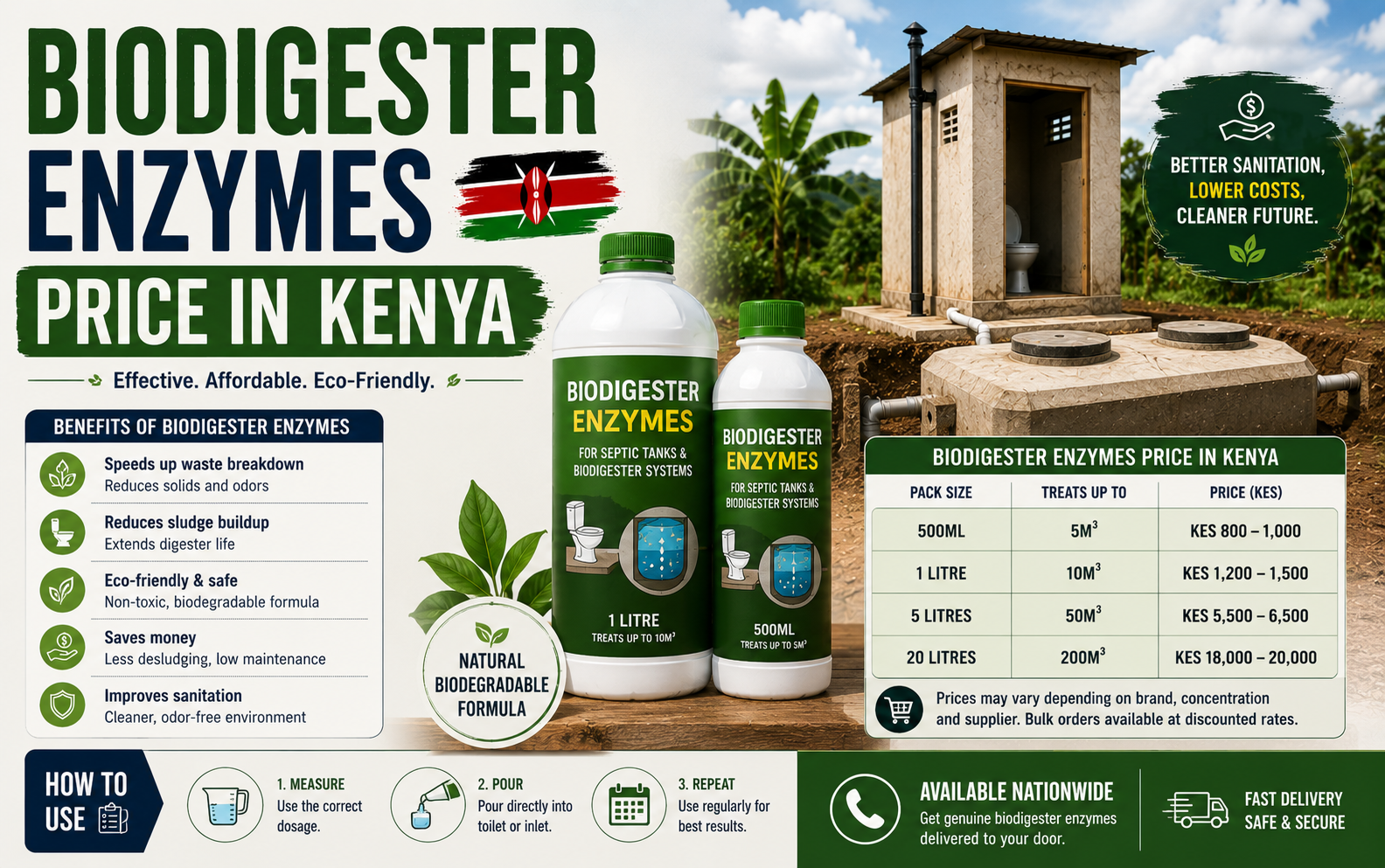
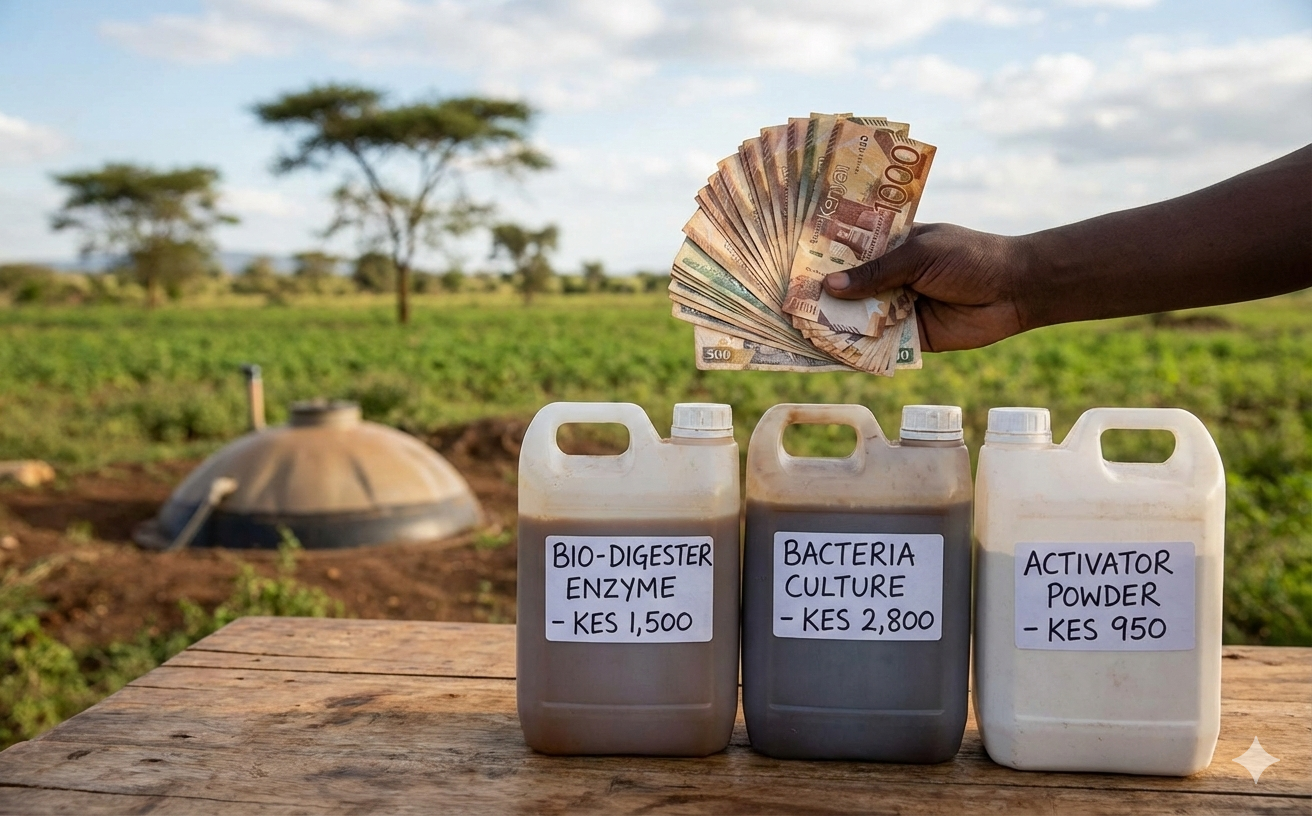
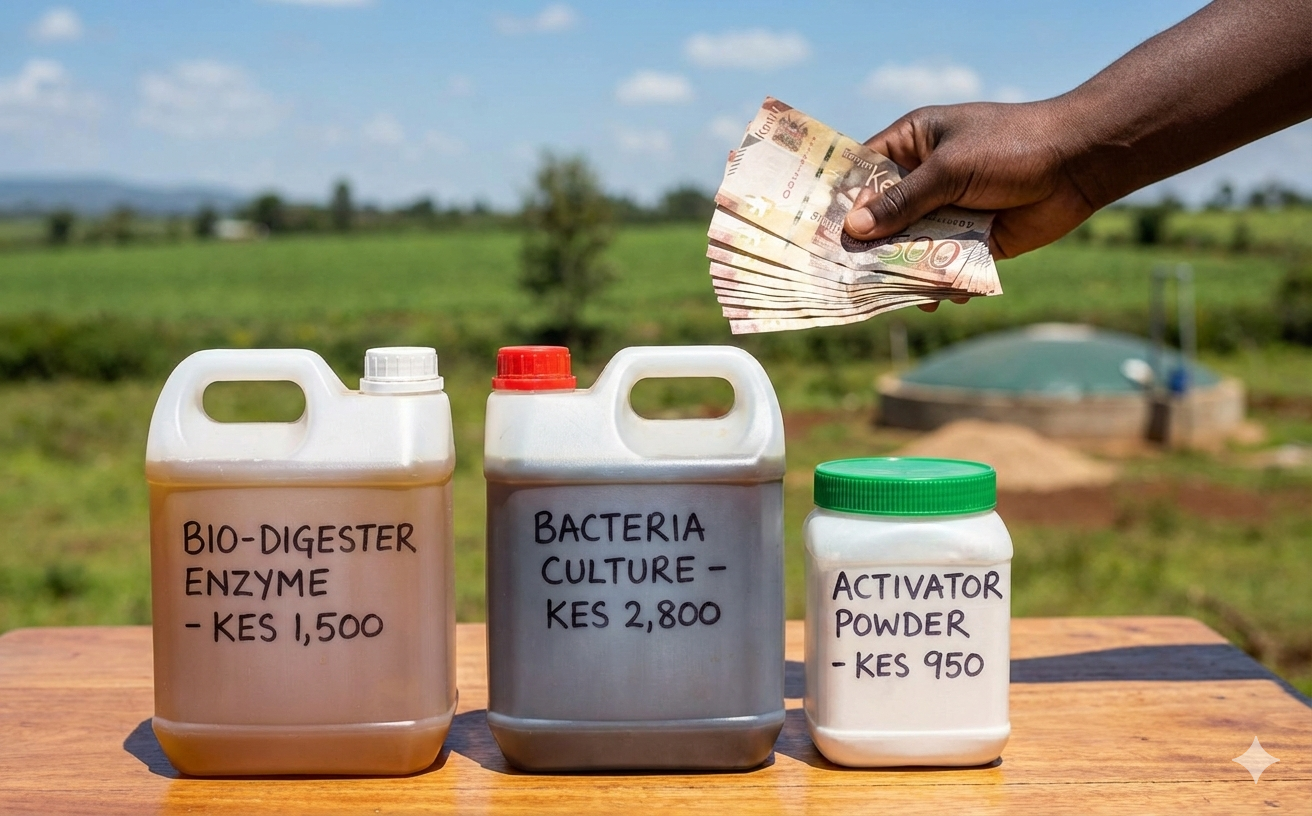
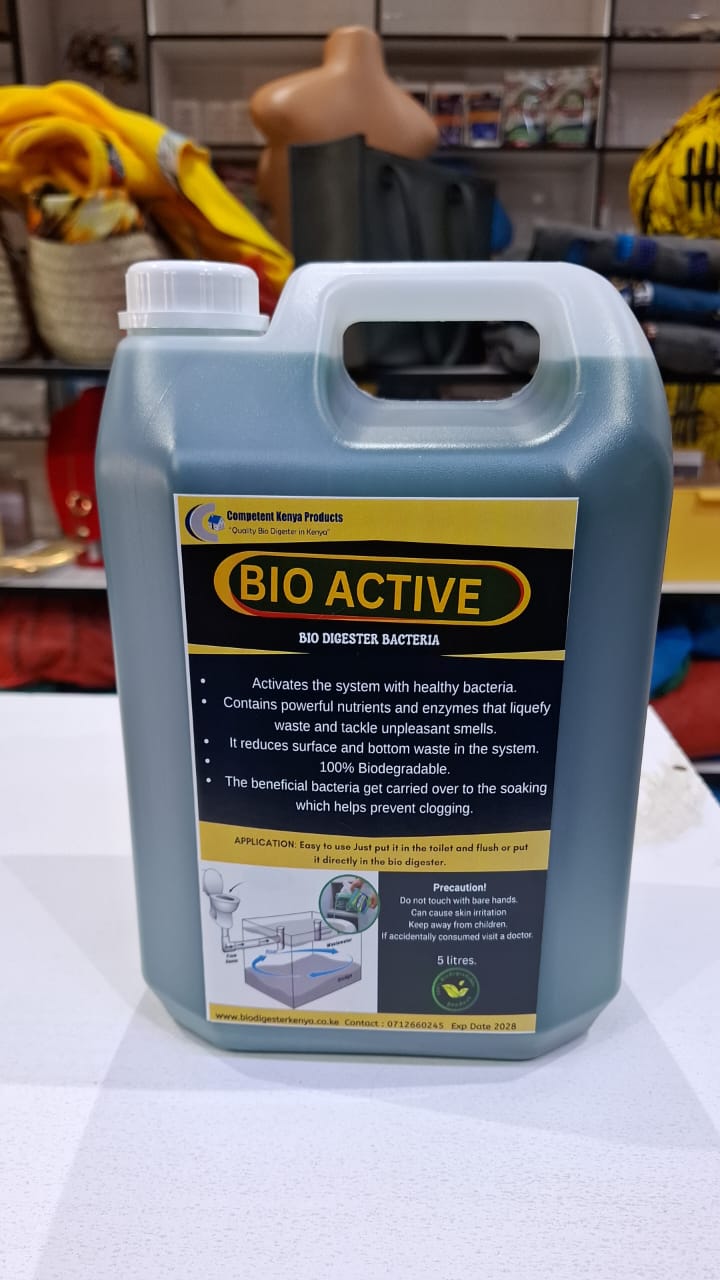
The solution? Simple! You just need to replenish the system with our premium Bio Digester Bacteria – 400g or our specialized Septic Tank Bacteria – 250g.
Every few months, simply flush a packet of our highly concentrated bacteria down any toilet in your house. It travels to the biodigester, repopulates the colony, and keeps the system digesting waste flawlessly. It is incredibly cheap, cost-effective, and guarantees you will never have to deal with nasty blockages or bad smells.
Why You Need Professionals: DIY vs. Hiring Bio Digester Kenya
We get it. The internet is full of “Do It Yourself” videos showing how to construct a biodigester using basic plastic tanks. But let us issue a friendly warning: waste management is not a weekend DIY project.
An incorrectly installed biodigester can lead to:
- Structural Collapse: Ground pressure can easily crush low-quality plastic tanks or poorly mixed concrete.
- Environmental Fines: If untreated sewage leaks into nearby water tables, you could face massive fines from NEMA (National Environment Management Authority).
- System Clogging: If the internal baffles are angled incorrectly, solid waste will escape directly into your soak pit, clogging the soil and rendering your entire system useless.
Why take the risk? At Bio Digester Kenya, we have years of hands-on experience designing, manufacturing, and installing top-tier systems across Kenya.
Our highly trained team handles the excavation, plumbing connections, tank placement, and biological seeding.
We leave you with a fully functioning, worry-free system backed by a rock-solid structural guarantee. Learn more about our specialized Bio Digester Installation services.

Our Step-by-Step Installation Process
Curious about how we do it? We don’t believe in secrets. Here is a quick look at how our experienced crew installs your system:
- Site Inspection: We visit your property to assess the soil type, gradient, and the best location for the digester and soak pit.
- Excavation: Our team digs a compact pit for the biodigester tank and a secondary pit for the soaking area.
- Plumbing Integration: We connect your home’s main sewer lines directly to the inlet of the new digester.
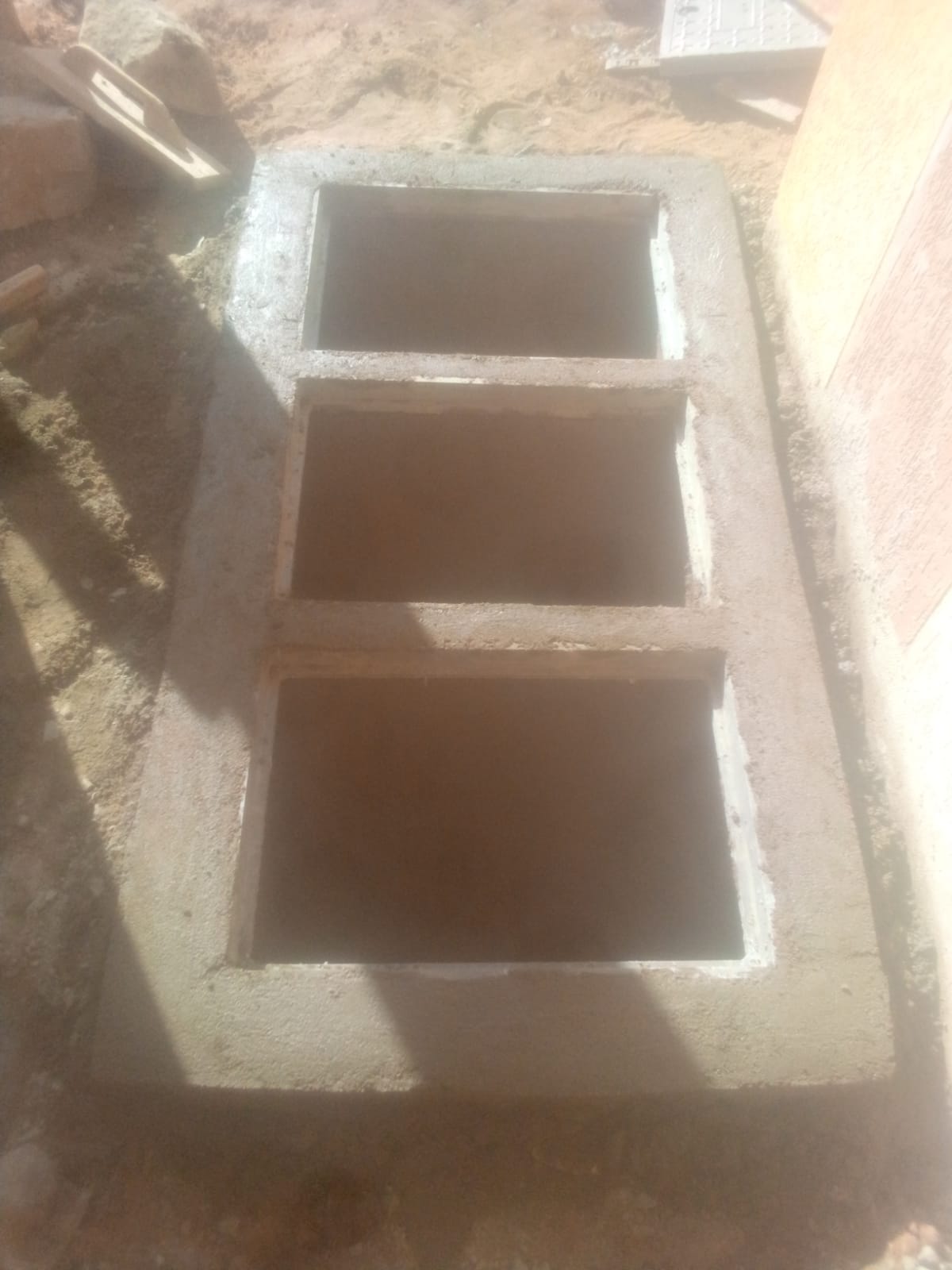
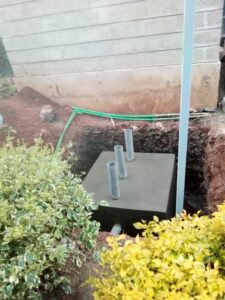
- Tank Placement: We carefully lower our engineered precast concrete chamber into the pit.
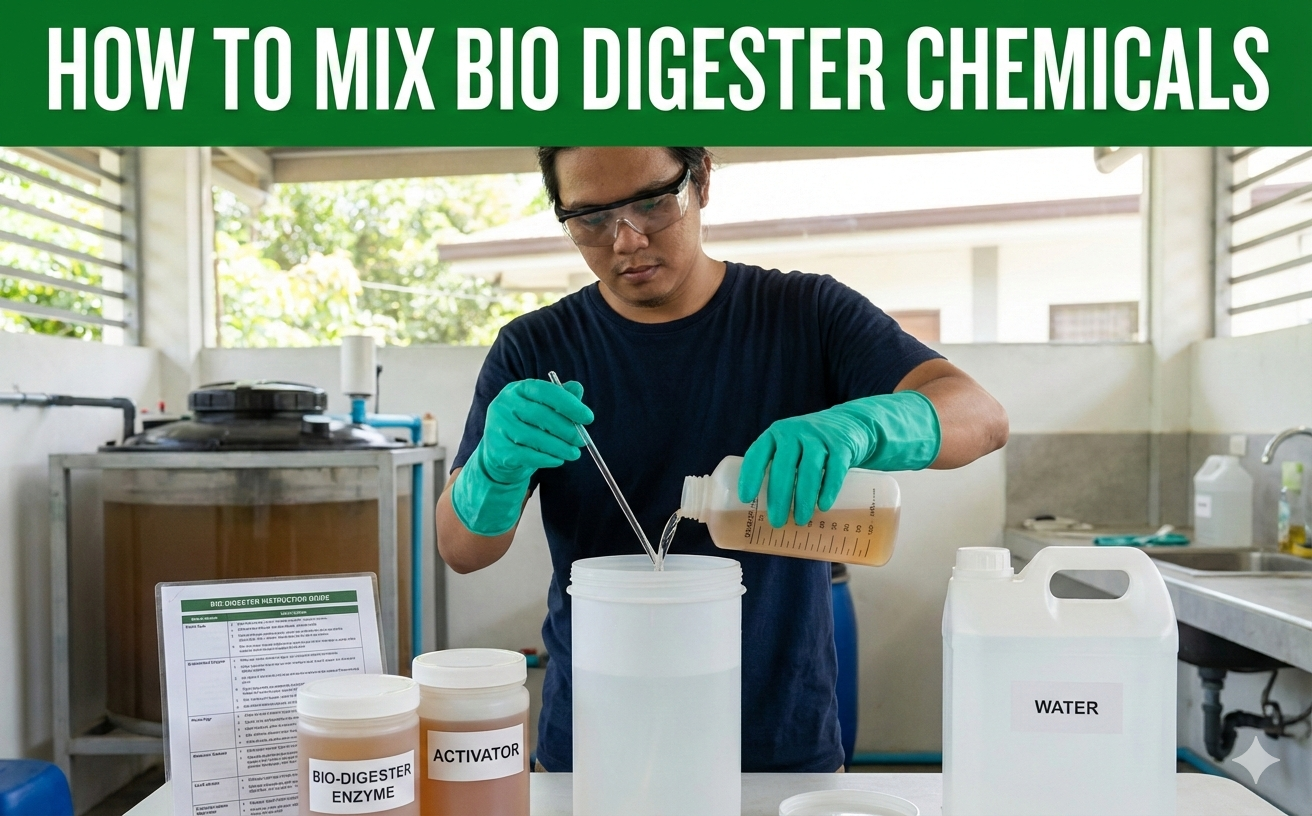
- Seeding with Enzymes: We add a powerful starter dose of our premium Bio Digester Bacteria to kickstart the biological decomposition process.
- Backfilling & Soak Pit Setup: We backfill the soil around the tank and prepare the gravel-filled soaking area so the treated water absorbs smoothly into the earth.
- Testing: We run water through the system to make sure the flow is absolutely perfect.
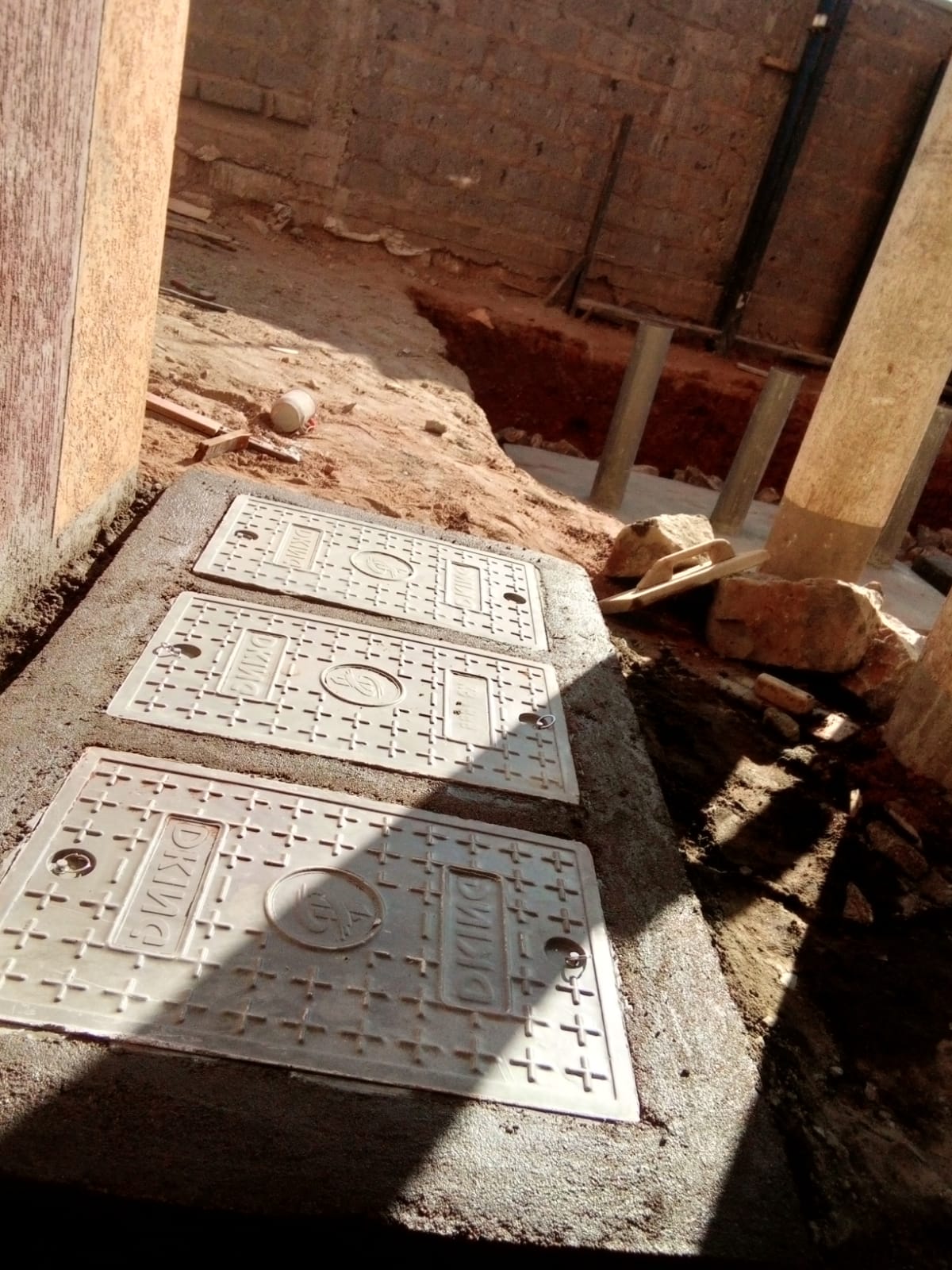
Check out our beautiful completed projects in our Bio Digester Gallery!
Conclusion: Saving Money and Saving the Environment
Investing in a Biodigester is one of the smartest financial decisions you can make as a property owner in Kenya.
While the initial cost of installing a biodigester might seem comparable to building a large masonry septic tank, the long-term savings are massive.
You completely eliminate monthly exhauster fees, avoid foul smells, and preserve the value of your beautiful land.
At Bio Digester Kenya, we are dedicated to providing the highest quality waste management solutions across the country. We don’t just sell systems—we build long-lasting relationships based on trust, quality engineering, and premium customer service.
Are you ready to make the switch? Let us give you a personalized quote and build a system that will last for decades.
Contact Us Today!
- Phone: Call +254 712 660 245
- Email: Email info@biodigesterkenya.co.ke
- Website: Bio Digester Kenya
- Explore Our Services: View our full list of Services and plumbing packages.
Let’s keep Kenya clean, green, and modern—one smart biodigester at a time!
Frequently Asked Questions
1. How long does a biodigester last in Kenya?
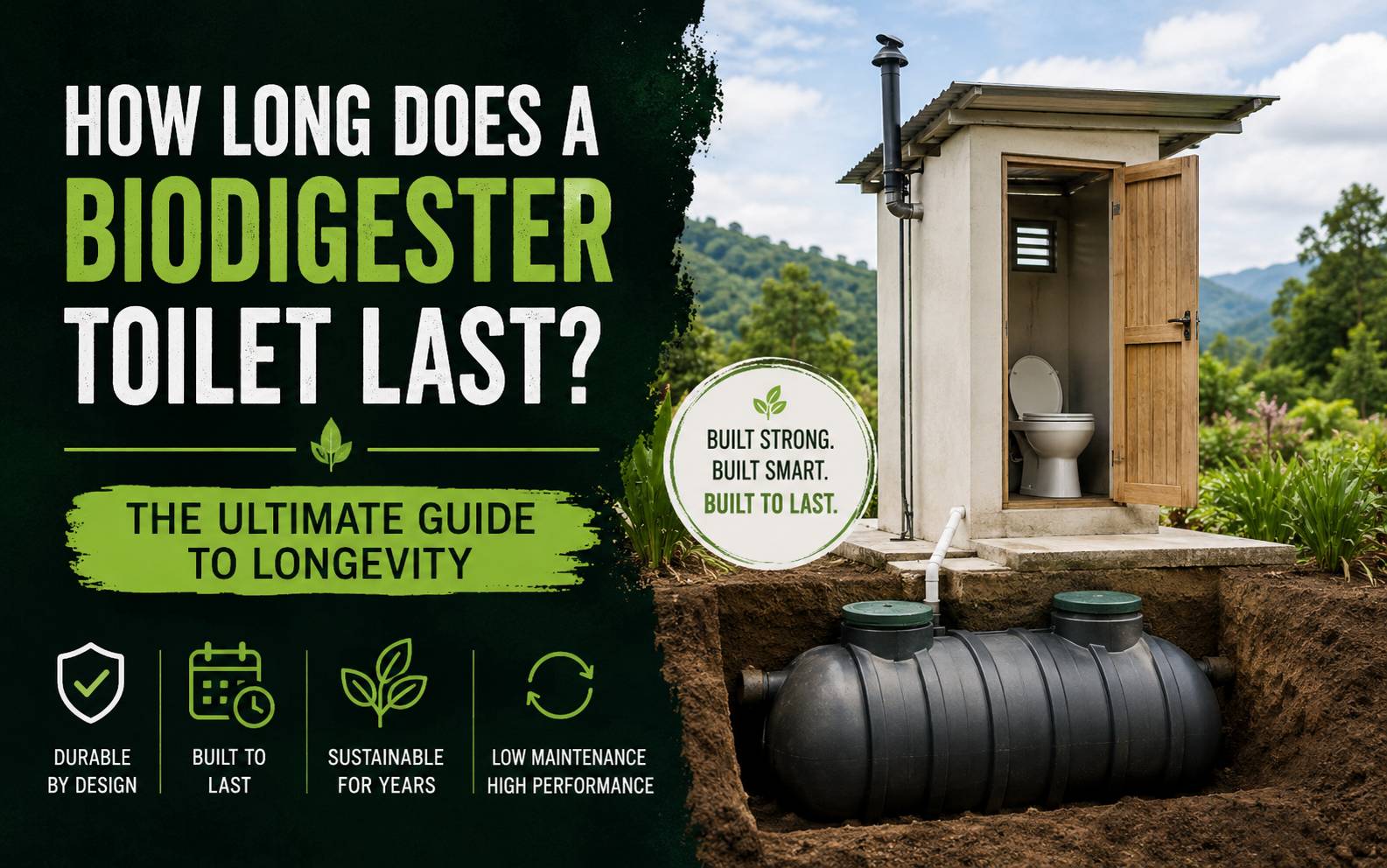
A professionally installed precast bio digester from Bio Digester Kenya can easily last over 30 to 50 years. Because the structural concrete is engineered to withstand extreme soil pressure and the interior utilizes natural biological processes, there are no mechanical parts to wear down or break.
2. Can I use toilet cleaning chemicals like Harpic or JIK with my biodigester?
Yes, but you should use them in moderation. Heavy, concentrated chemical cleaners can kill off the helpful Bio Digester Bacteria inside the tank. We recommend using eco-friendly, biodegradable cleaners where possible. If you must use harsh chemicals, simply replenish your system’s bacteria every 3 to 6 months using our affordable bacterial powder packets available on our Shop.
3. Does a biodigester smell?
Not at all! Unlike traditional septic tanks that generate highly toxic, smelly sulfur gases, a properly designed and chemically active biodigester breaks down waste anaerobically, leaving behind only odorless water and harmless, scent-free gases. If your system ever develops an odor, it is a sign that the bacterial colony has died off and needs to be re-seeded.
4. What happens to the water that comes out of the biodigester?
The water that exits the biodigester is fully treated, completely odorless, and free of harmful pathogens. This water is piped directly into a soaking area (or soak pit) where it is naturally absorbed by the surrounding soil. In some advanced commercial setups, this treated water can even be recycled for garden irrigation!
5. Can a biodigester handle kitchen waste?
Yes, but with one major condition: kitchen wastewater must go through a grease trap before entering the main biodigester septic tank. Cooking oils and grease do not break down easily and can form a thick layer that suffocates the beneficial bacteria. We highly recommend installing a grease trap and maintaining it with our Grease Trap & Kitchen Drain Bacteria.