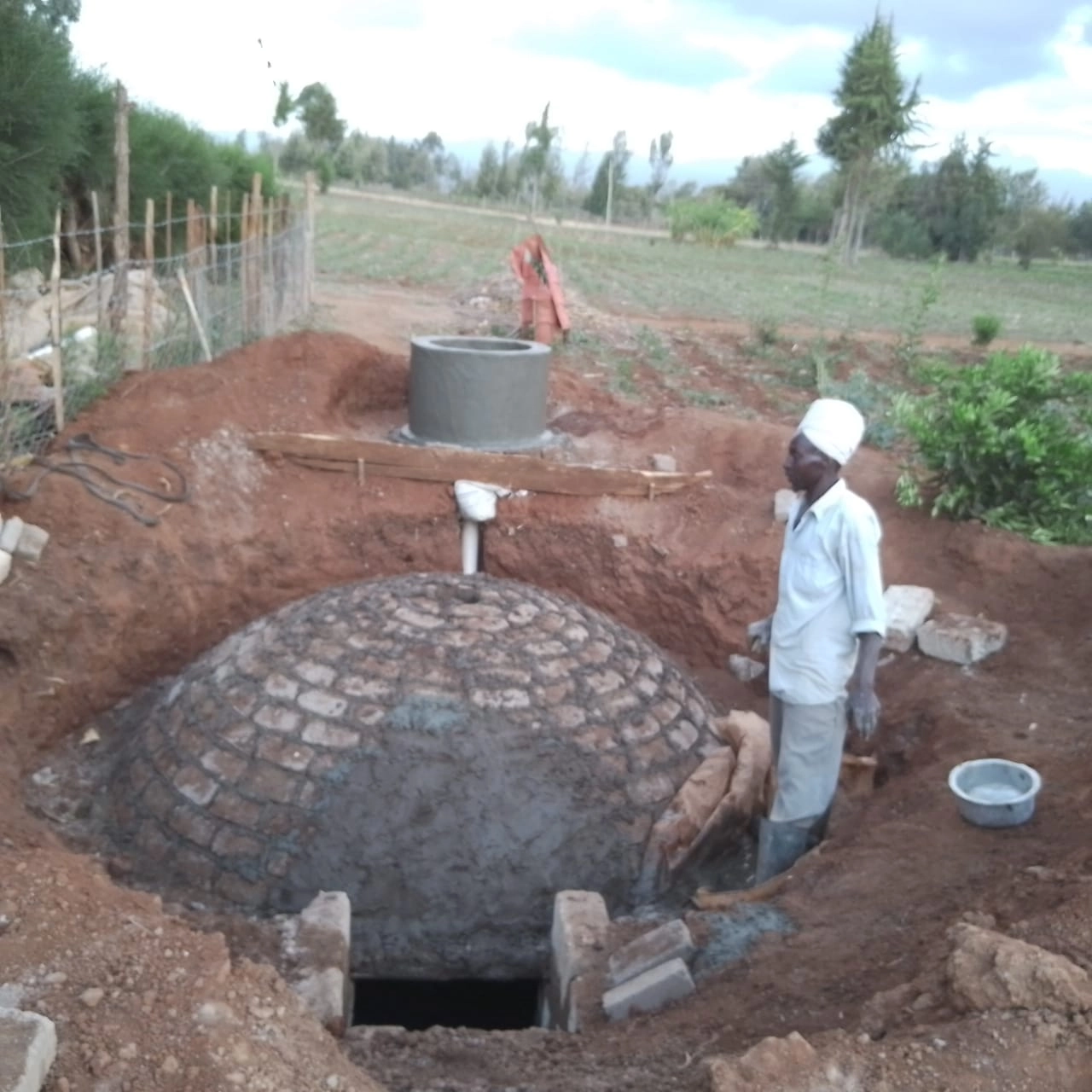
Are you planning to build your dream home in Nairobi, Kiambu, Machakos, or anywhere else in Kenya?
If so, you have probably spent sleepless nights thinking about how to handle human waste.
Let’s be honest: nobody likes to think about sewage, but ignoring it is a recipe for a smelly, expensive disaster.
For decades, the default solution has been the traditional concrete septic tank.
But let’s face it, those massive, concrete monsters are expensive to build, swallow up valuable yard space, and require those noisy, foul-smelling exhauster trucks every few months. Who wants that?
Fortunately, modern technology has brought us a game-changing alternative: the Biodigester.
If you are wondering about the biodigester price in Kenya and whether this system is the right fit for your property, you have landed in the perfect place.
At Bio Digester Kenya, we specialize in designing, installing, and maintaining modern waste systems that save you money and keep your compound pristine.
Let’s dive deep and explore everything you need to know about biodigester systems, how they compare to traditional setups, and the exact costs of installing one today.

What is a Biodigester Septic Tank anyway?
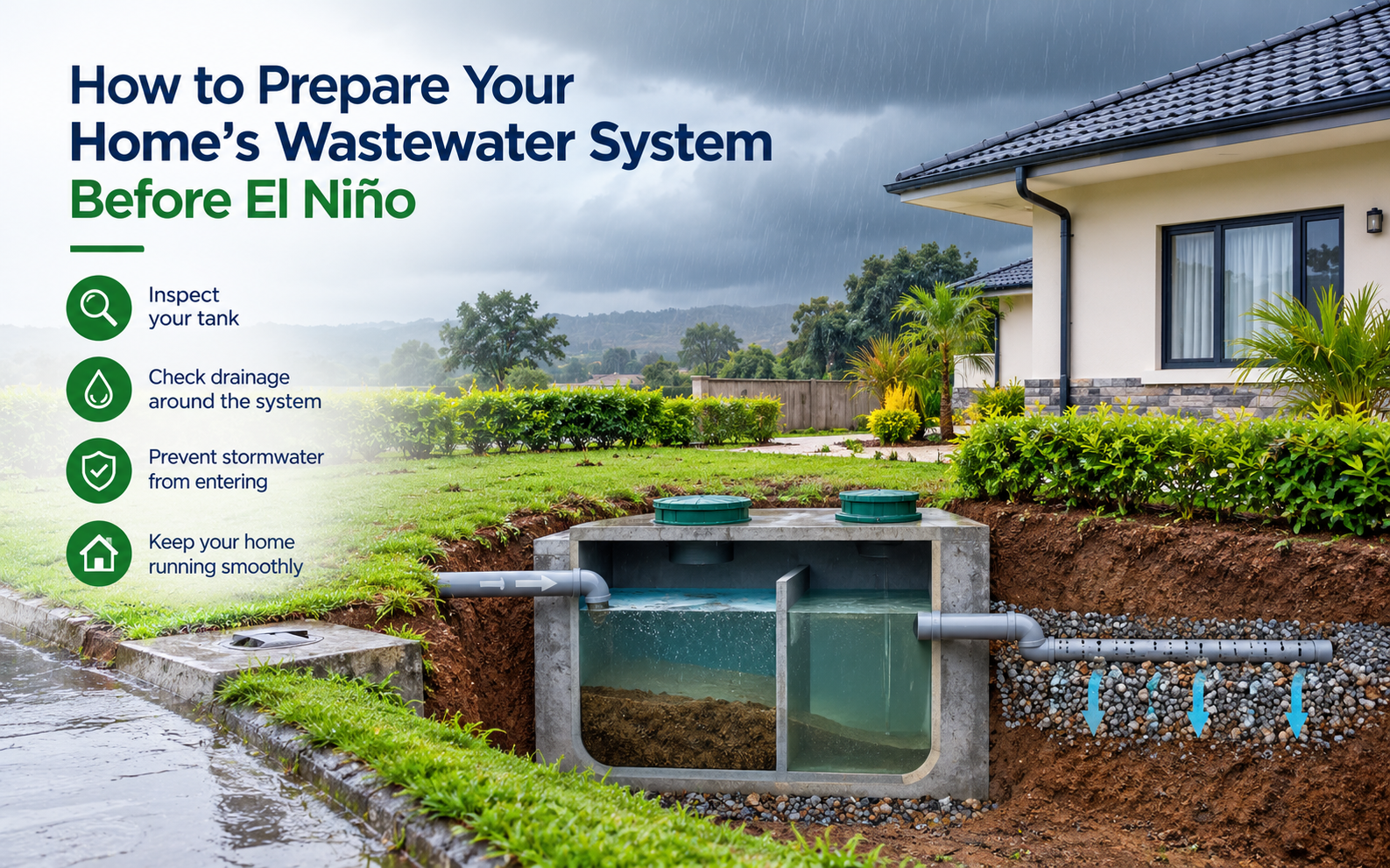
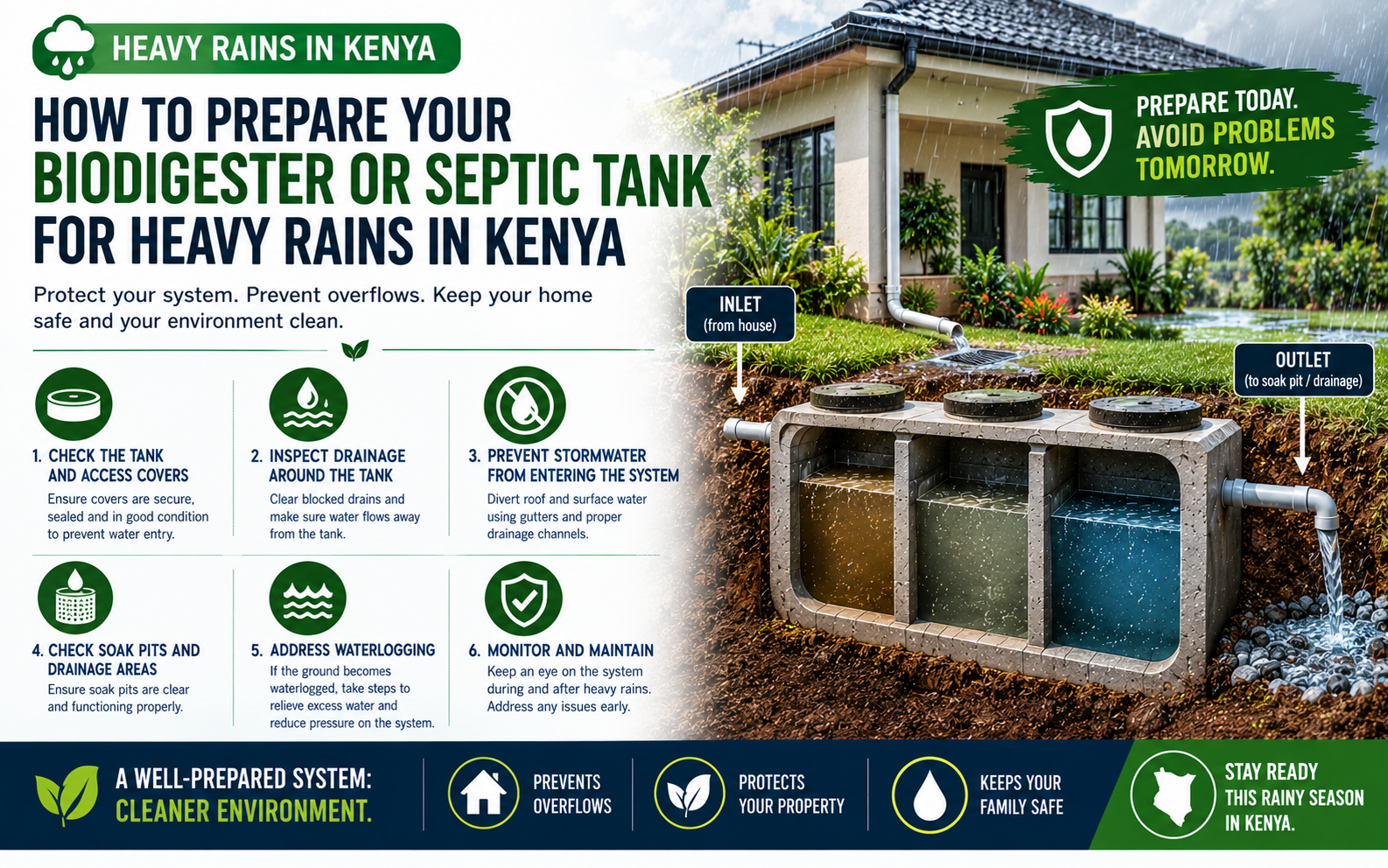
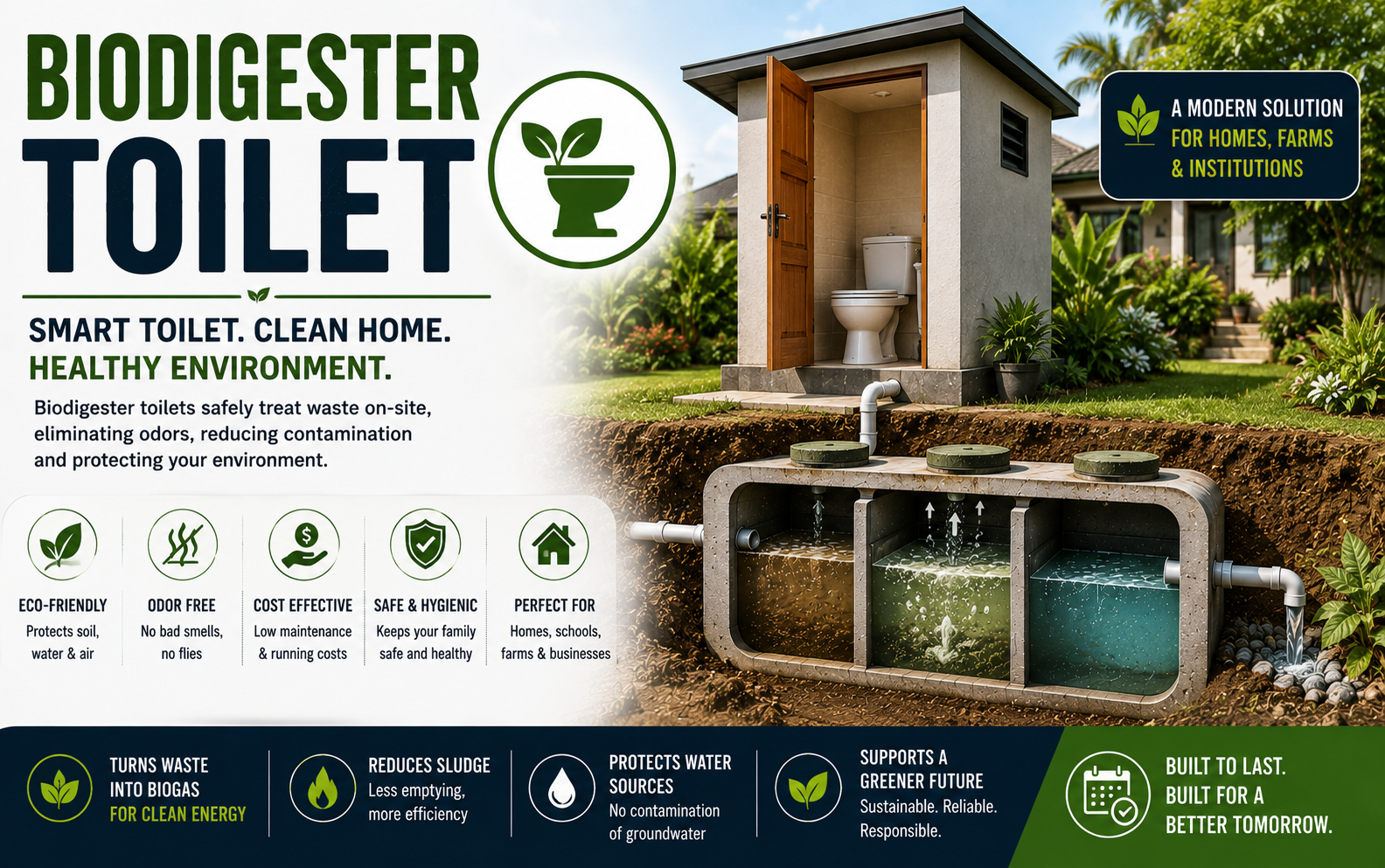
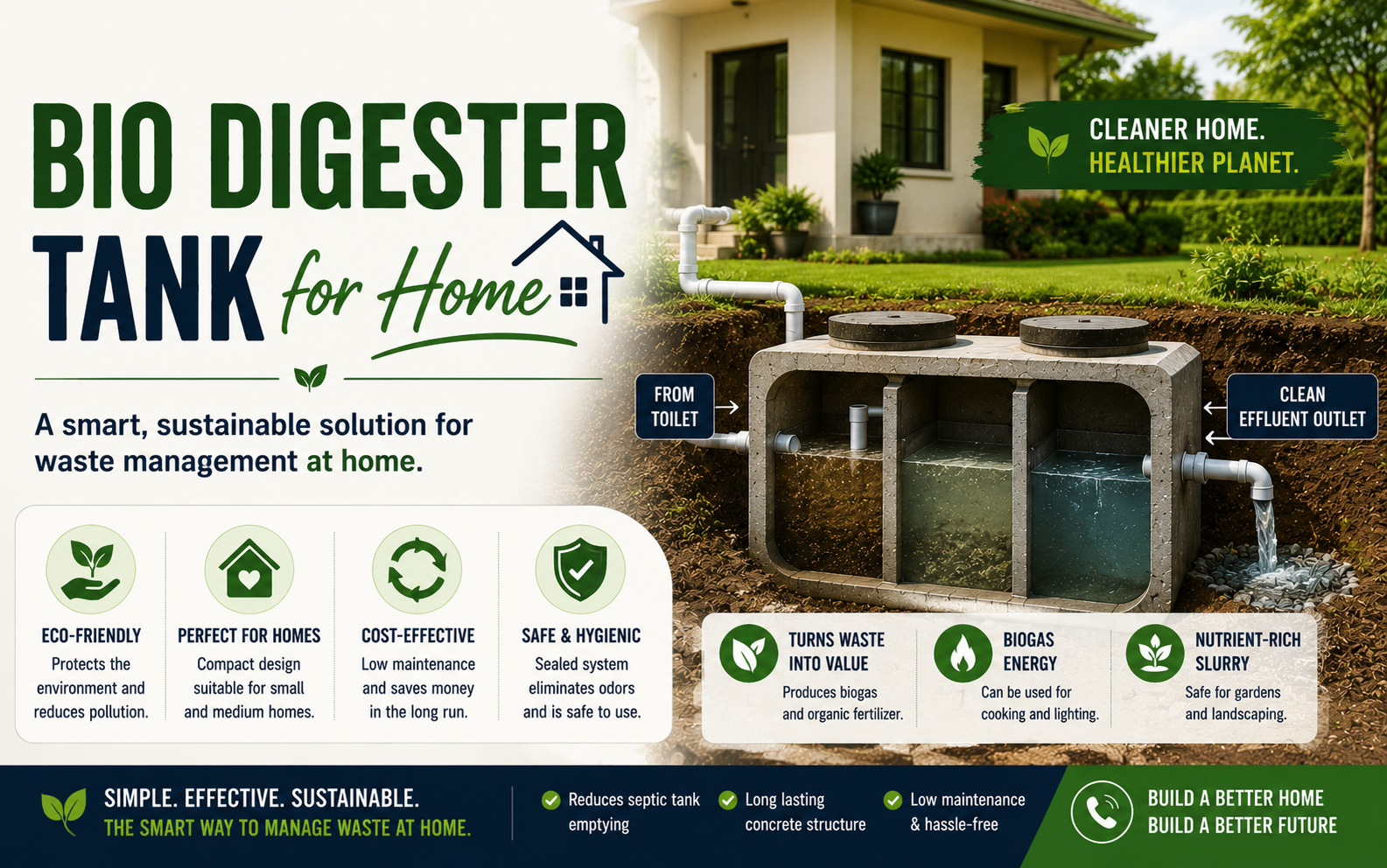
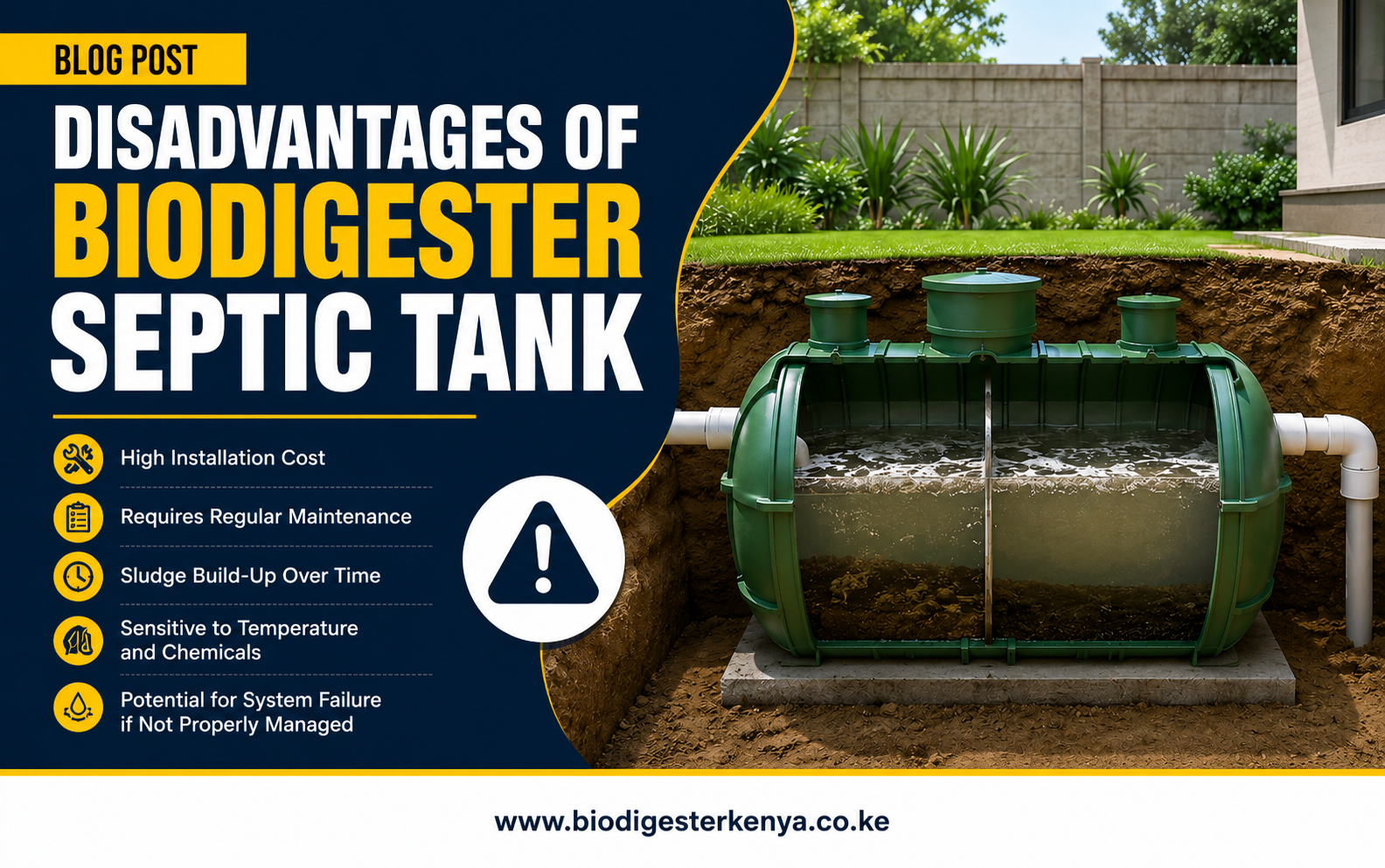
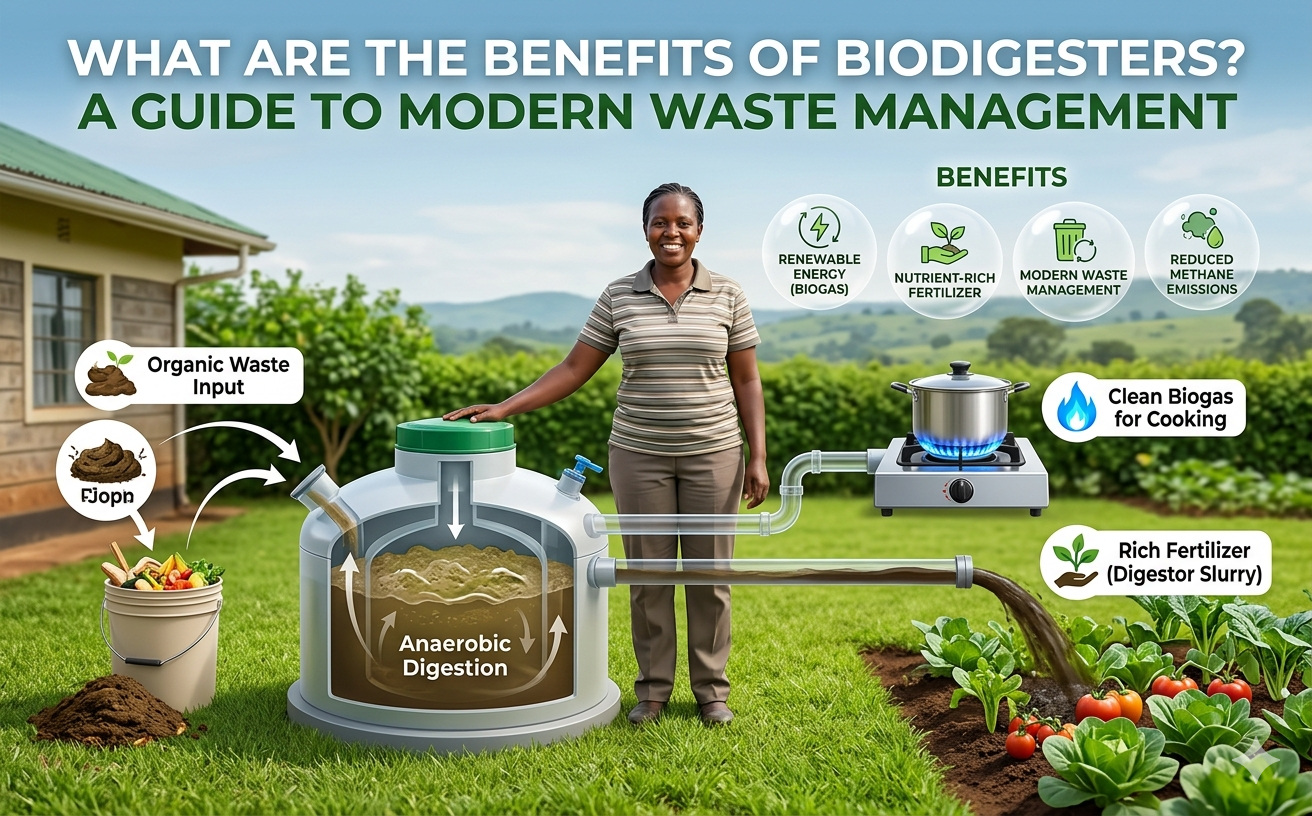
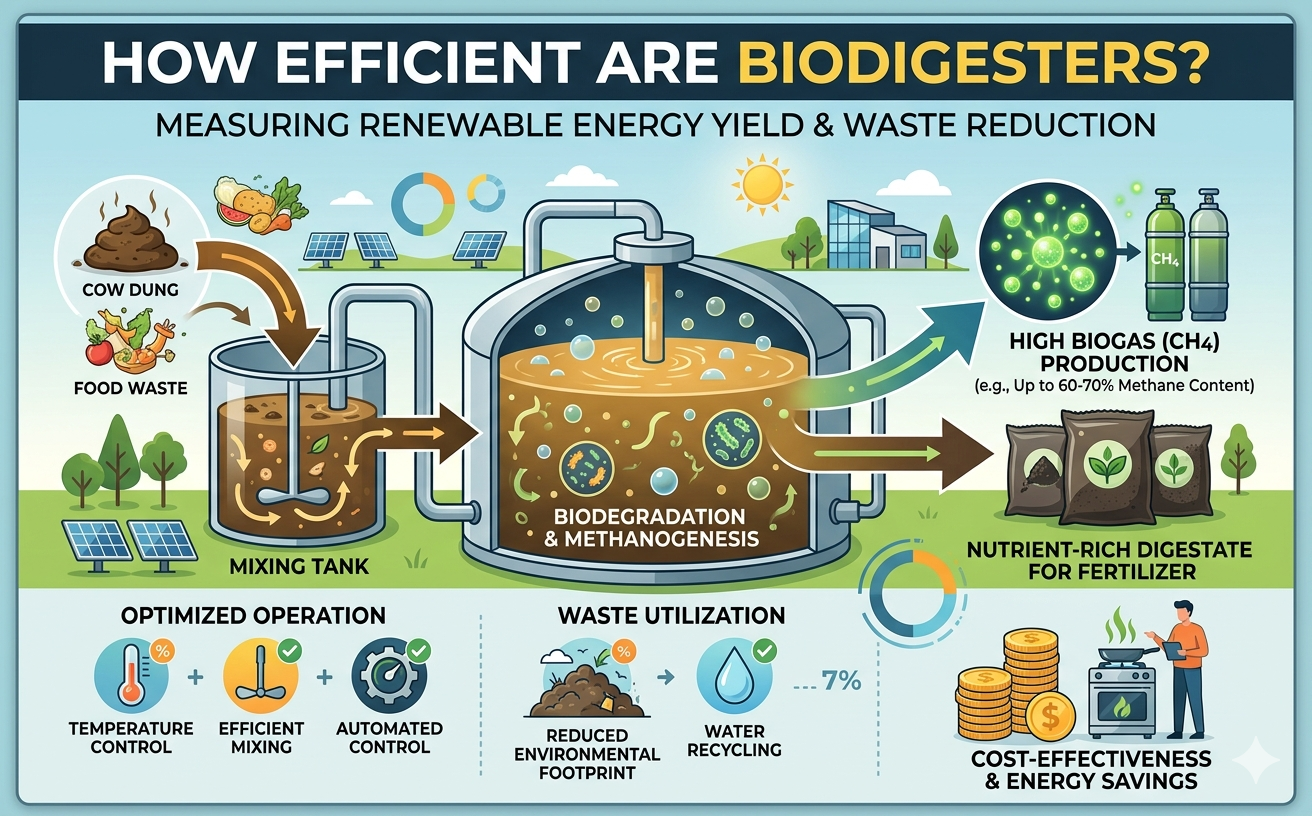
Think of a biodigester septic tank as a highly efficient, living organism that works 24/7 right under your feet. Unlike a traditional pit or holding tank that simply stores raw sewage until it overflows, a biodigester is an active treatment system.
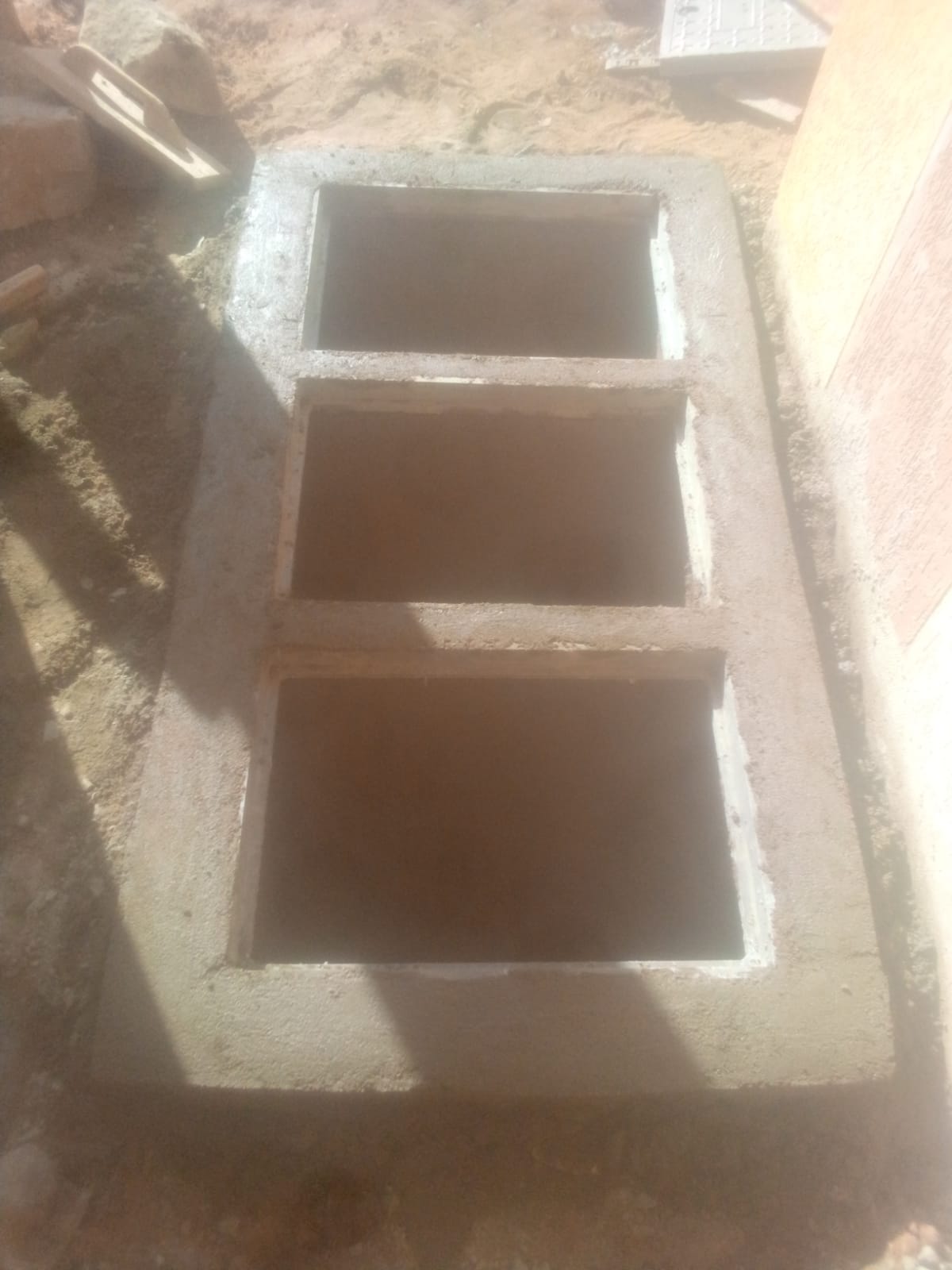
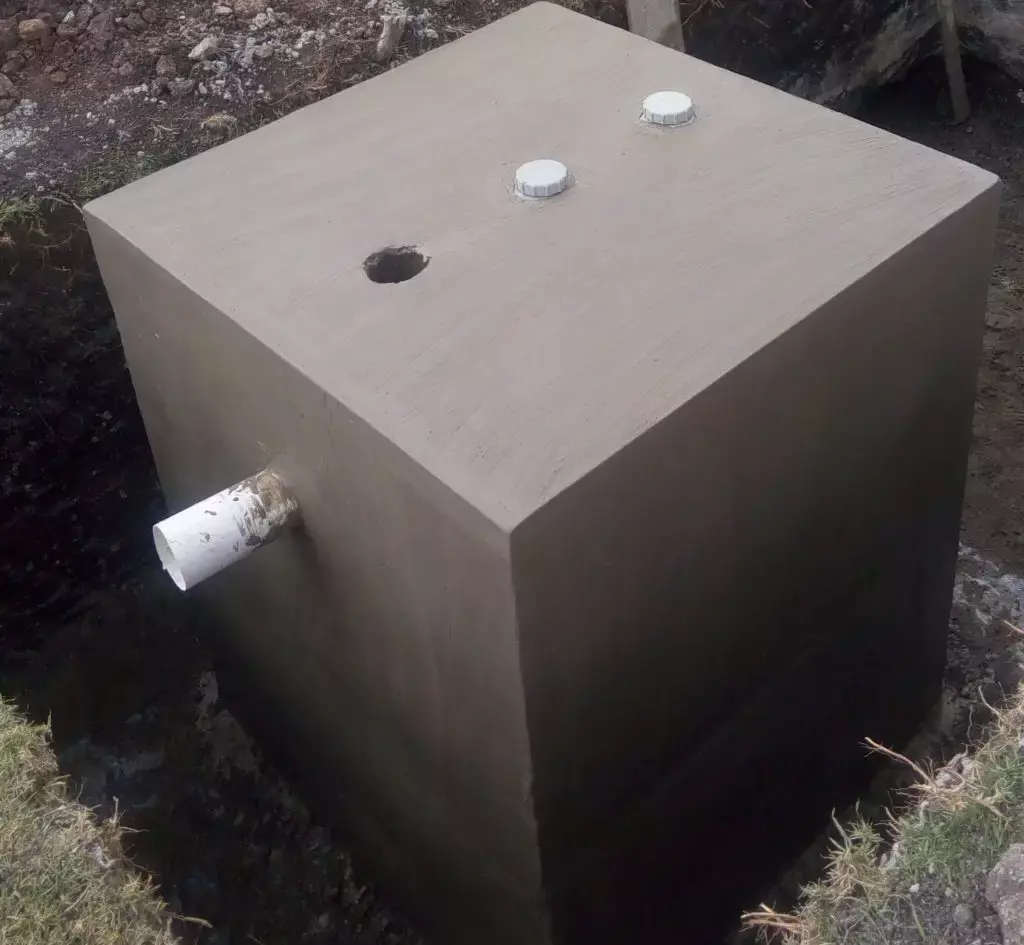
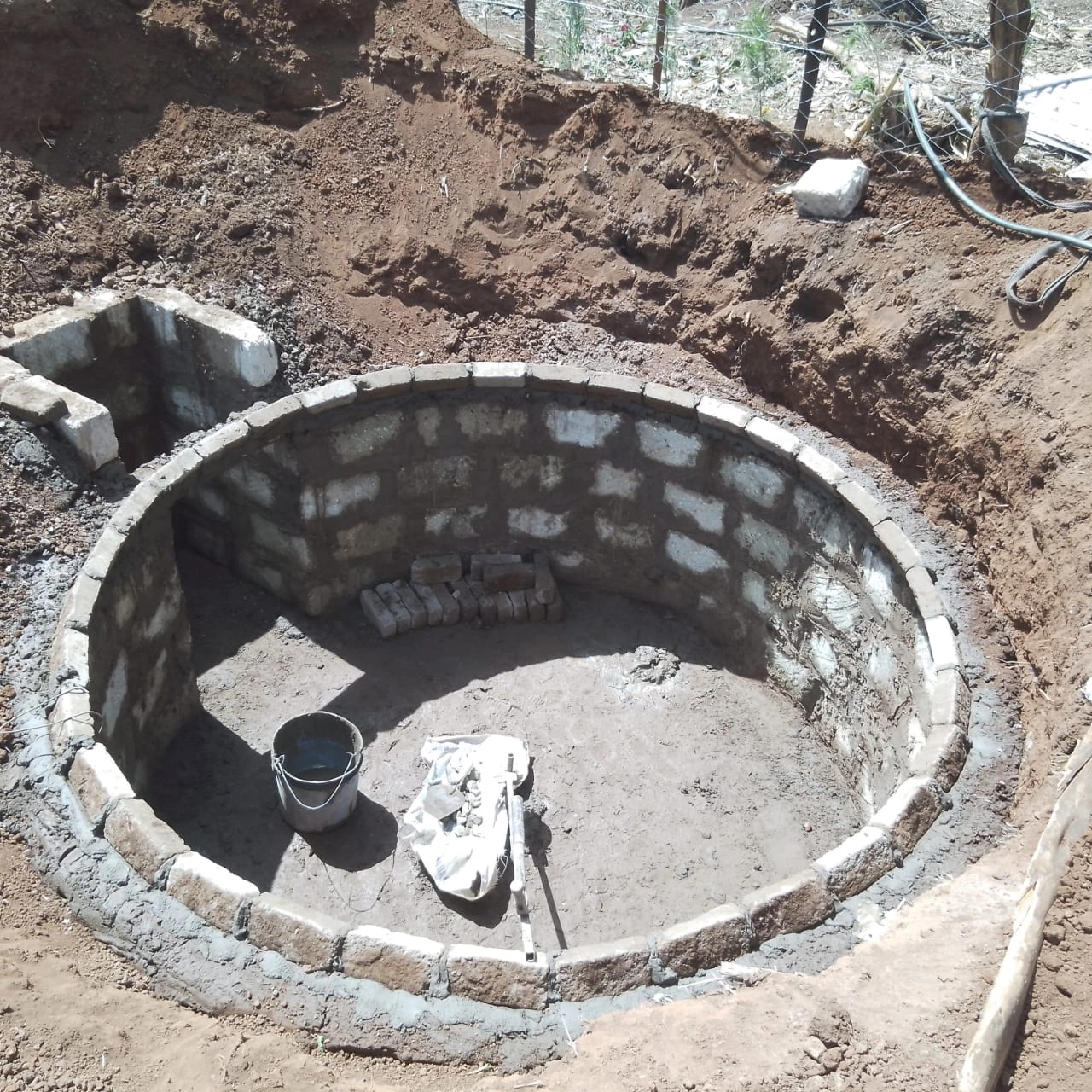
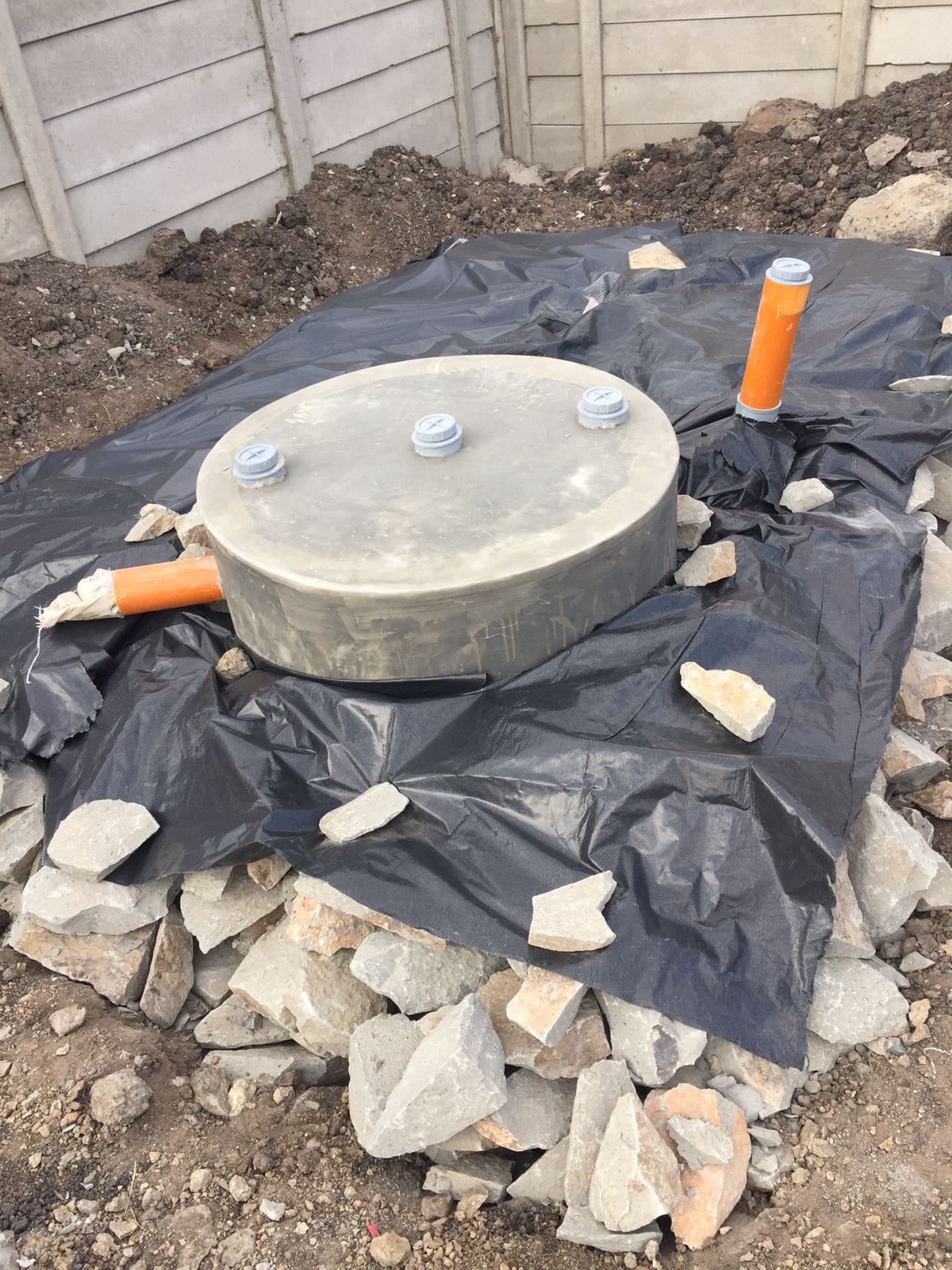
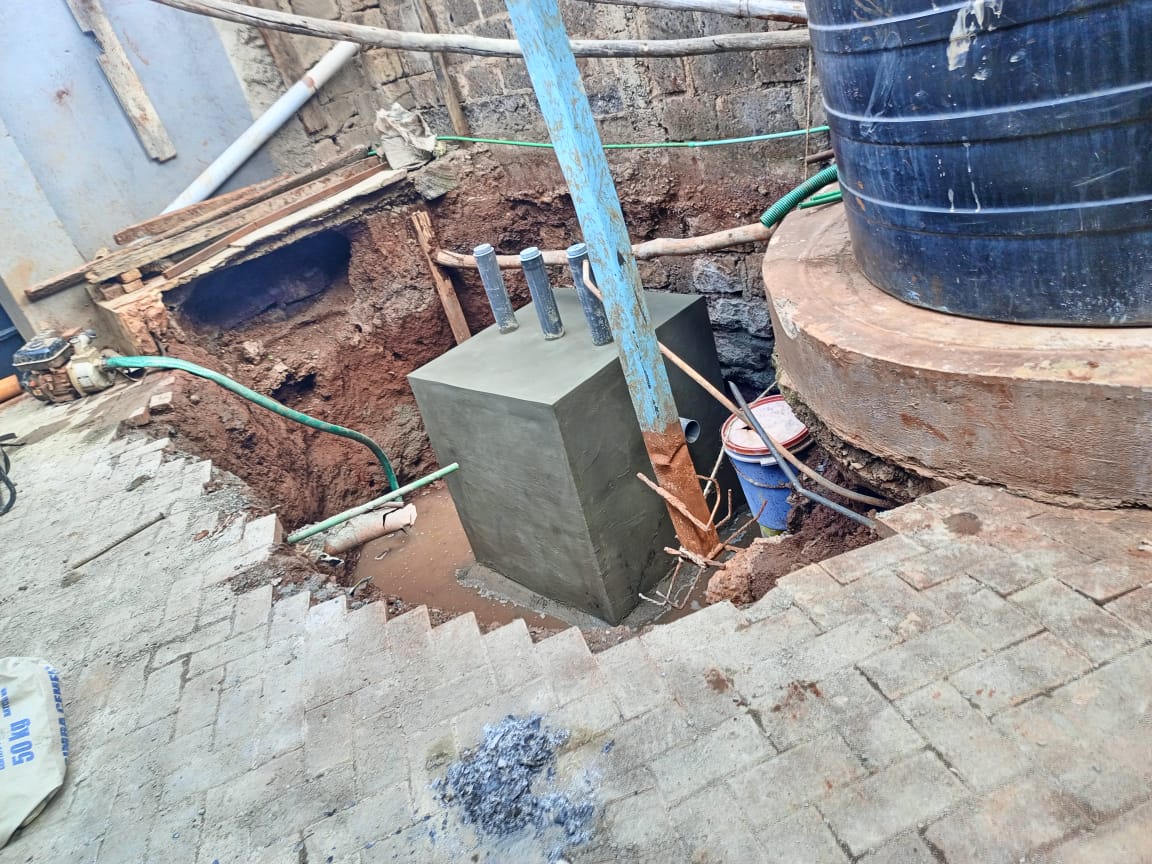
It is a compact, enclosed chamber constructed from concrete or high-density plastic.
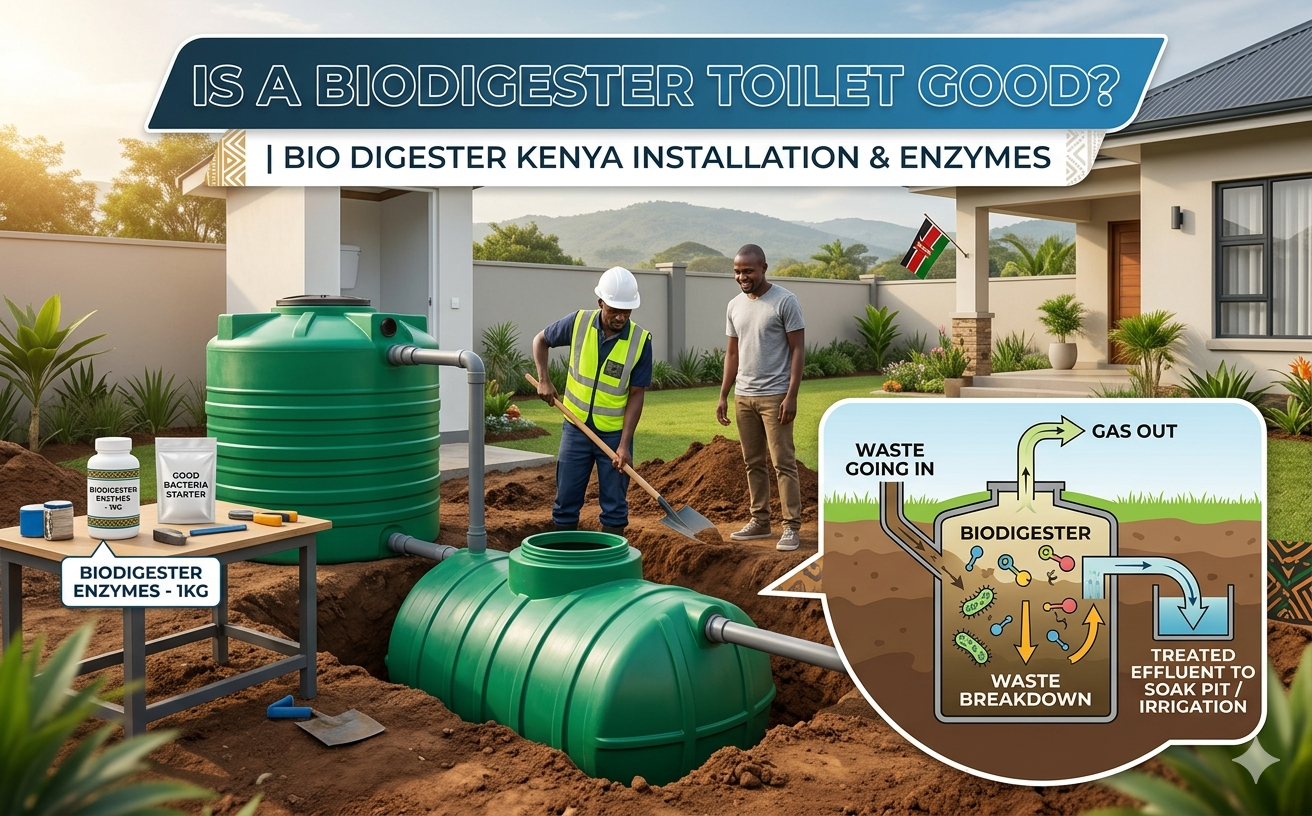
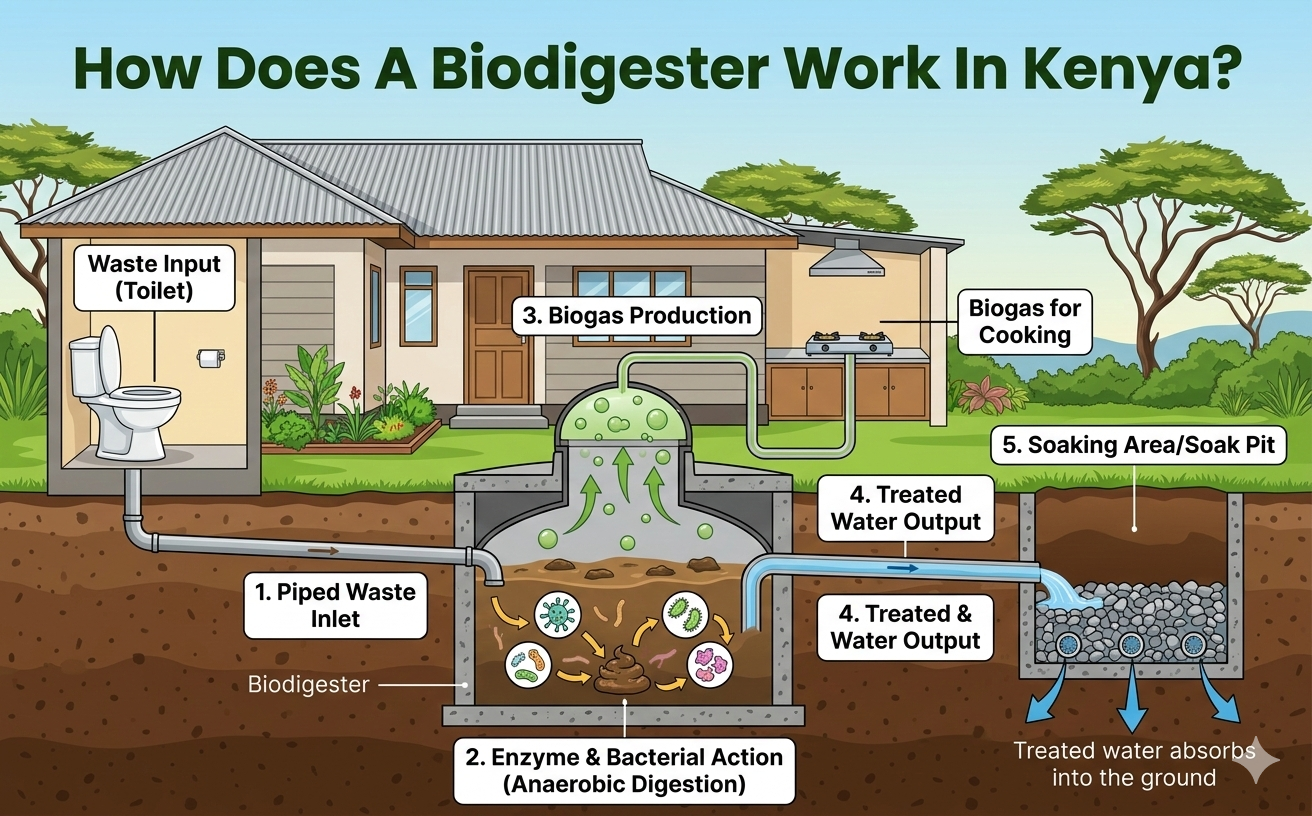
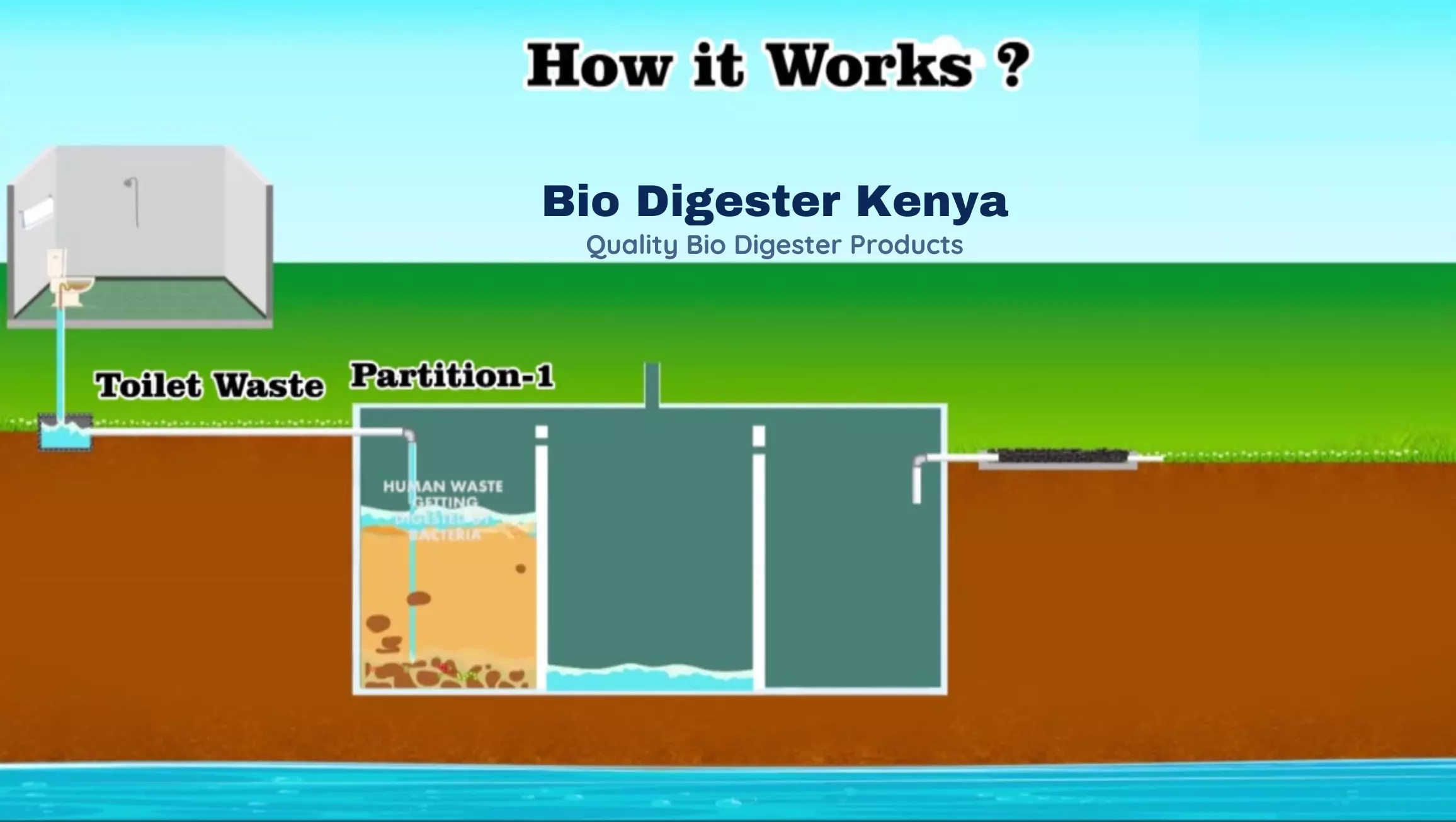
Human waste from your toilets, bathrooms, and kitchen sinks is piped directly into this chamber.
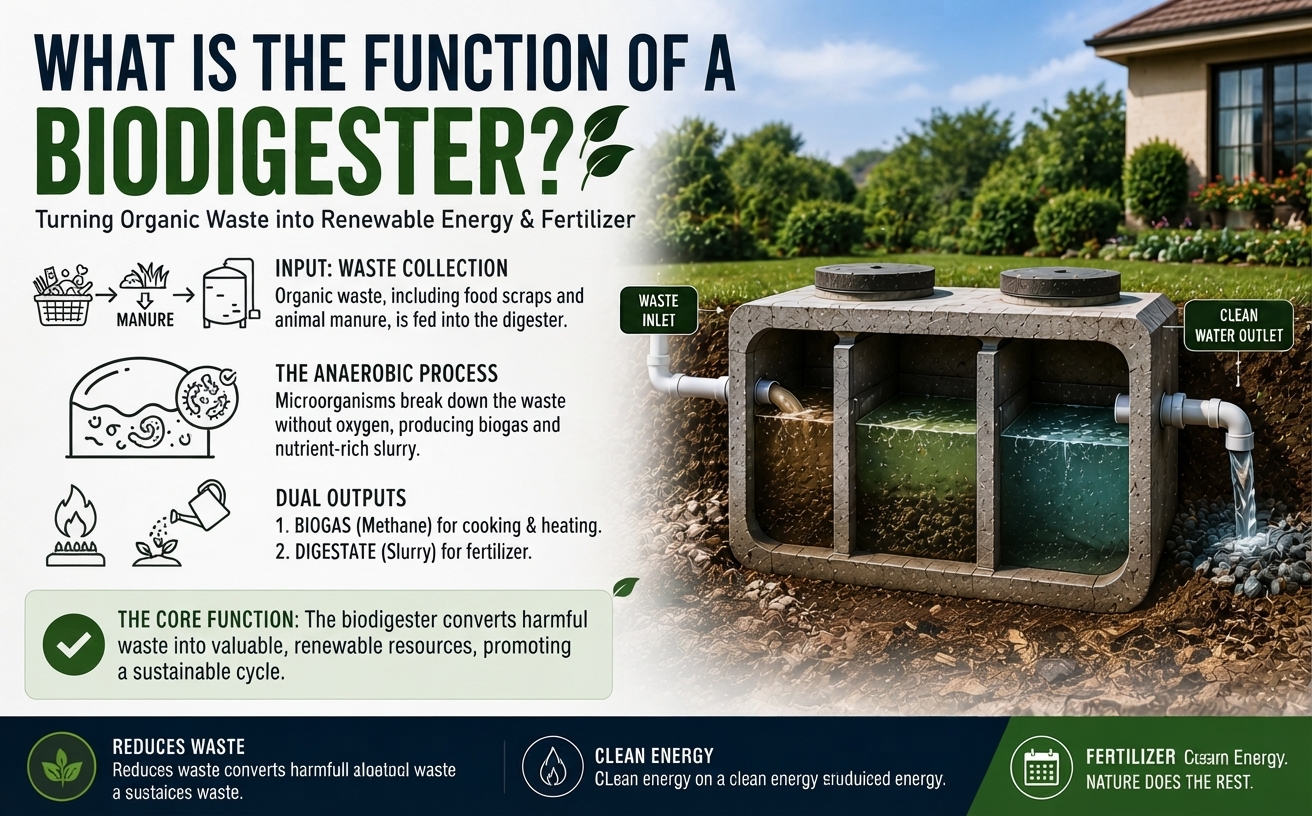
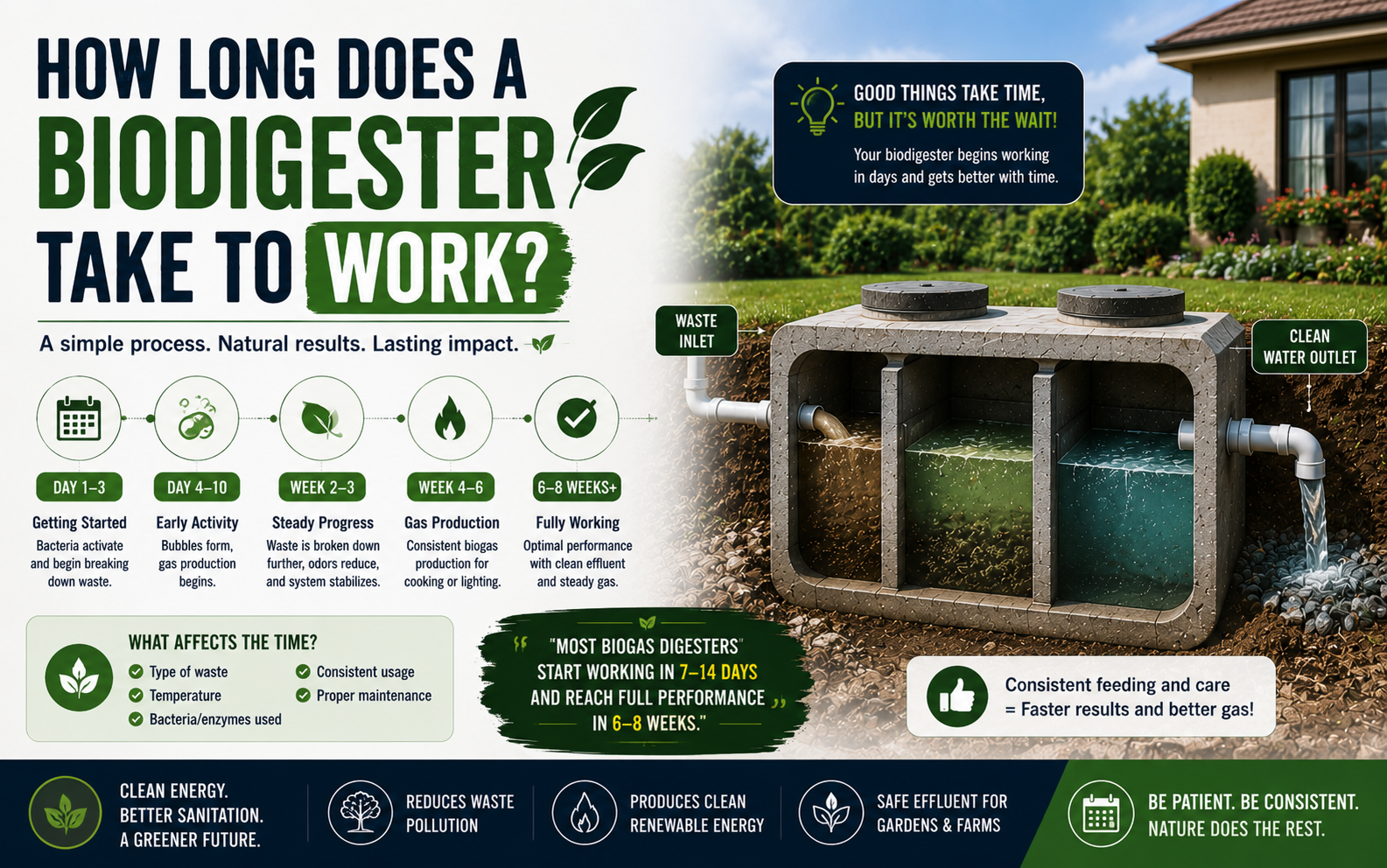
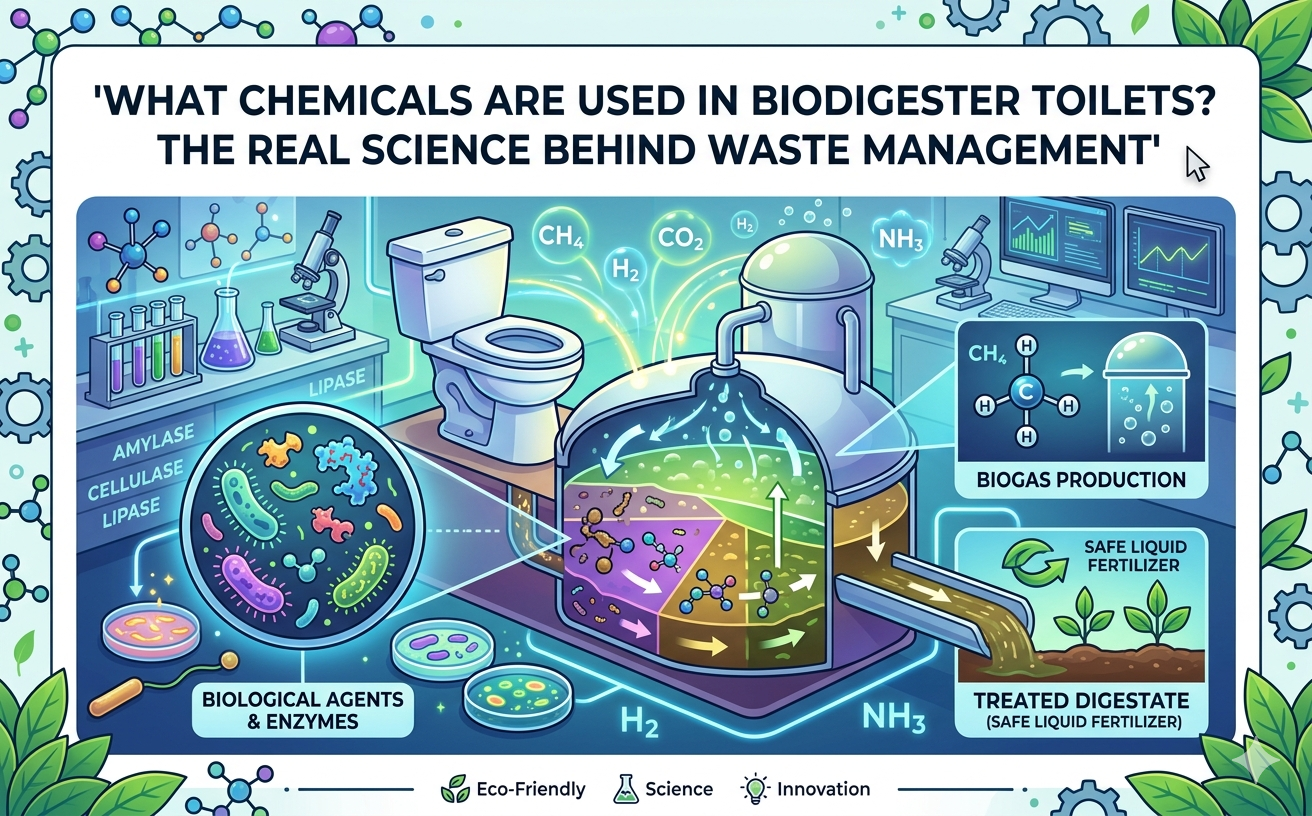
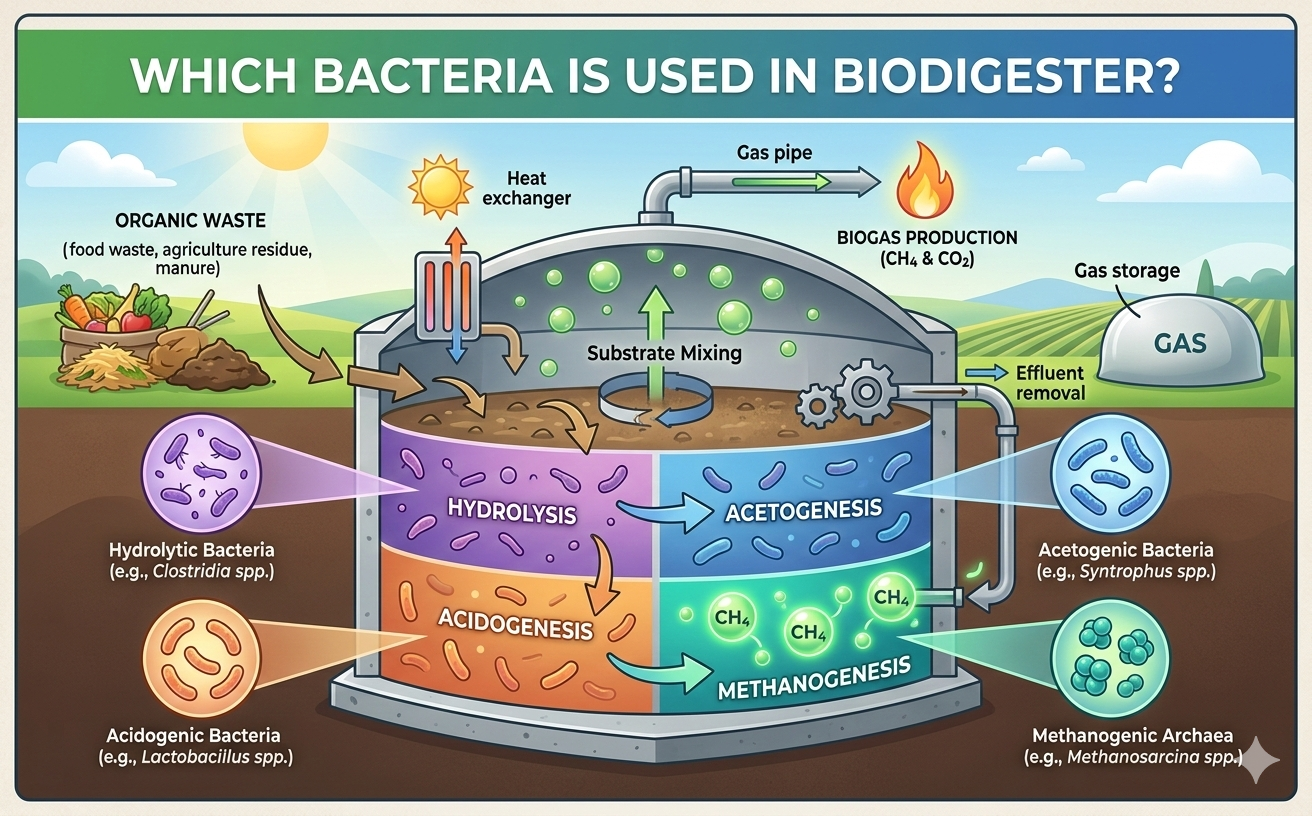
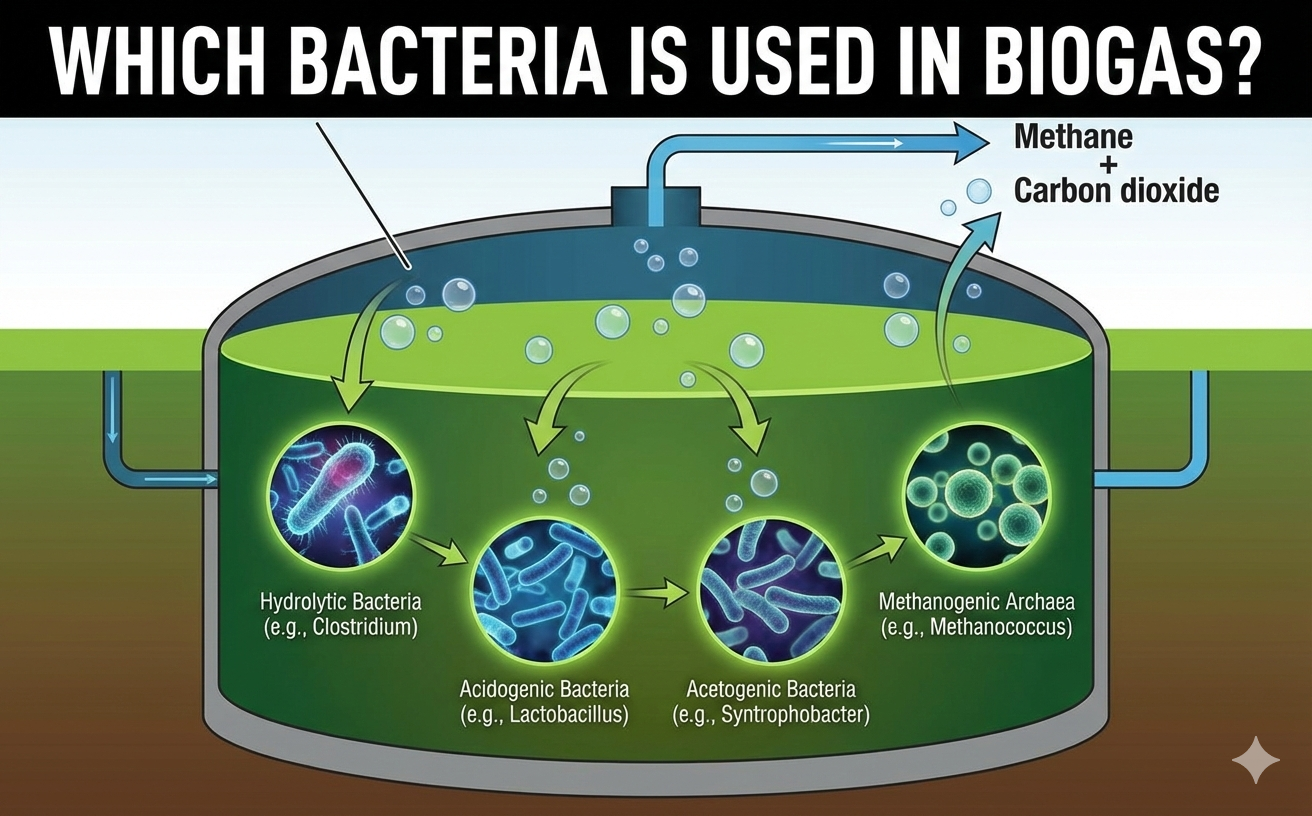
Once inside, nature takes over. Specialized microorganisms and enzymes get to work, breaking down the solid waste into harmless liquids and gases.
By utilizing biological decomposition, a Biodigester septic tank functions like a human stomach, transforming raw sewage into clean, eco-friendly output. It is the ultimate human waste management solution for both residential homes and commercial spaces across Kenya.
The Science: How Biodigester Enzymes Work Their Magic
How does a small, underground tank process so much waste without ever filling up? It all comes down to the biology of decomposition.
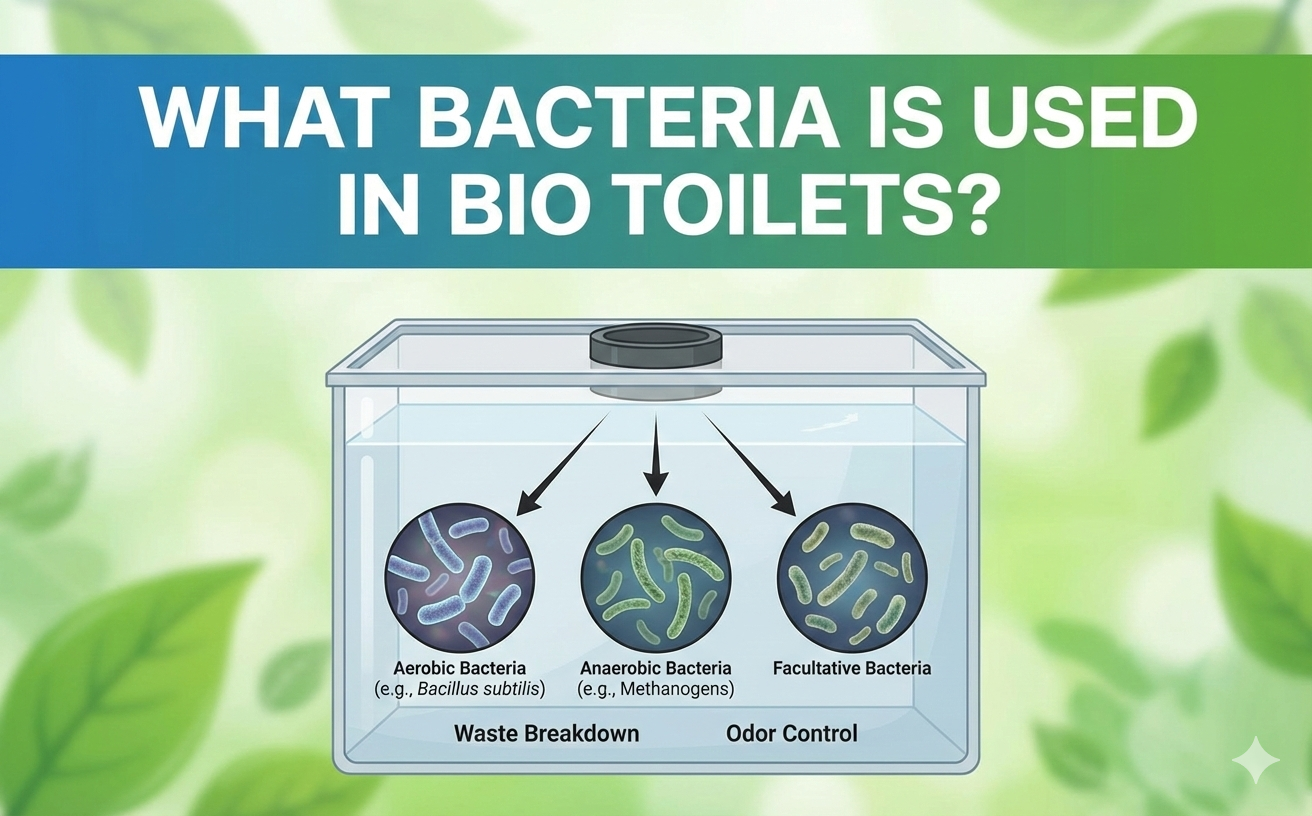
When waste enters the chamber, it is met by millions of hungry bio digester bacteria and enzymes.
These enzymes break down complex organic materials—such as proteins, fats, and carbohydrates—into simple, liquid compounds.
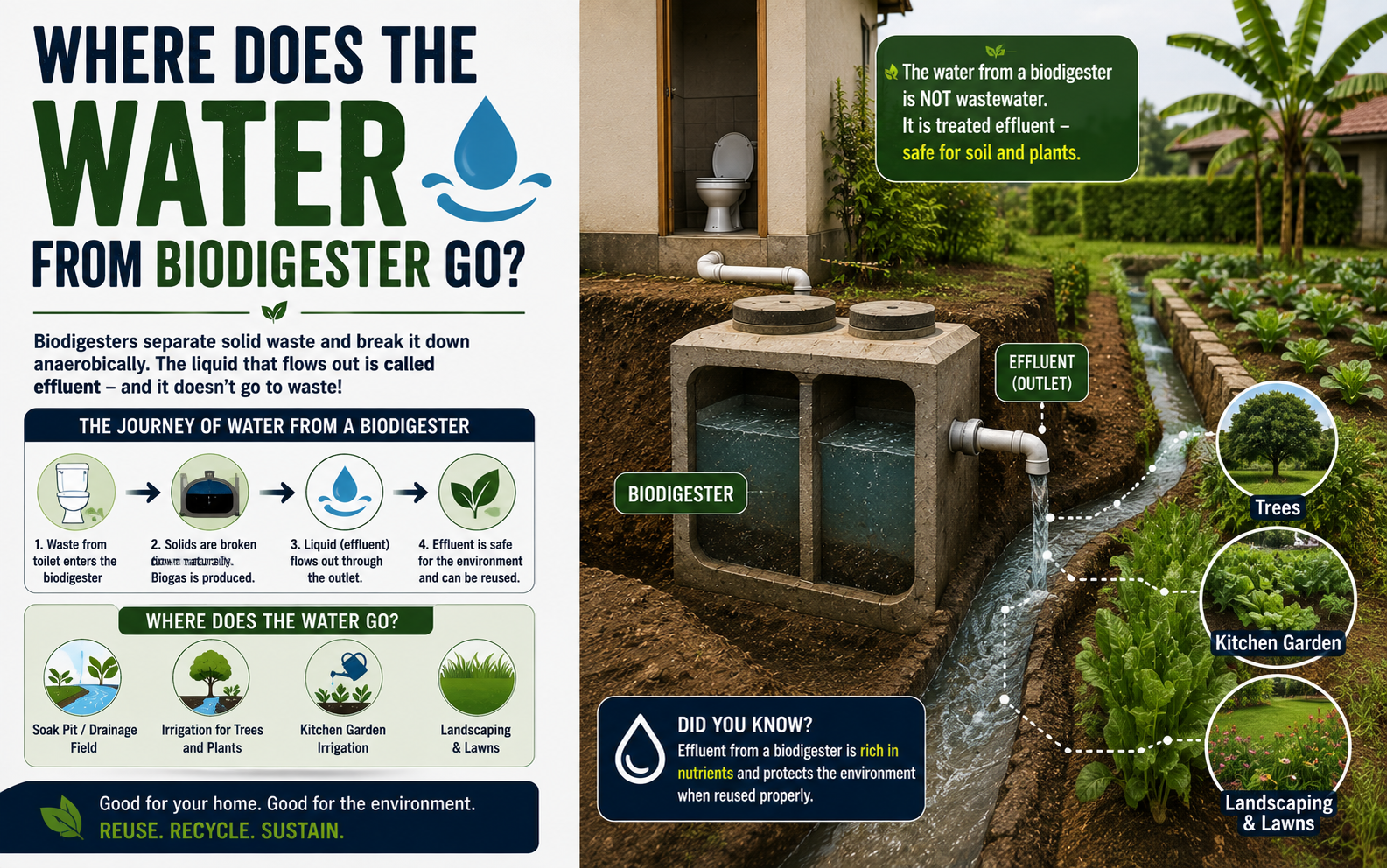
The brilliant part is the end result. After the chemical and biological breakdown, the waste is converted entirely into just water and air.
The gas (mostly odorless carbon dioxide and methane) is vented out safely into the atmosphere.
The treated water is then piped directly into a dedicated soaking area, where the ground absorbs it naturally. Because the water is clean and free of heavy solids, it won’t clog your soil or pollute the water table.
Biodigester vs Septic Tank: The Battle of Waste Systems
If you are still on the fence about whether to choose a traditional septic system or a modern bio septic tank, let’s look at the facts.
In a classic biodigester vs septic tank comparison guide, the differences are night and day:
- Size & Space: Traditional septic tanks are massive. They require a huge footprint, taking up space you could have used for a beautiful garden, parking, or an extra rental unit. A biodigester, on the other hand, is remarkably compact and requires less than a third of the space.
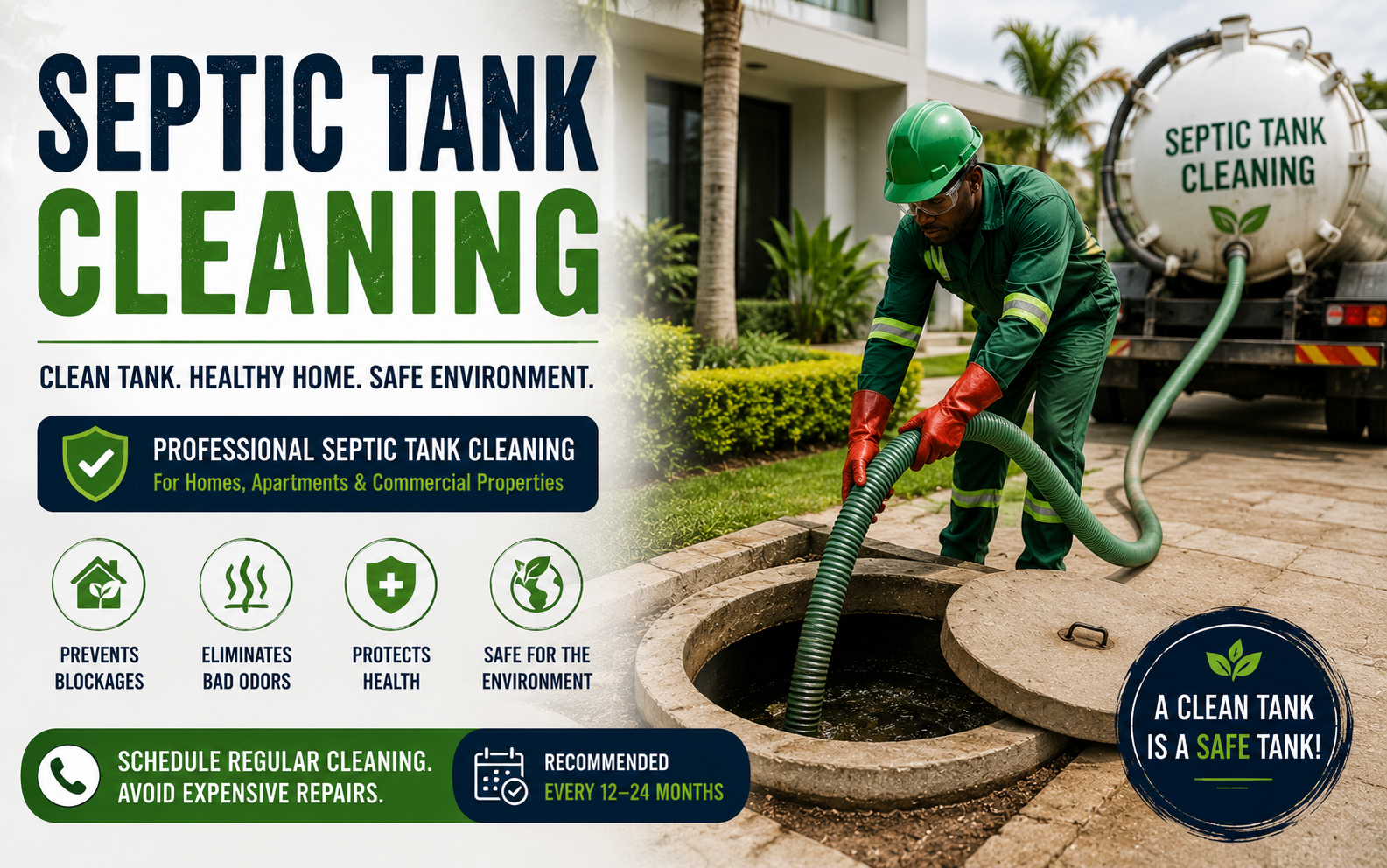
- Maintenance: Standard septic tanks fill up. When they do, you have to pay thousands of shillings for exhauster services. A Bio Septic Tank never needs to be exhausted because the solid waste is continuously broken down into water and gas.
- Odors: Traditional systems can smell terrible, especially during hot days or heavy rains. A properly installed biodigester is completely odorless.
- Installation Time: Building a traditional concrete tank can take up to two to three weeks of heavy construction. A precast biodigester can be installed and ready for use in just 2 to 3 days!
Why You Should Ditch Your Traditional Septic Tank Today
If you want to save space, cut long-term costs, and protect the environment, making the switch to a modern waste system is an absolute no-brainer.
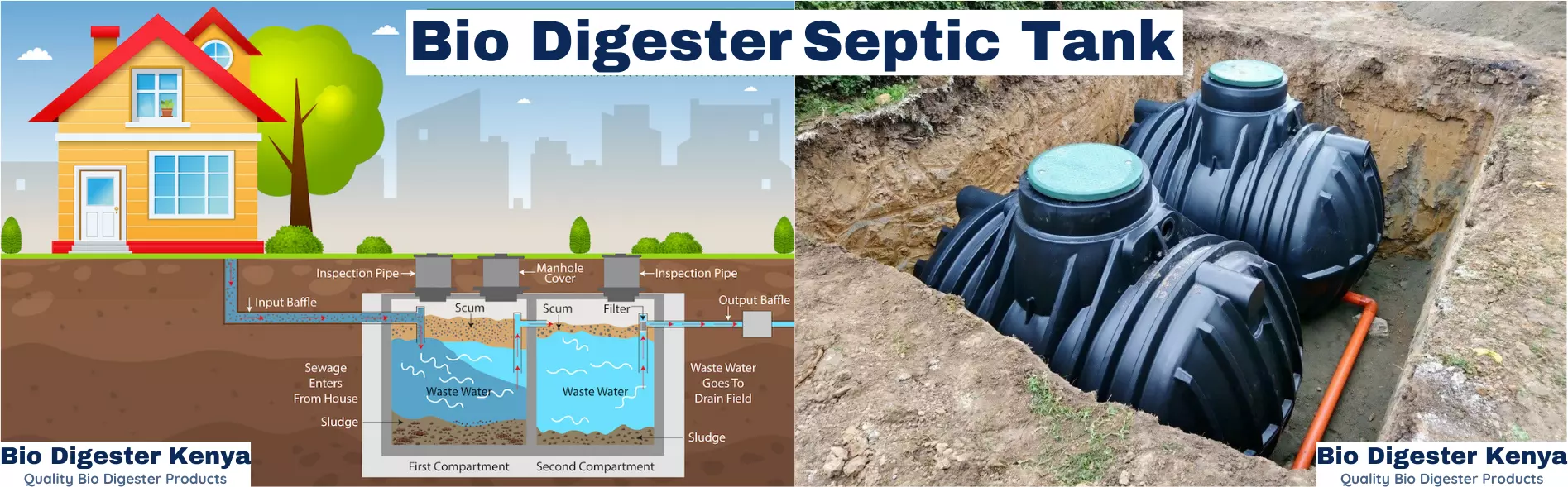
Traditional Septic Tank (Smelly, bulky, requires exhausting) VS Biodigester Septic Tank (Odorless, compact, self-cleaning)
Space-Saving and Environmentally Friendly Designs
As property sizes shrink in rapidly growing urban areas like Ruaka, Syokimau, Kitengela, and Kahawa West, every square foot of land counts. Why dedicate a large chunk of your 50×100 plot to a waste dump?
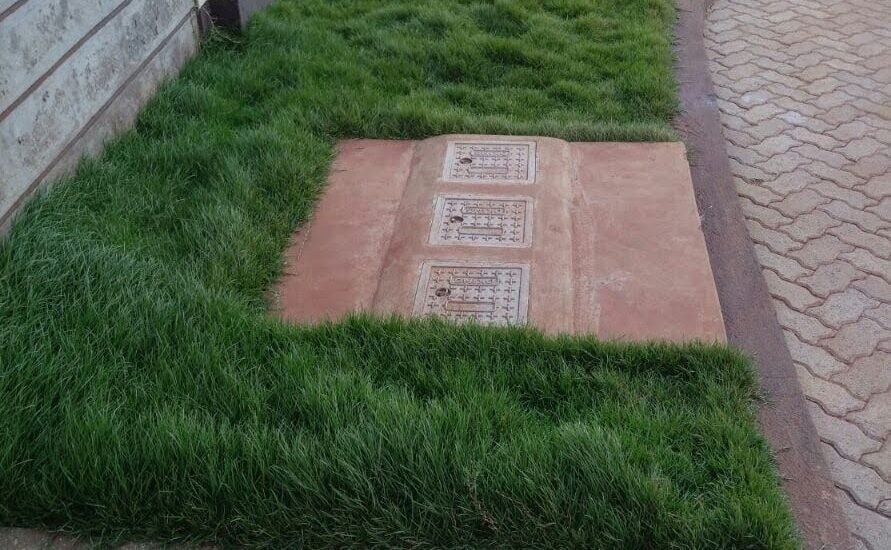
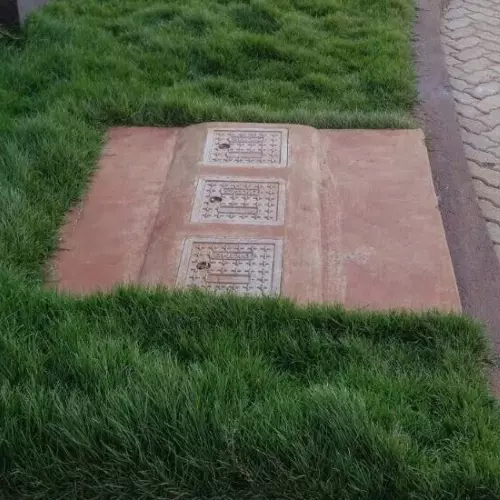
Because a biodigester septic tank is so small, you can install it under your driveway, in a small corner of your backyard, or even under a garden path.
This gives you total architectural freedom. Furthermore, because the output water is treated and clean, it does not harm local flora or pollute nearby wells and streams. It is the greenest plumbing decision you will ever make!
Say Goodbye to Exhauster Services Forever
Let’s talk about money. How much do you spend on exhauster services?
Depending on where you live in Kenya, a single exhauster trip can cost anywhere from KES 8,000 to KES 15,000.
If you have a large family or run a busy commercial property, you might find yourself calling the exhauster truck every few months.
That is money down the drain—literally!
By investing in a Bio Digester Septic Tank installed by Bio Digester Kenya, you cut out the need for exhausters entirely.
The system manages its own volume by sending treated water to the soil. You will save hundreds of thousands of shillings over the lifespan of your property.
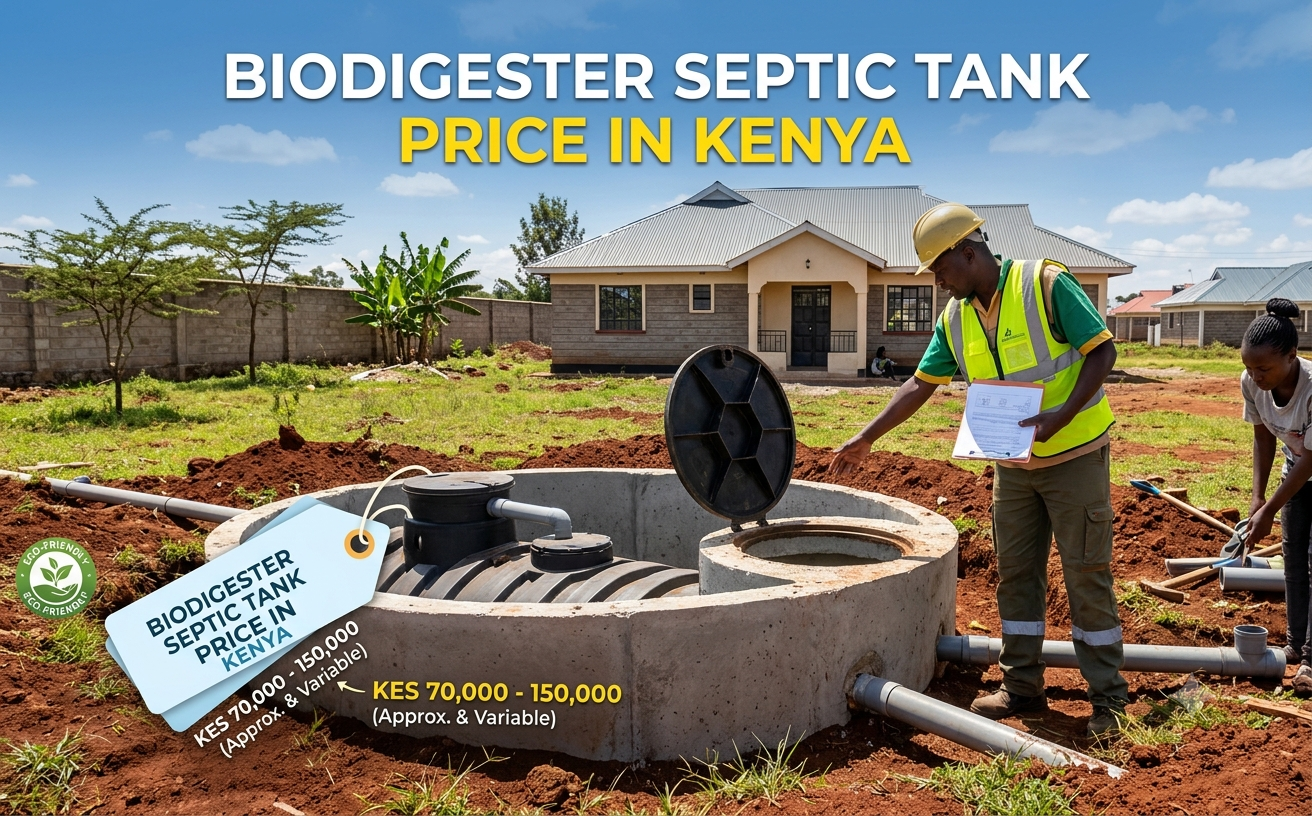
Biodigester Price in Kenya: Breaking Down the Costs
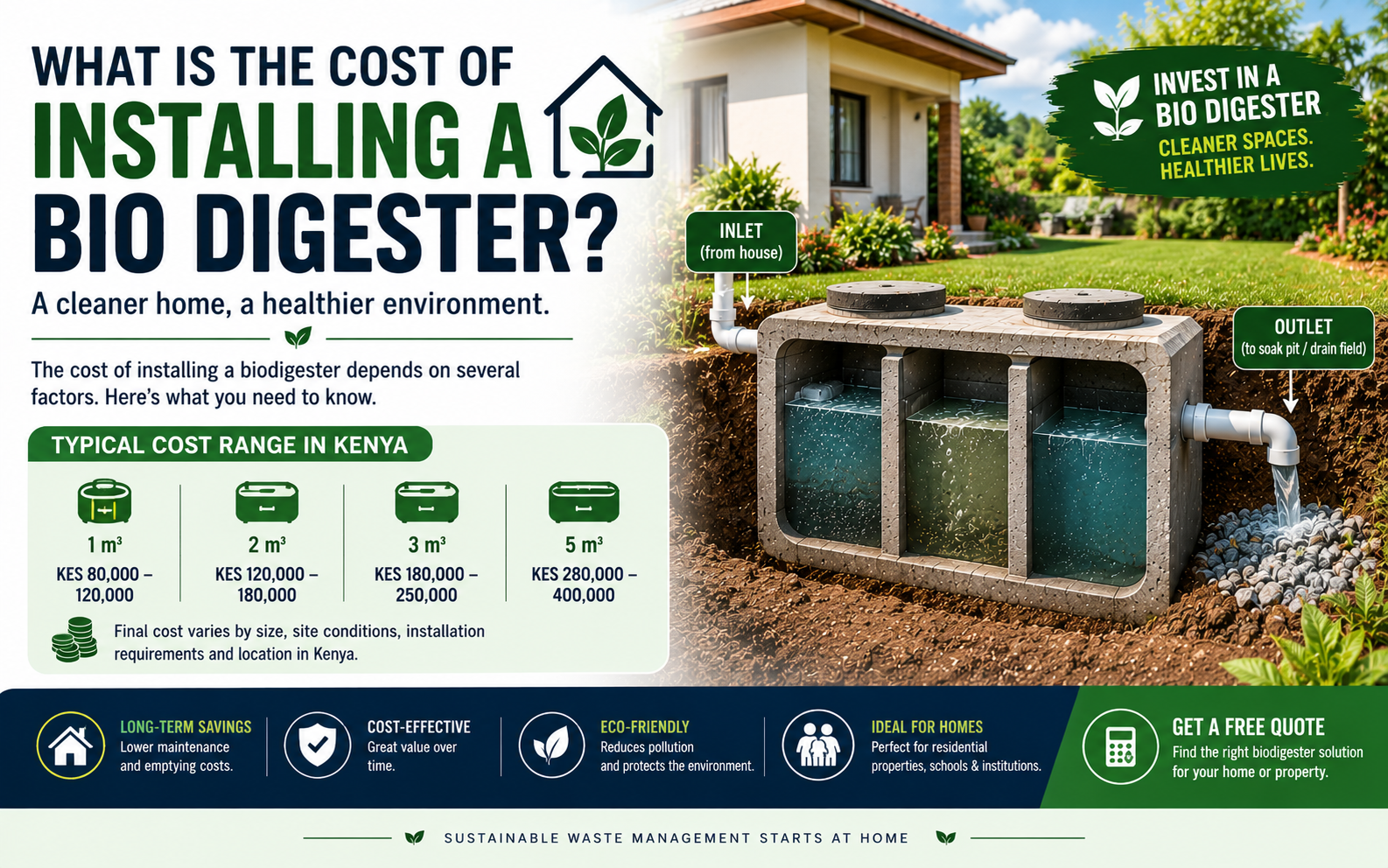
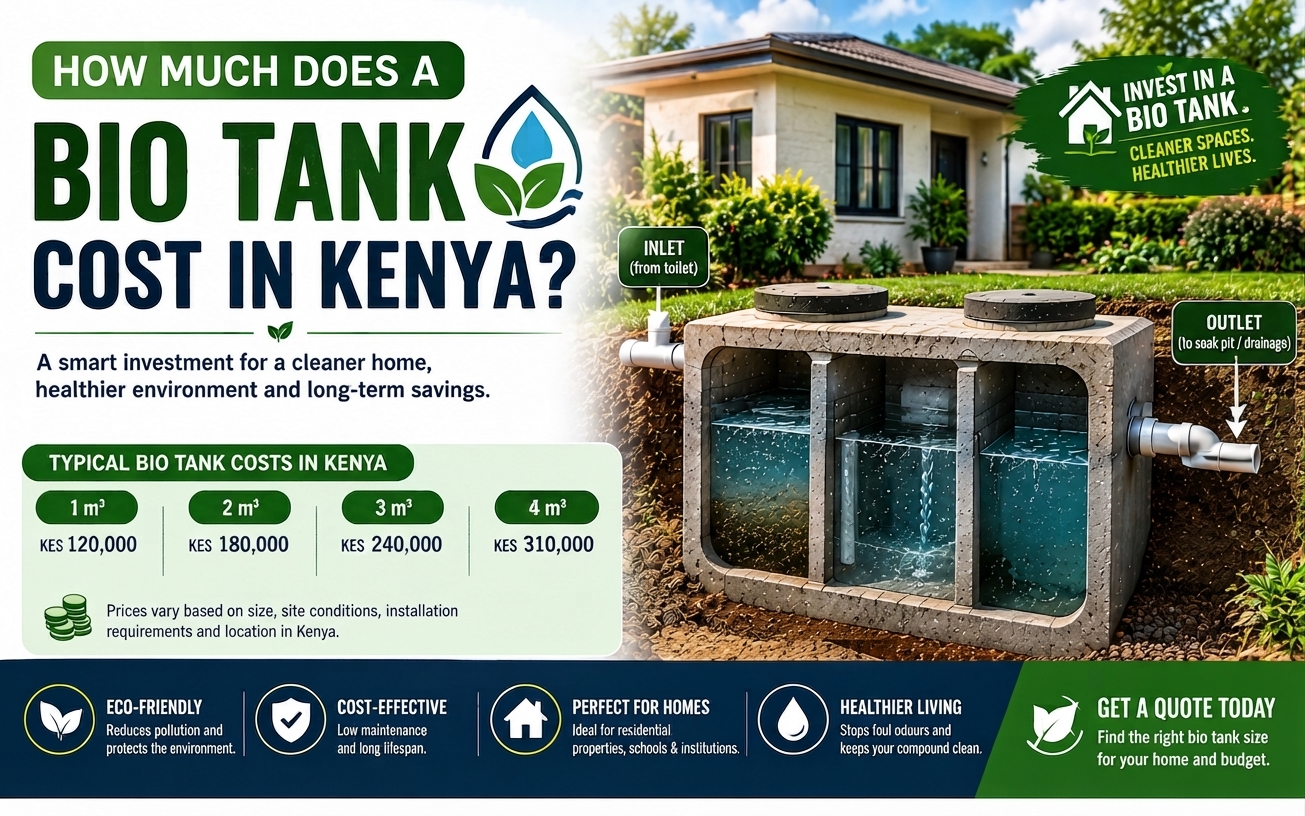
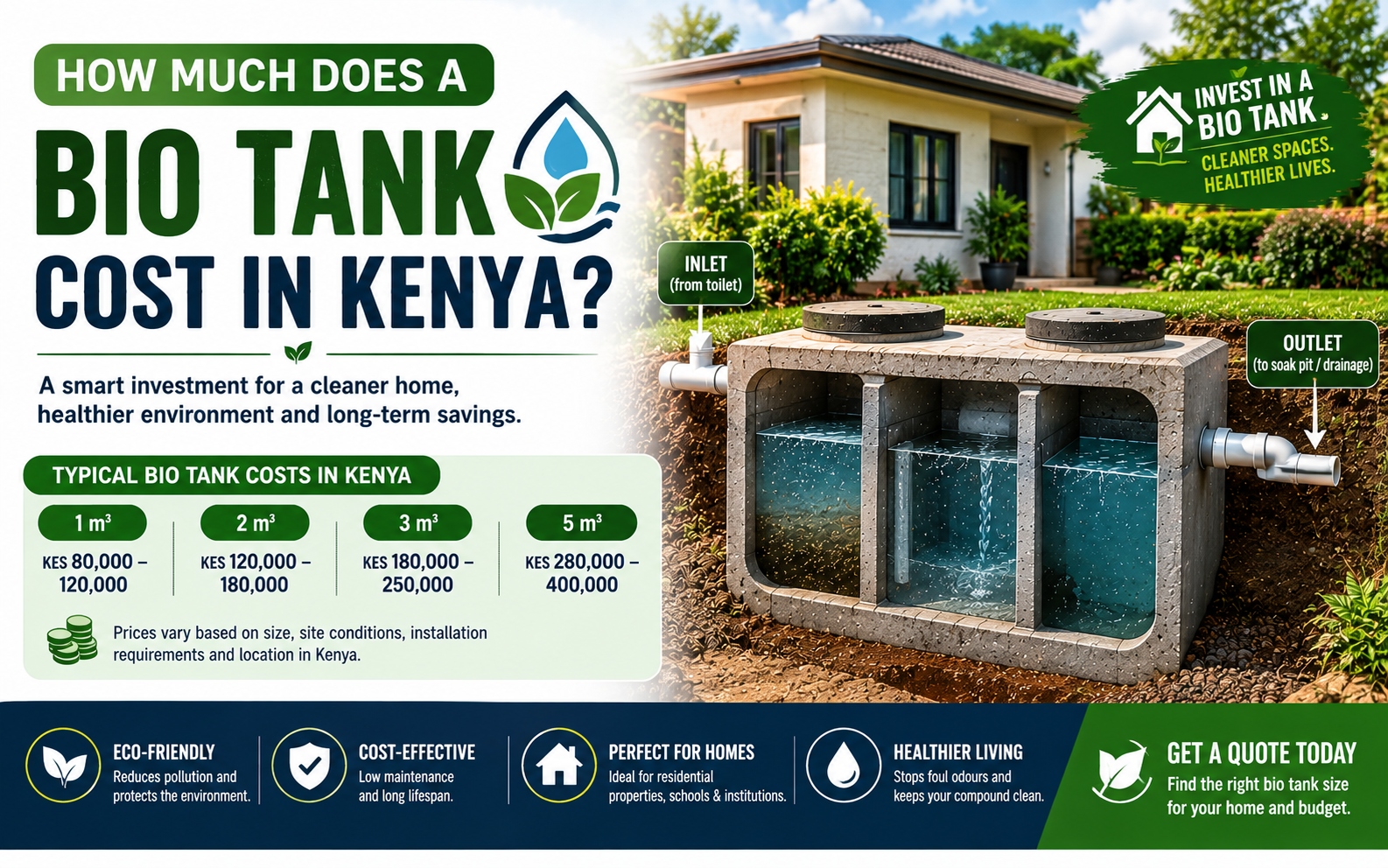
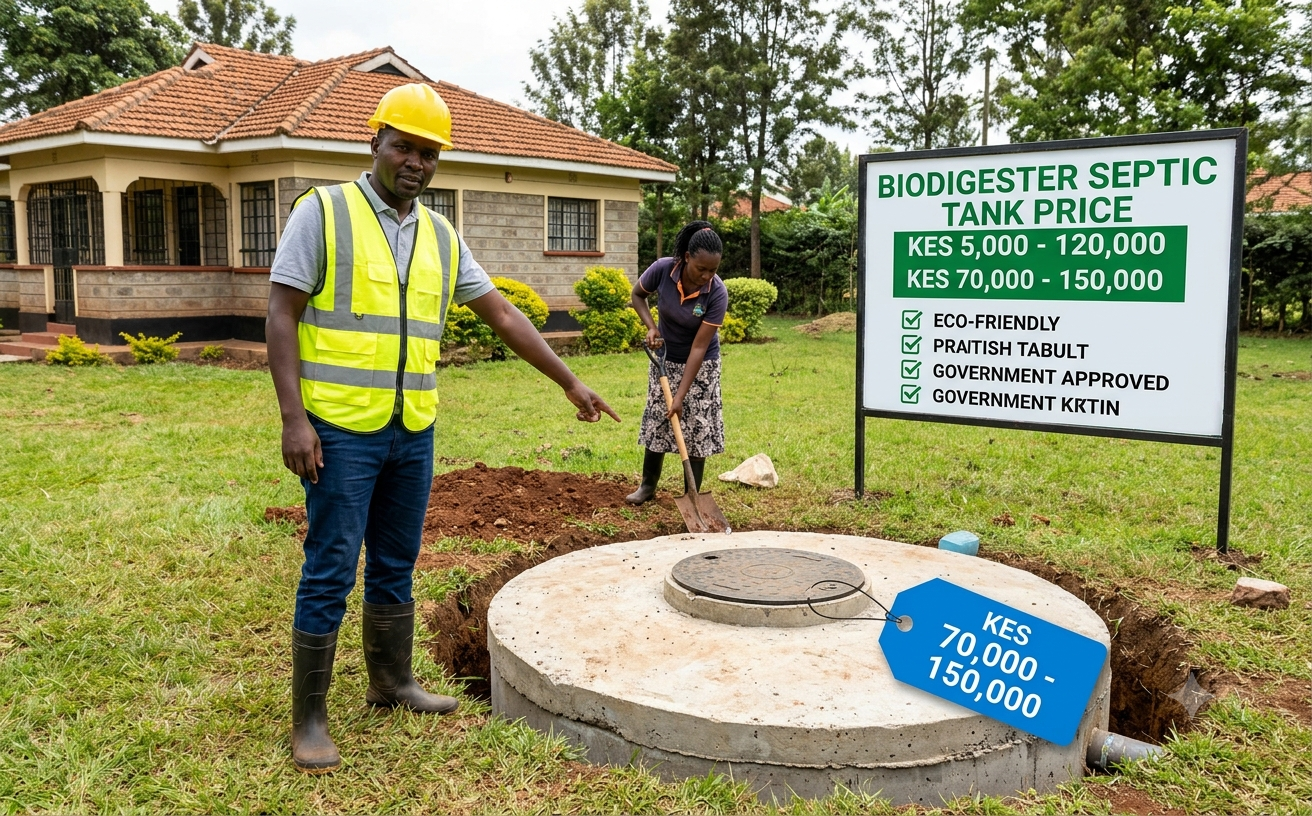
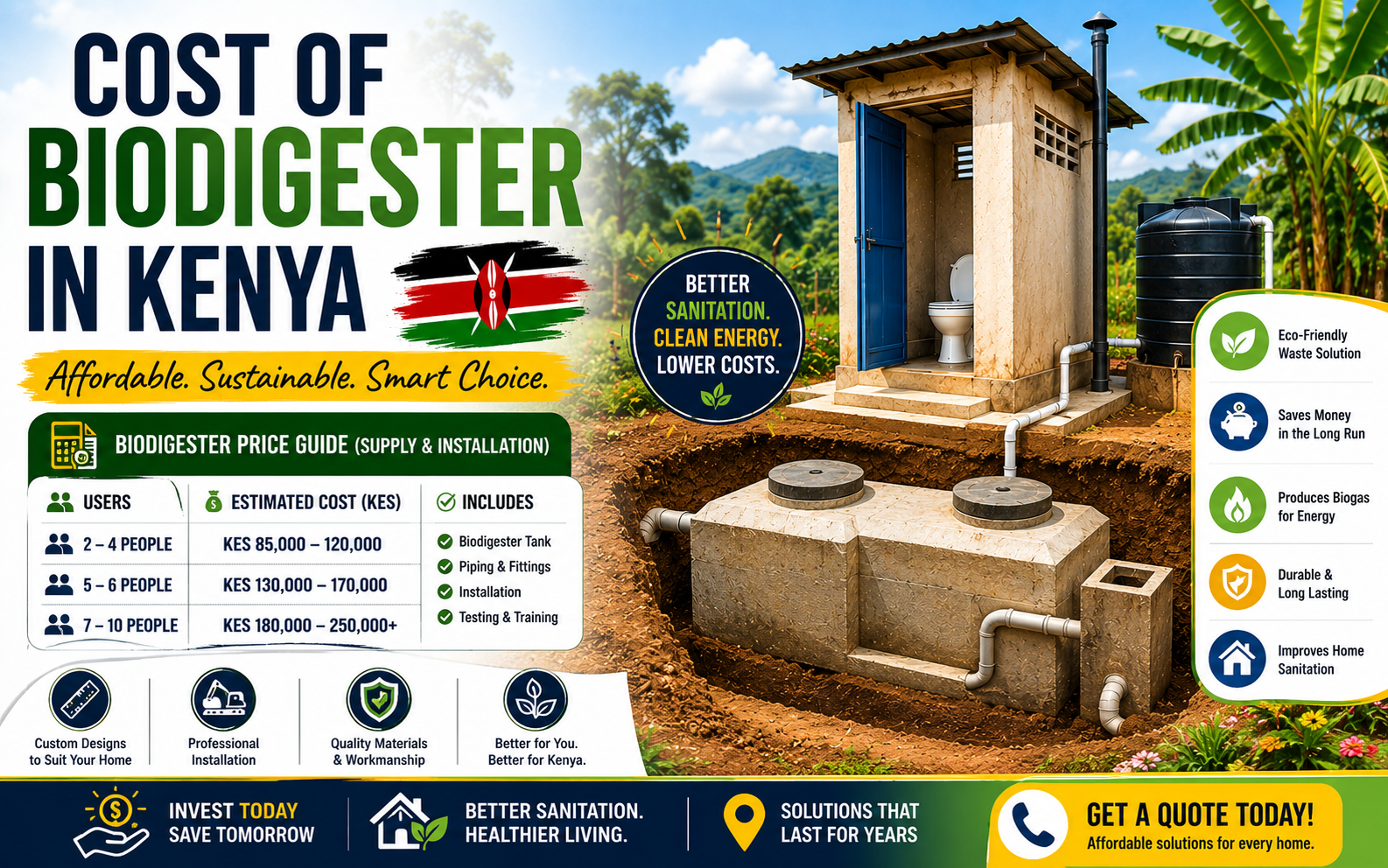
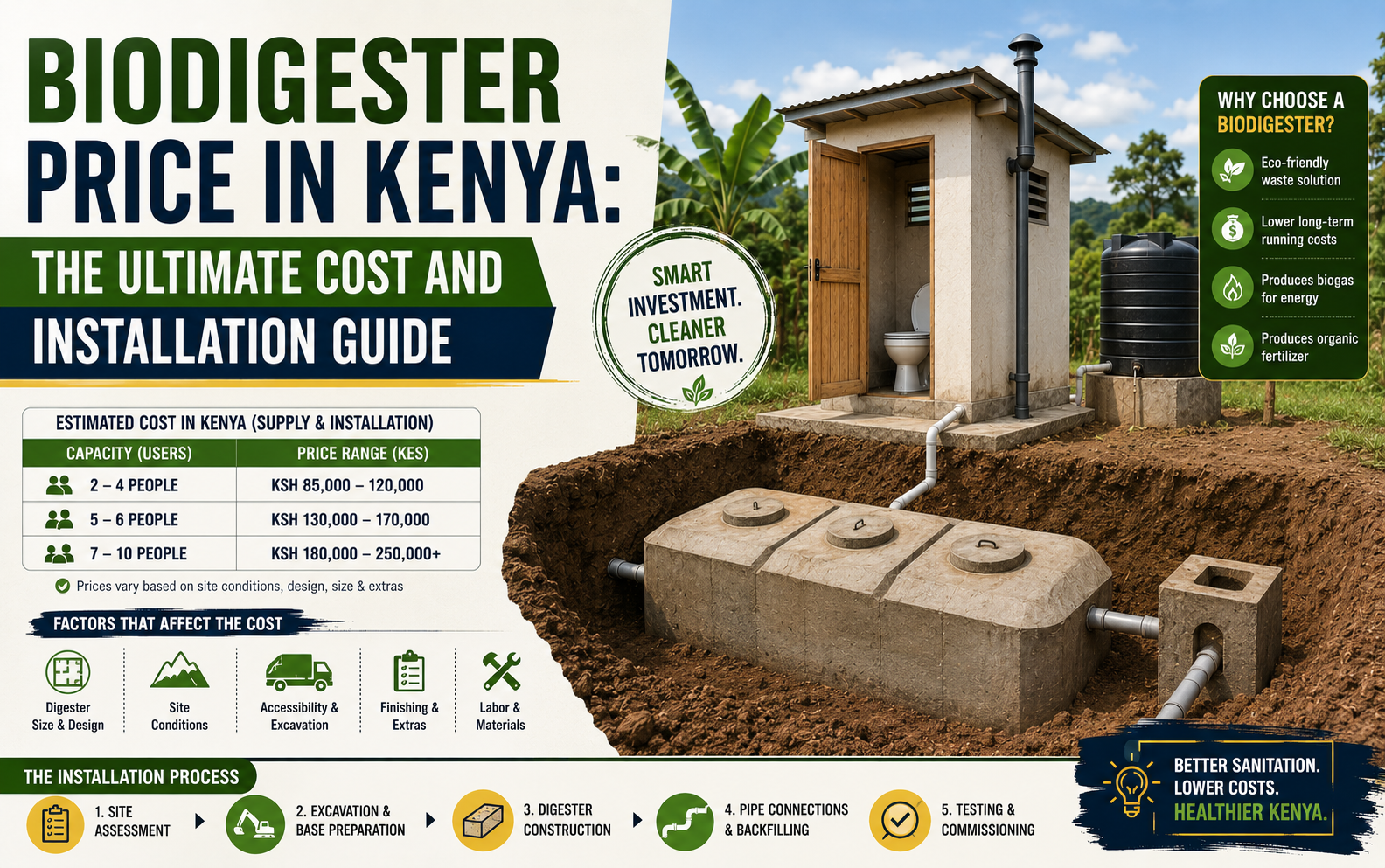
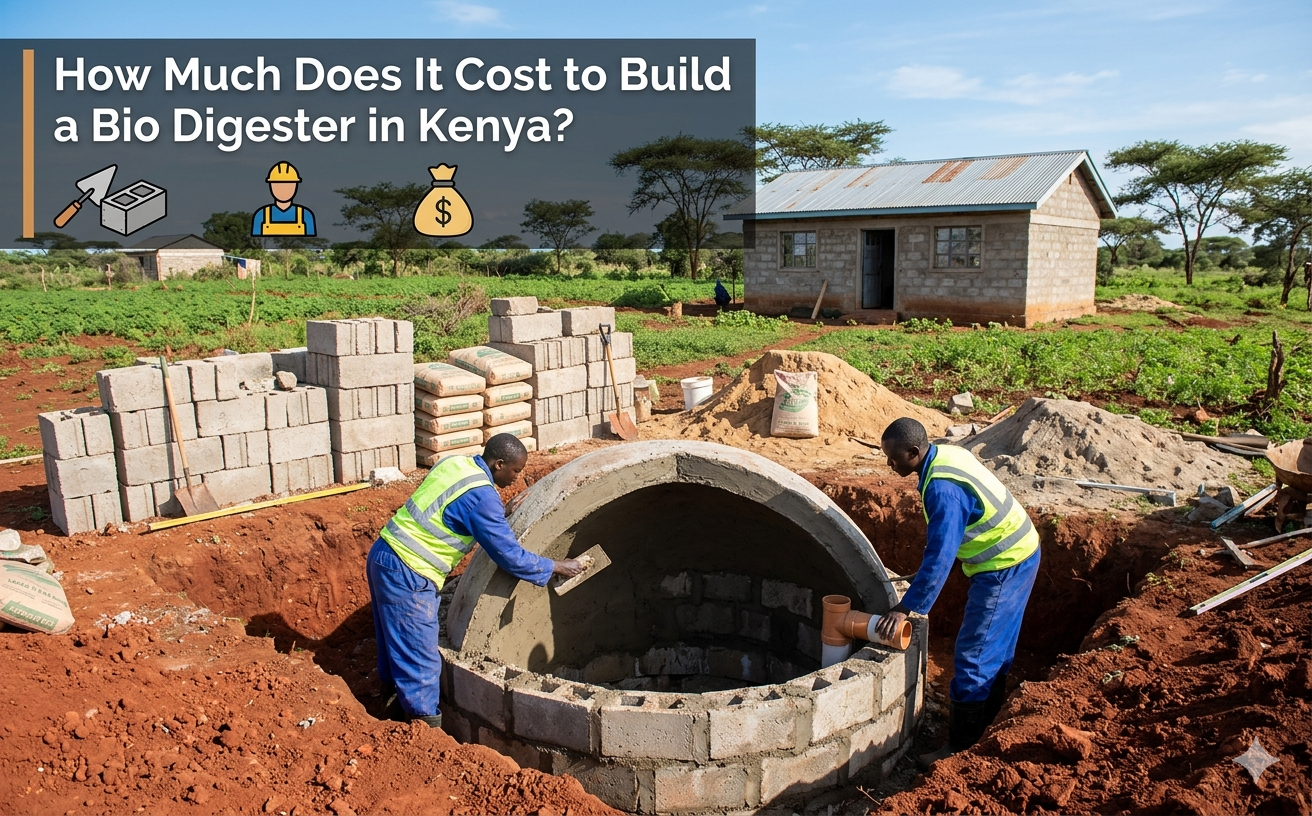
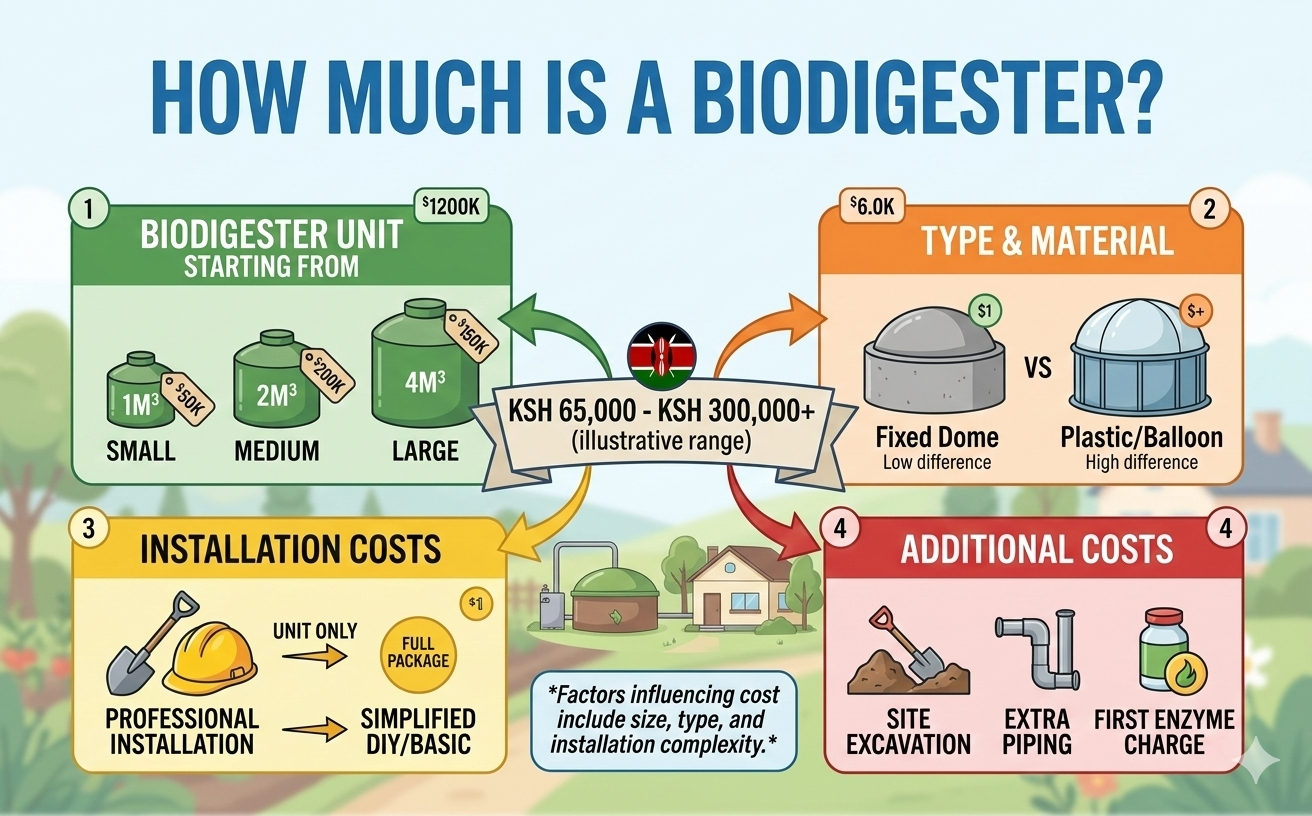
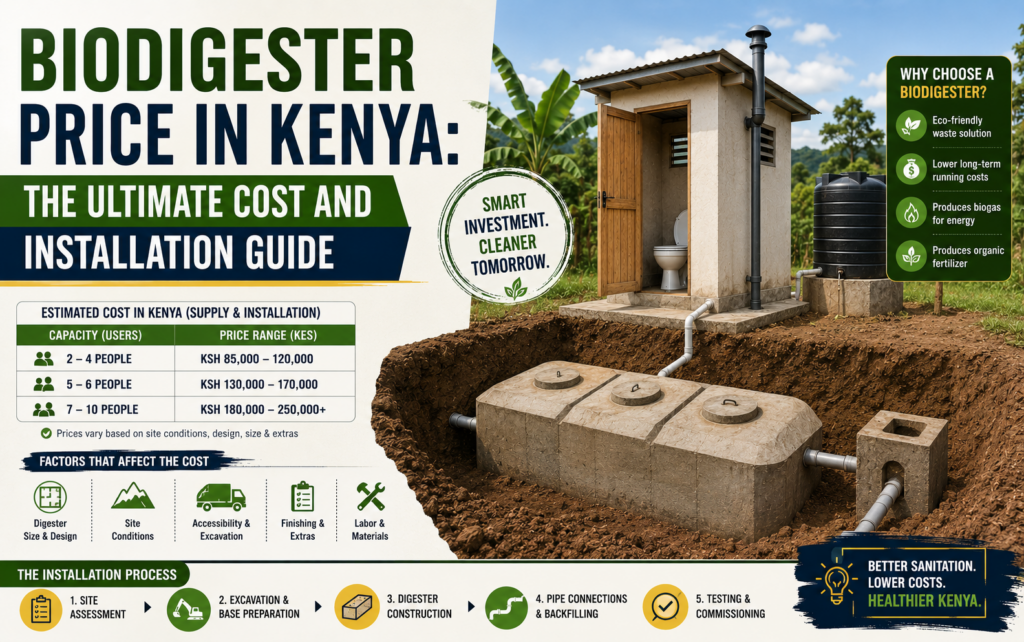
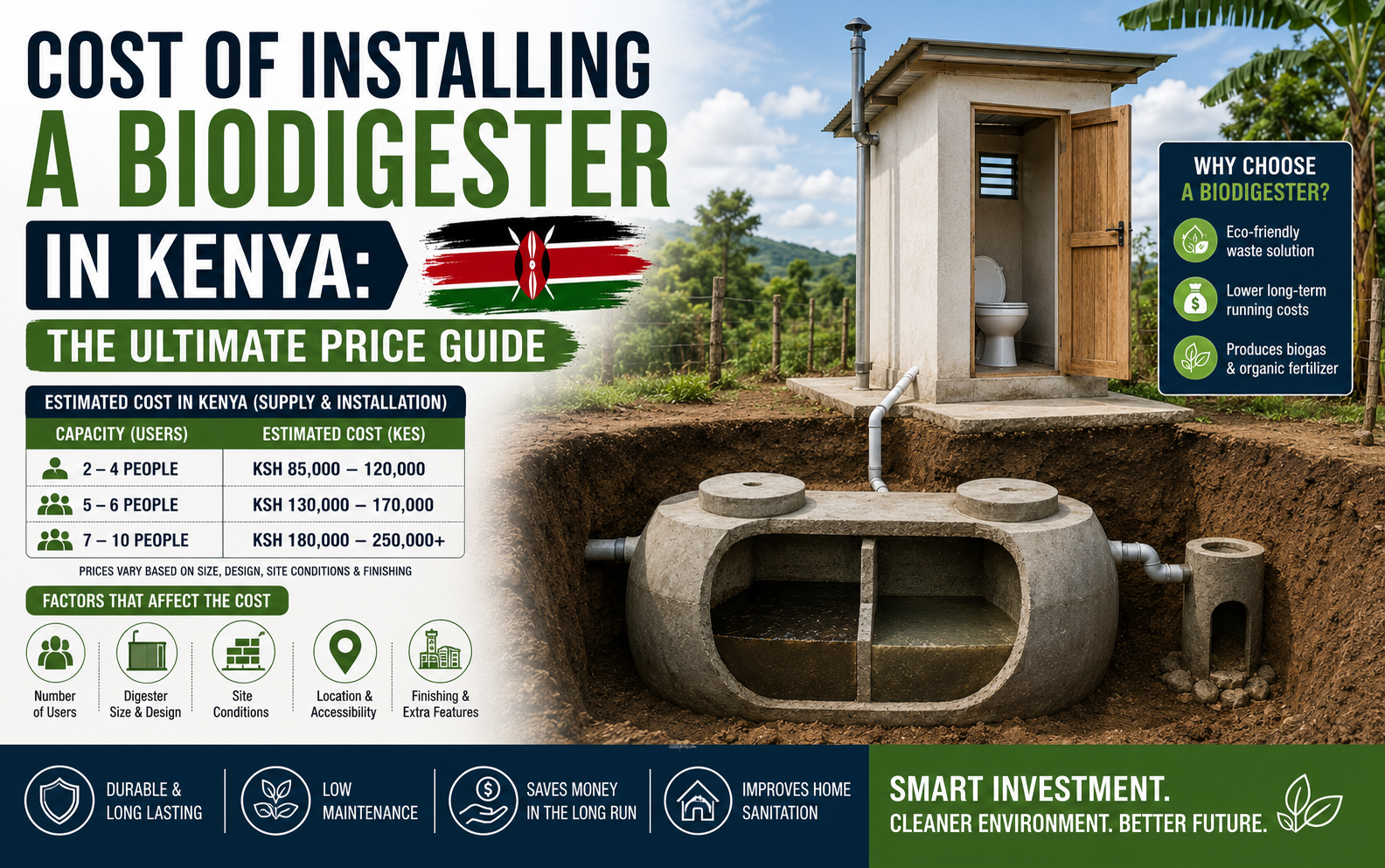
Now, let’s address the big question: How much does a biodigester cost in Kenya?
When evaluating prices, it is important to remember that you are paying for both the physical unit and the expert engineering required to install it correctly. Cutting corners on installation can lead to system failures, so working with a certified specialist is essential.
At Bio Digester Kenya, we offer affordable, transparent pricing with no hidden costs.
Price Breakdown by Size and Capacity
The overall cost depends primarily on the size of the system, which is determined by the number of people using the property daily. Here is a breakdown of our high-quality options:
1M³ Bio Digester | 1 to 10 Users | Small residential homes, cottages | KES 75,000 – KES 95,000 | Buy Now
2M³ Bio Digester | 10 to 20 Users | Medium families, apartments, duplexes | KES 95,000 – KES 120,000 | Buy Now
3M³ Bio Digester | 20 to 35 Users | Large estates, schools, small offices | KES 120,000 – KES 150,000 | Buy Now
4M³ Bio Digester | 35 to 50 Users | Commercial buildings, apartments | KES 150,000 – KES 180,000 | Buy Now
Note: These prices are estimates and can vary based on soil type, location, and specific site requirements. For an exact quote, you can always reach out to our team at Bio Digester Kenya.
1M³ Bio Digester for Small Residential Homes
The 1M³ Bio Digester is our most popular residential unit.
It is ideal for single-family homes with up to 10 daily users. This unit is compact, incredibly easy to install, and perfectly suited for 1/8-acre or 1/4-acre residential plots. If you are building a budget-friendly home, this is your best option.
2M³ and 3M³ Bio Digesters for Medium-Sized Families
If you are building a multi-unit property, a rental apartment block, or a larger family home, the 2M³ Bio Digester or 3M³ Bio Digester is the way to go.
These systems handle higher volumes of wastewater daily without breaking a sweat, ensuring your tenants or family enjoy hassle-free sanitation year-round.
4M³ Bio Digesters and Custom Systems for Commercial Spaces
For commercial properties, shopping malls, churches, public institutions, or large gated communities, we recommend the heavy-duty 4M³ Bio Digester or custom-designed multi-m³ configurations. These systems are specifically engineered to handle high surges of wastewater during peak hours.
Bio Digester Kenya: Your Trusted Partner in Waste Management
Why should you choose us? Well, waste management is a precise science. If installed incorrectly, a system can leak, clog, or fail to digest waste properly, leading to unpleasant smells and pooling water.
At Bio Digester Kenya, we are seasoned professionals. We don’t just sell products; we offer peace of mind. We design, build, and deliver state-of-the-art waste systems that stand the test of time. Our experienced team of engineers handles everything from initial site surveys to final plumbing connections.
The Vital Role of Bio Digester Bacteria
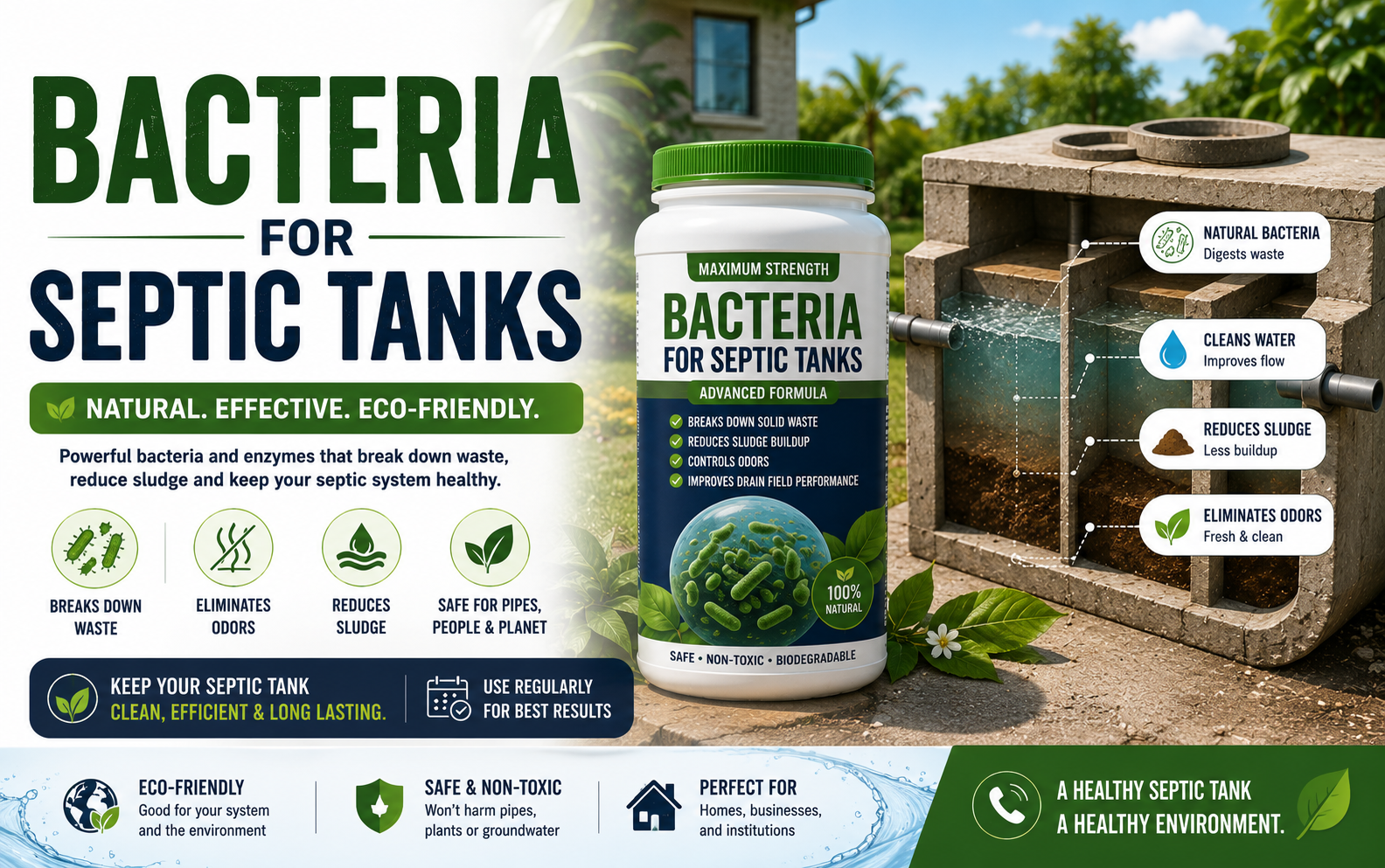
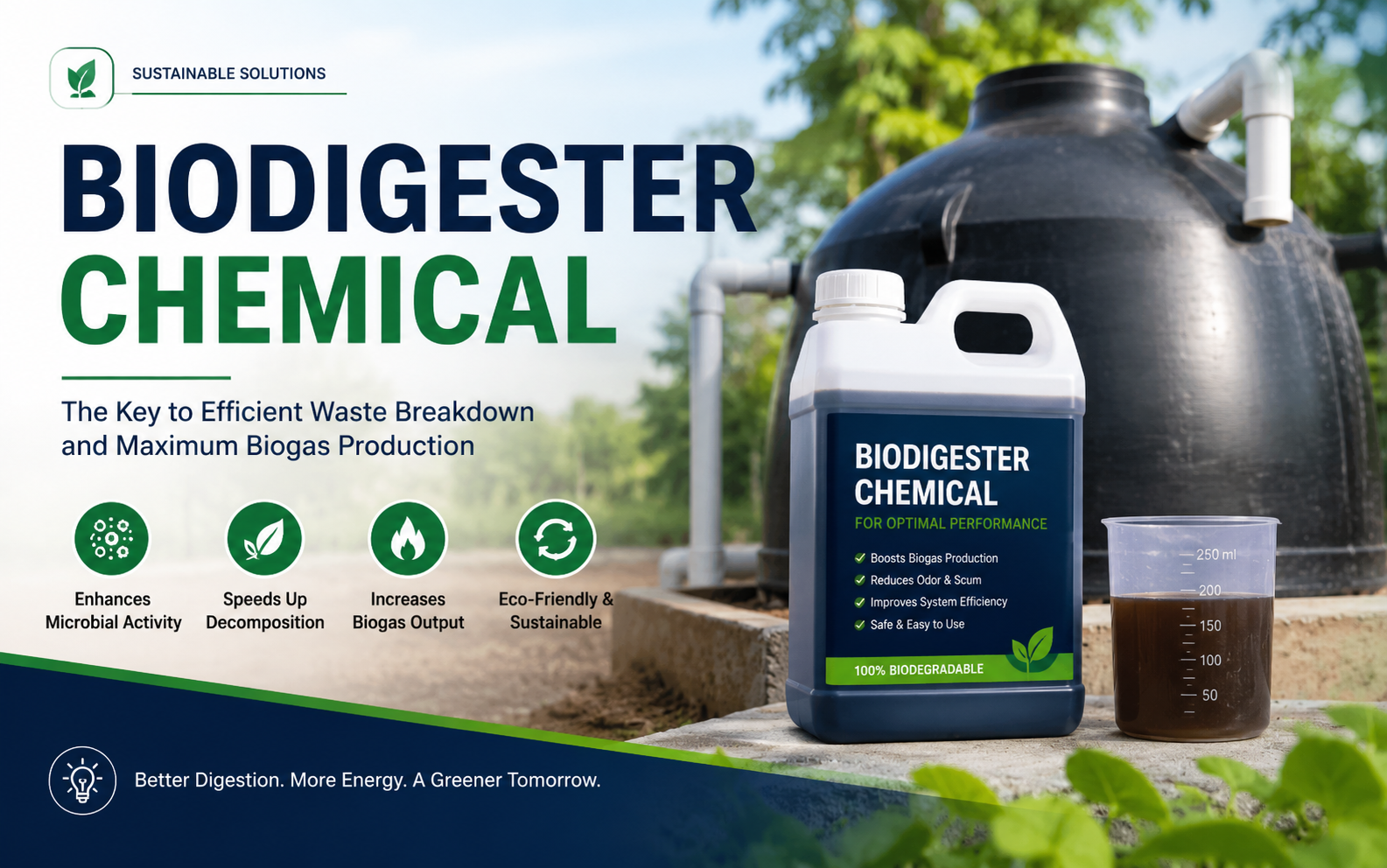
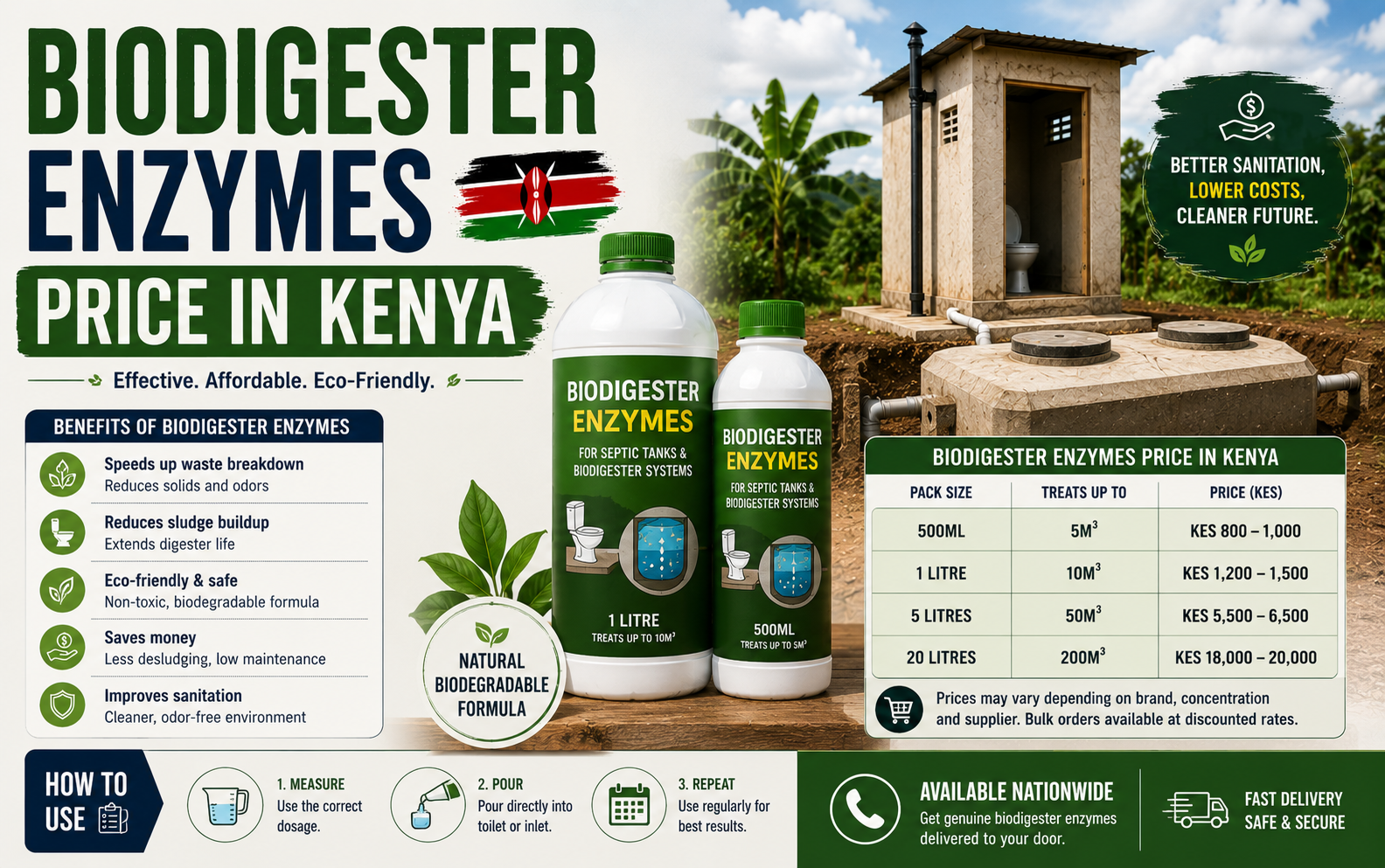
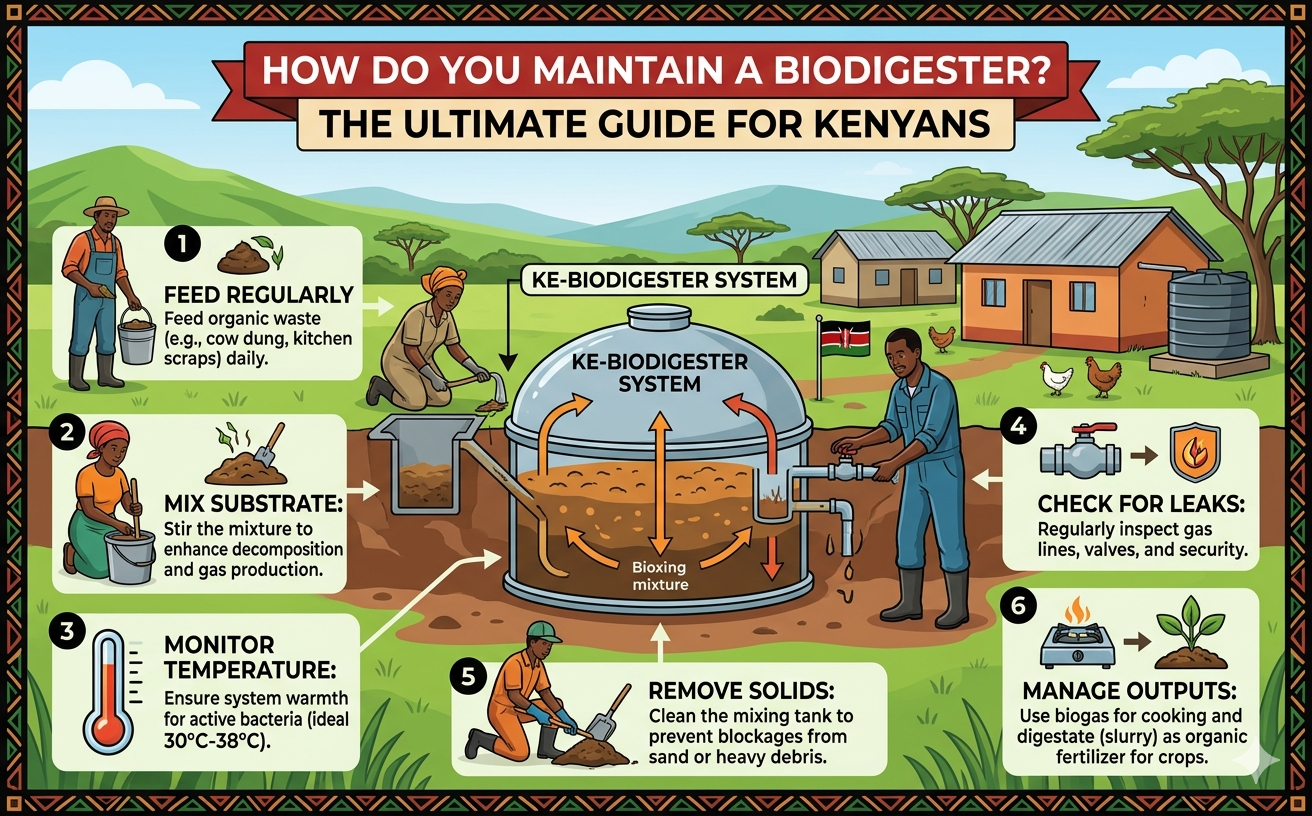
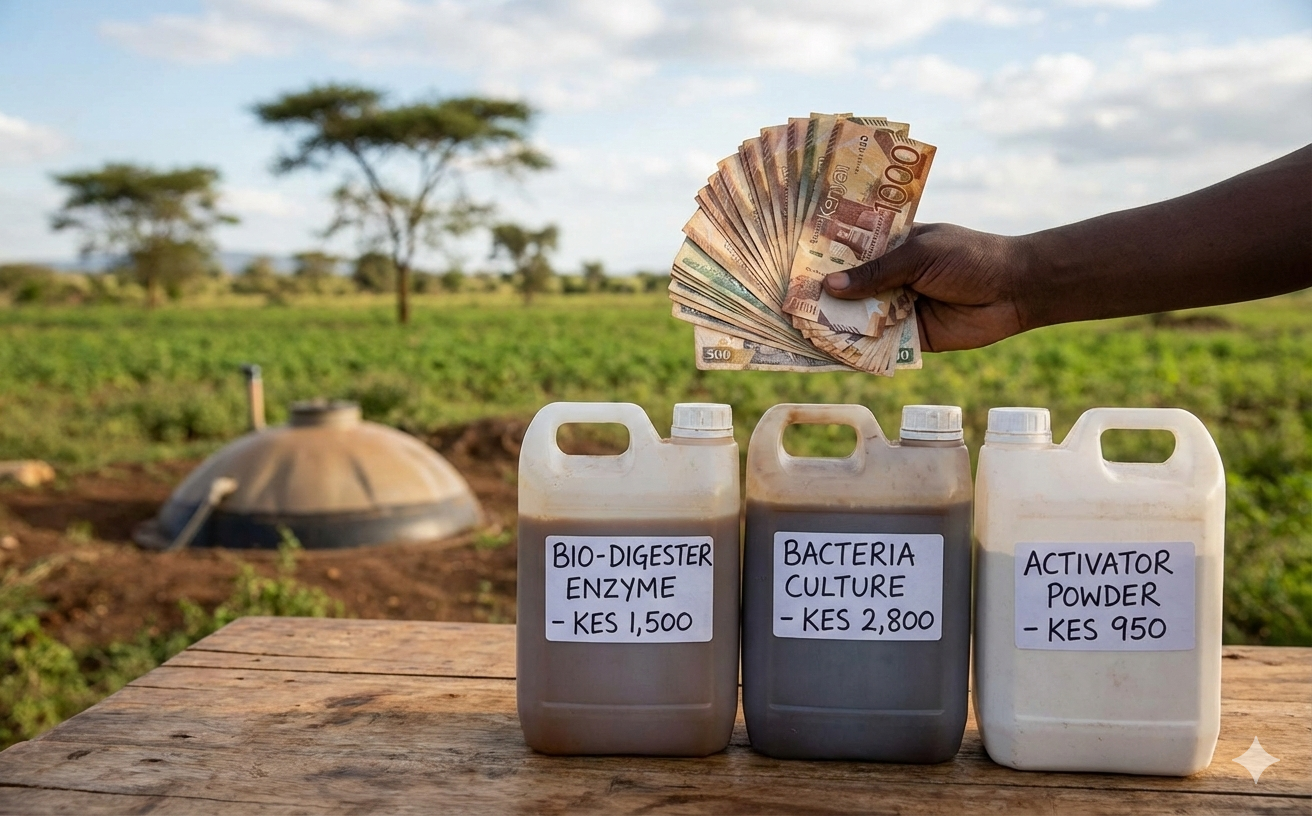
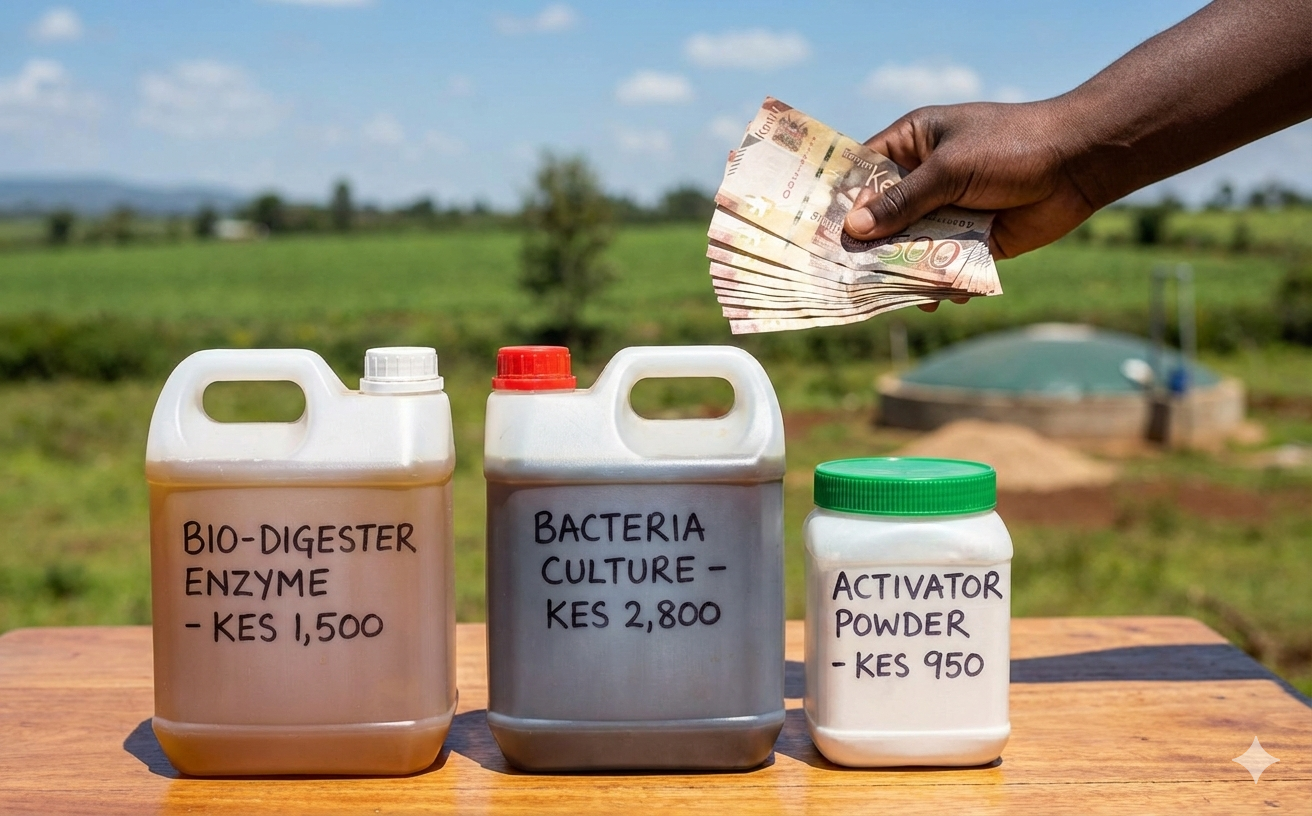
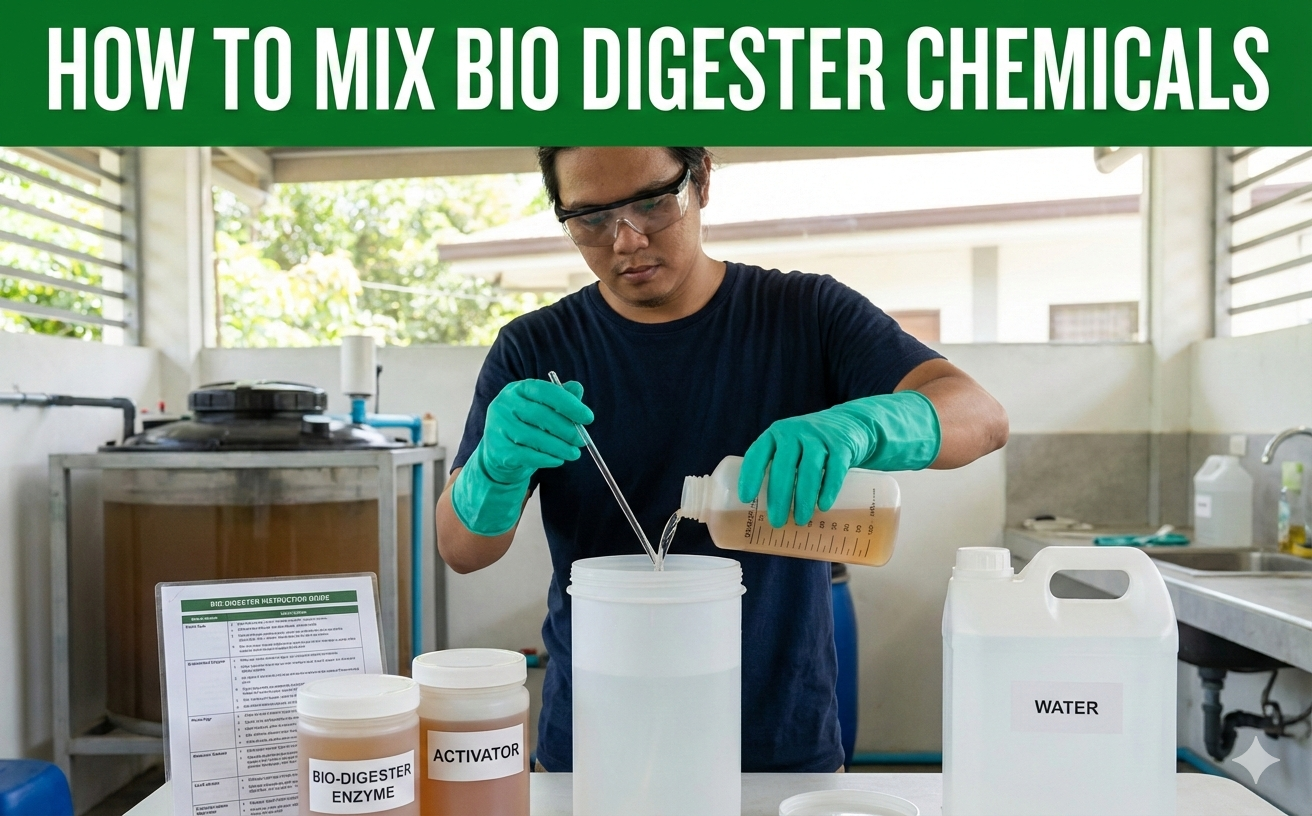
Your system relies on active bacteria to consume waste. Over time, household chemicals, disinfectants, and harsh soaps can kill these beneficial microorganisms. To keep the digestion process running smoothly, we recommend periodic maintenance with high-quality bacterial additives.
We supply a complete line of premium treatment products, available directly through our online store:
- Bio Digester Bacteria – 200g – Ideal for monthly or quarterly maintenance of small home systems.
- Bio Digester Bacteria – 400g – Excellent for medium-sized systems and residential maintenance.
- Septic Tank Bacteria – 250g – Formulated to boost performance in both older septic systems and modern biodigesters.
- Bio Digester Bacteria – 5L – The perfect commercial-grade liquid solution for larger installations.
Simply flush these treatments down your toilet once every few months to keep your system clean, active, and completely odor-free.
FAQs
1. Can a biodigester septic tank overflow?
No, a properly installed and maintained biodigester septic tank will not overflow. Because the solid waste is continuously broken down into water and air, the liquids flow freely into the soak pit to be absorbed by the soil. The only way a system might back up is if non-biodegradable items (like plastics or diapers) are flushed and block the pipes.
2. How often do I need to add bio digester bacteria?
We recommend adding a fresh dose of bio digester bacteria once every 3 to 6 months, or whenever you notice a decline in drainage speed or faint odors. It is as simple as pouring the powder or liquid into your toilet bowl and flushing!
3. Can I use a biodigester in black cotton soil?
Yes, you can! While black cotton soil is notorious for poor water absorption, our engineering team designs custom drainage fields and deep soak pits backfilled with sand and gravel. This ensures efficient water drainage even in difficult soil conditions.
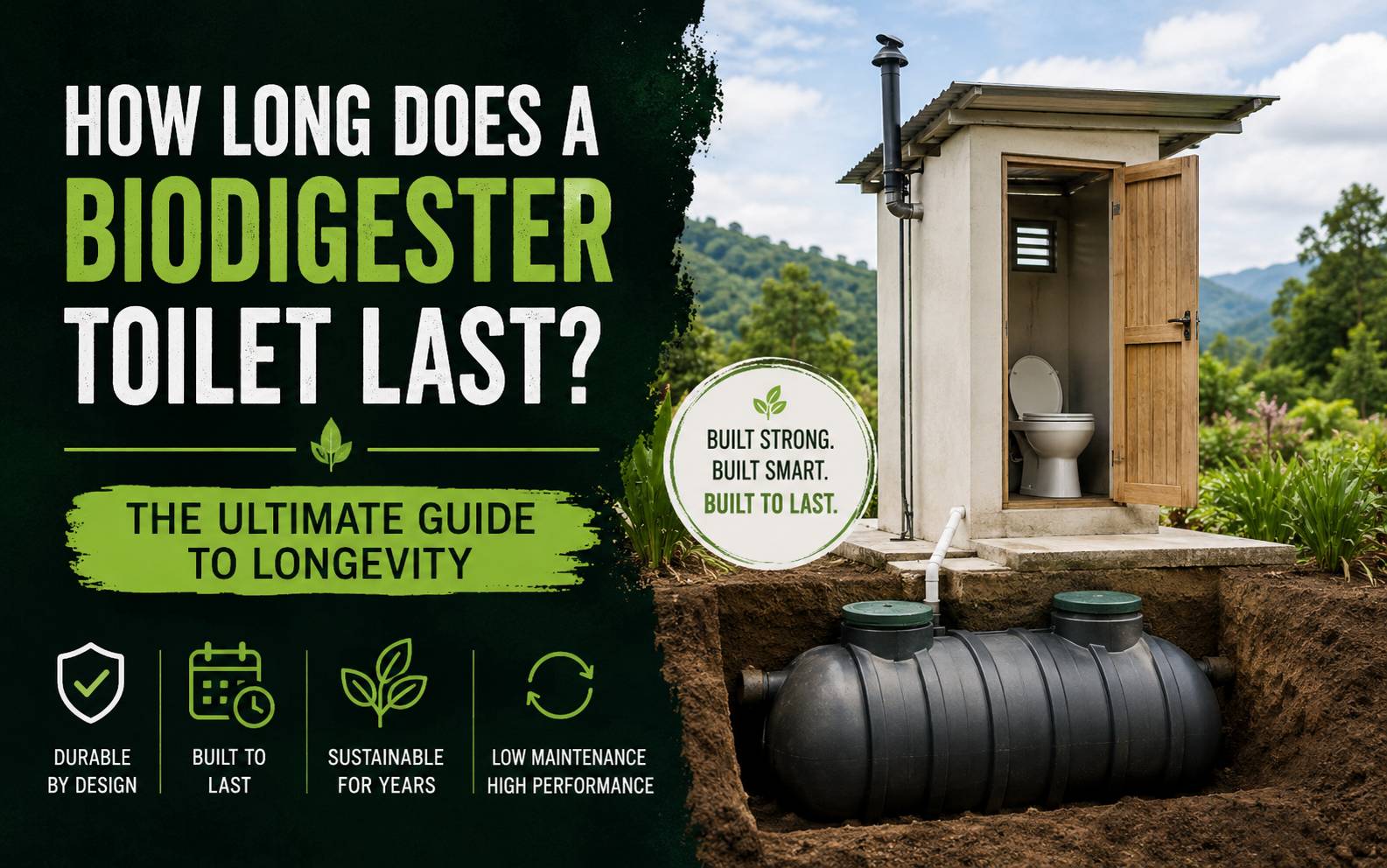
4. How long does a biodigester system last?
Our concrete and high-density plastic biodigester chambers are built to last a lifetime. The structural components can easily last upwards of 50 years, while the biological system continues to run indefinitely as long as you avoid flushing toxic chemicals.
5. Can I connect both kitchen greywater and toilet blackwater to the same biodigester?
Yes, but we highly recommend installing a grease trap on your kitchen line first. Grease and cooking oils can form a thick layer on top of the water inside the digester, slowing down the aerobic and anaerobic breakdown. A grease trap captures these oils before they reach the main system, ensuring optimal performance.