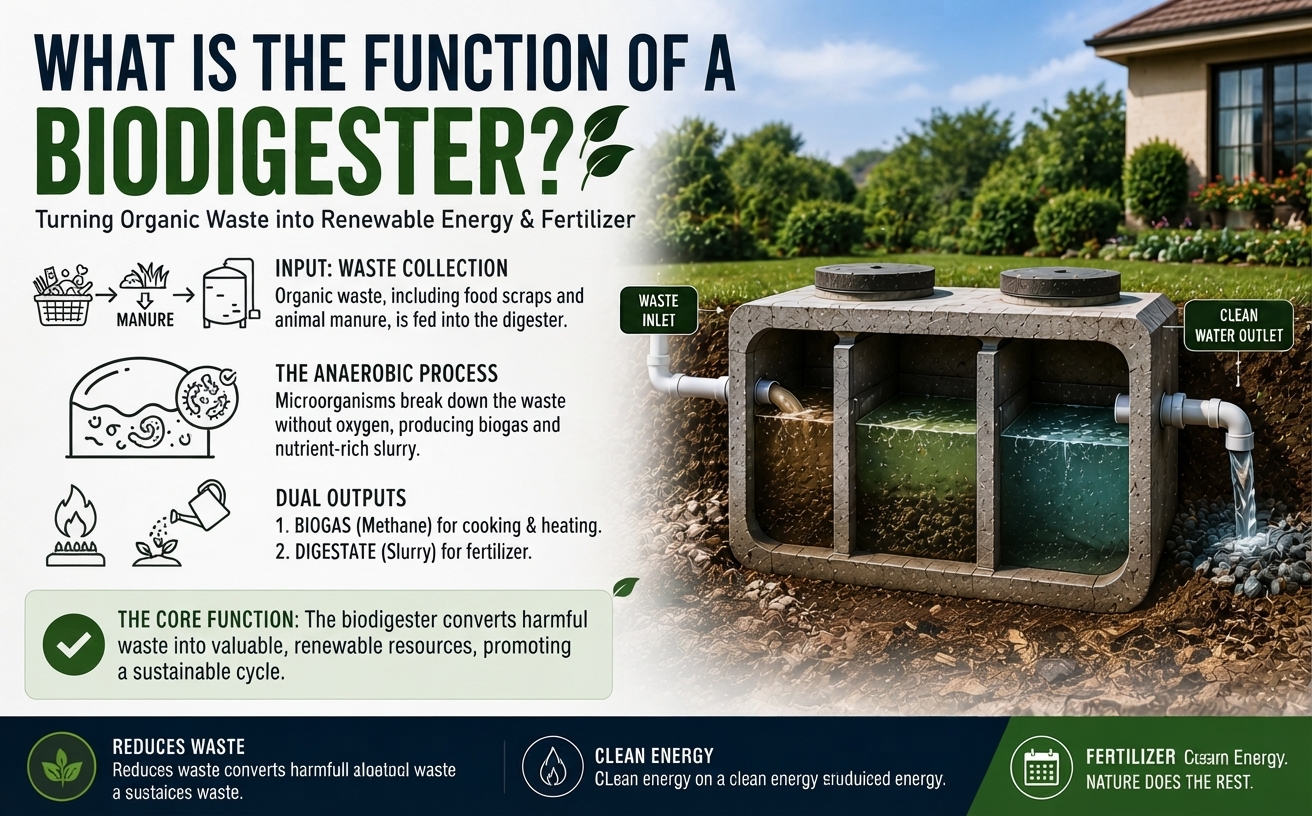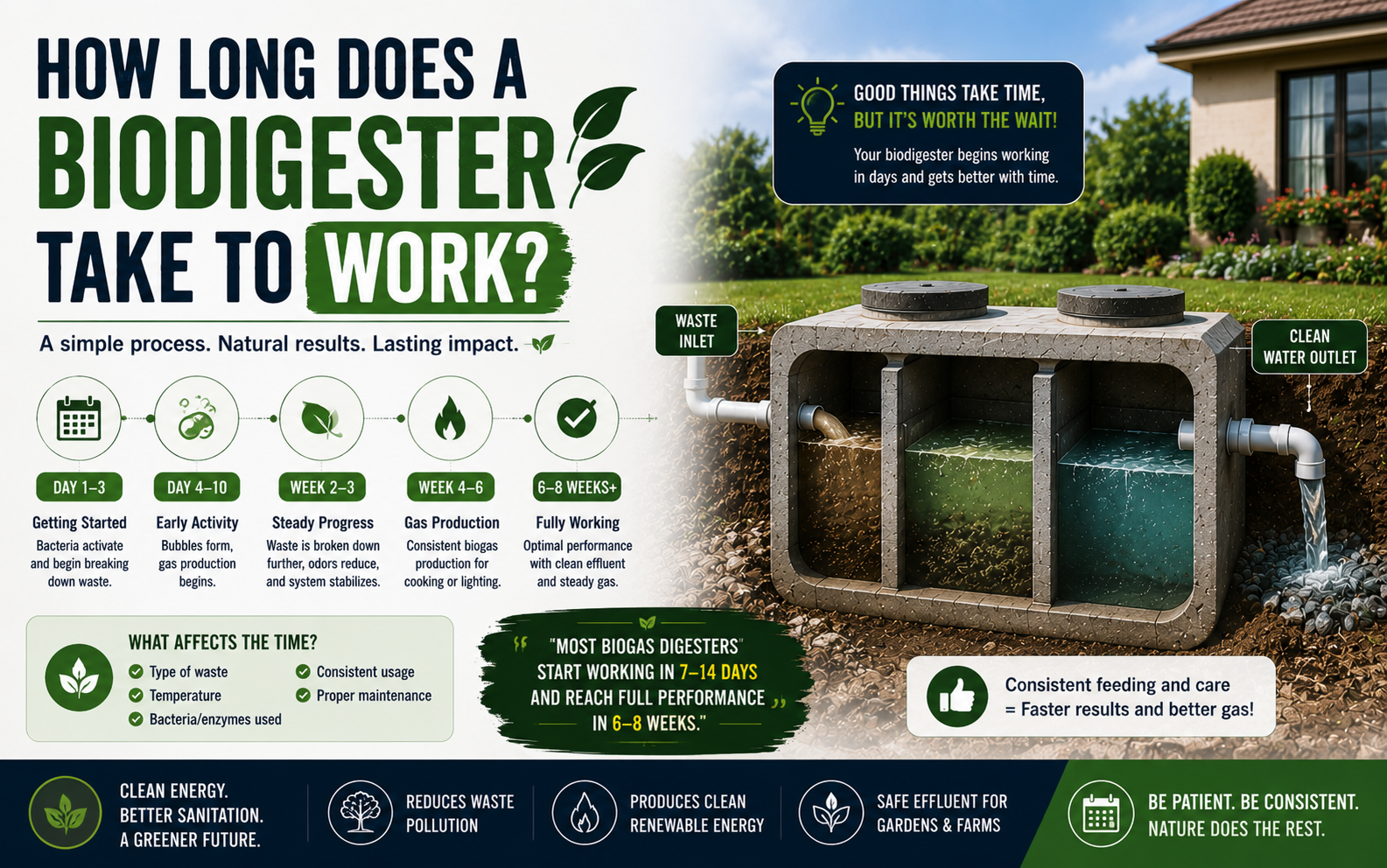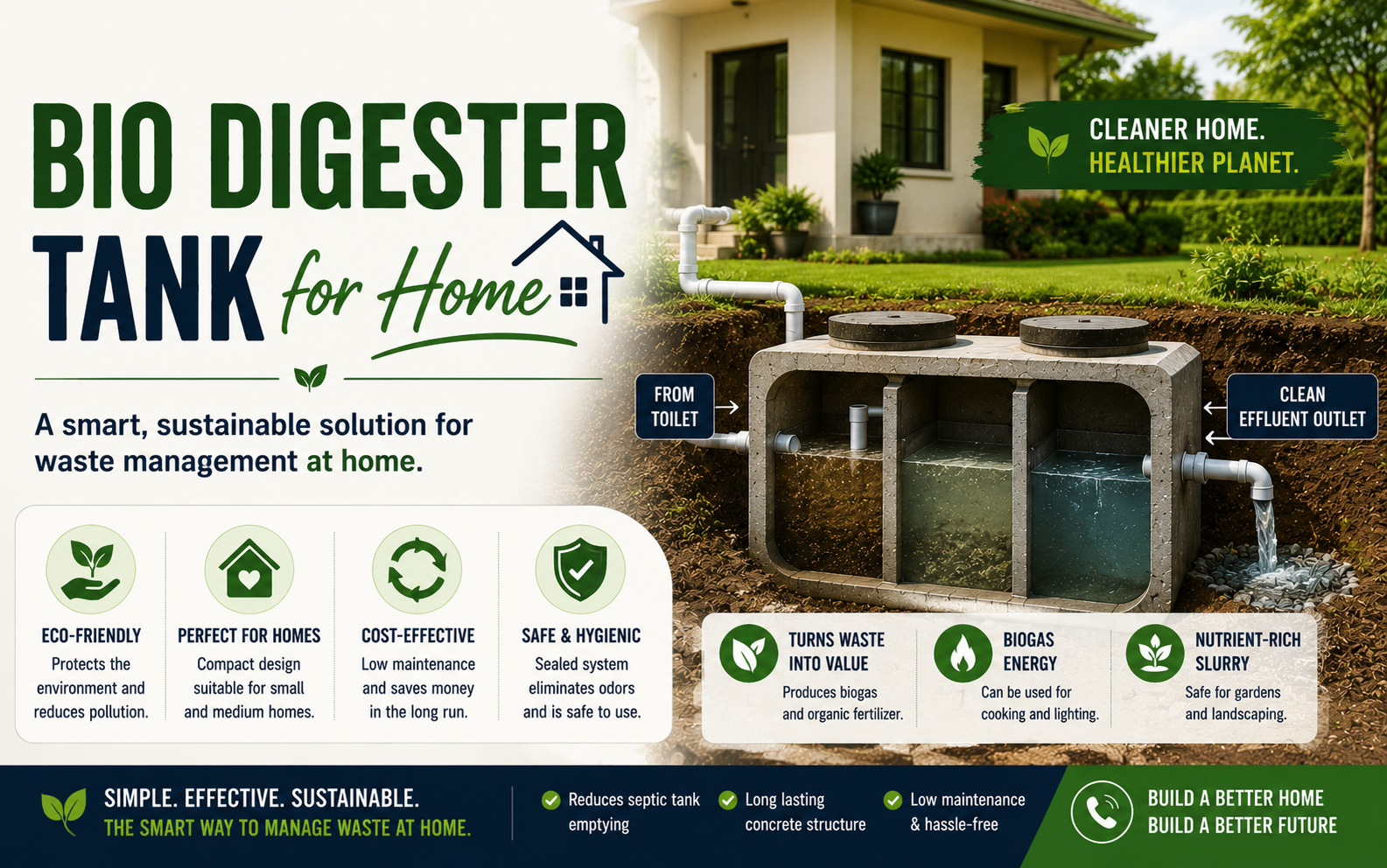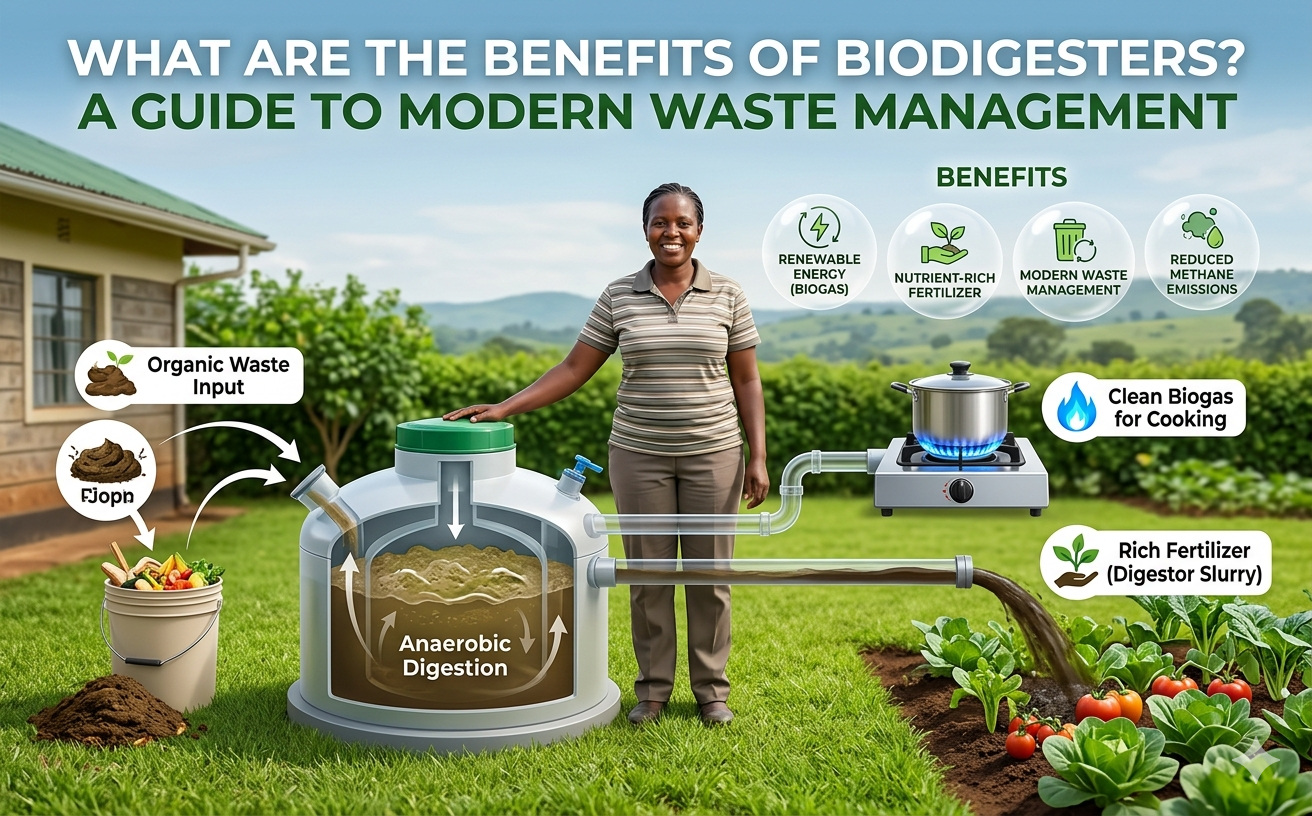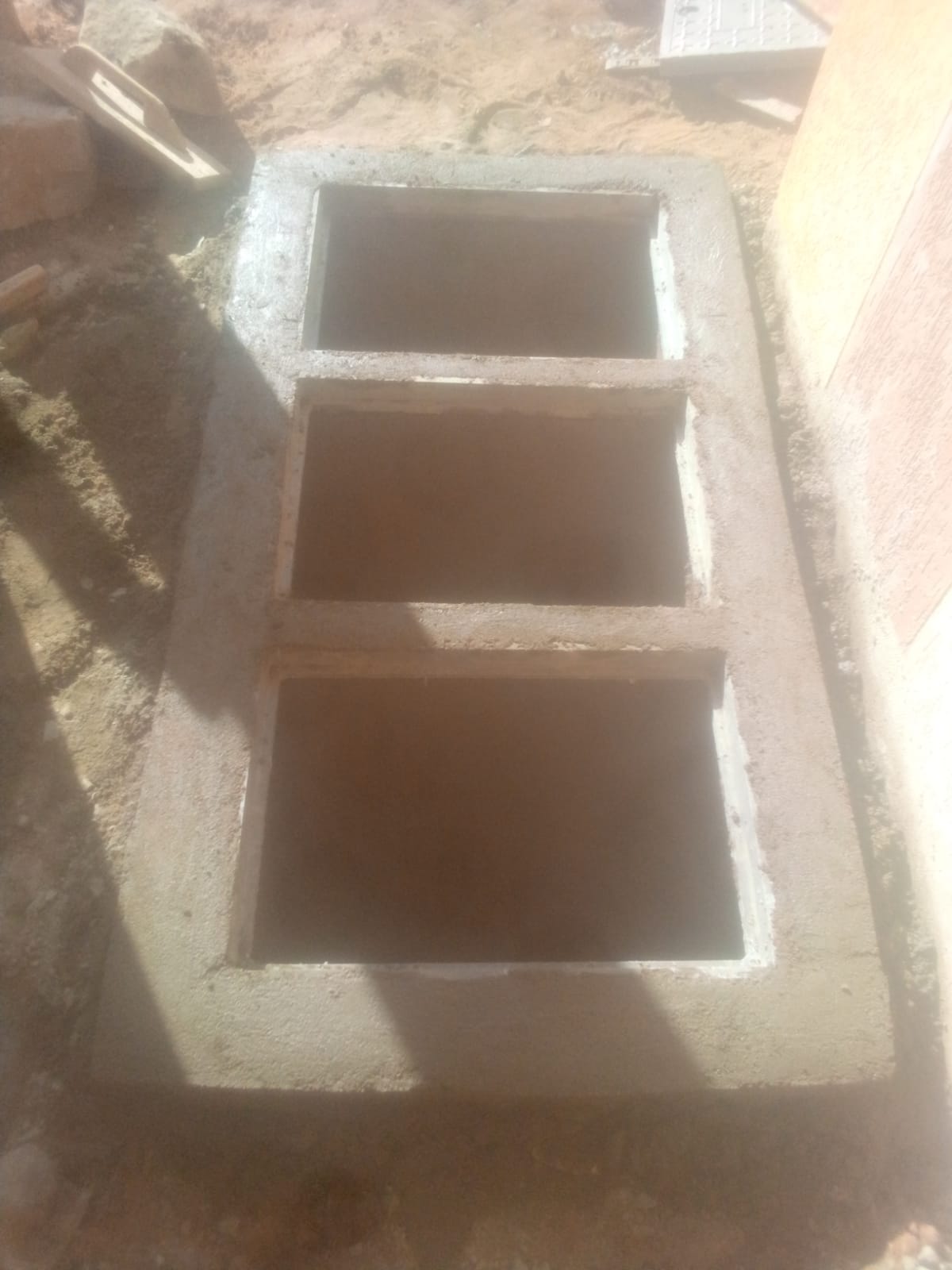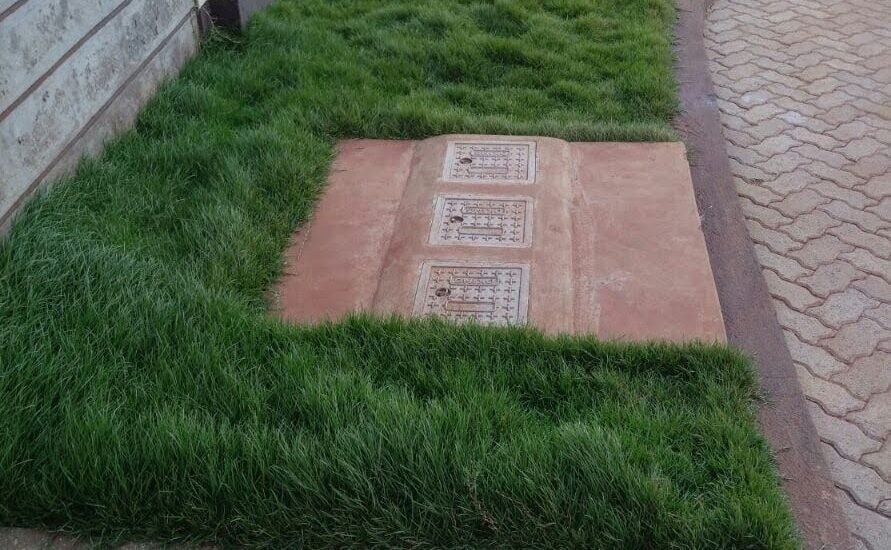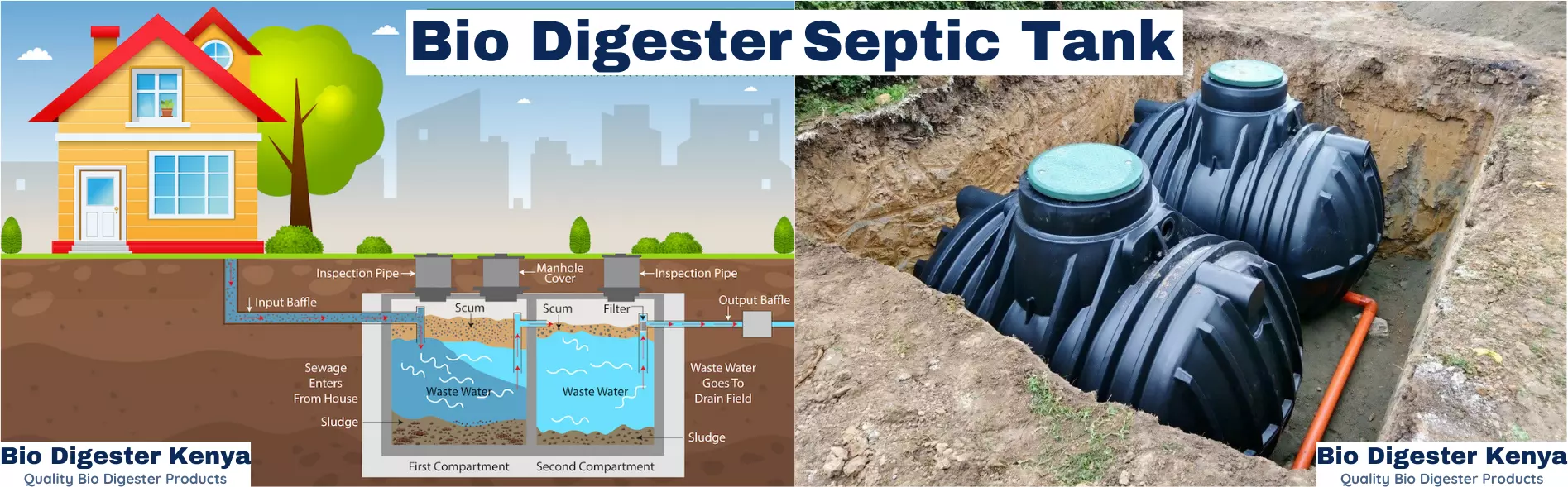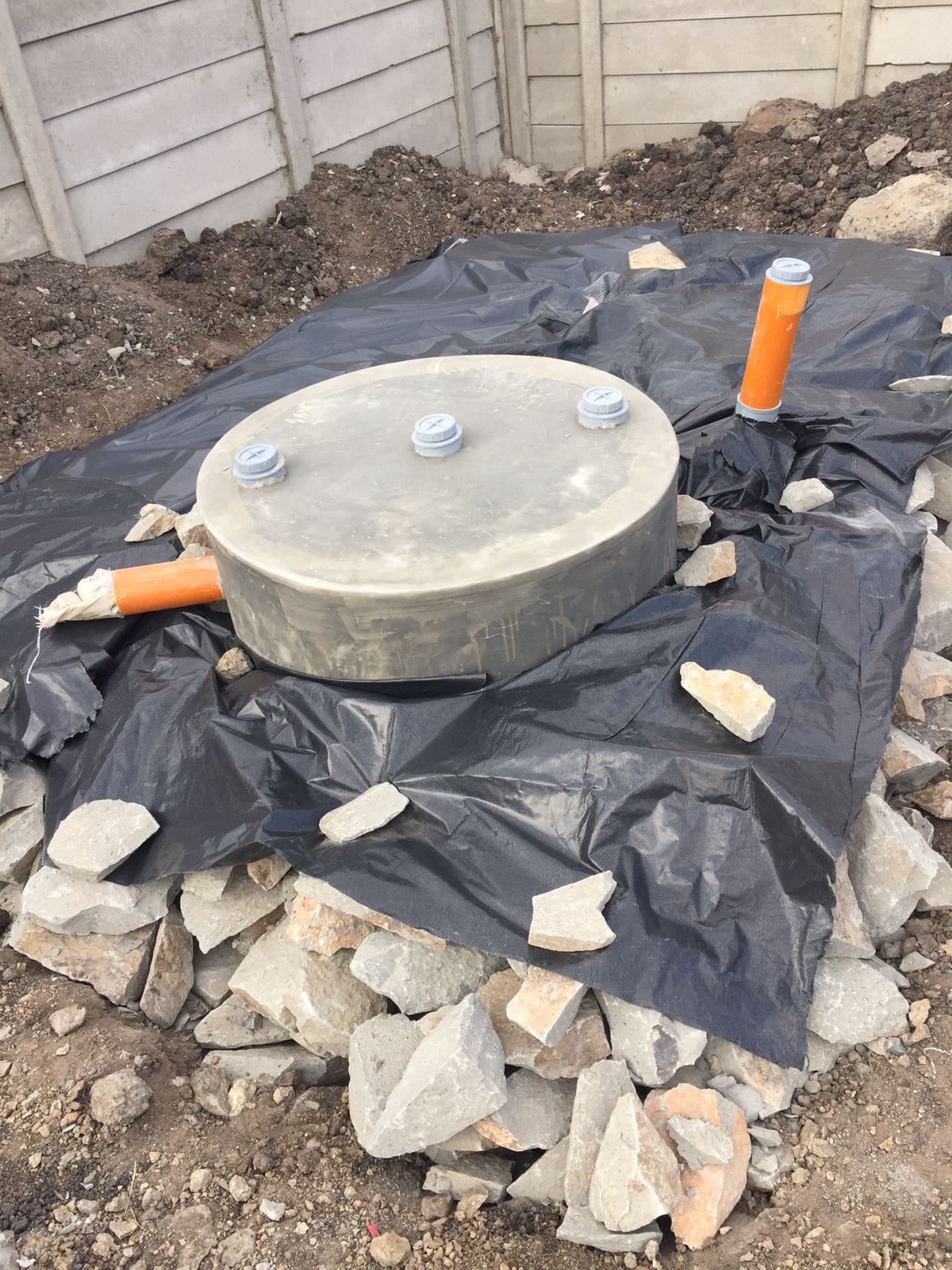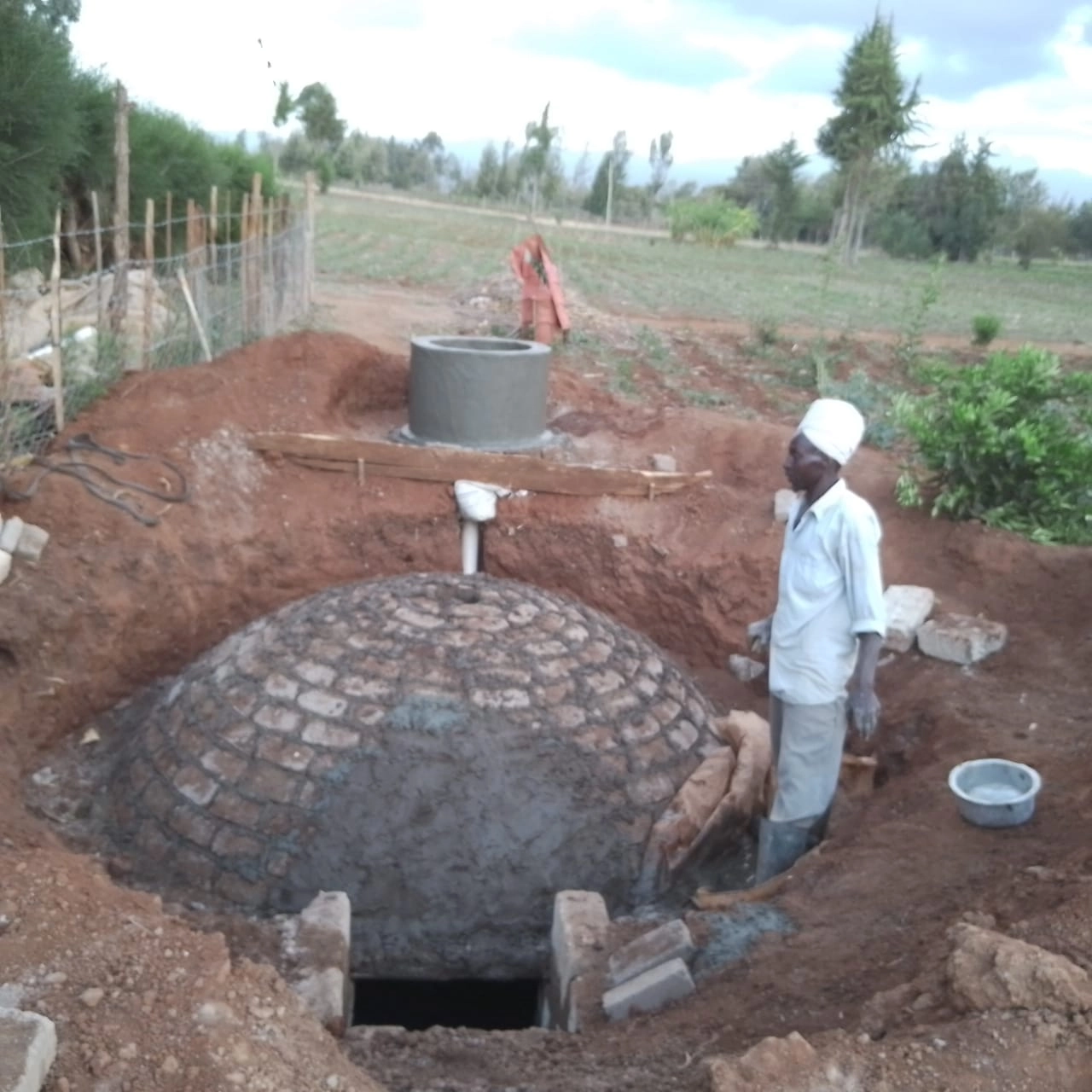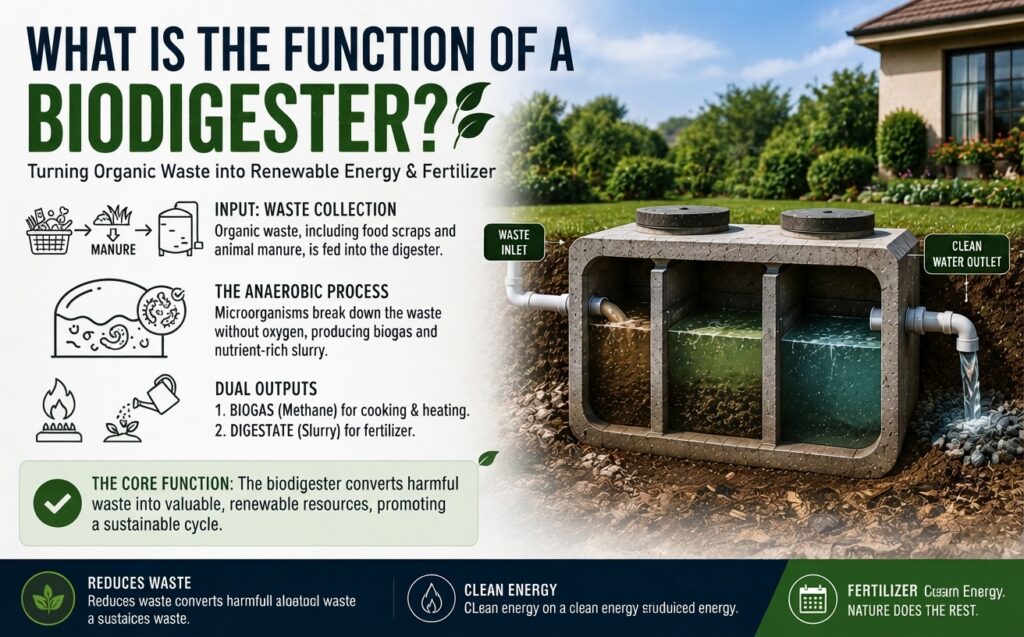
The primary function of a biodigester is to provide an efficient, anaerobic waste treatment process that uses specialized enzymes to decompose organic human waste.
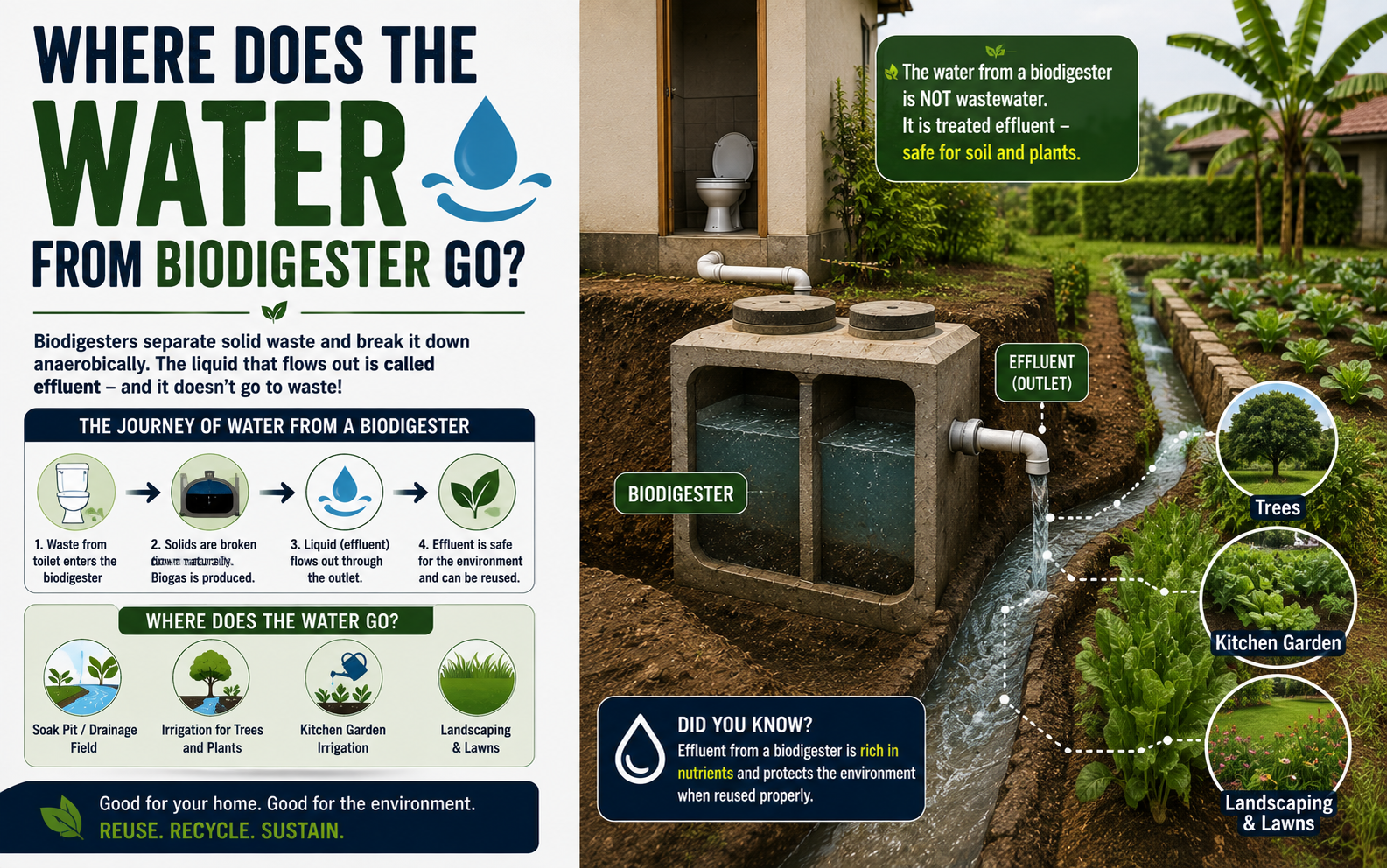
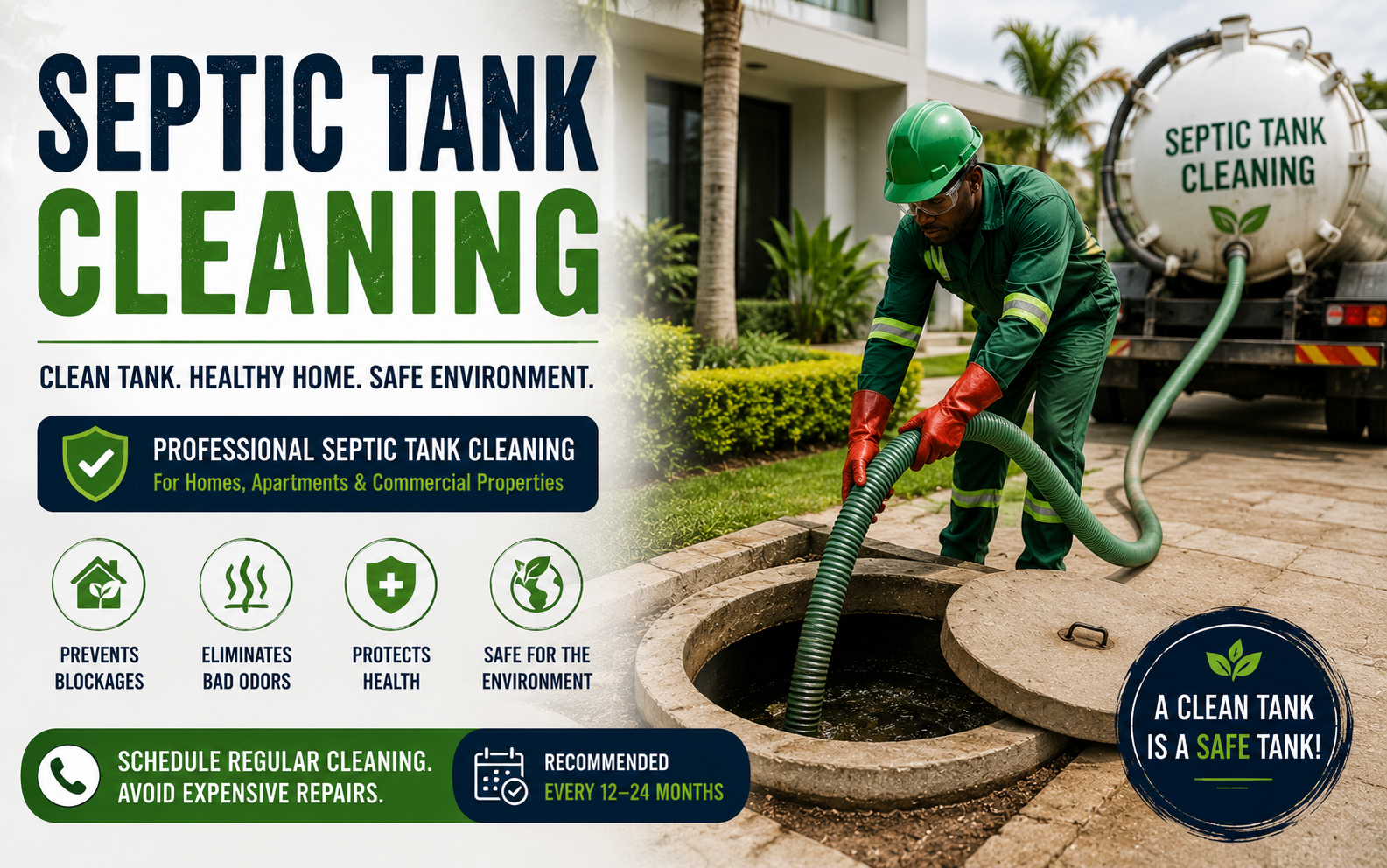
Unlike traditional septic tanks, it converts solids into treated water and odorless air, which are then absorbed into the soil via a soaking area, eliminating the need for recurring exhaust bowser services.
How a Biodigester Works: The Engineering Reality
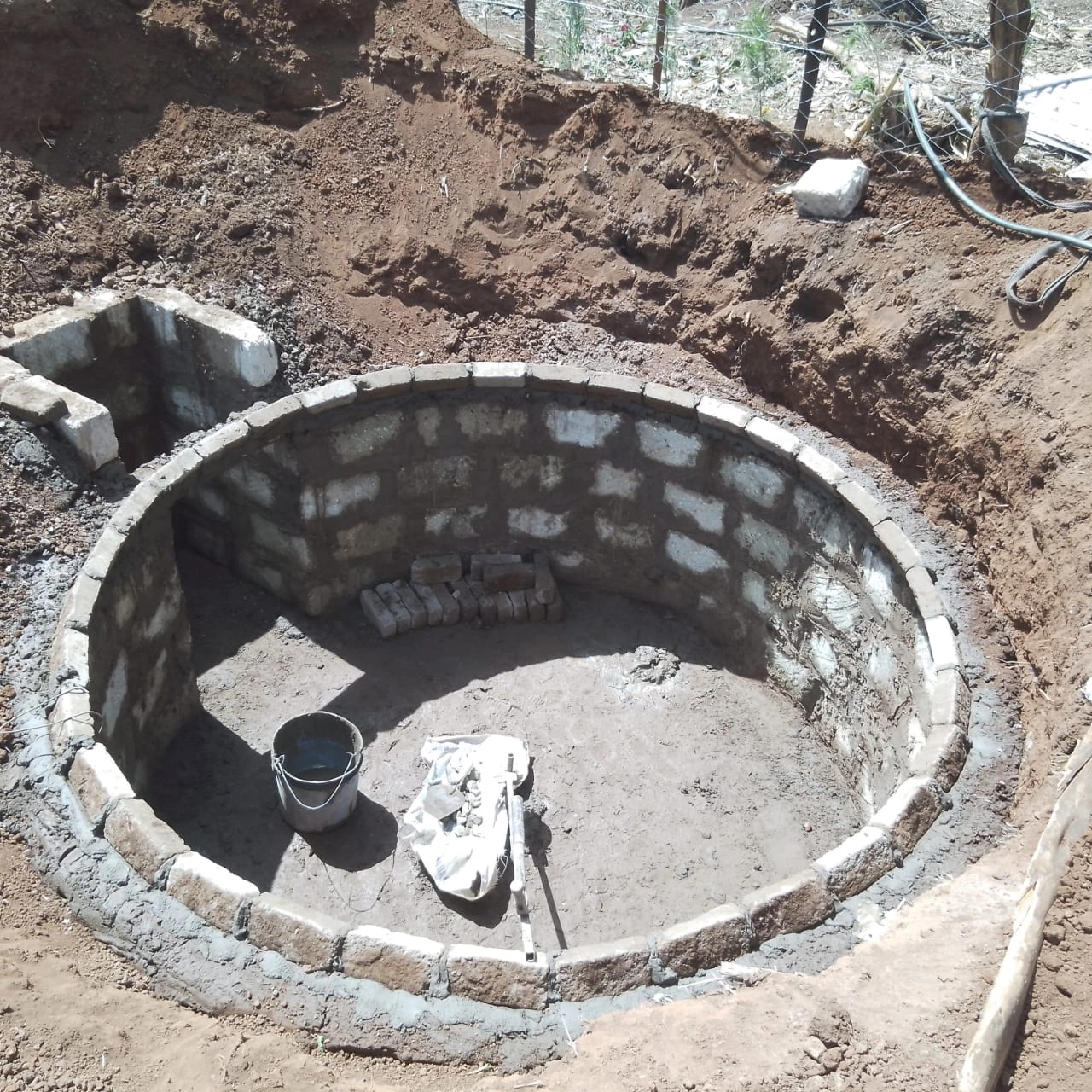
For years, Kenyan developers relied on the “concrete ring” method—essentially building a large hole in the ground and hoping the soil would handle the overflow.
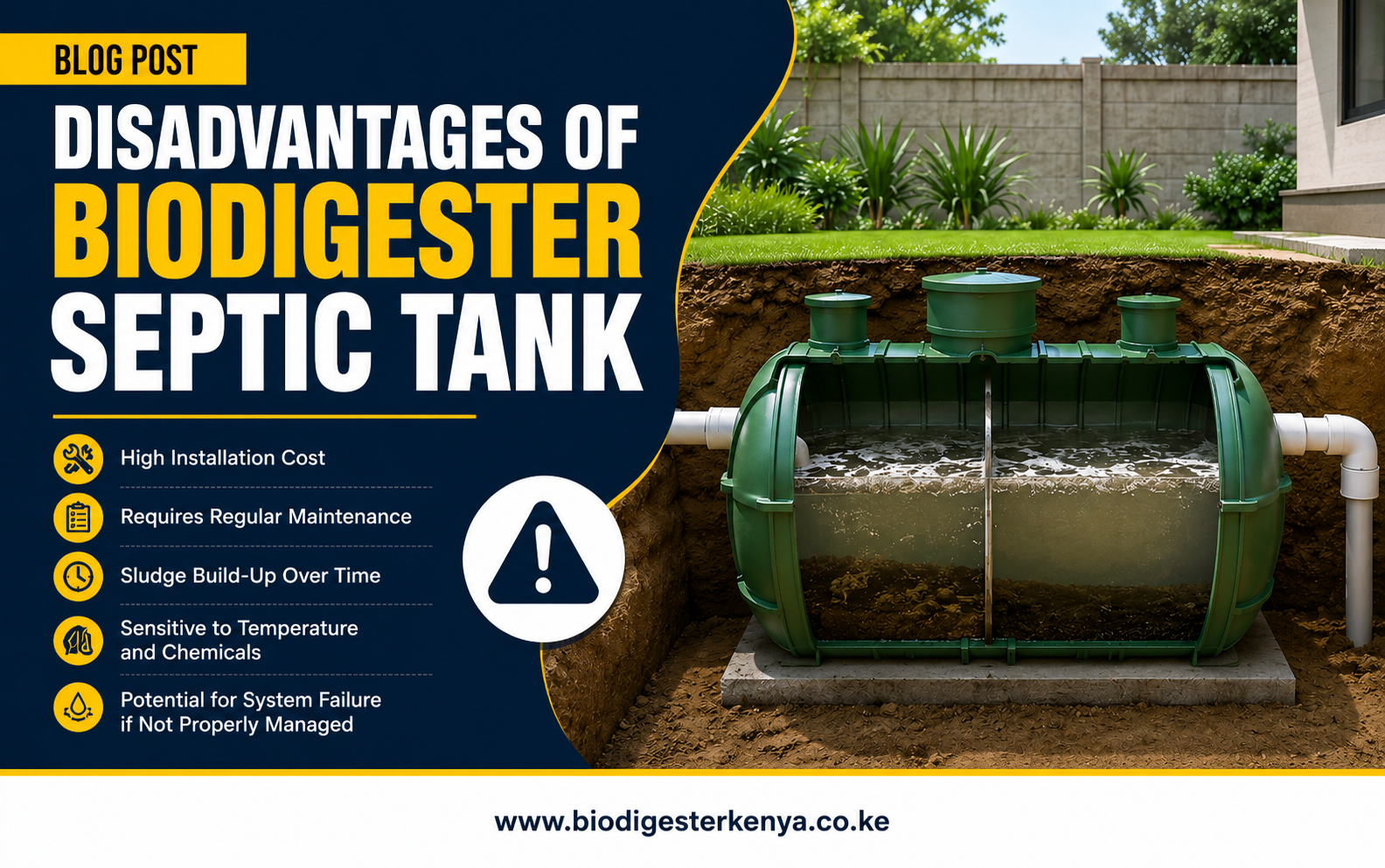
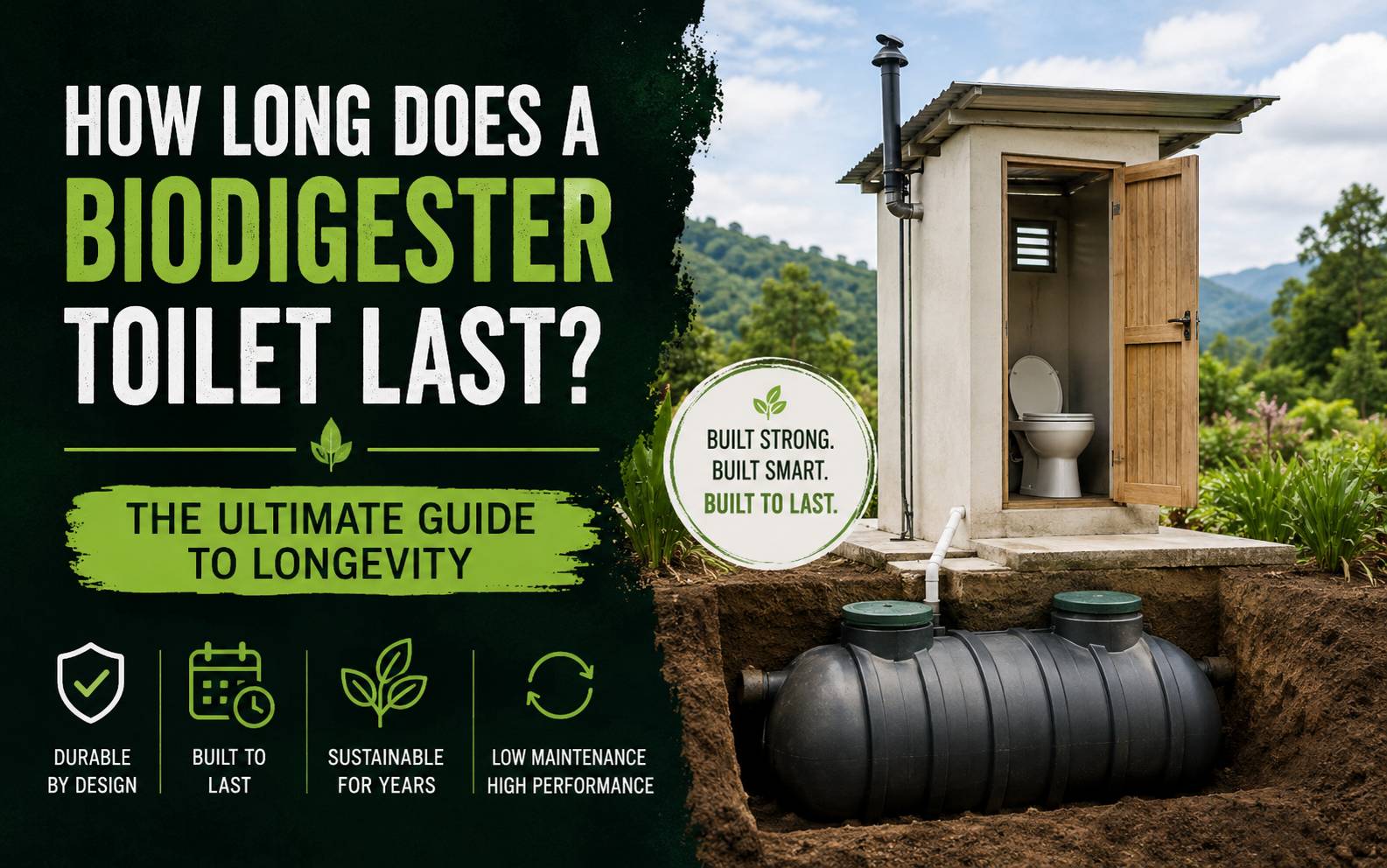
This is fundamentally different from a modern system. A biodigester is a biological reactor, not just a storage tank.
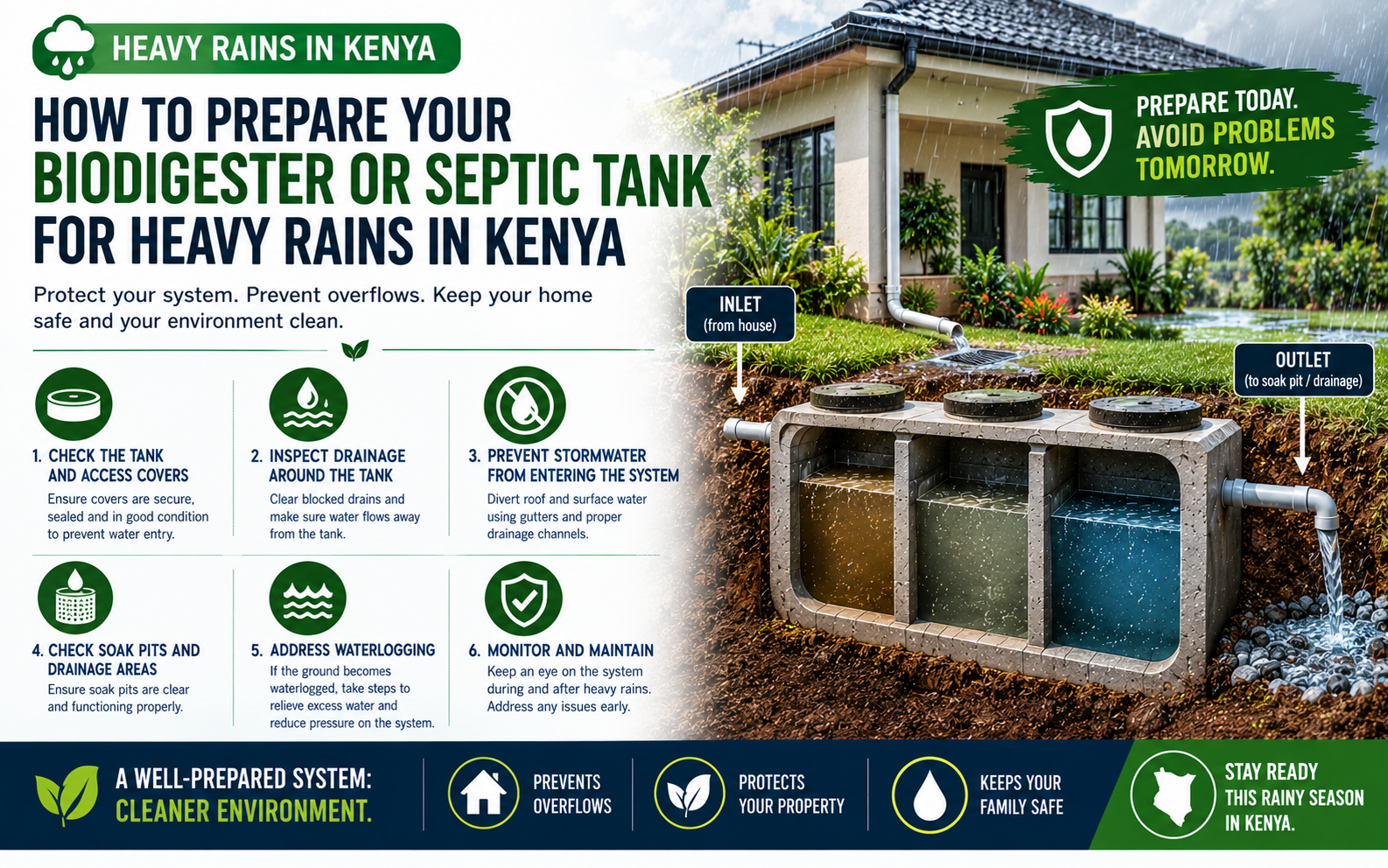
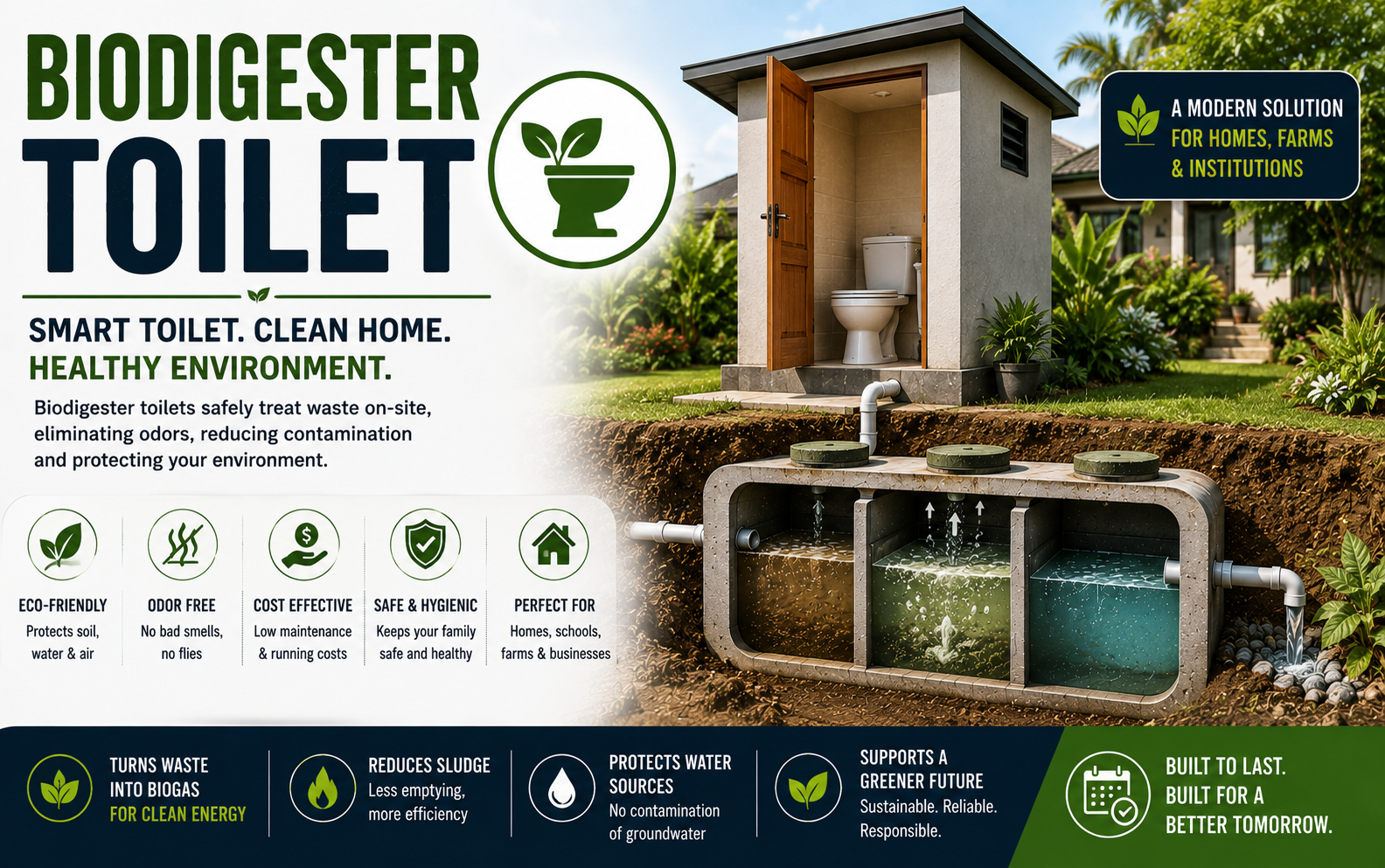
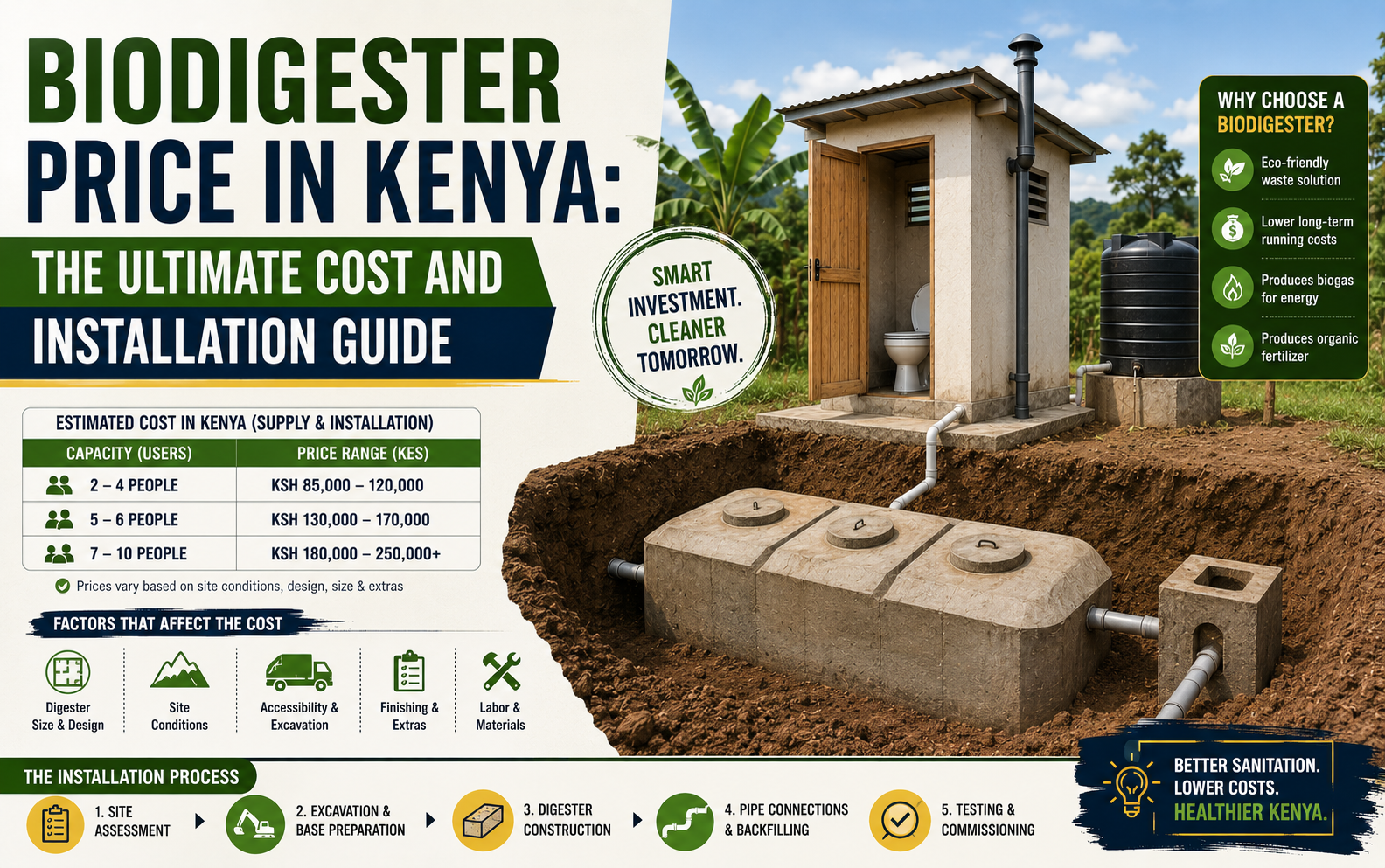
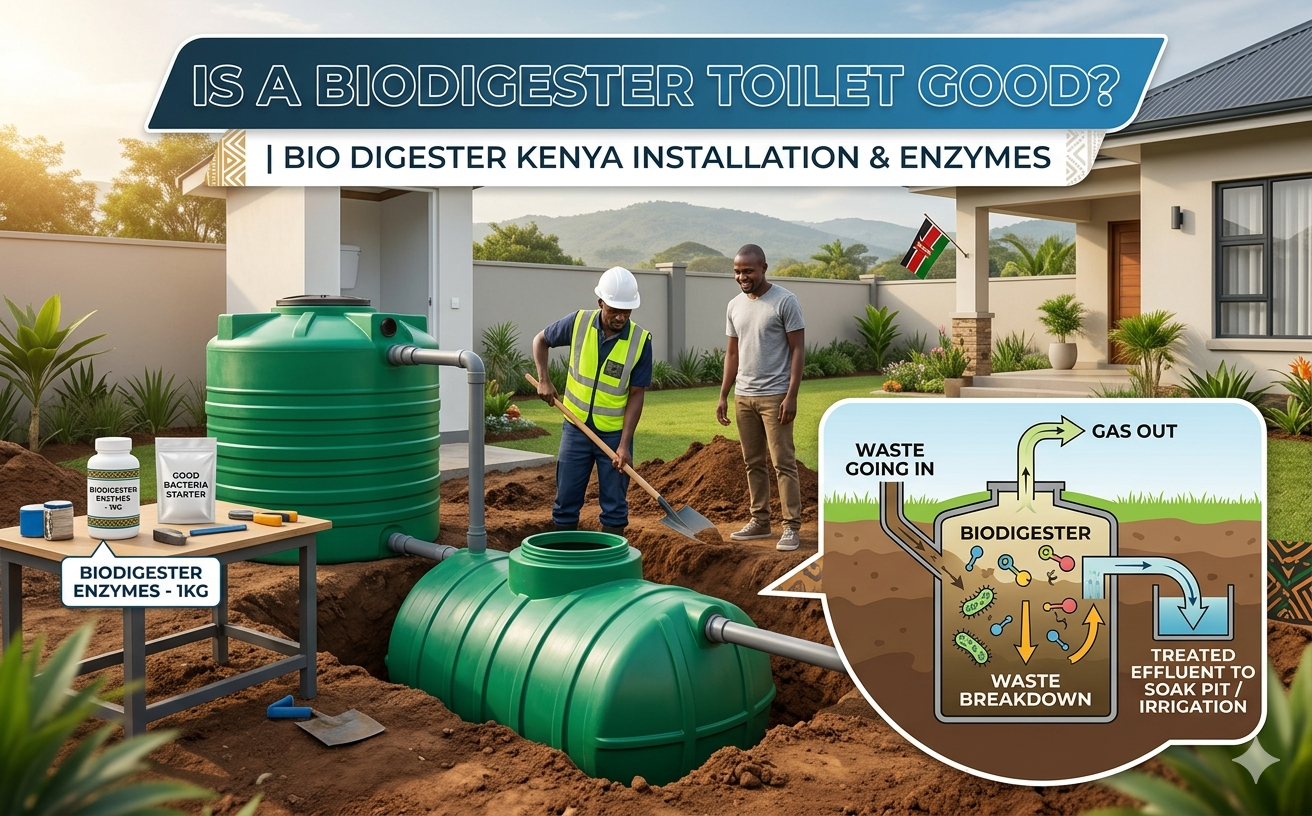
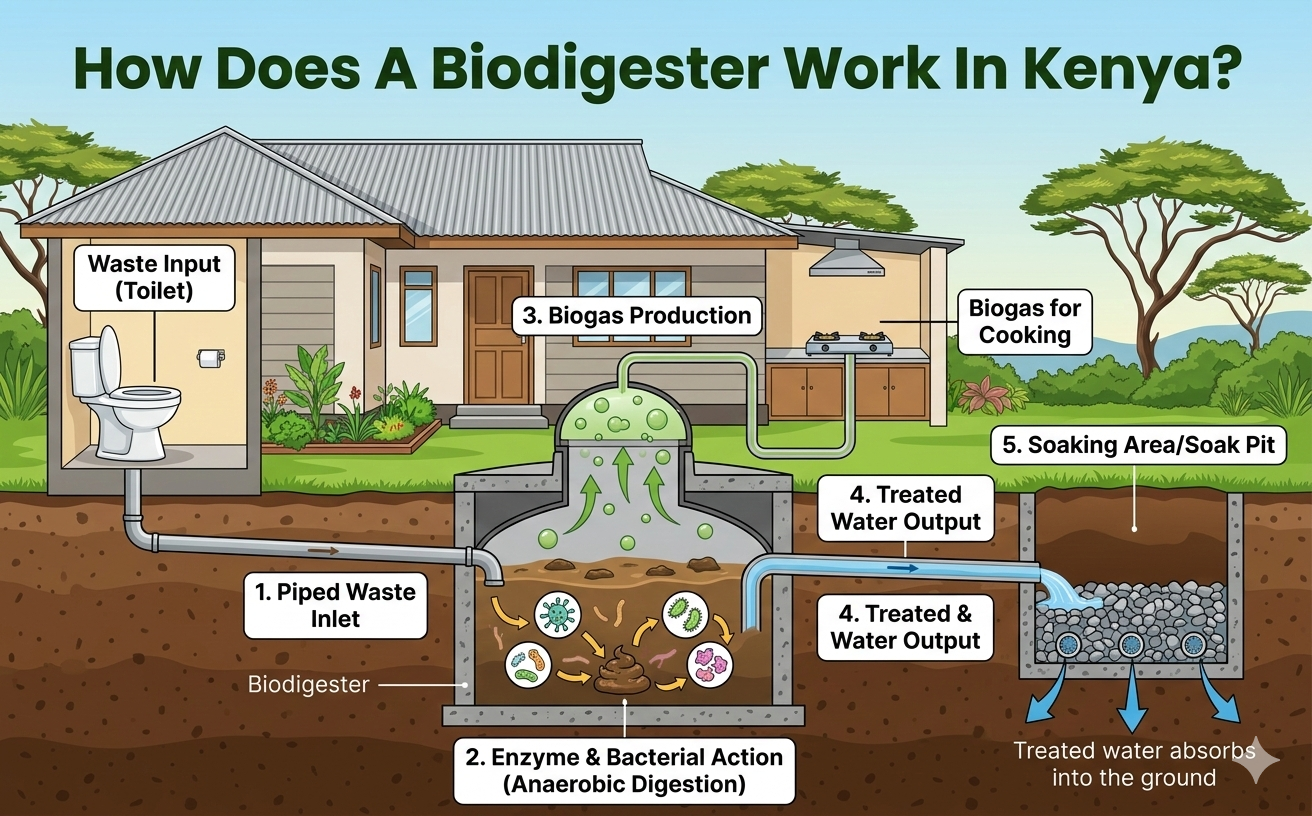
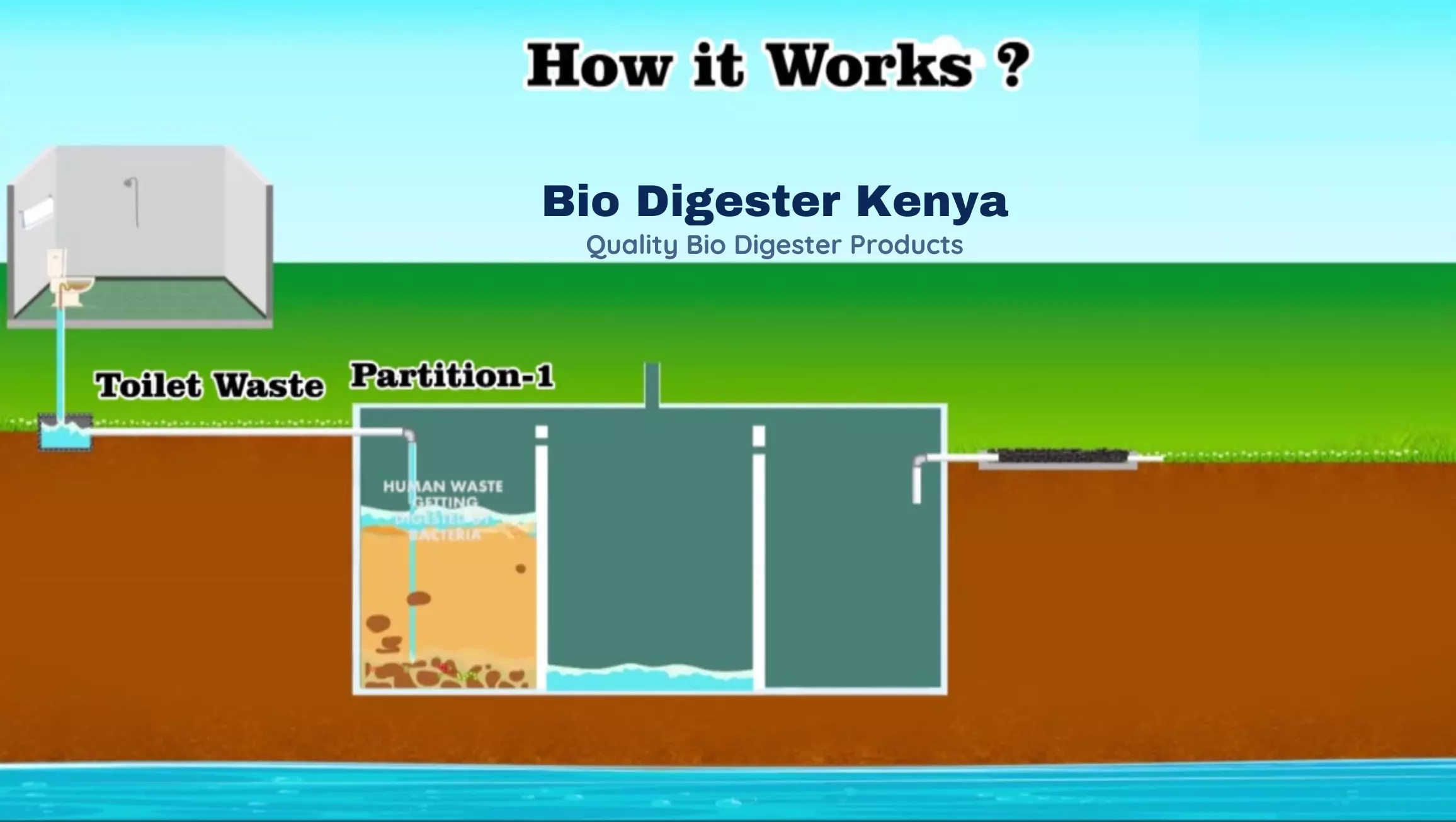
The process begins when blackwater is piped directly from your toilets into the biodigester chamber.
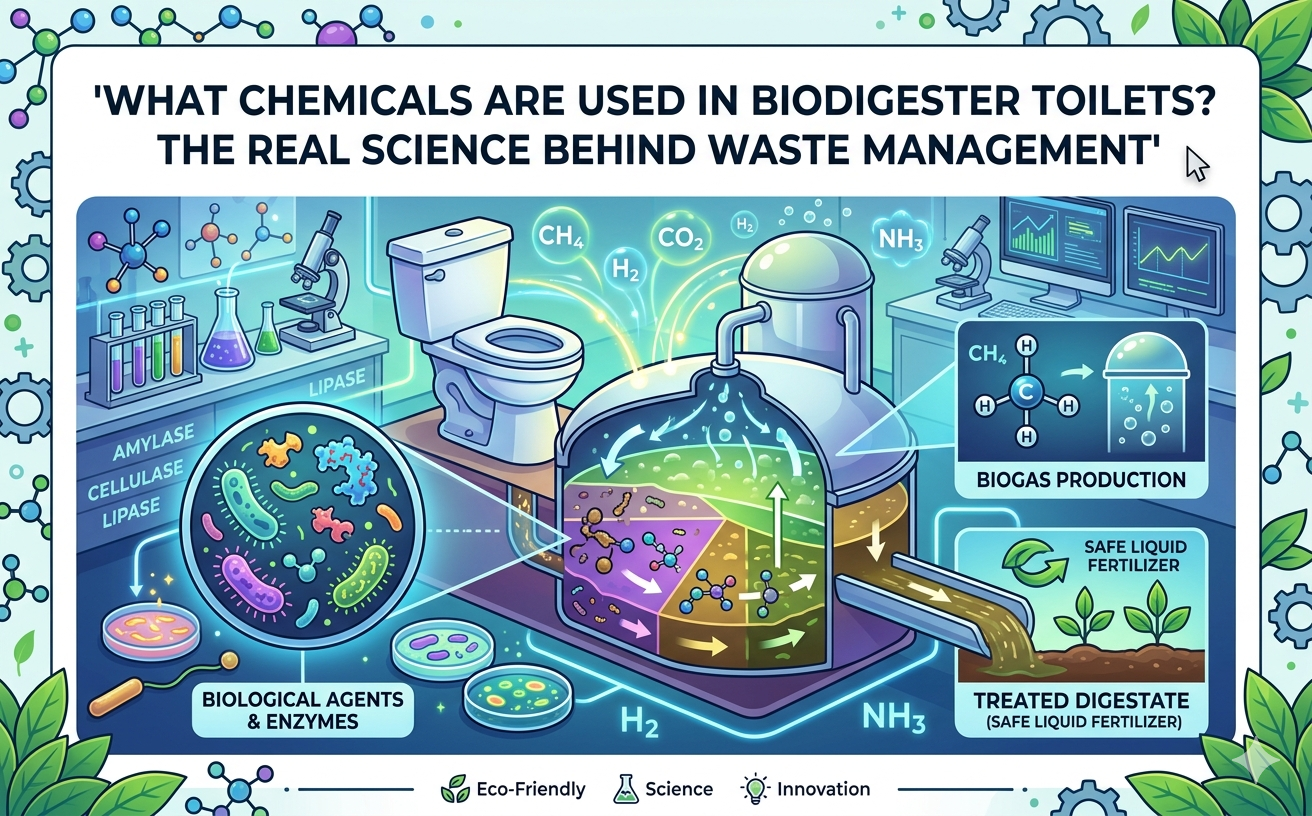
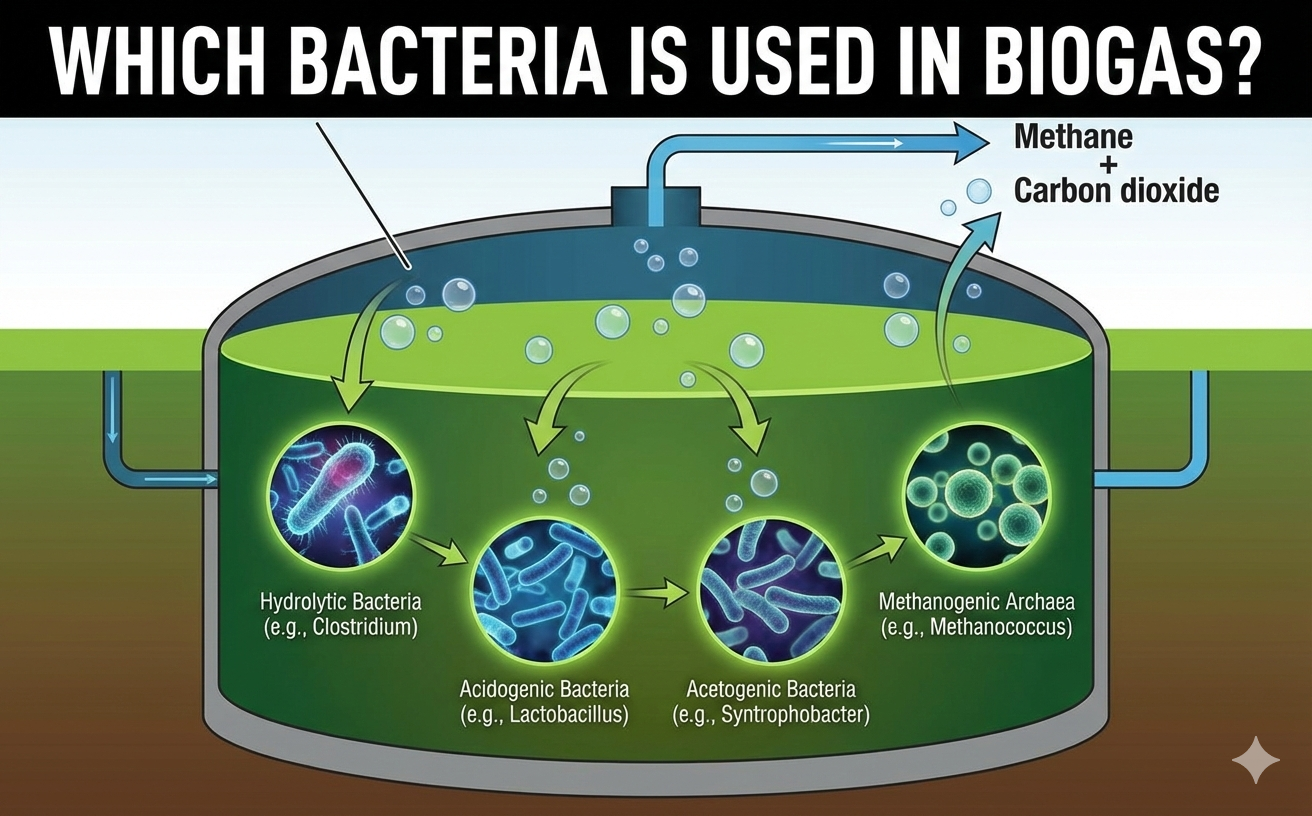
Inside this sealed environment, the system utilizes anaerobic digestion.
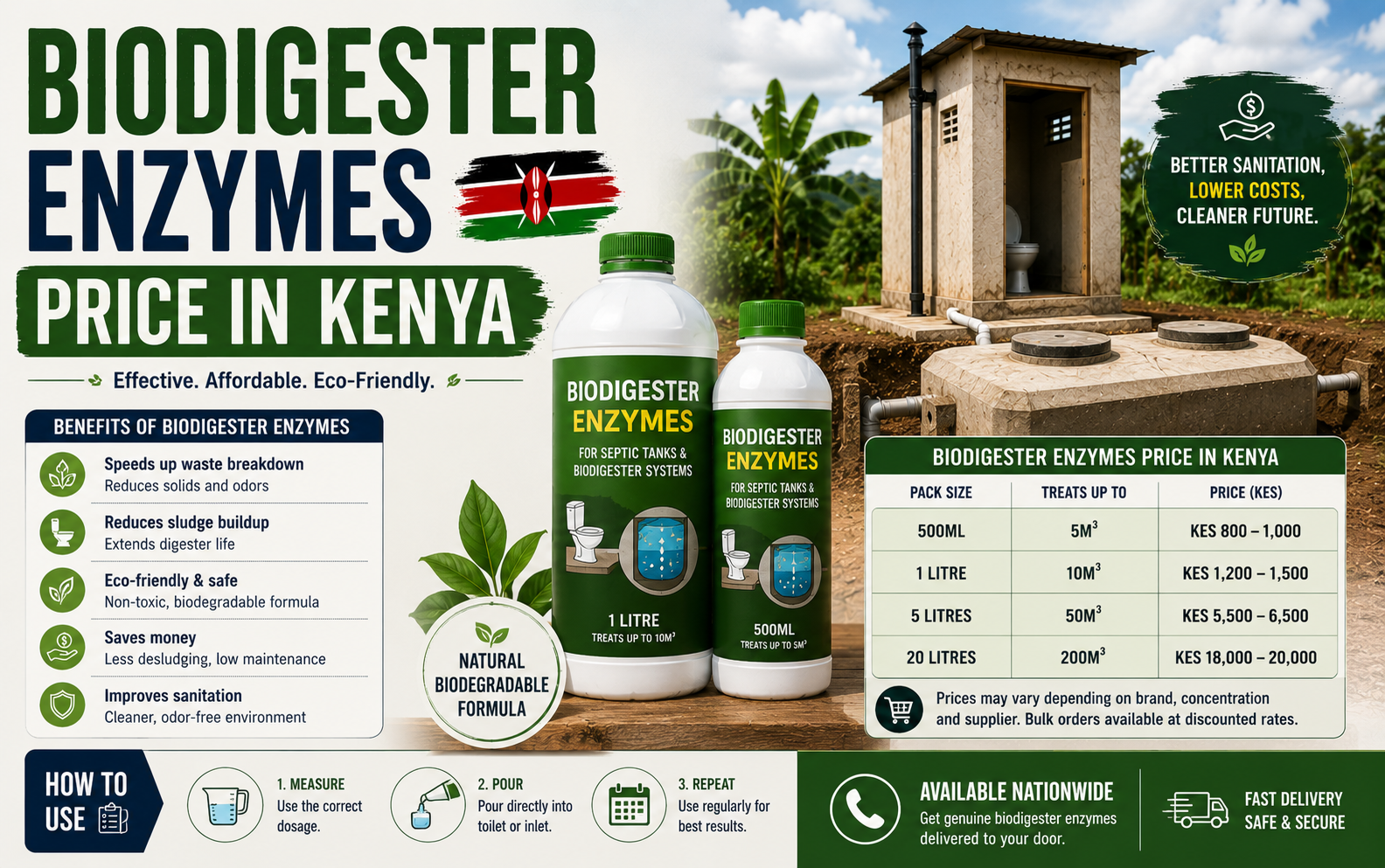
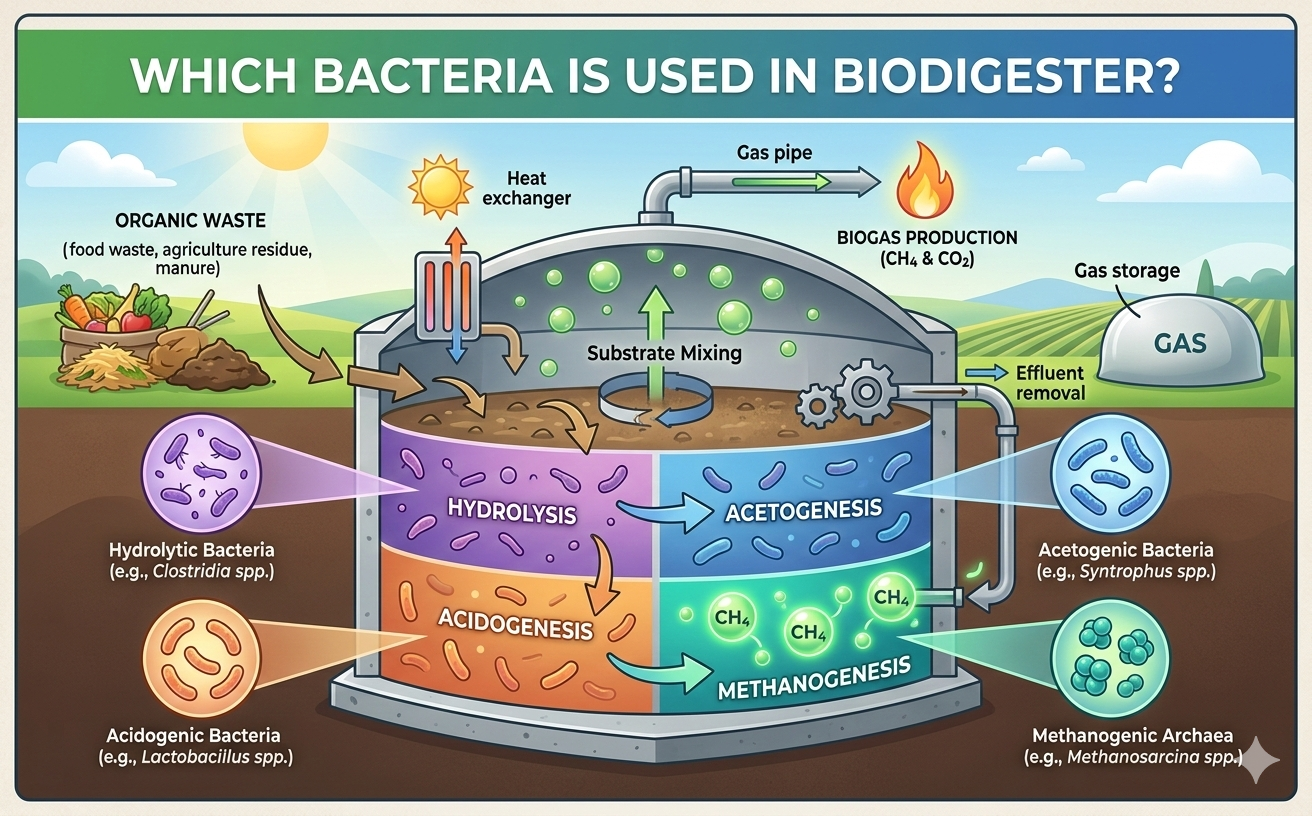
Specialized biodigester enzymes act as catalysts, breaking down the complex organic matter (solids) at an accelerated rate.
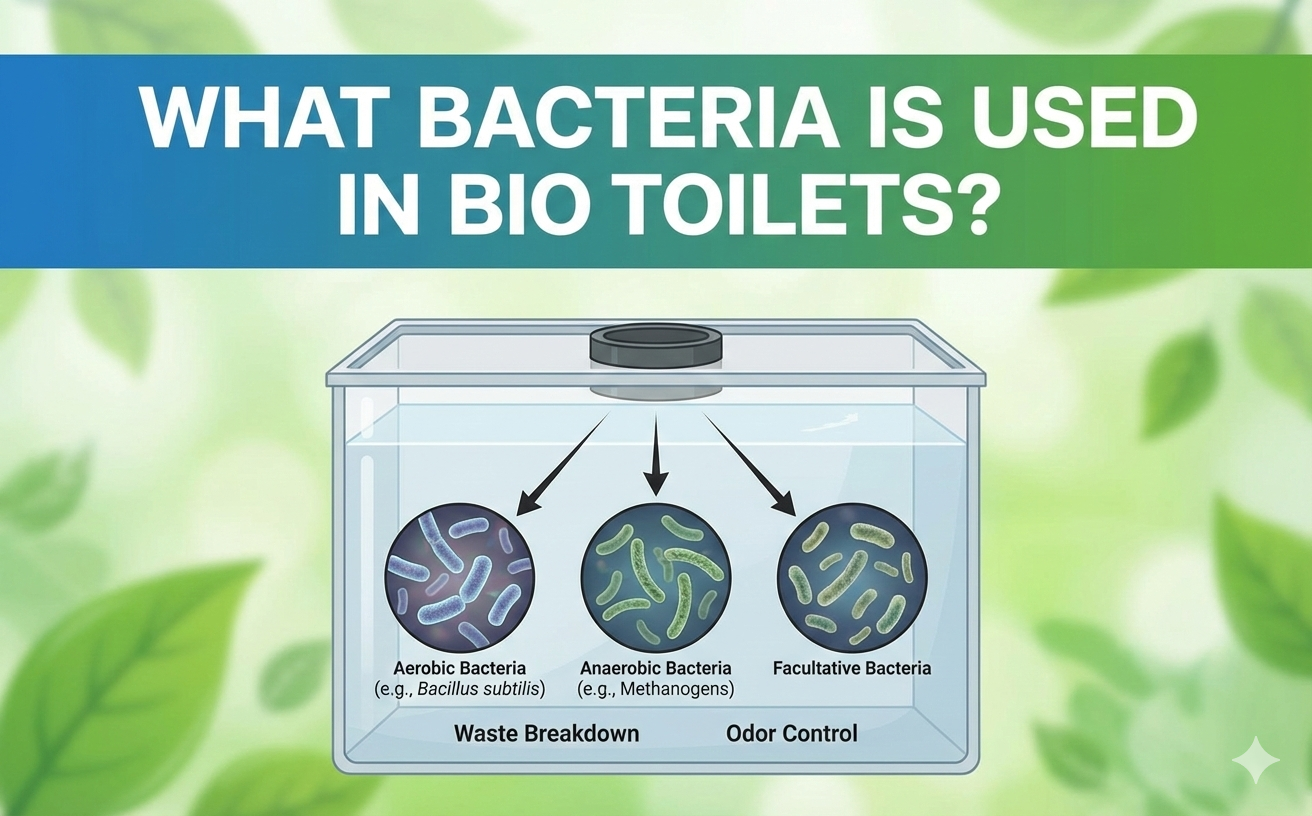
These bacteria “consume” the waste, stripping away the pathogens and the foul odors associated with raw sewage.
The biological end result is strictly treated water and odorless air.
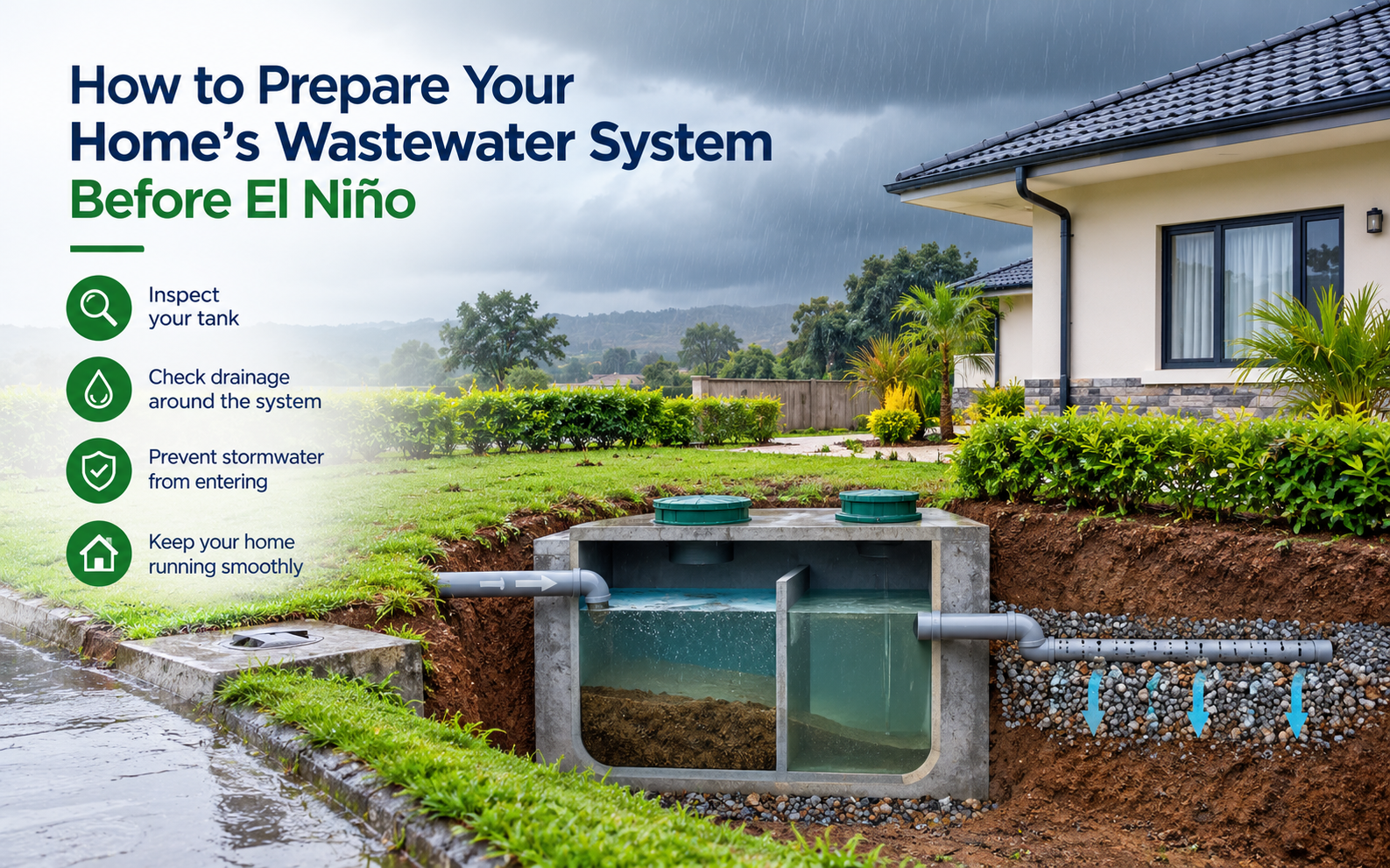
Because the solids are fully digested rather than just settled, the effluent is clear enough to be directed into a localized soaking area or French drain.
If you are planning a new build and want to avoid the headache of traditional pits, professional Bio Digester Installation ensures the system is graded correctly for your specific land slope.
Phone: +254 712 660 245
Email: info@biodigesterkenya.co.ke

Biodigesters vs. Traditional Septic Tanks: Why the Function Matters
The critical difference lies in waste management vs. waste storage.
A traditional septic tank stores waste; you simply wait for it to fill up and then pay a bowser service to pump it out.
This is a recurring lifetime cost that many property owners overlook during the construction phase.
Space Efficiency for Urban Plots
In estates across Nairobi, where plot sizes are shrinking, you cannot afford to dedicate a massive chunk of your backyard to a concrete septic tank and a sprawling soak pit.
The function of a biodigester allows for a much smaller footprint.
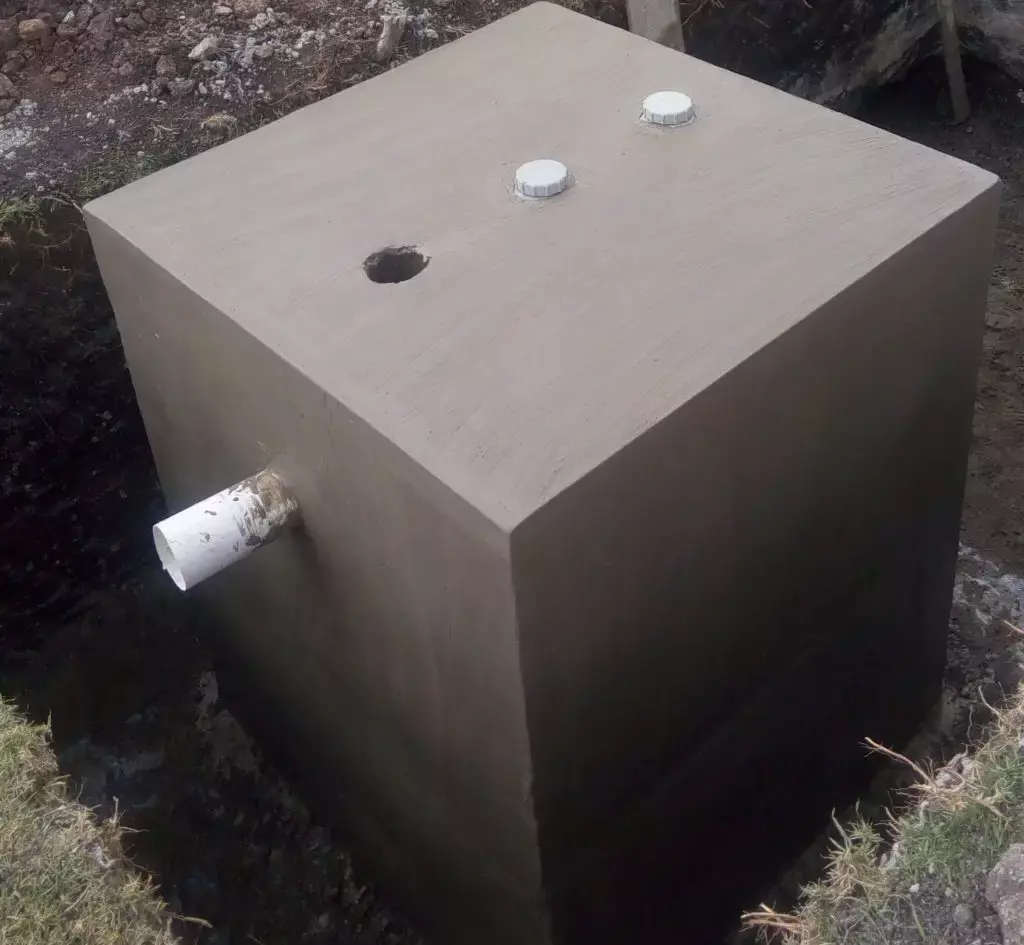
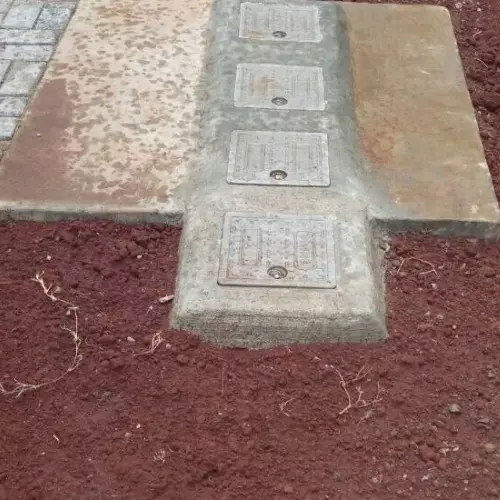
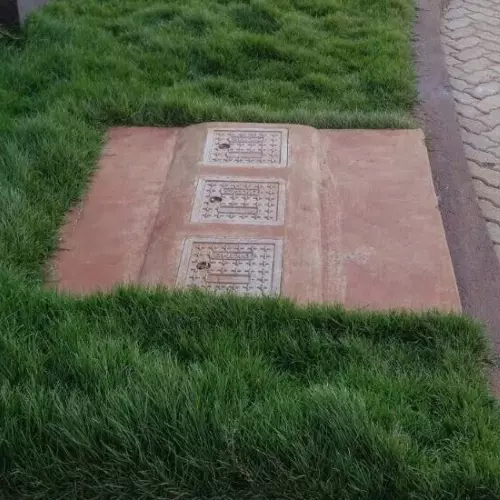
Because the digestion is so efficient, the system requires significantly less space, making Precast Bio Digesters an ideal choice for tight residential spaces.
Soil Absorption Realities in Kenya
Soil type dictates how your waste system performs. In areas with heavy black cotton soils common in Kitengela, Kamulu, or parts of Kajiado traditional septic tanks often fail because the soil does not absorb water well, leading to “full” tanks and overflowing manholes.
Biodigesters mitigate this by treating the water to a higher standard before it hits the soil, reducing the risk of clogging the absorption field.
In the red soils of Kiambu or Central Kenya, the absorption is even faster, making the biodigester an almost invisible utility.
For a deeper dive into the technical trade-offs, check out our biodigester vs septic tank comparison.
Maintaining the Biological Function
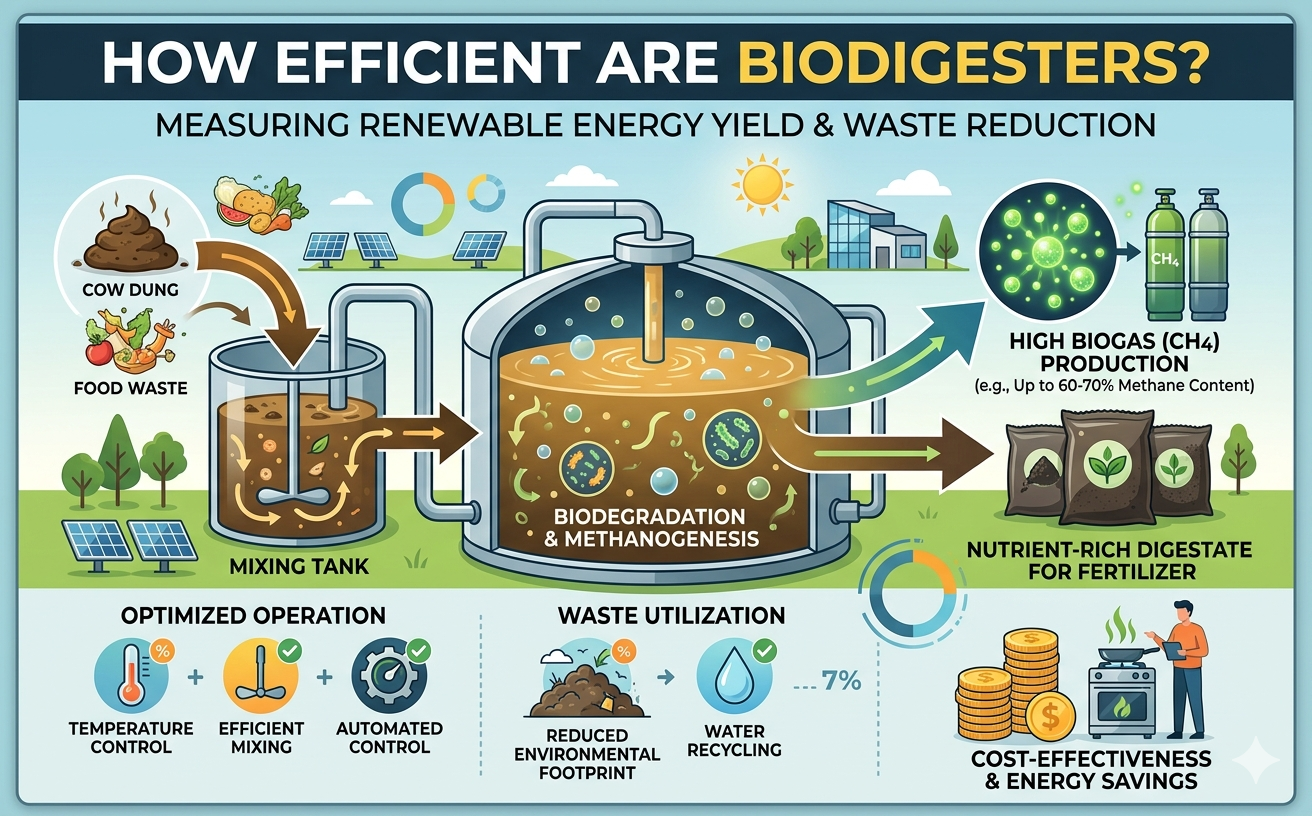
A biodigester is a living system. Its function depends entirely on the health of the bacteria colony inside the tank.
If you overuse harsh chemicals, bleach, or strong acids, you risk killing the enzymes that do the heavy lifting.
When the bacteria colony is depleted, the system may become sluggish, and you might notice a slow drain in your toilets.
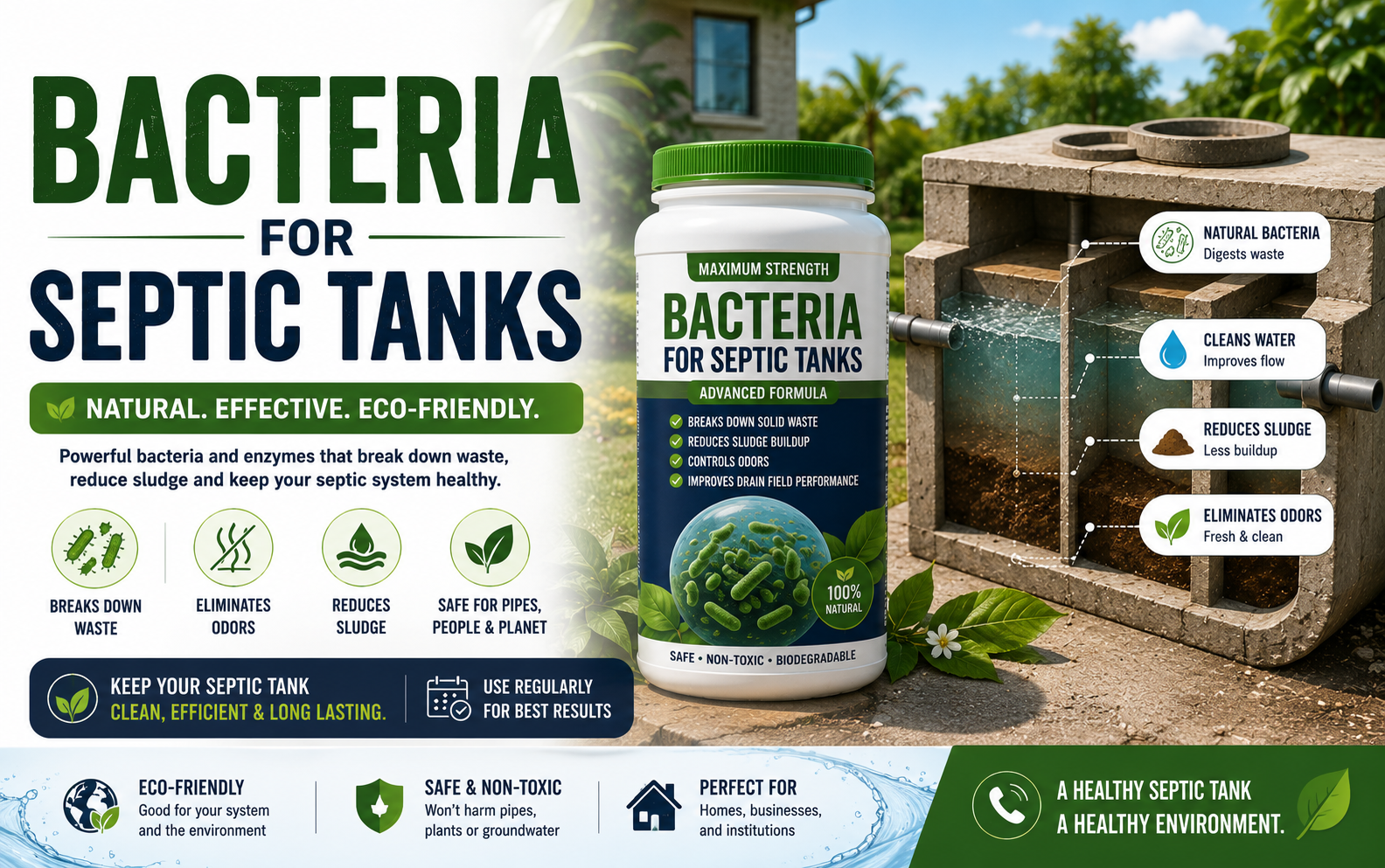
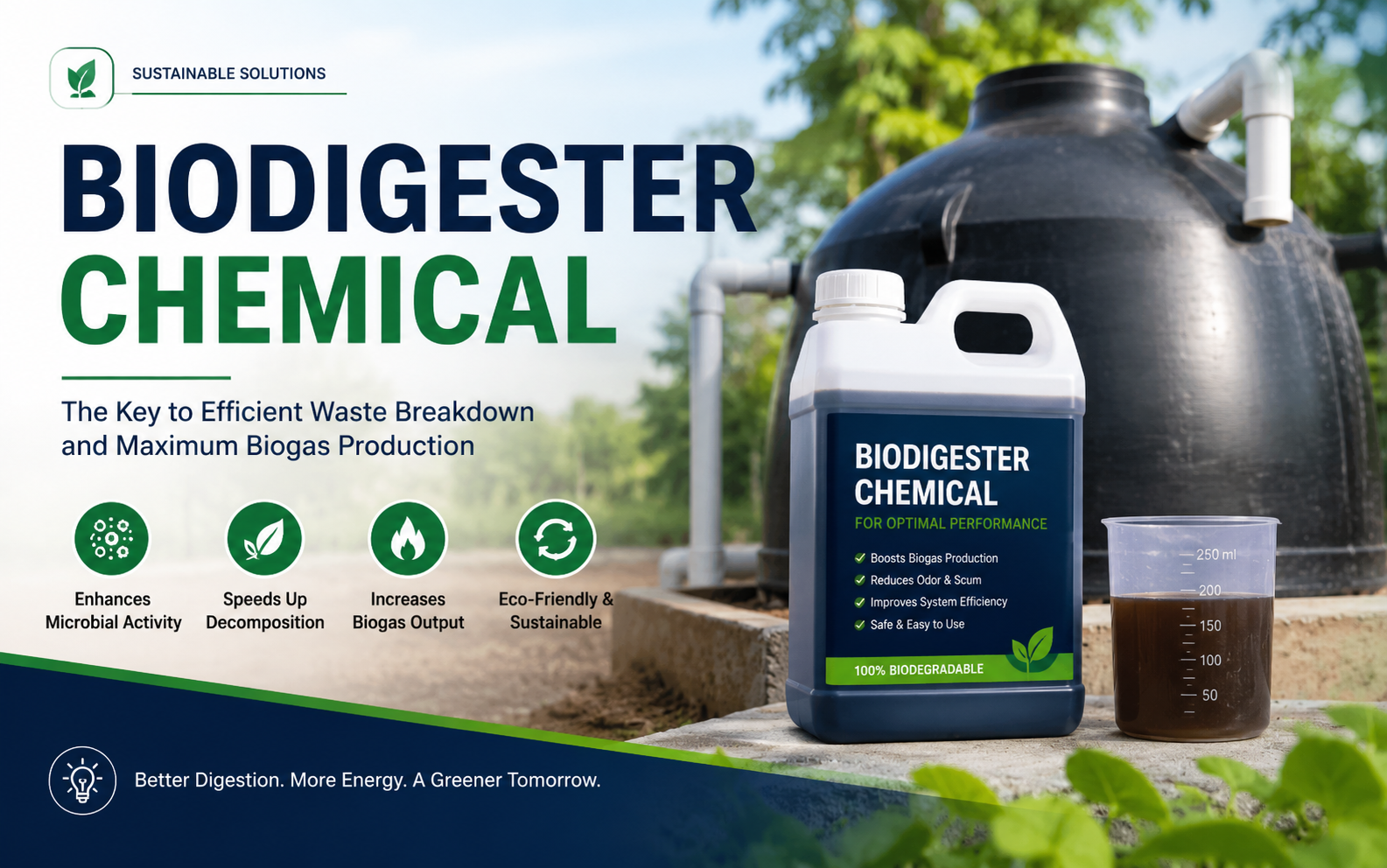
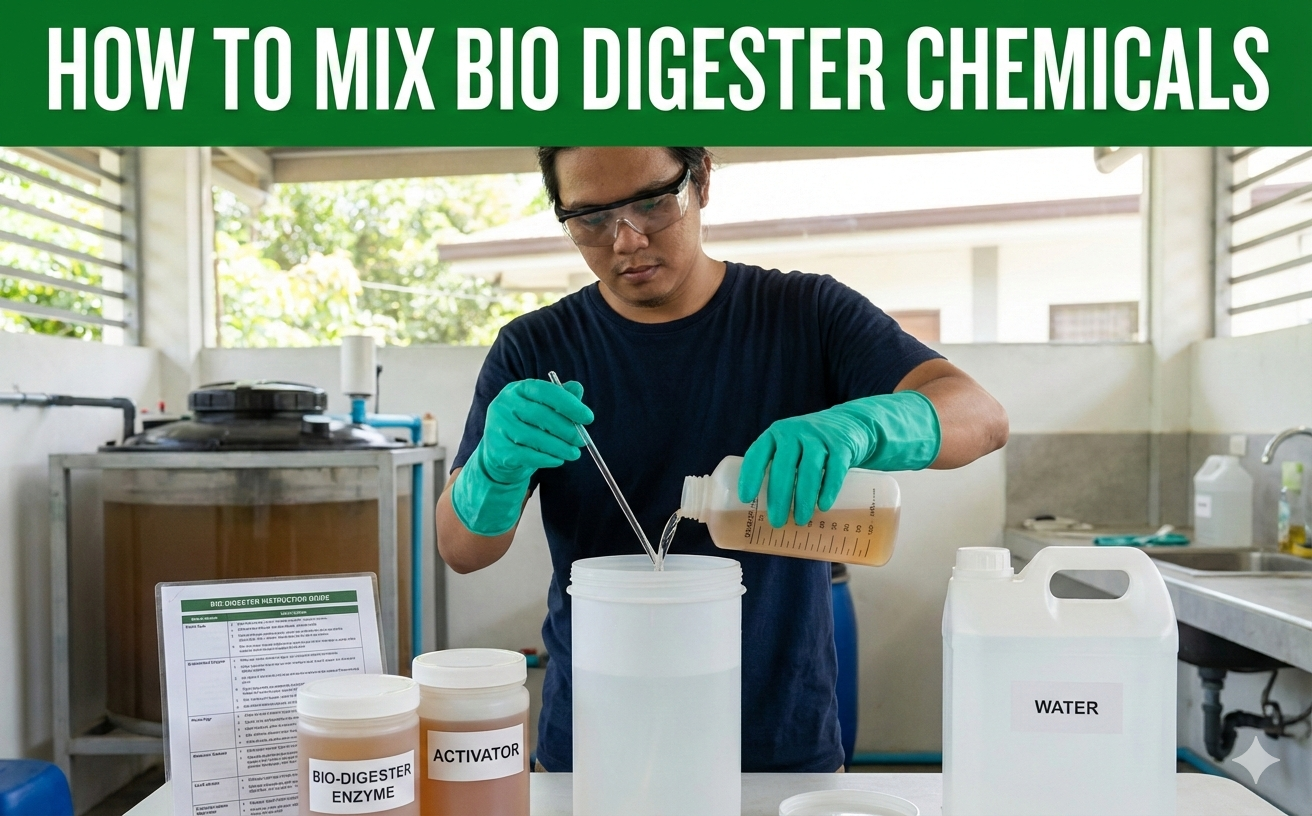
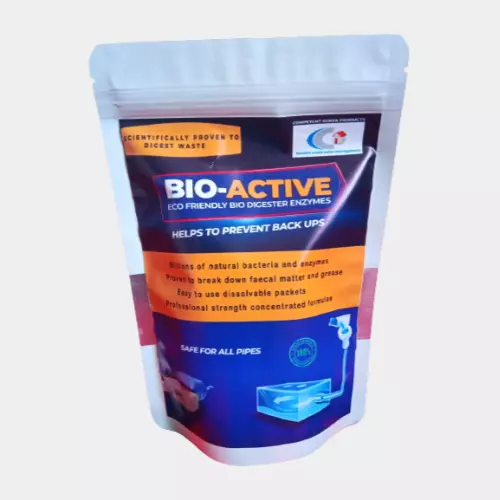
To keep the system running at peak efficiency, we recommend periodic dosing with Bio Digester Bacteria.
This replenishes the microbial population and ensures that solid waste continues to be broken down instantly.
For those dealing with an existing, sluggish system that was poorly maintained, using a high-grade Septic Tank Cleaner can help clear accumulated sludge and restore flow.
Regular Septic Tank Maintenance is the only way to ensure you never have to call a bowser truck to your gate.
Phone: +254 712 660 245
Email: info@biodigesterkenya.co.ke

The Economic Advantage of Biodigester Functionality
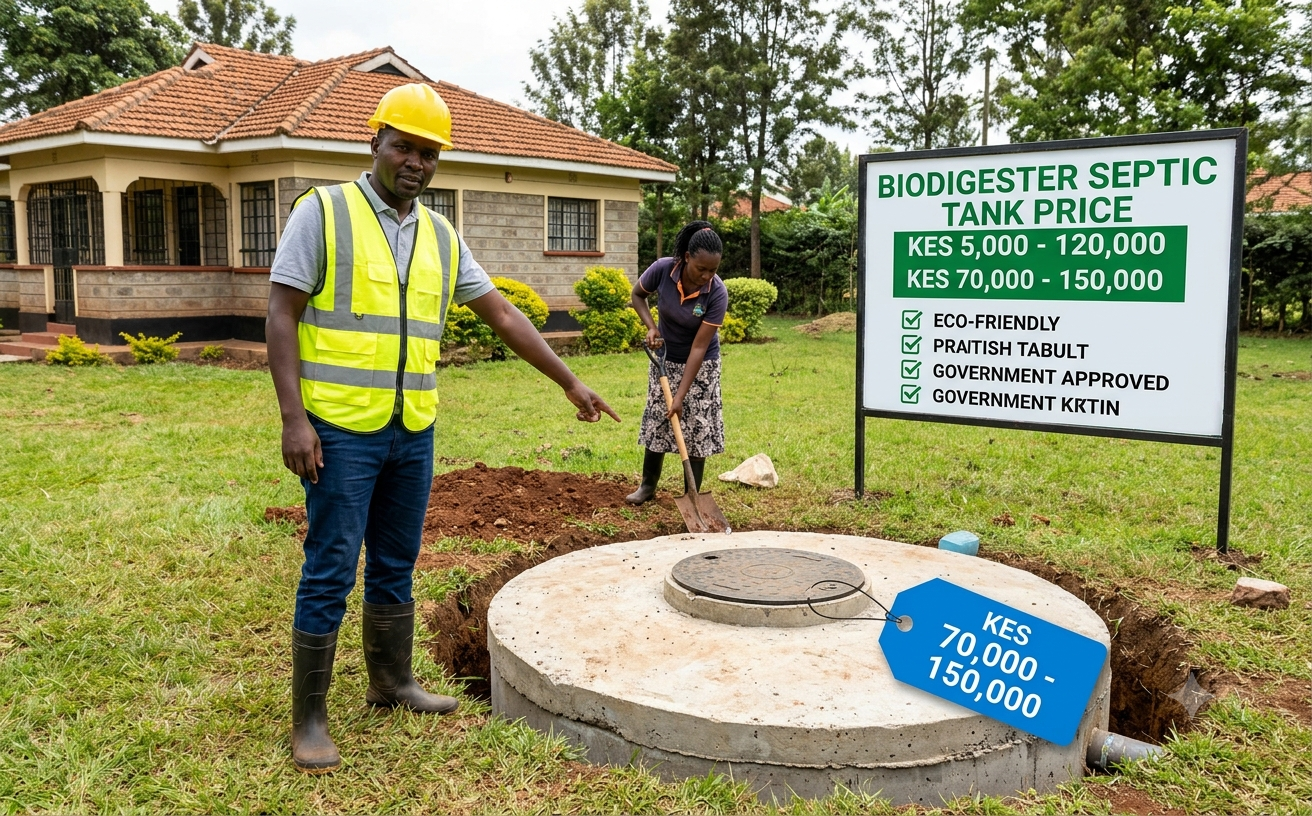
When you analyze the Total Cost of Ownership (TCO), the biodigester wins decisively.
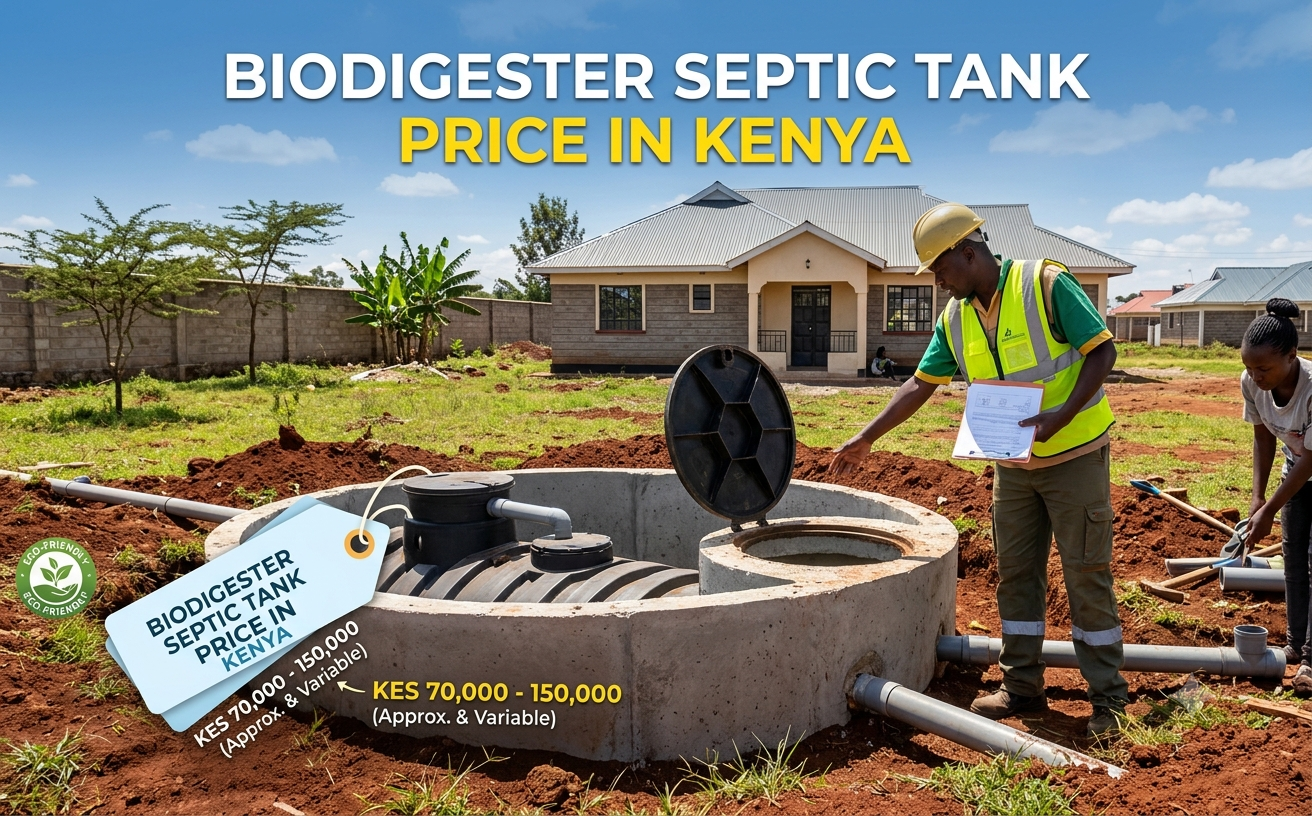
While the initial installation might be comparable to a high-end concrete tank, the operational costs are nearly zero.
You eliminate the “exhaust tax”—the thousands of shillings spent every few years on emptying services.
- No Exhausting: The continuous digestion process means no sludge buildup.
- Environmental Safety: No risk of groundwater contamination due to superior effluent treatment.
- Property Value: Modern, sustainable sanitation increases the resale value of commercial and residential properties.
If you are tired of the smells, costs, and logistical nightmare of traditional sewage systems, it is time to upgrade to a system designed for the modern Kenyan environment.
Bio Digester Kenya provides the engineering expertise to move your property toward total sanitation independence.
Ready to eliminate bowser costs forever?
Phone: +254 712 660 245
Email: info@biodigesterkenya.co.ke
Conclusion
Understanding the function of a biodigester reveals that it is far more than just a tank it is a sustainable waste processing plant for your home.
By leveraging anaerobic digestion and specialized enzymes, it transforms a liability (human waste) into a manageable byproduct (treated water).
Moving away from outdated septic systems to Bio Digester Kenya installations grants you economic freedom from exhaust services and the peace of mind that your property is environmentally sustainable.
Frequently Asked Questions
- Does a biodigester smell?
No. Because the system is sealed and utilizes anaerobic digestion to break down organics, it produces odorless air and treated water. - How often do you add enzymes?
Depending on usage, we recommend adding Bio Digester Bacteria – 400g every 6 to 12 months to maintain the microbial colony. - Can a biodigester be installed in black cotton soil?
Yes, but it requires a correctly engineered soaking area or French drain to ensure the treated water is absorbed without flooding. - Is a biodigester NEMA approved?
Yes, biodigesters are preferred by NEMA because they treat waste biologically rather than just storing it, reducing groundwater pollution. - Do I still need a soak pit?
You do not need a traditional deep soak pit; instead, you use a localized soaking area or French drain for the treated effluent.