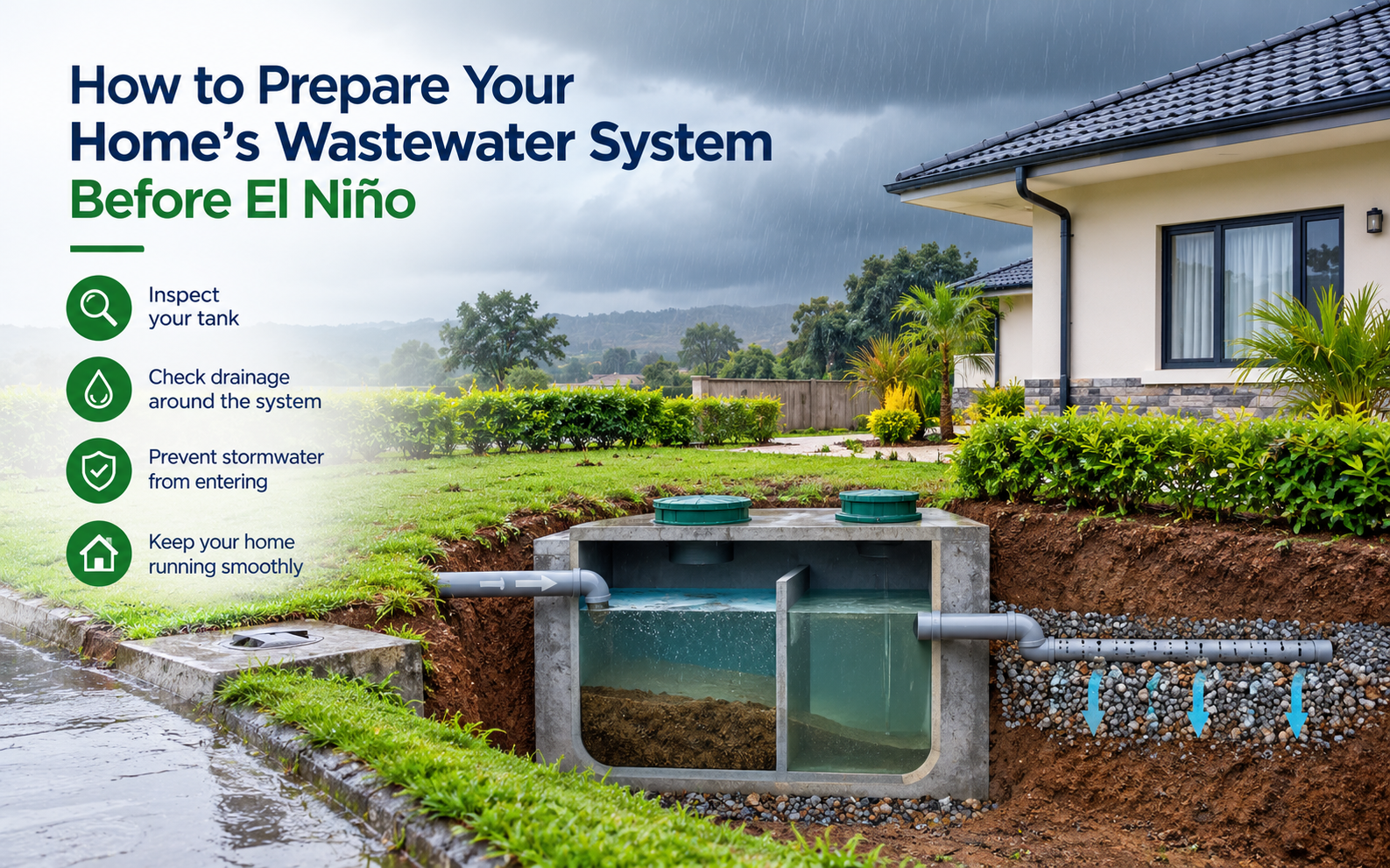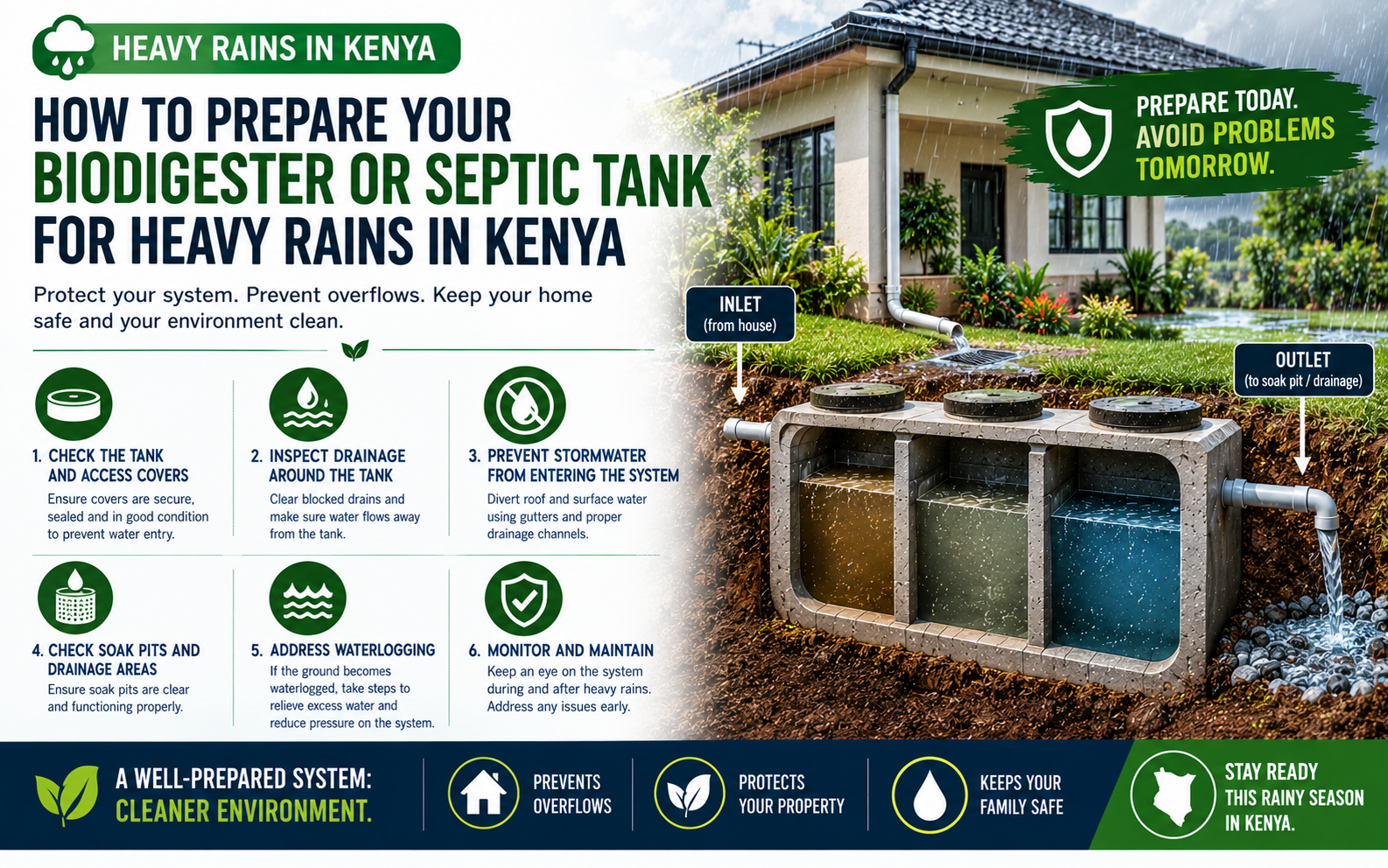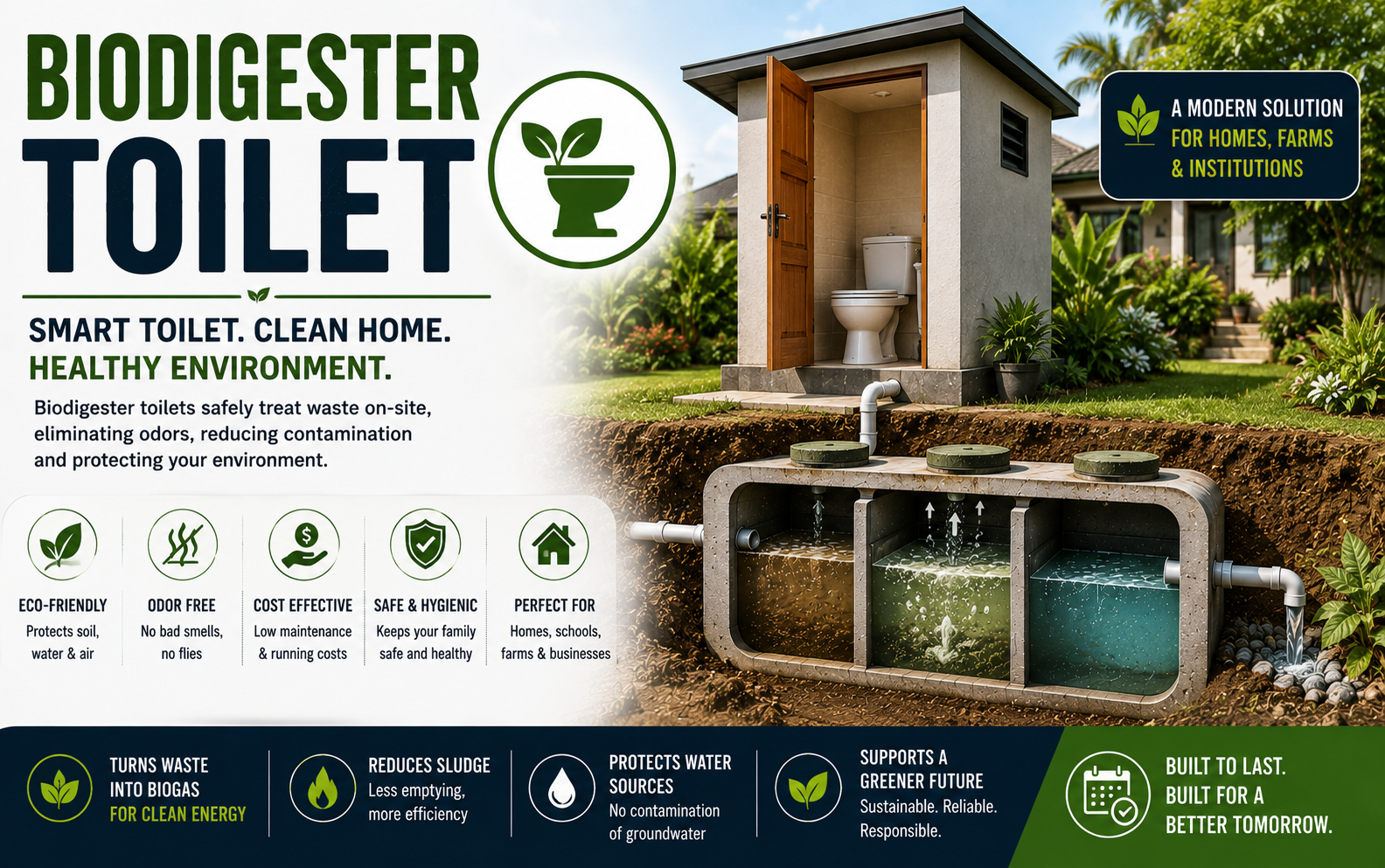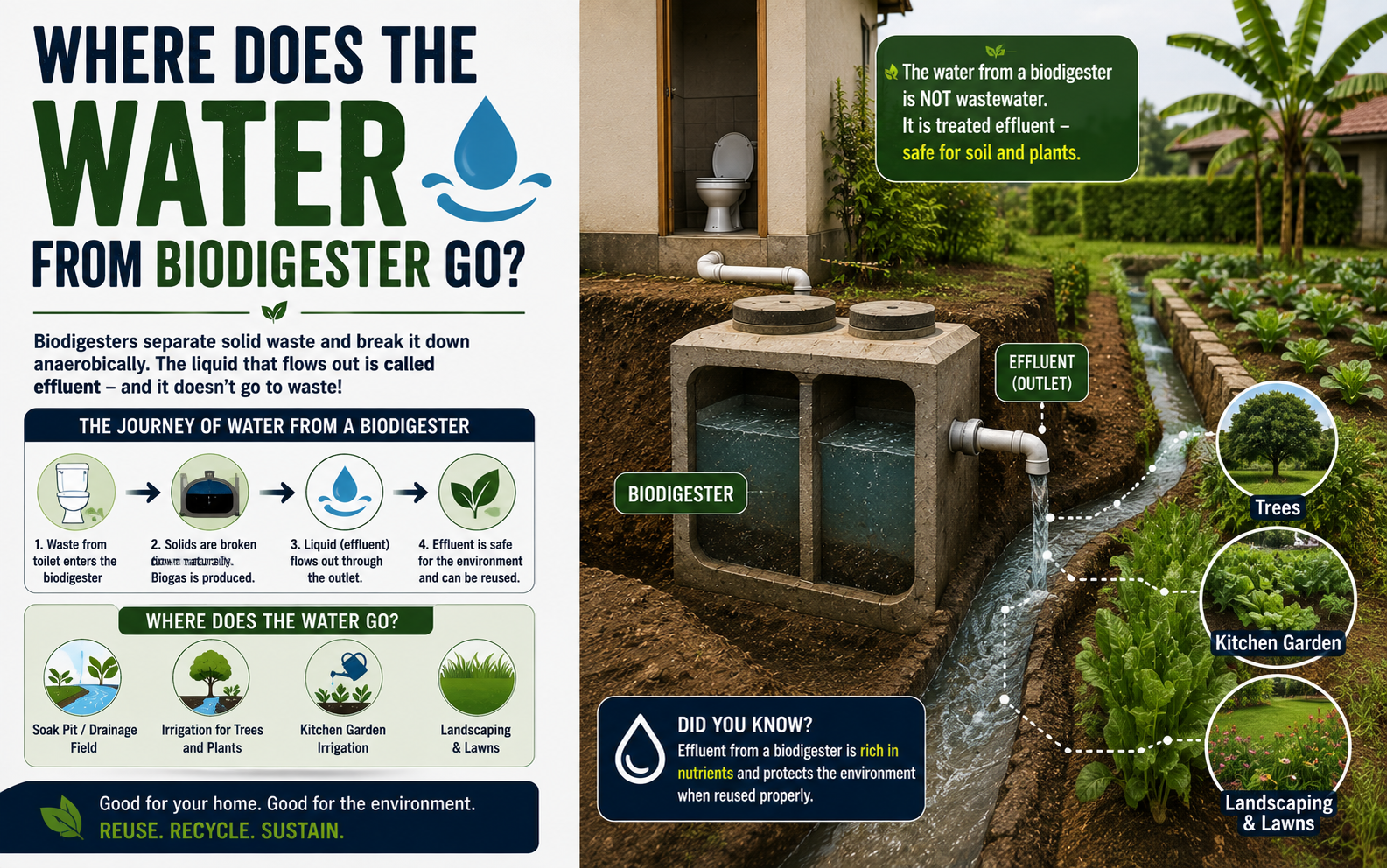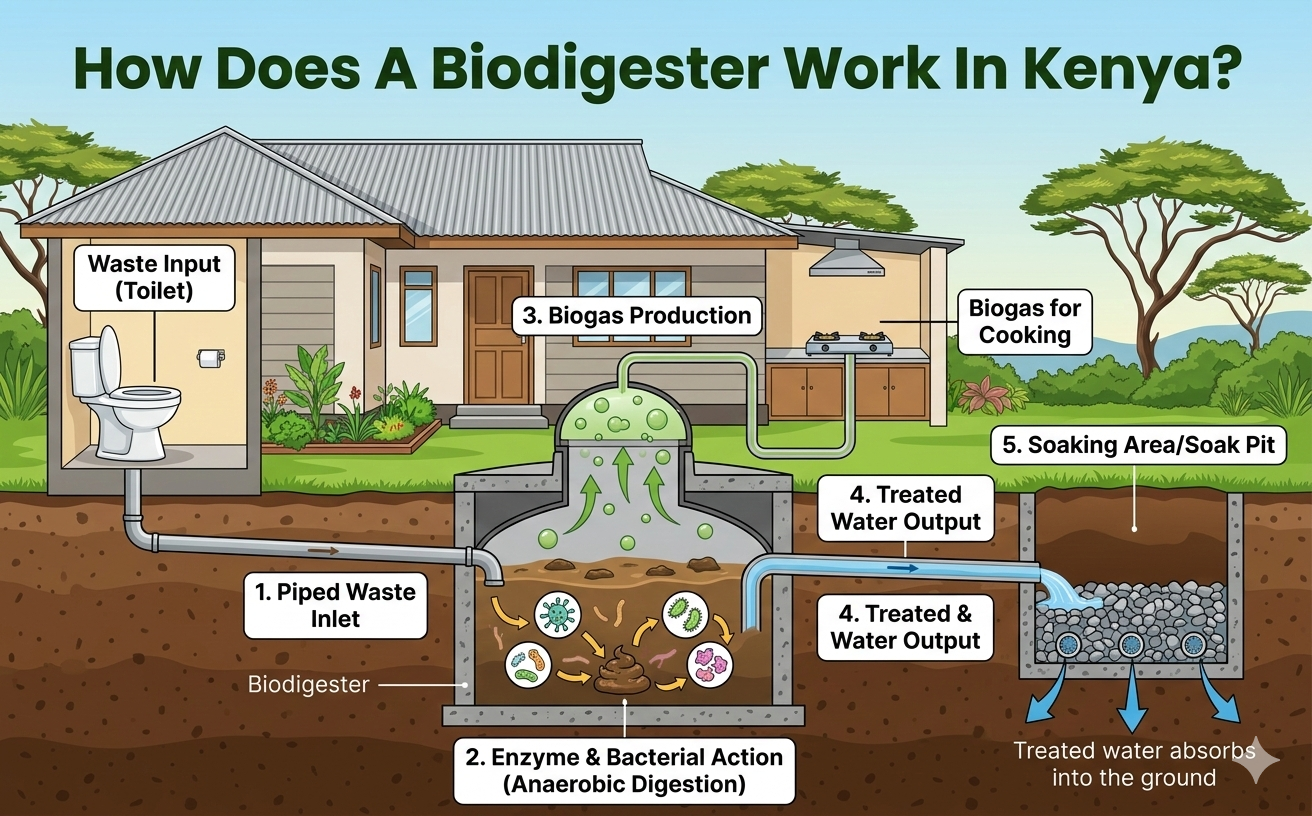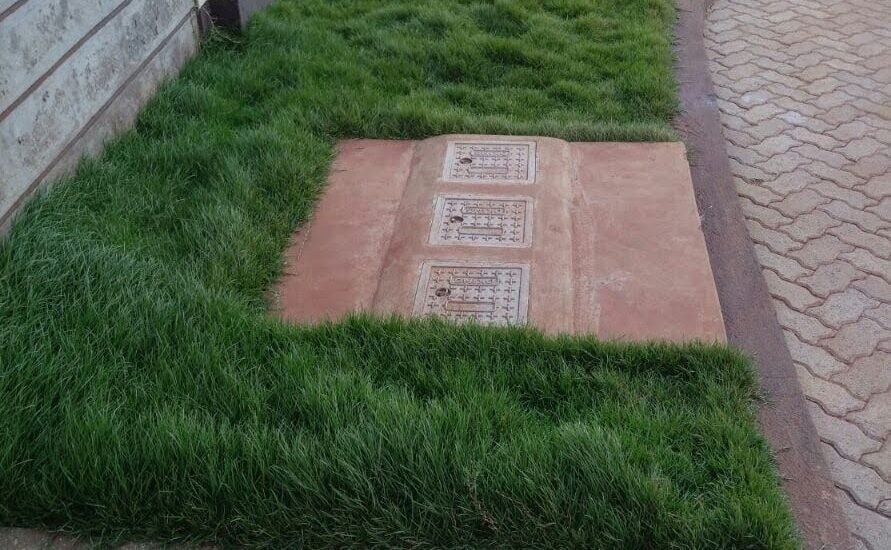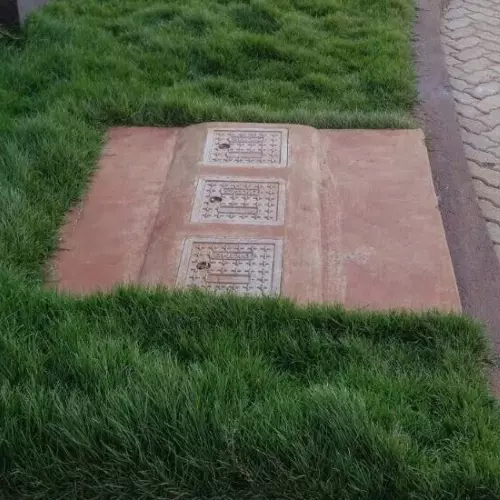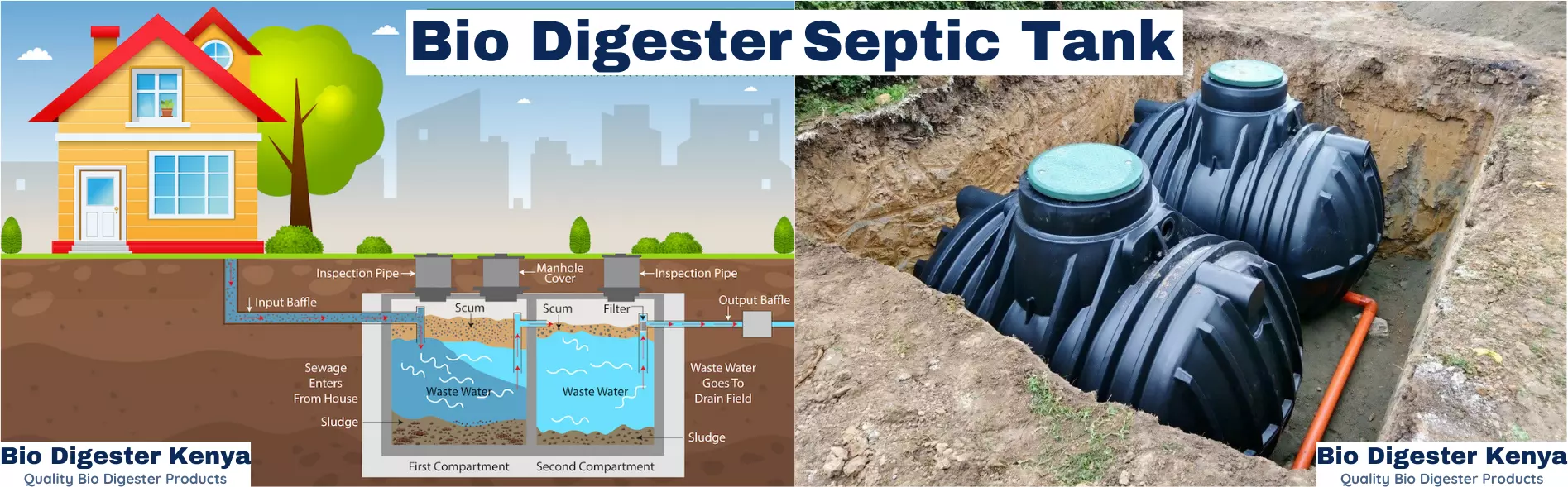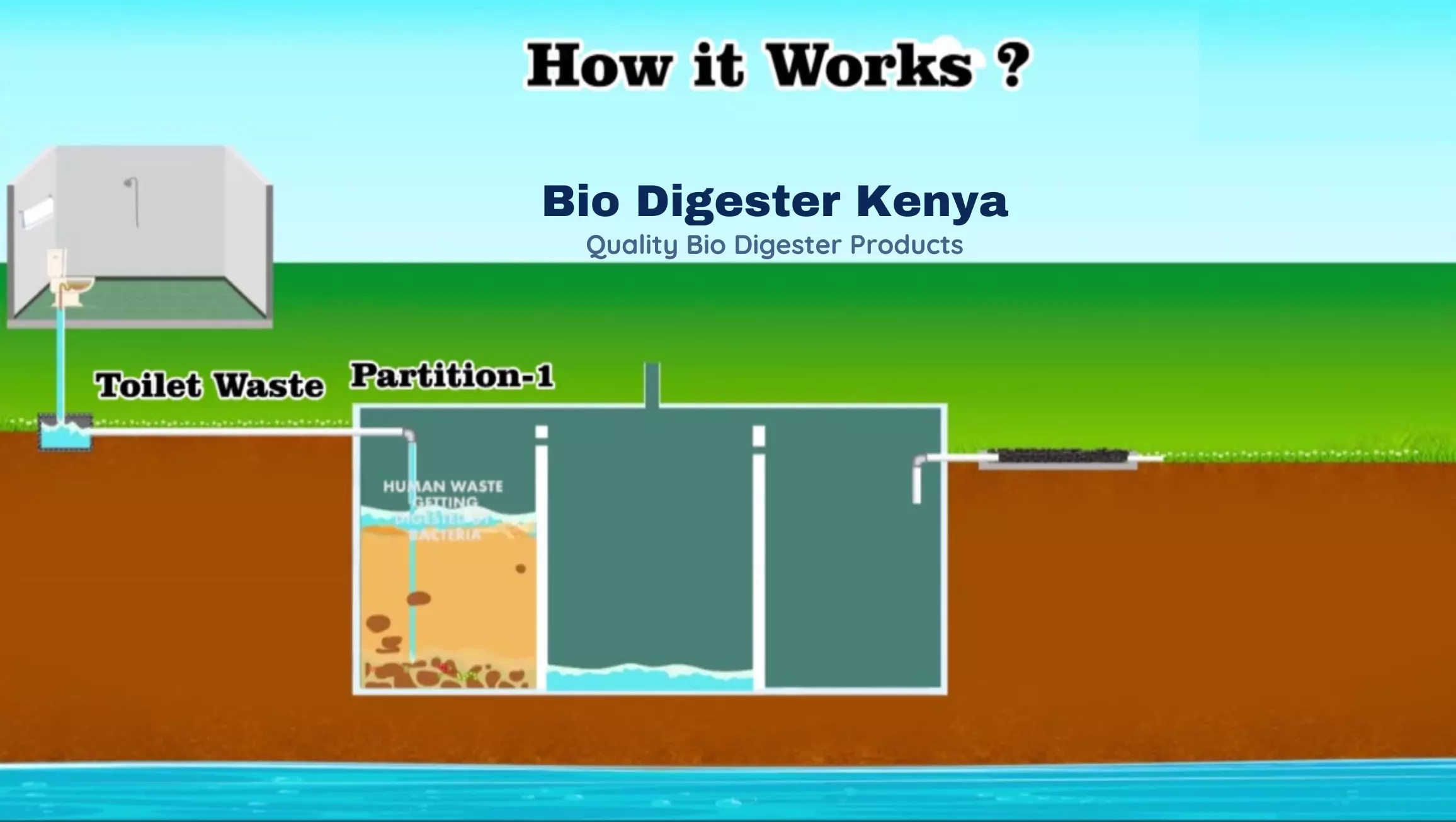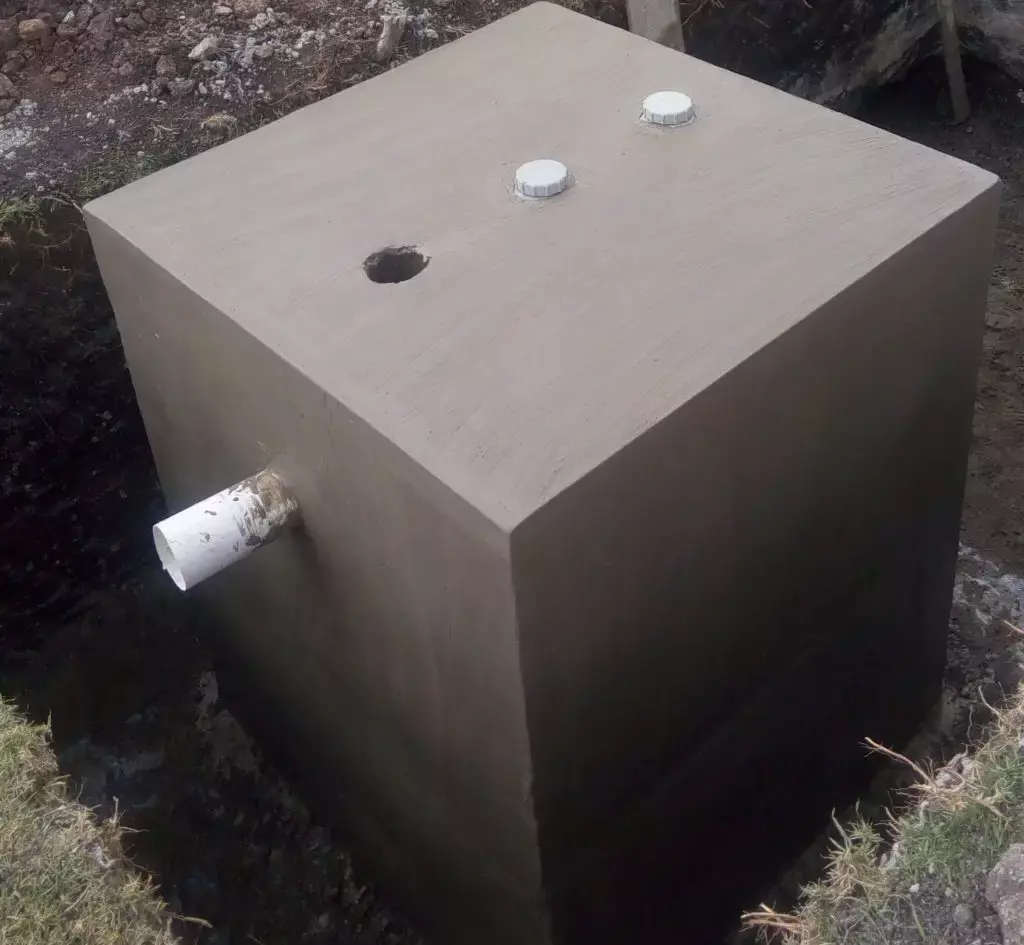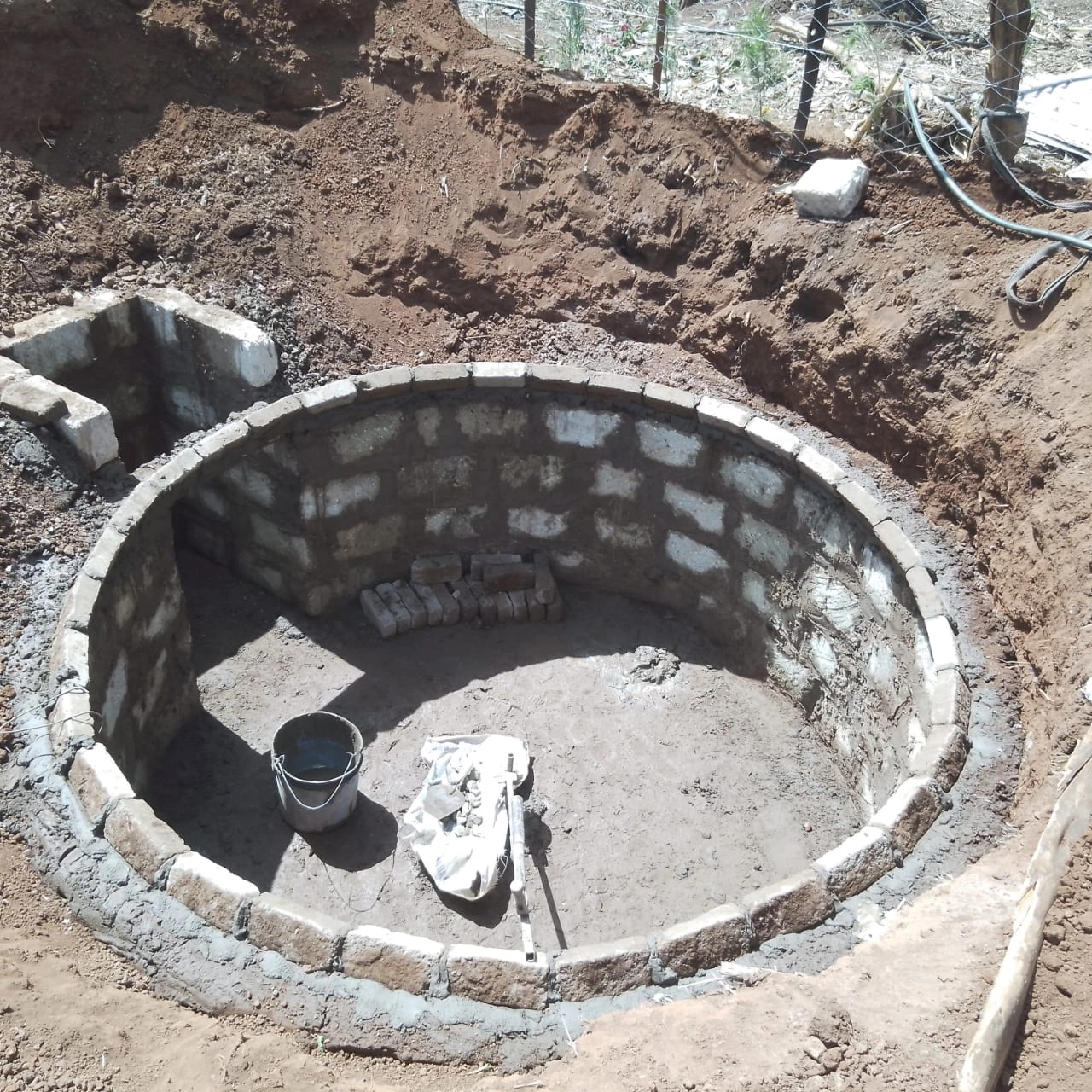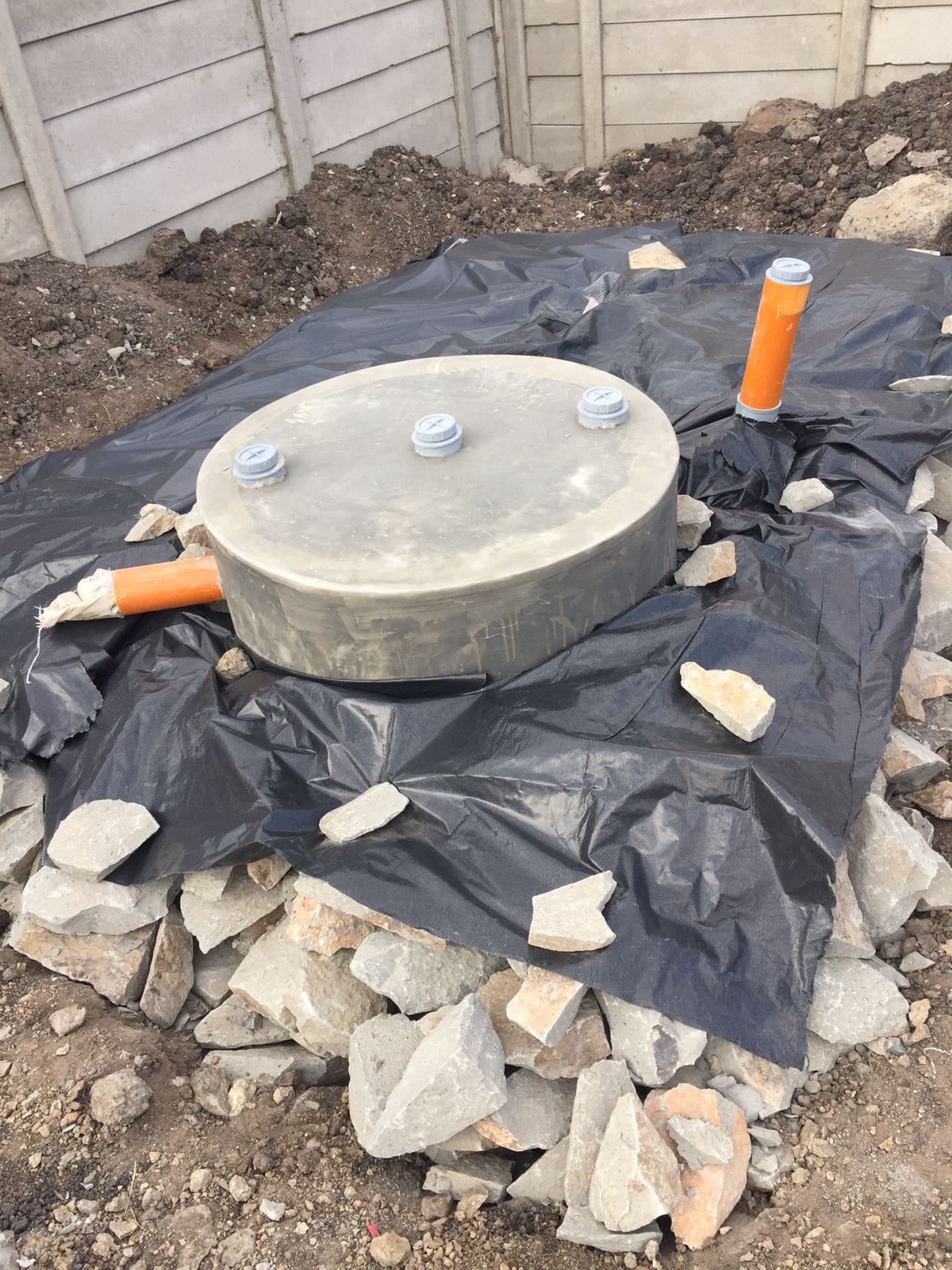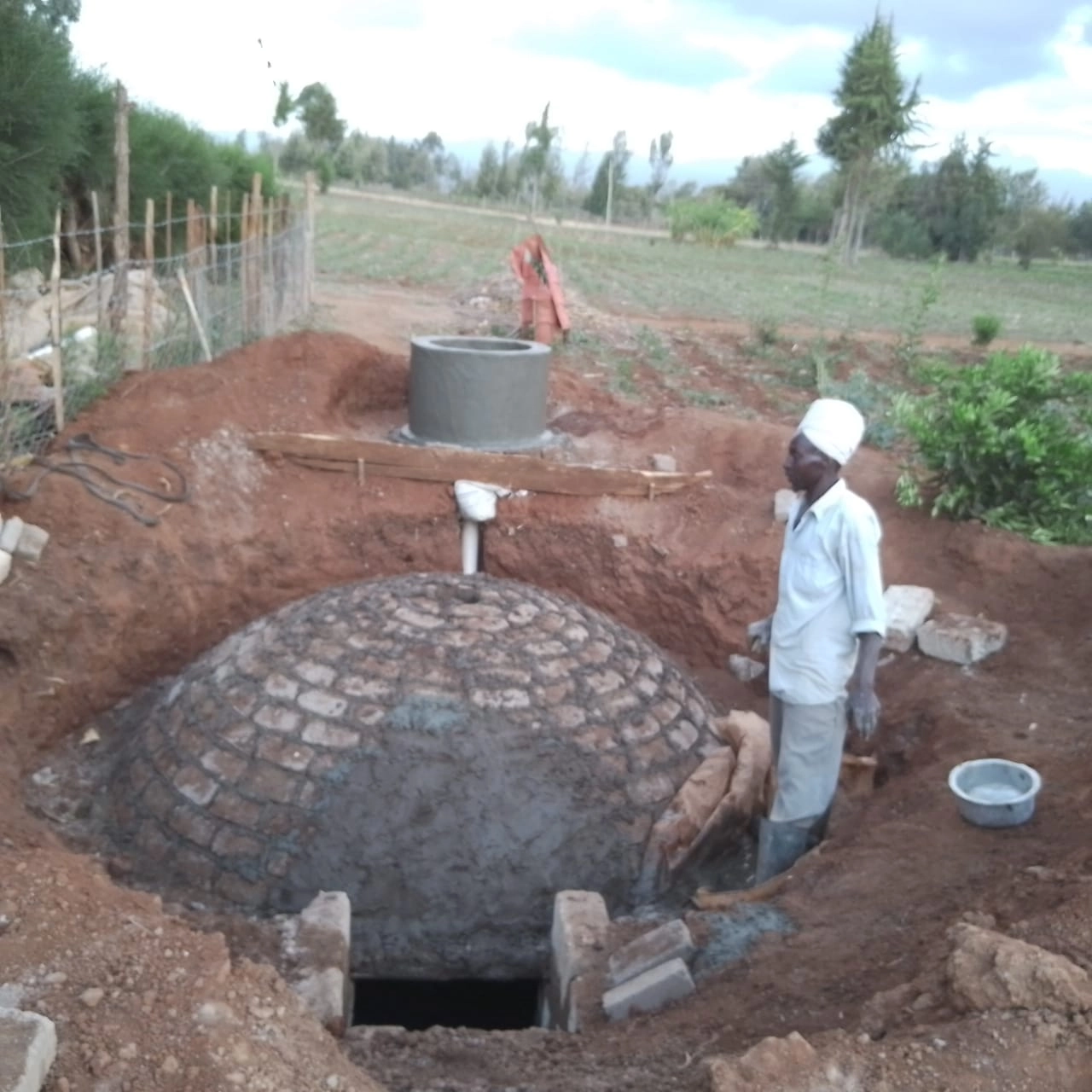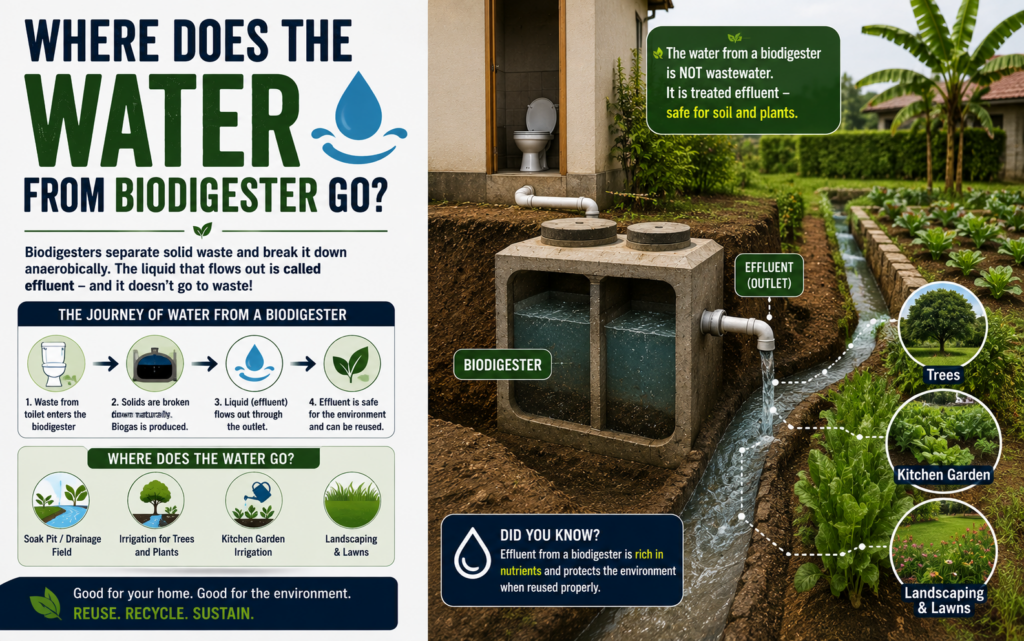
The water from a biodigester flows into a localized soaking area or French drain after the waste is processed.
Specialized biodigester enzymes break down solid waste into treated water and odorless air, which then permeates through the soil, eliminating the need for recurring exhaust bowser services common with traditional tanks.
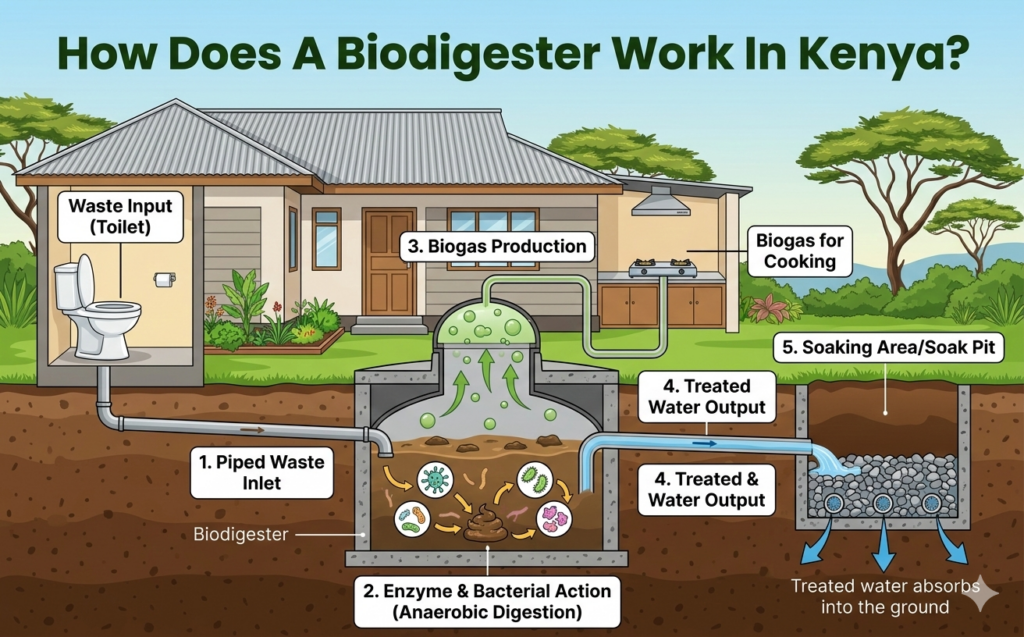
The Engineering Flow: From Waste to Absorption
To understand where the effluent ends up, you have to understand the biological transition happening inside the unit.
Unlike an old-school concrete septic tank that simply stores waste until it’s full, a modern system functions as a high-efficiency blackwater treatment plant.
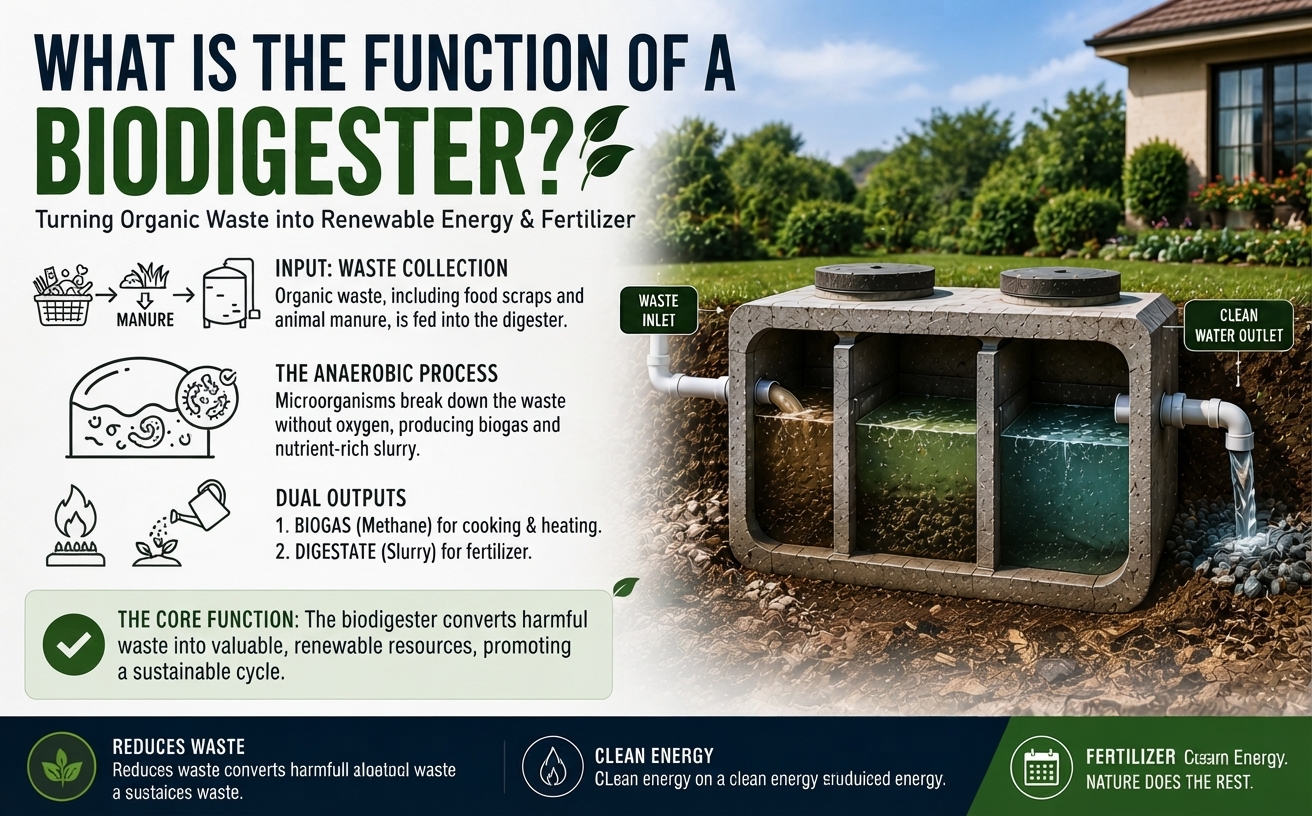
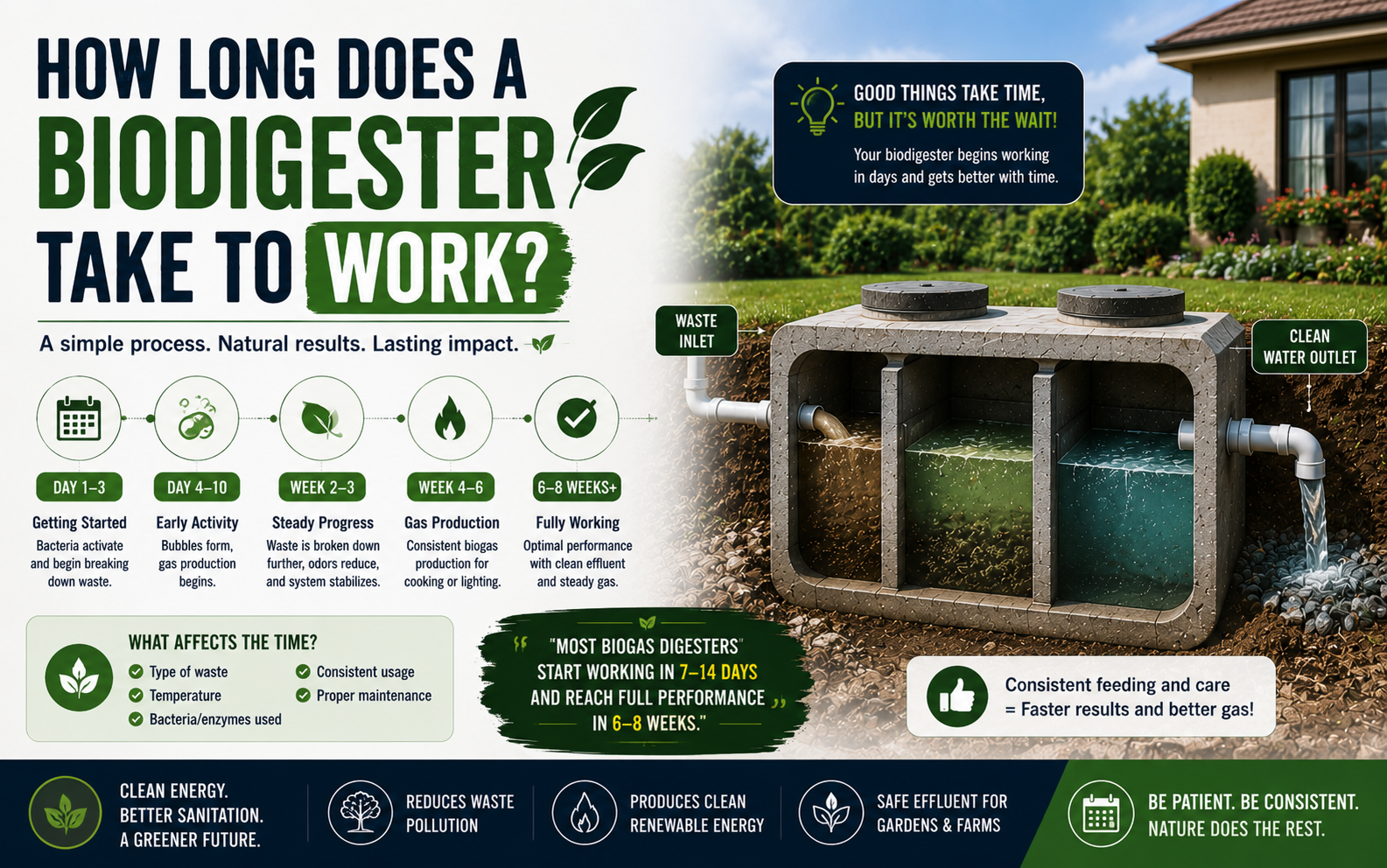
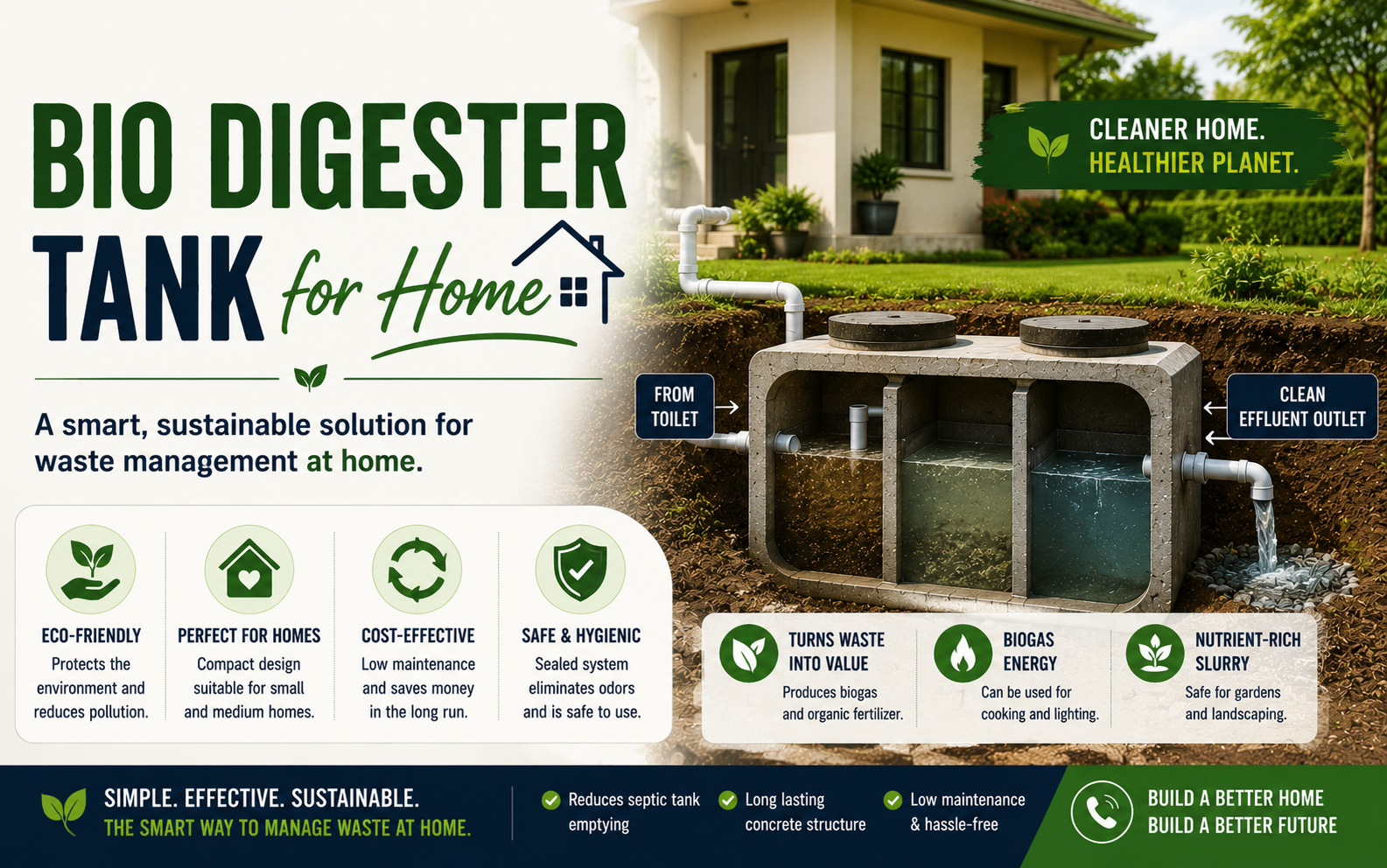
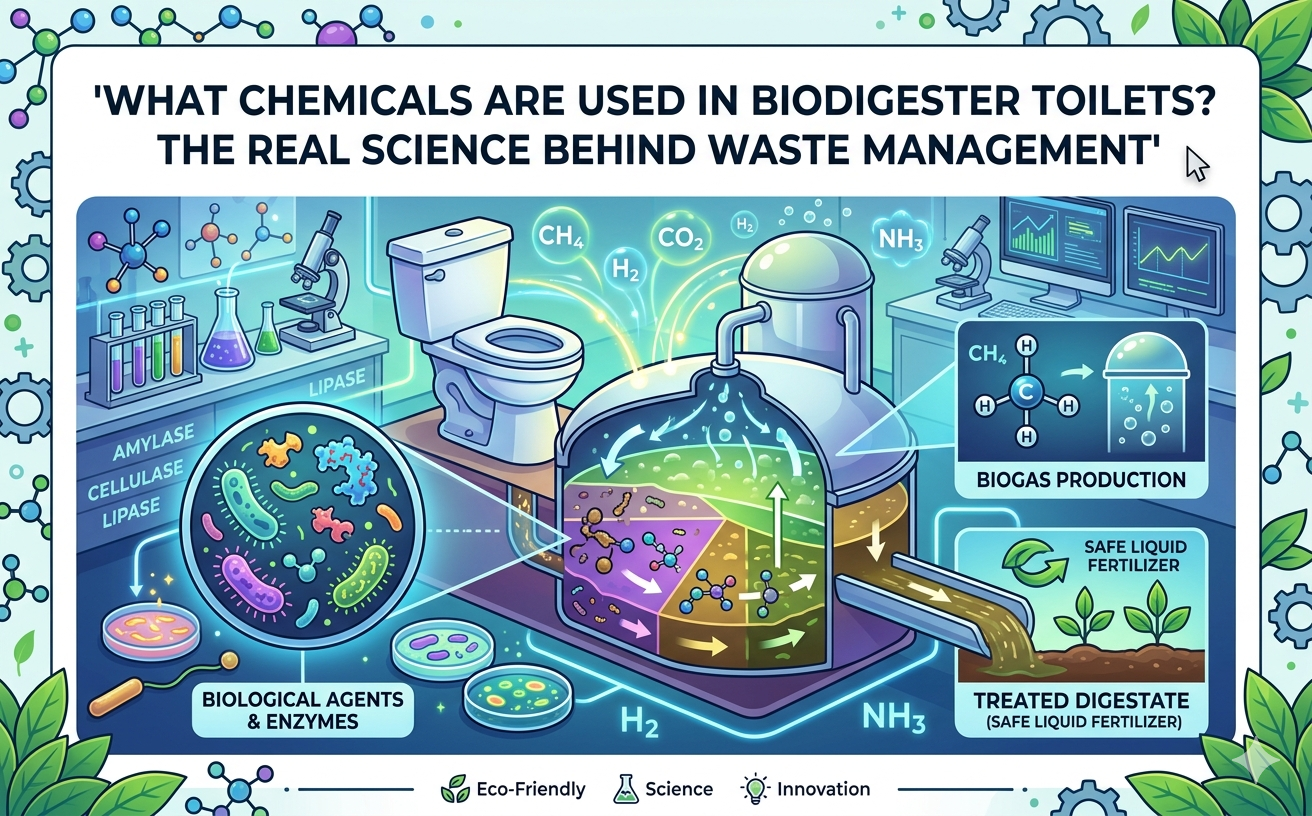
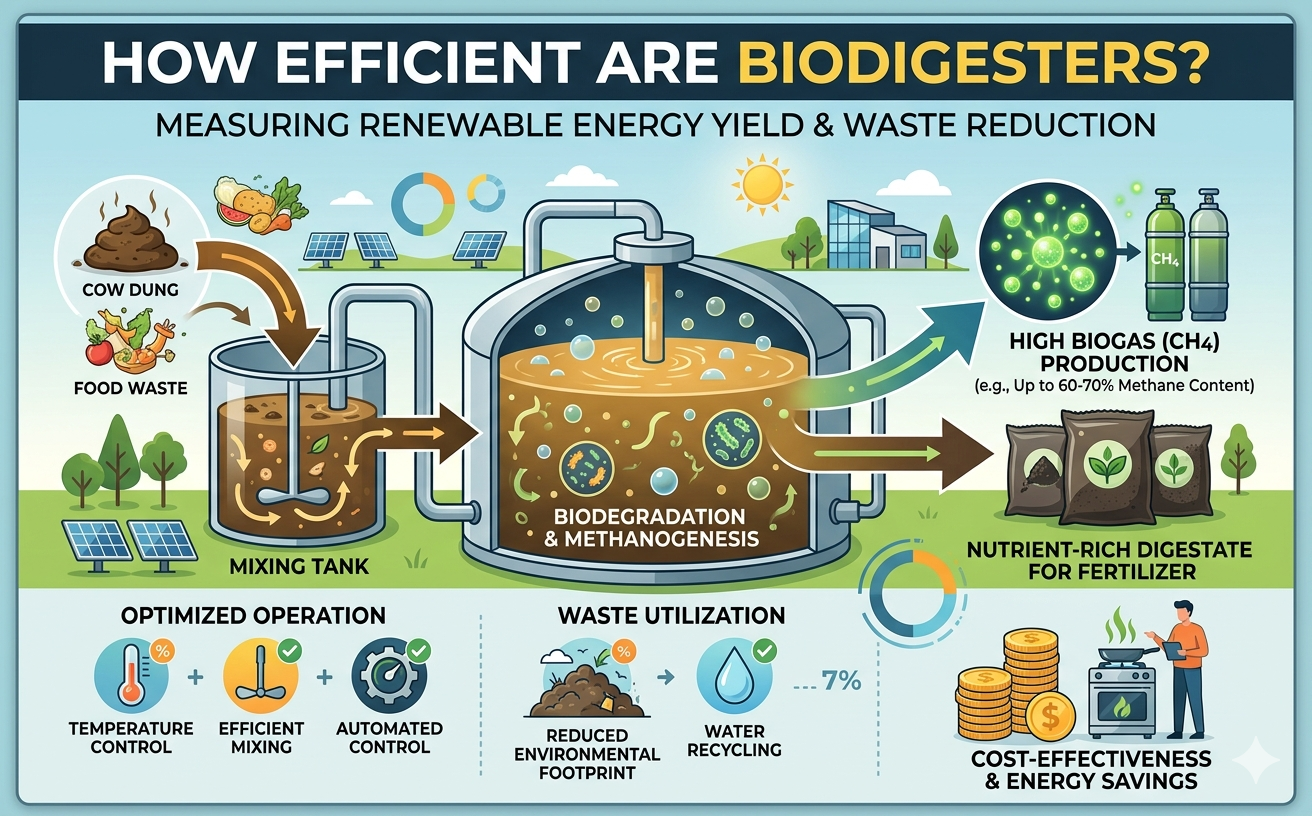
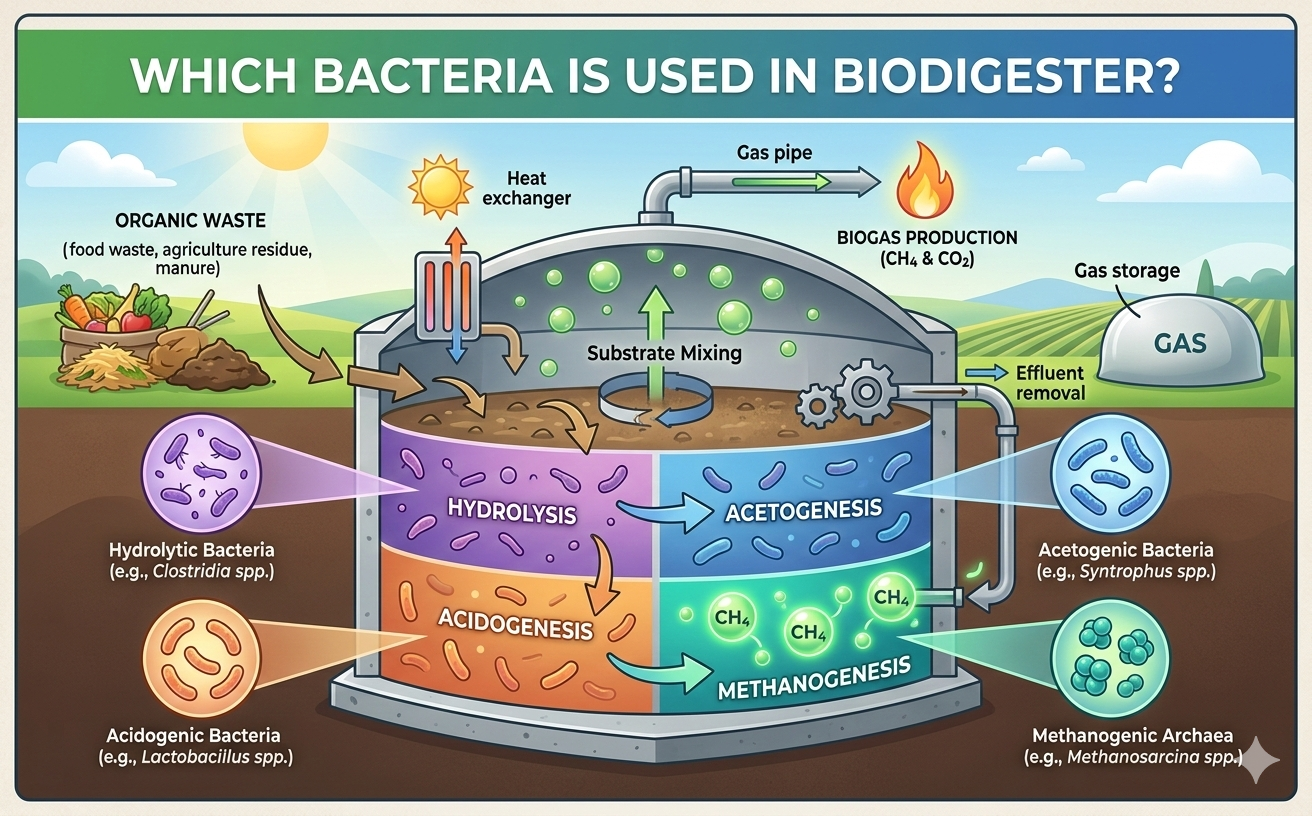
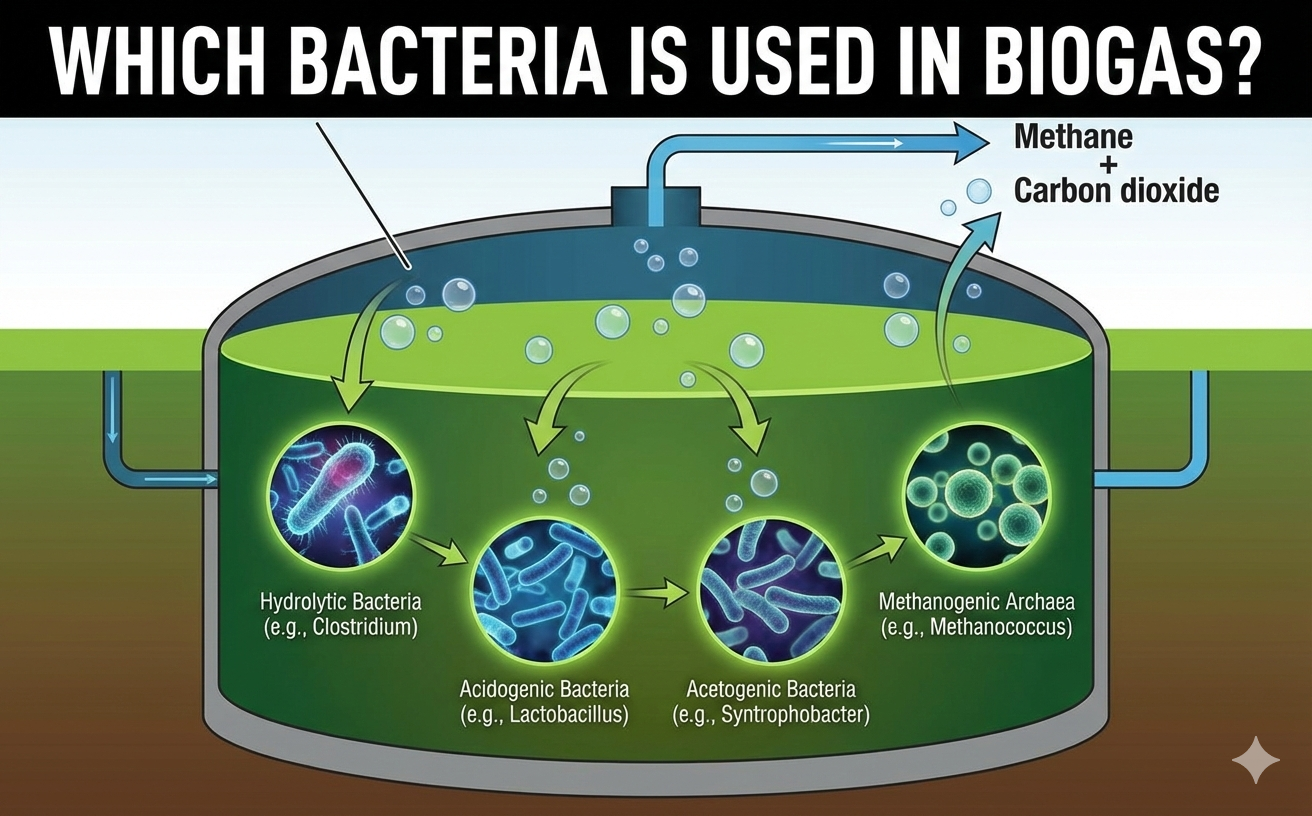
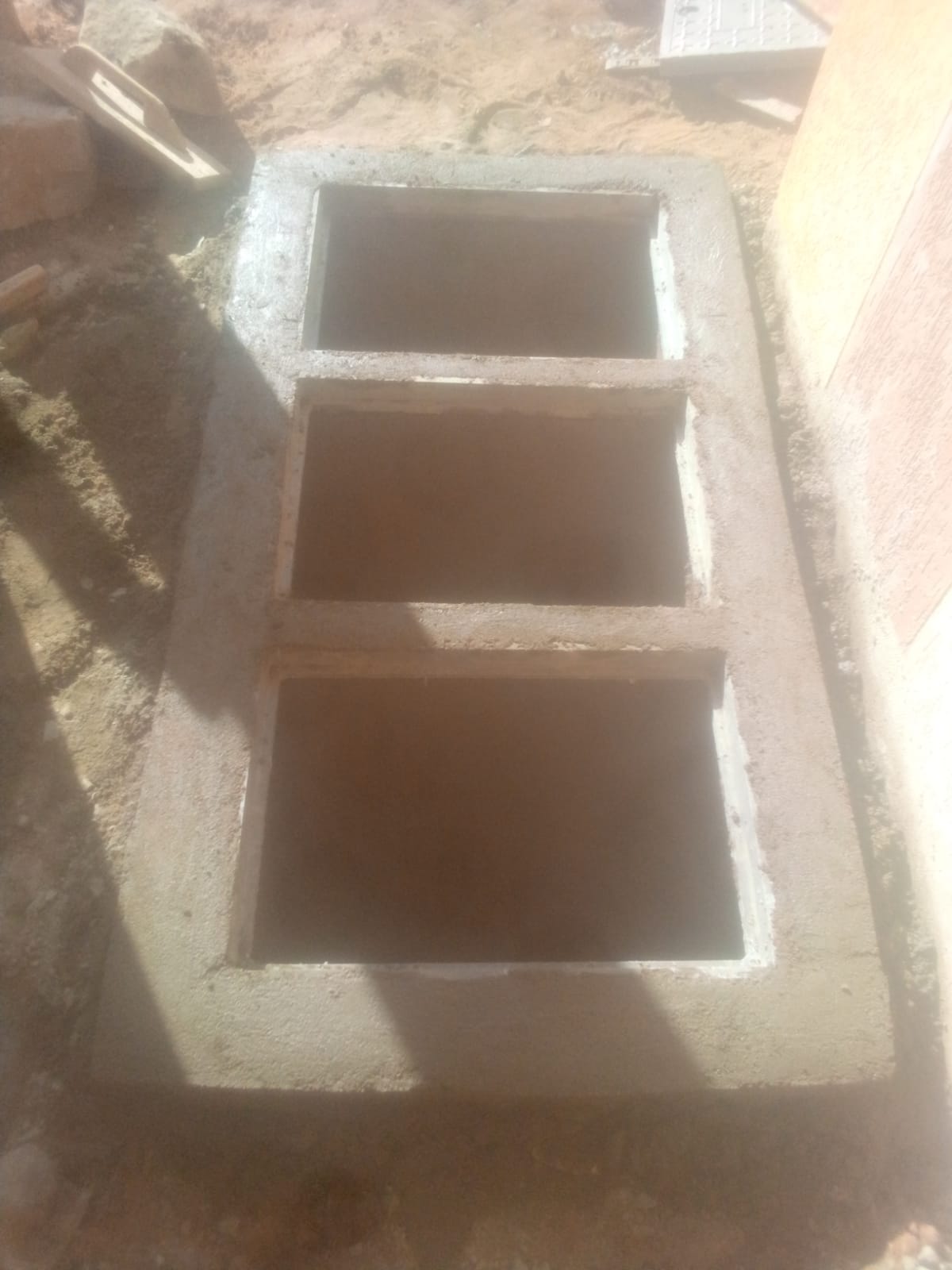
Waste is piped directly into the biodigester where specialized biodigester enzymes break down and consume the solid waste through anaerobic digestion.
This process strips the waste of its harmful pathogens and organic solids. The biological end result is strictly treated water and odorless air.
The Role of the French Drain and Soaking Pit
Once the water is treated, it exits the main chamber through an outlet pipe and enters the soaking area.
Depending on the Bio Digester Installation strategy used, this is usually a French drain—a trench filled with graded stones and gravel—or a soakaway pit.
Because the effluent is now treated water, it does not contaminate the surrounding environment.
Instead, it seeps slowly into the earth, where the soil acts as a final natural filter.
This cycle ensures that your yard remains dry and odor-free, provided the system is sized correctly for your household load.
If you are currently planning your site layout and are unsure about the best positioning for your soaking area, get expert advice.
Phone: +254 712 660 245
Email: info@biodigesterkenya.co.ke

Soil Realities: How Kenyan Geography Affects Effluent Flow
As an installer who has worked across the country, I can tell you that “one size fits all” doesn’t work in Kenya.
Where the water goes is a constant, but how fast it disappears depends entirely on your soil profile.
Black Cotton Soils (Kitengela, Kamulu, Athi River)
In areas like Kitengela or Kamulu, we deal with heavy black cotton soils. These soils have very low absorption rates and tend to expand when wet.
In these regions, a standard small soakaway will fail, leading to “pooling” or water surfacing in your compound.
To counter this, we engineer wider French drains or use specialized aggregates to increase the surface area for absorption.
Red Volcanic Soils (Kiambu, Nairobi, Central Highlands)
The red soils of Kiambu and the Nairobi outskirts are generally more porous.
Water moves through these soils much faster, making the absorption process highly efficient.
In these areas, Precast Bio Digesters work exceptionally well because the soil handles the treated effluent with ease, reducing the risk of system backup.
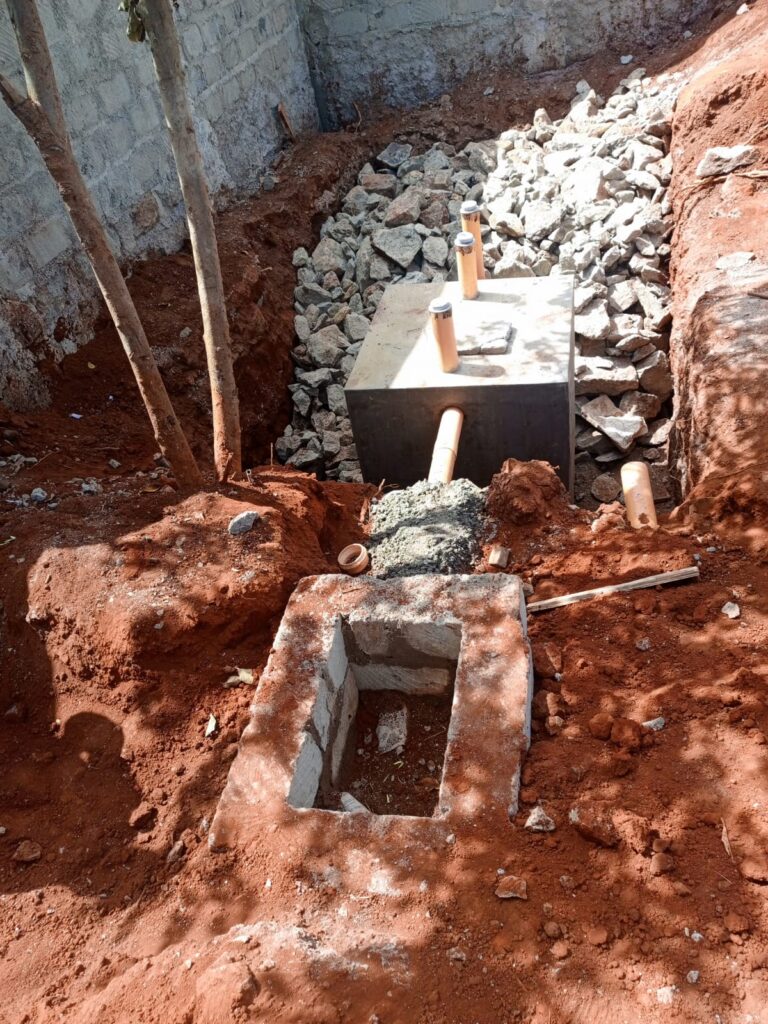
Maintaining the Flow: Preventing System Sluggishness
The water only flows freely if the biological engine inside the tank is healthy.
If the enzymes are depleted—often due to the overuse of harsh chemical cleaners or bleach—solid waste begins to accumulate.
This creates a “sludge blanket” that can block the outlet pipe, causing water to back up into your house.
To keep the treated water moving efficiently toward the soaking area, you must maintain the bacterial colony.
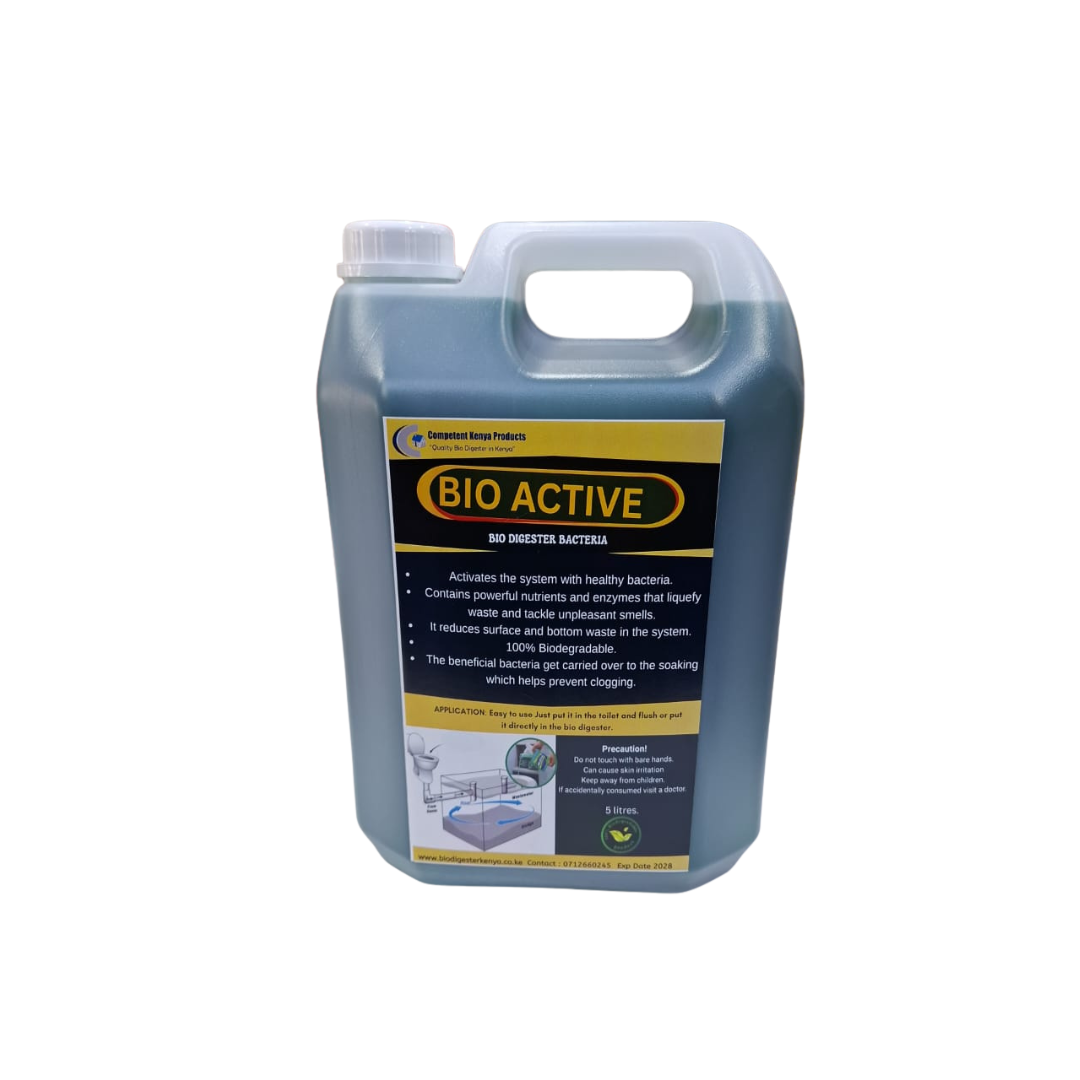
Periodically adding Bio Digester Bacteria ensures that the solids are fully liquefied.
For systems that have already become sluggish or are experiencing slow drainage, using a high-strength Septic Tank Cleaner can help break down stubborn accumulations and restore the flow to the French drain.
For homeowners wondering if they should stick with their current setup or switch to a biological system, a detailed biodigester vs septic tank comparison reveals the massive long-term savings on maintenance.
Need help reviving a sluggish system or calculating the absorption rate for your plot?
Phone: +254 712 660 245
Email: info@biodigesterkenya.co.ke

Compliance and Environmental Safety
From a NEMA perspective, the goal is to ensure that blackwater is treated before it enters the groundwater table.
Traditional septic tanks often leak raw sewage into the ground, which is a health hazard.
Because the biodigester treats the waste internally, the water entering the soaking area is safe.
Proper Septic Tank Maintenance—or in this case, biodigester maintenance—involves monitoring the soaking area for saturation.
If you notice the ground becoming spongy around your French drain, it may be time to boost the system with Bio Digester Bacteria – 400g to ensure no solids are escaping the tank and clogging the soil pores.
Conclusion
Moving away from the cycle of paying for expensive exhaust bowsers every few years is a liberating financial decision for any Kenyan property owner.
By understanding that a biodigester transforms waste into treated water that naturally absorbs into the earth, you can design a waste management system that is permanent, odorless, and environmentally sound.
Investing in a system from Bio Digester Kenya ensures that your installation is engineered for your specific soil type, giving you total peace of mind.
Ready to eliminate exhaust fees forever?
Phone: Call +254 712 660 245
Email: Email info@biodigesterkenya.co.ke
Frequently Asked Questions
- Does a biodigester smell?
No. Because the enzymes break down waste anaerobically and the system is sealed, the resulting air and water are odorless. - How often do you add enzymes/bacteria?
Typically, a booster dose of bacteria is recommended every 6 to 12 months to maintain optimal digestion rates. - Can the water from a biodigester be used for irrigation?
While the water is treated and safe for the soil, we recommend directing it to a French drain or ornamental plants rather than edible crops. - What happens if the soaking area gets full?
In well-engineered systems, this rarely happens, but if it does, adding bacteria can help clear any organic clogging in the soil. - Is a biodigester legal according to NEMA?
Yes, as long as it is installed correctly and the effluent is treated before entering the ground, it meets modern sanitation standards.