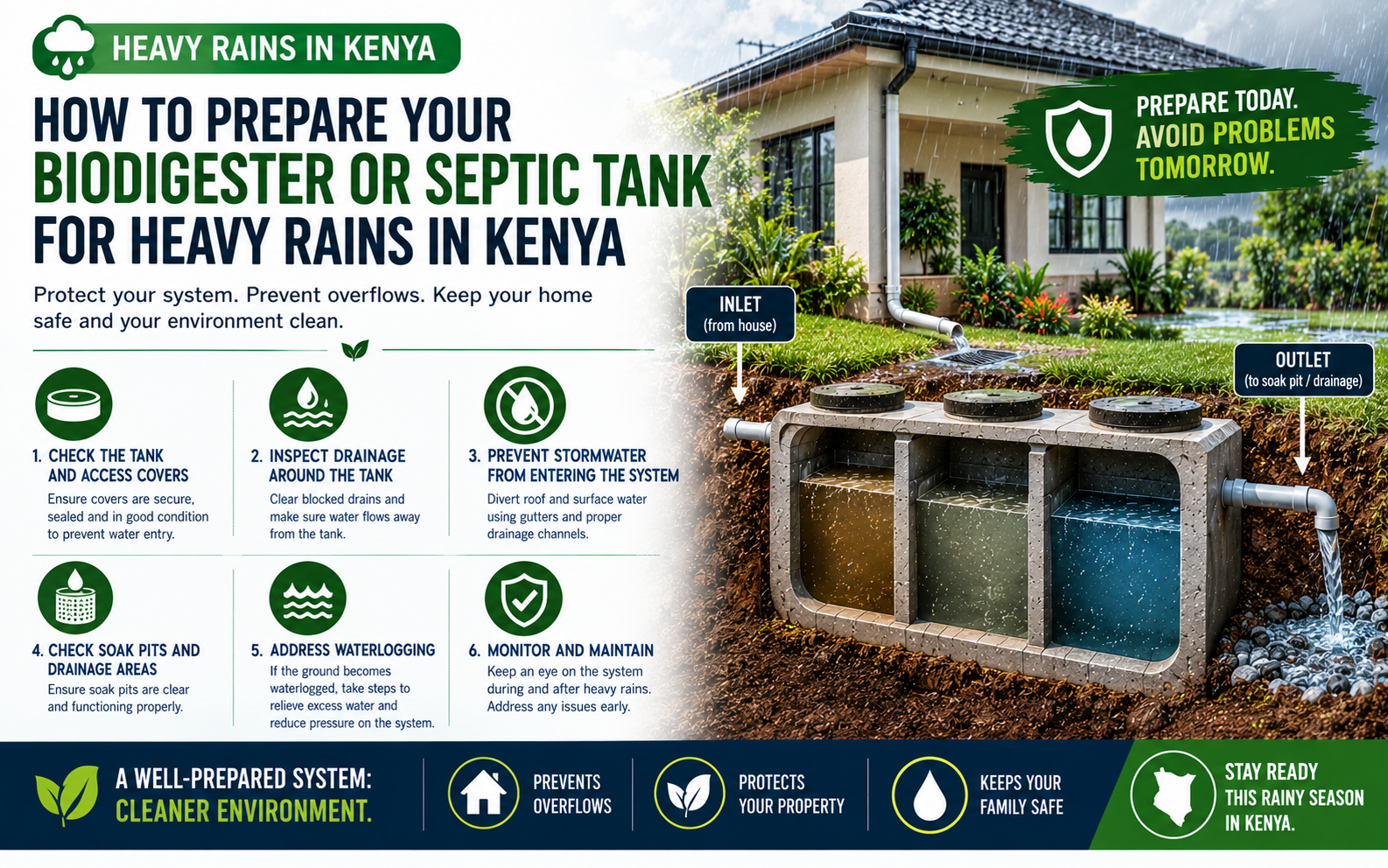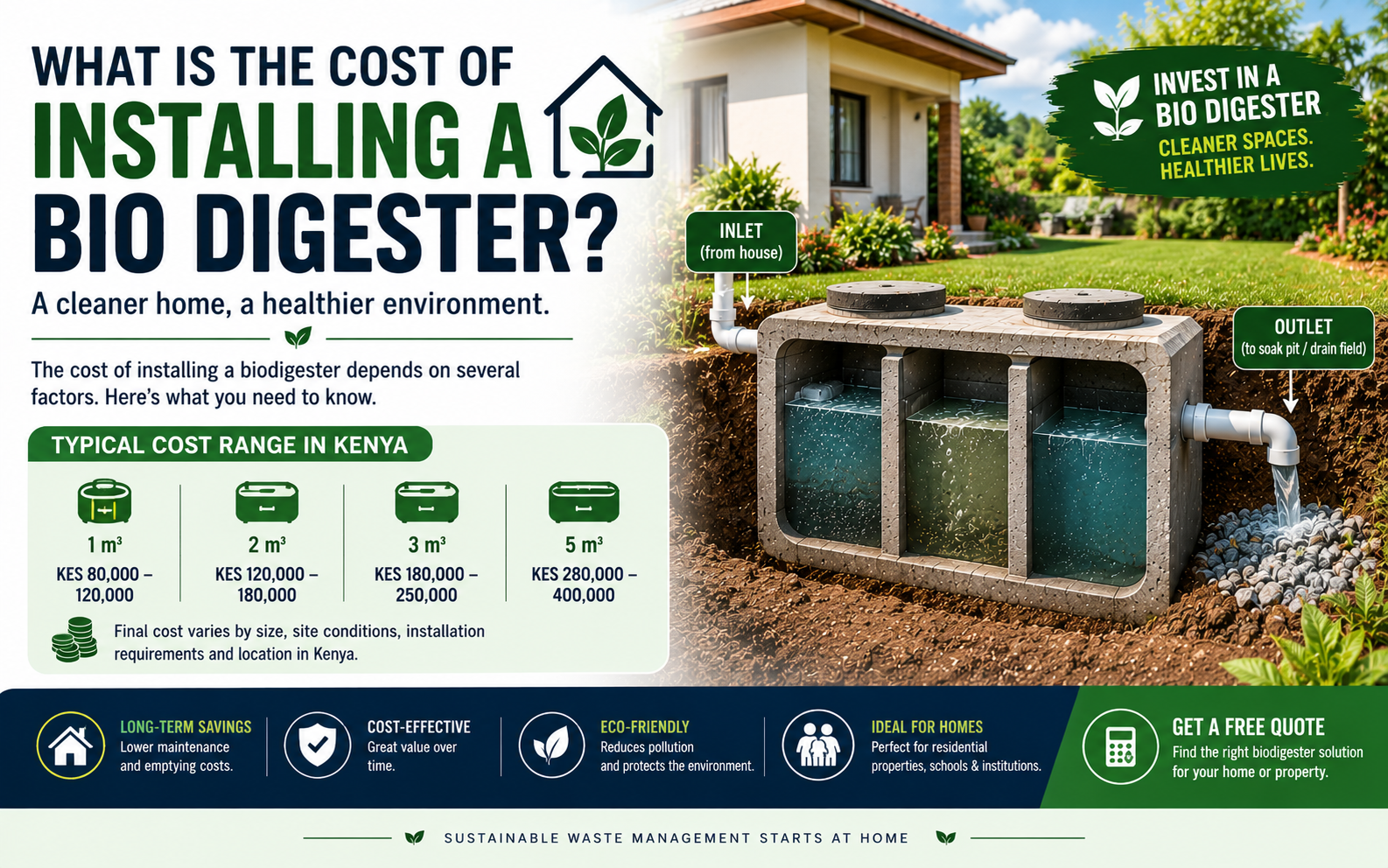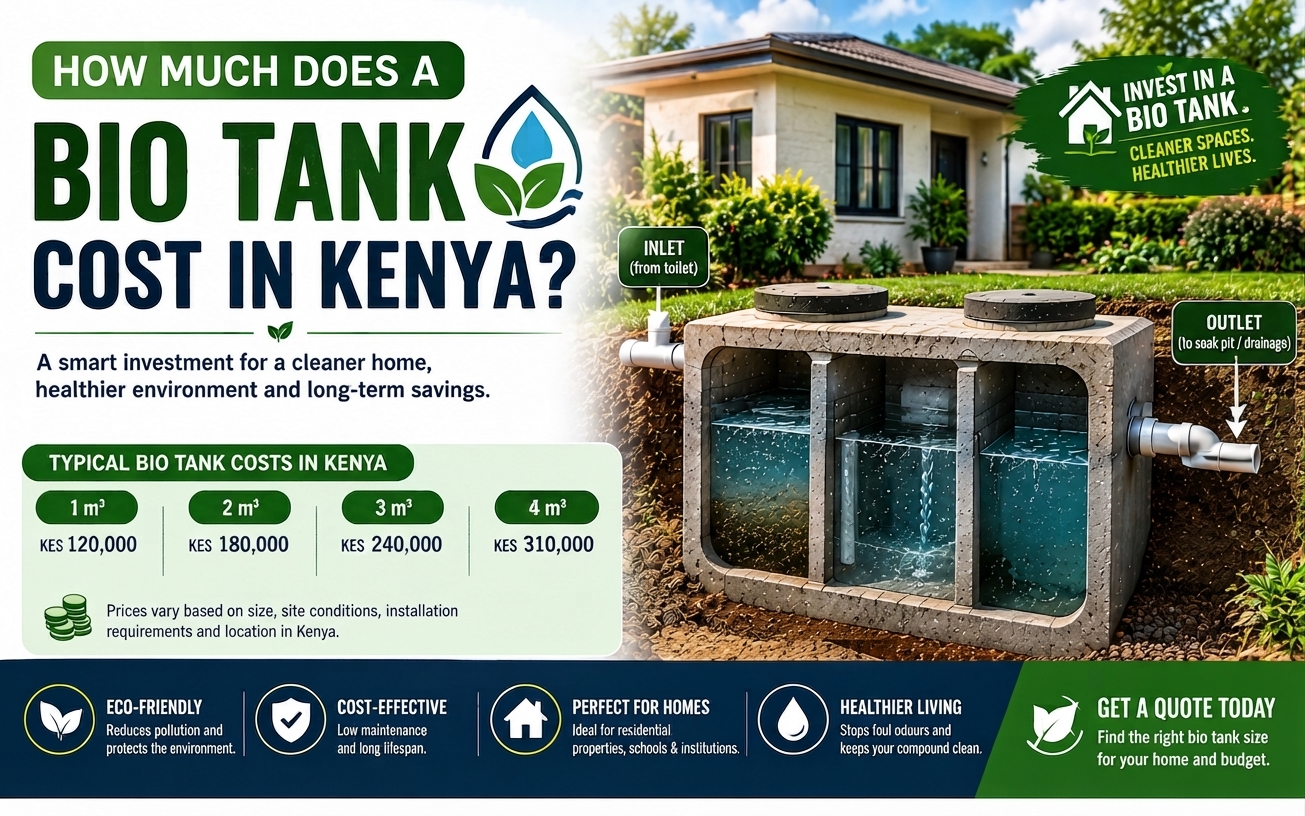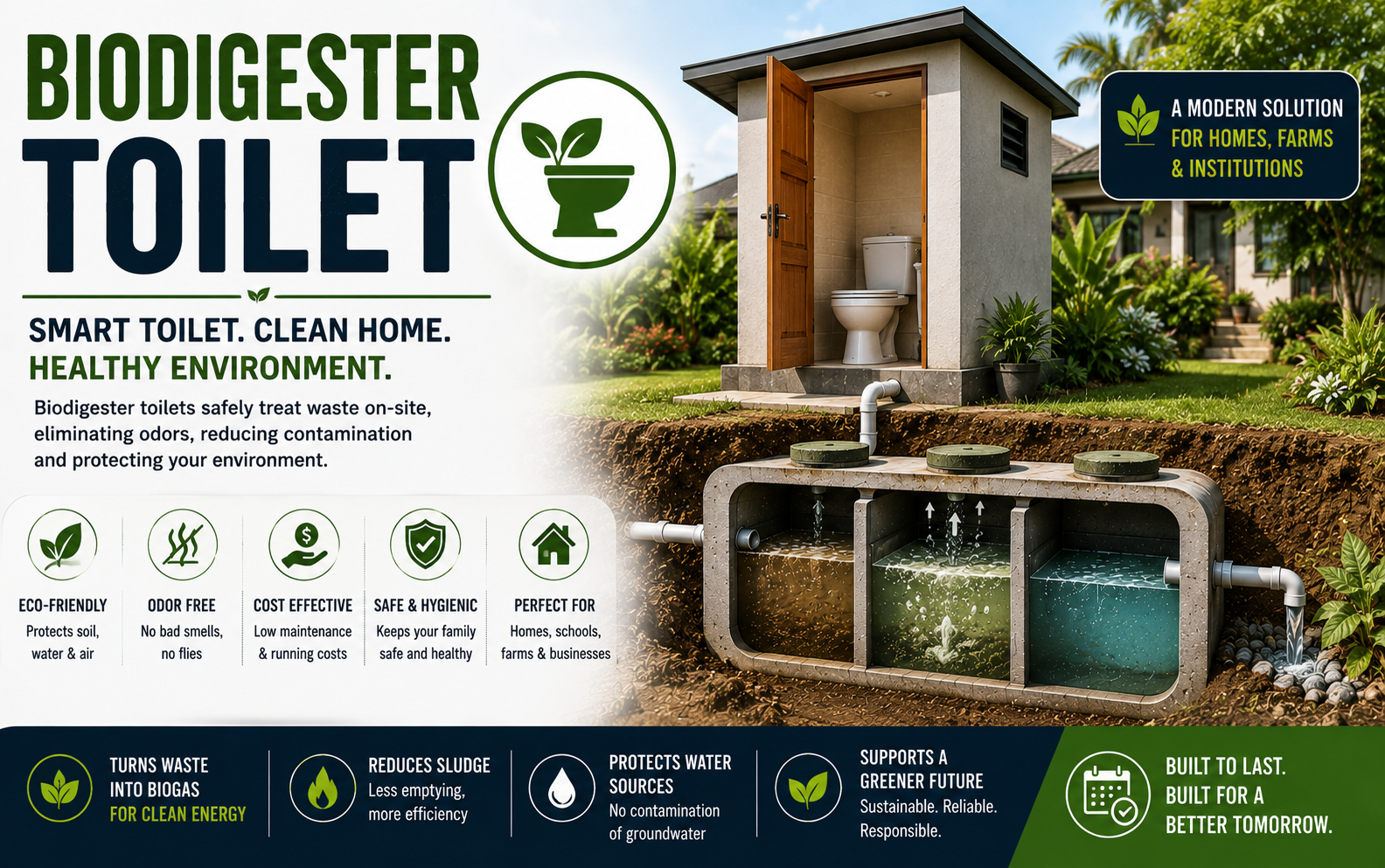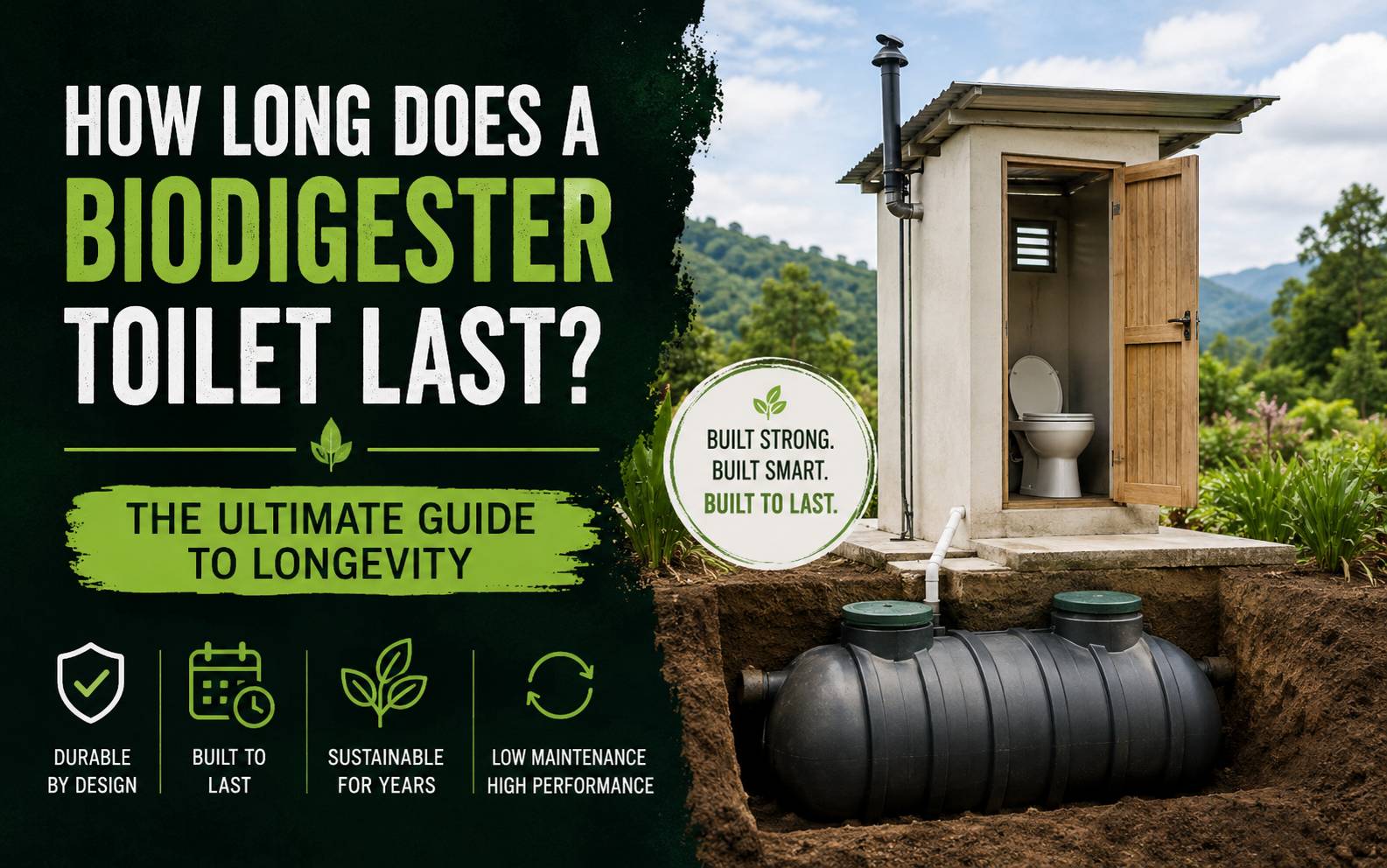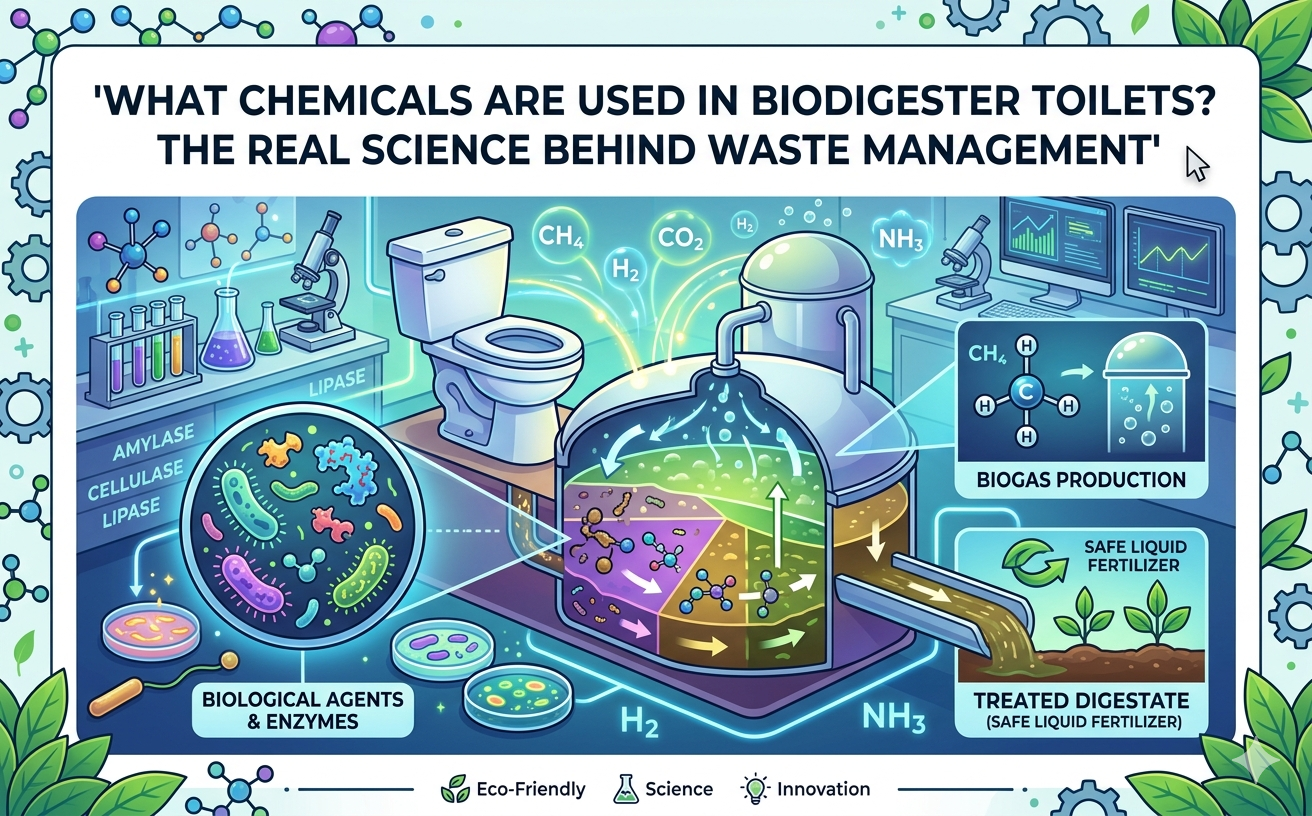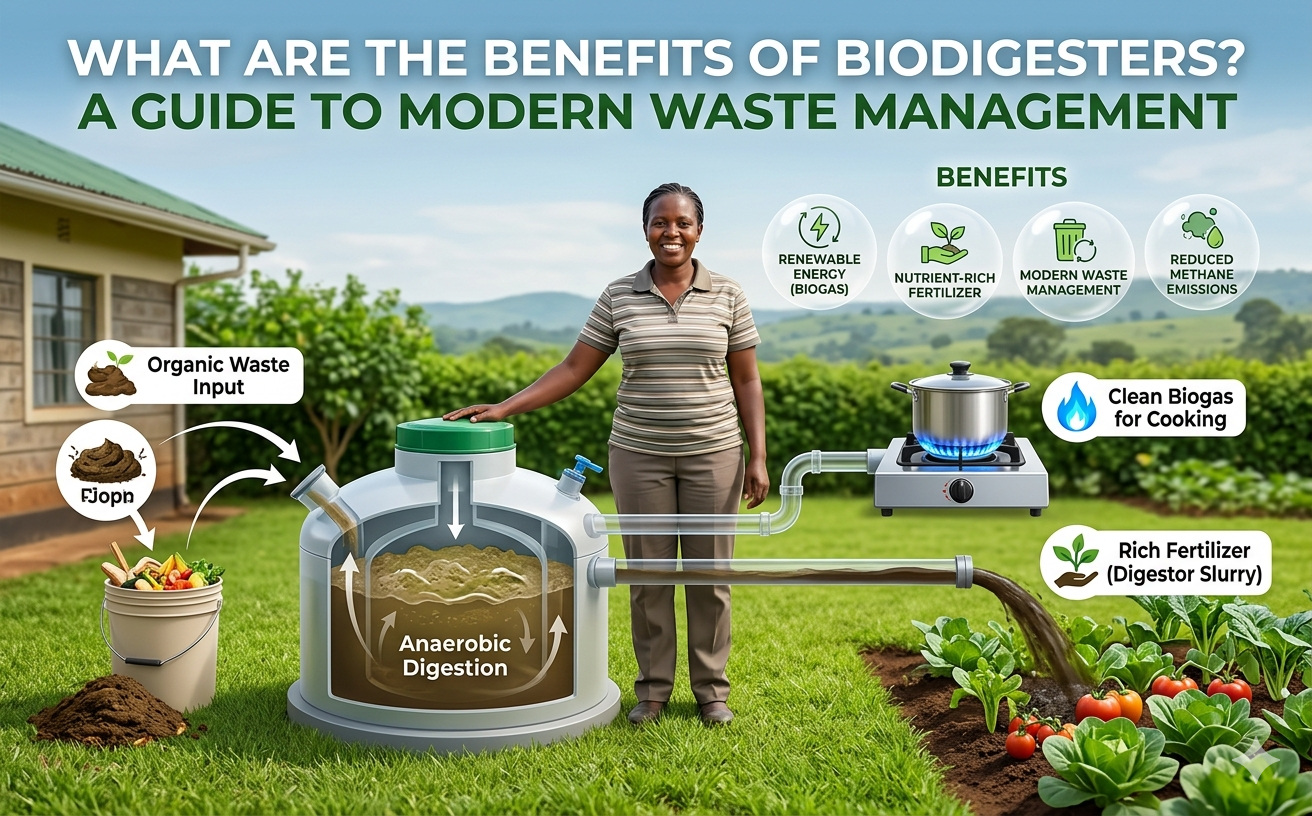
If you’ve been searching for “what chemicals are used in biodigester toilets,” you’re likely looking for a way to keep your toilet smelling fresh, prevent it from filling up, or perhaps you’re just curious about how these modern marvels work.
But here is the kicker: the most effective “chemicals” used in a Biodigester aren’t actually chemicals at all—they are living, breathing microorganisms and enzymes!
In Kenya, we are moving away from the old-school, smelly pit latrines and the massive, concrete septic tanks that need exhausting every few months.
At Bio Digester Kenya, we’ve seen a massive surge in homeowners and developers asking for a cleaner, more efficient solution.
Whether you are building a cozy bungalow in Kitengela or a massive apartment complex in Kilimani, understanding what goes into your bio septic tank is the first step toward a stress-free lifestyle.
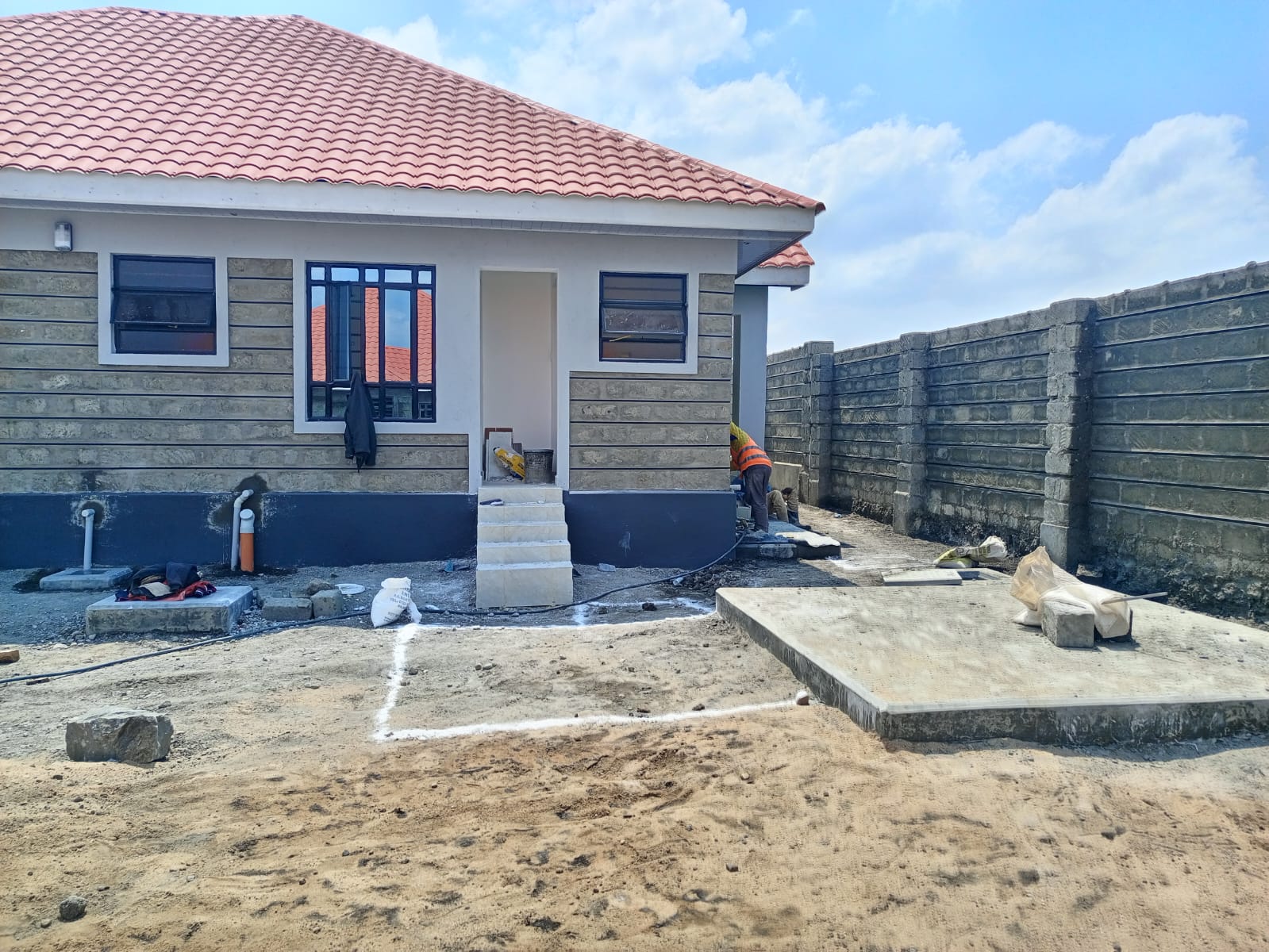
Is it Really “Chemicals”? Biology vs. Chemistry in Waste Treatment
When people ask about chemicals, they usually think of things like bleach, caustic soda, or harsh acids.
In a traditional pit latrine, people sometimes throw in these substances to “kill” the smell.
However, in a biodigester septic tank, using harsh chemicals is like bringing a flamethrower to a garden party—you’ll end up killing the very things that are helping you!
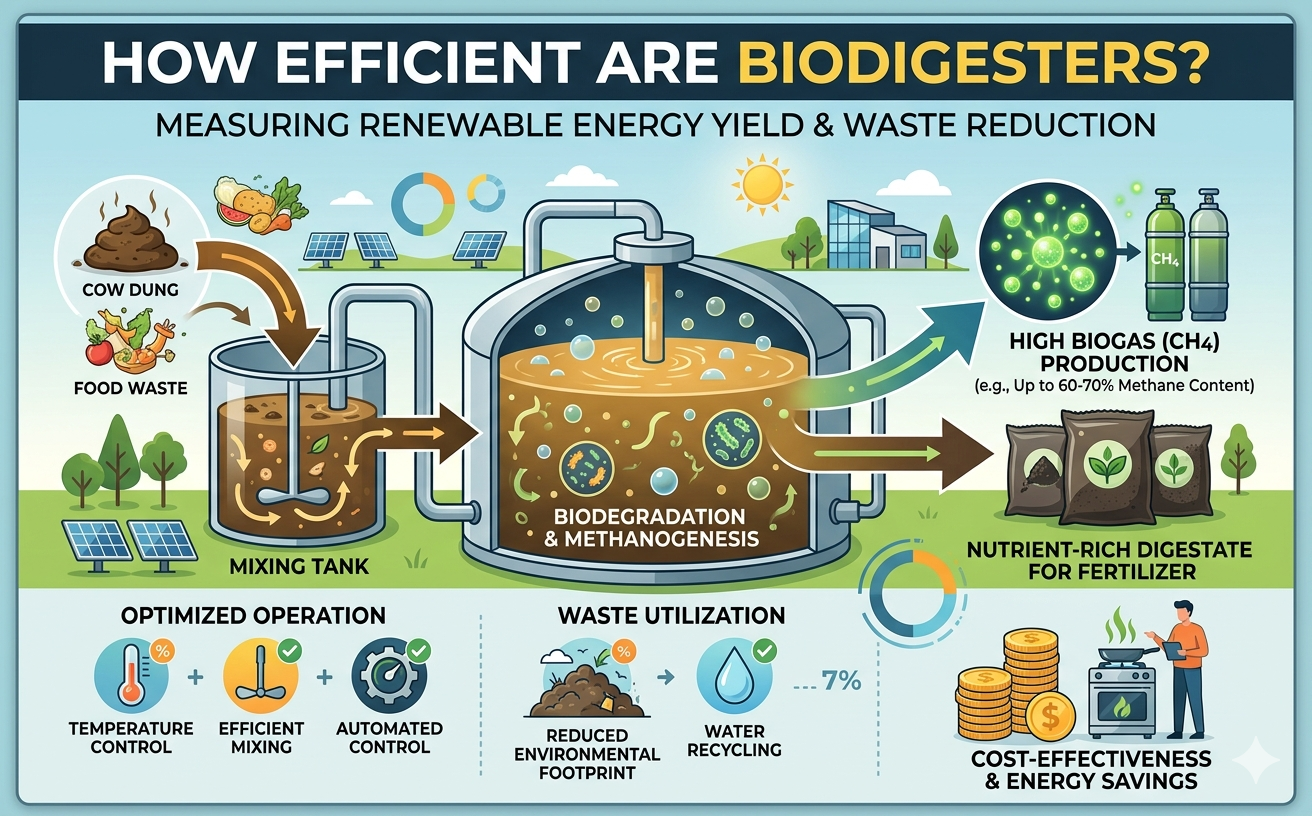
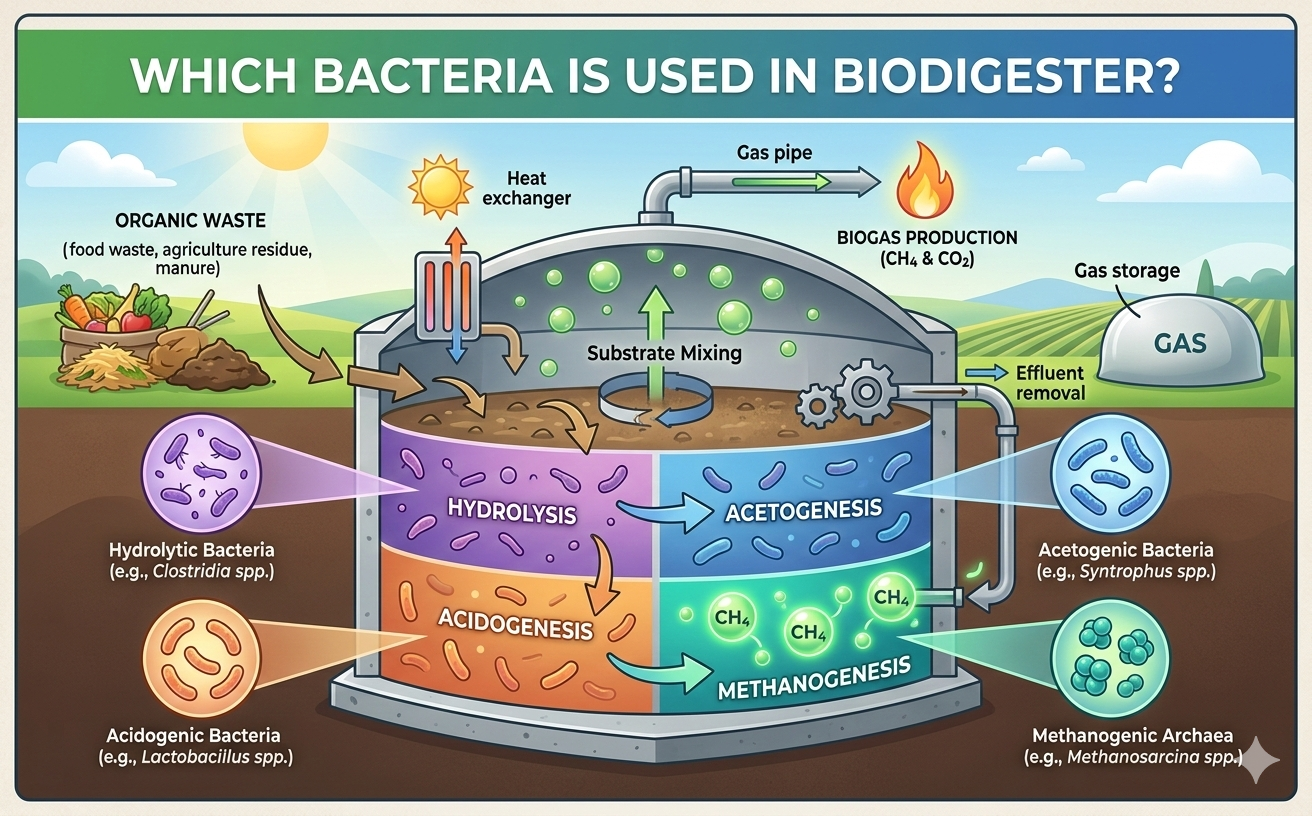
A Biodigester relies on biological catalysts.
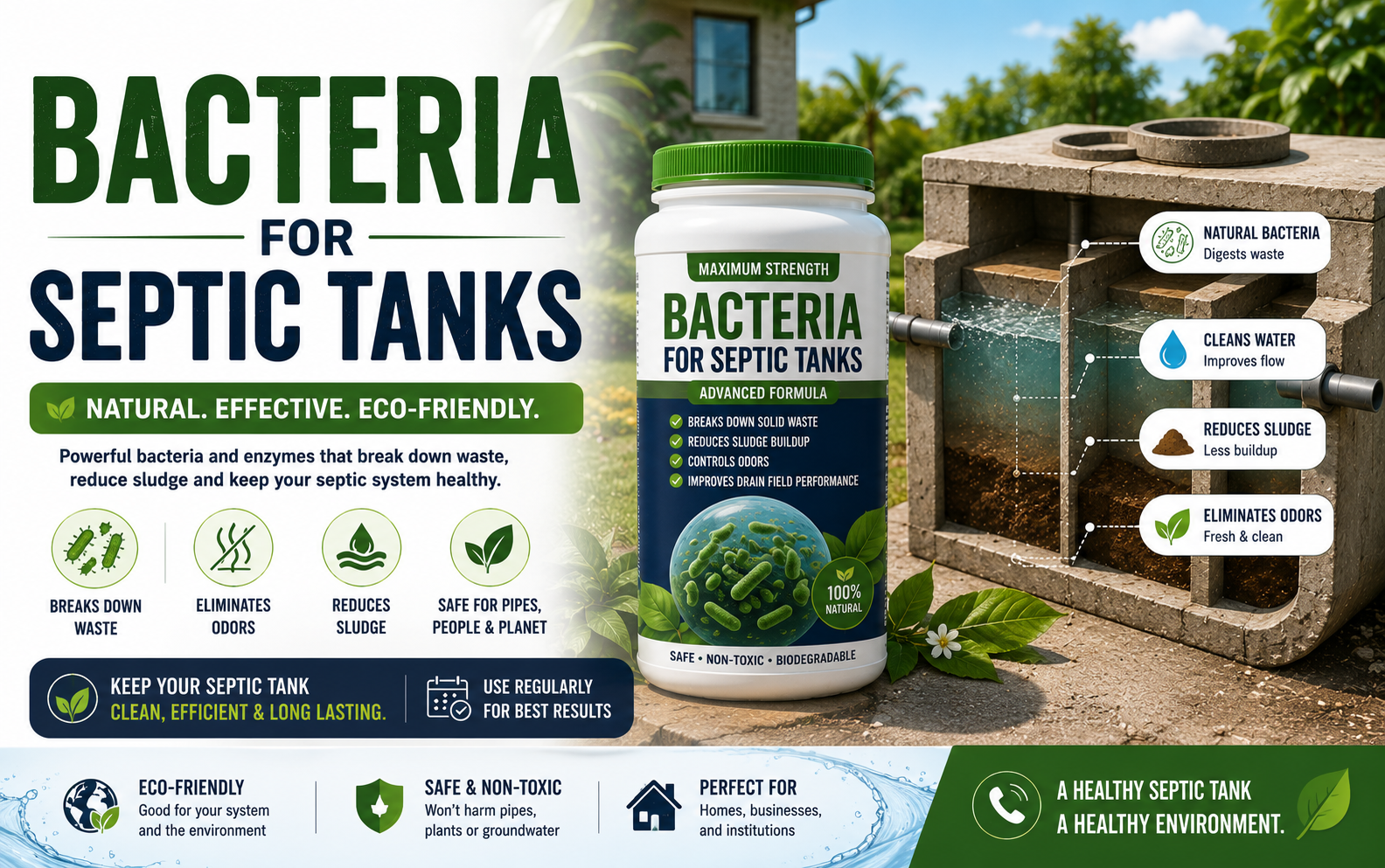
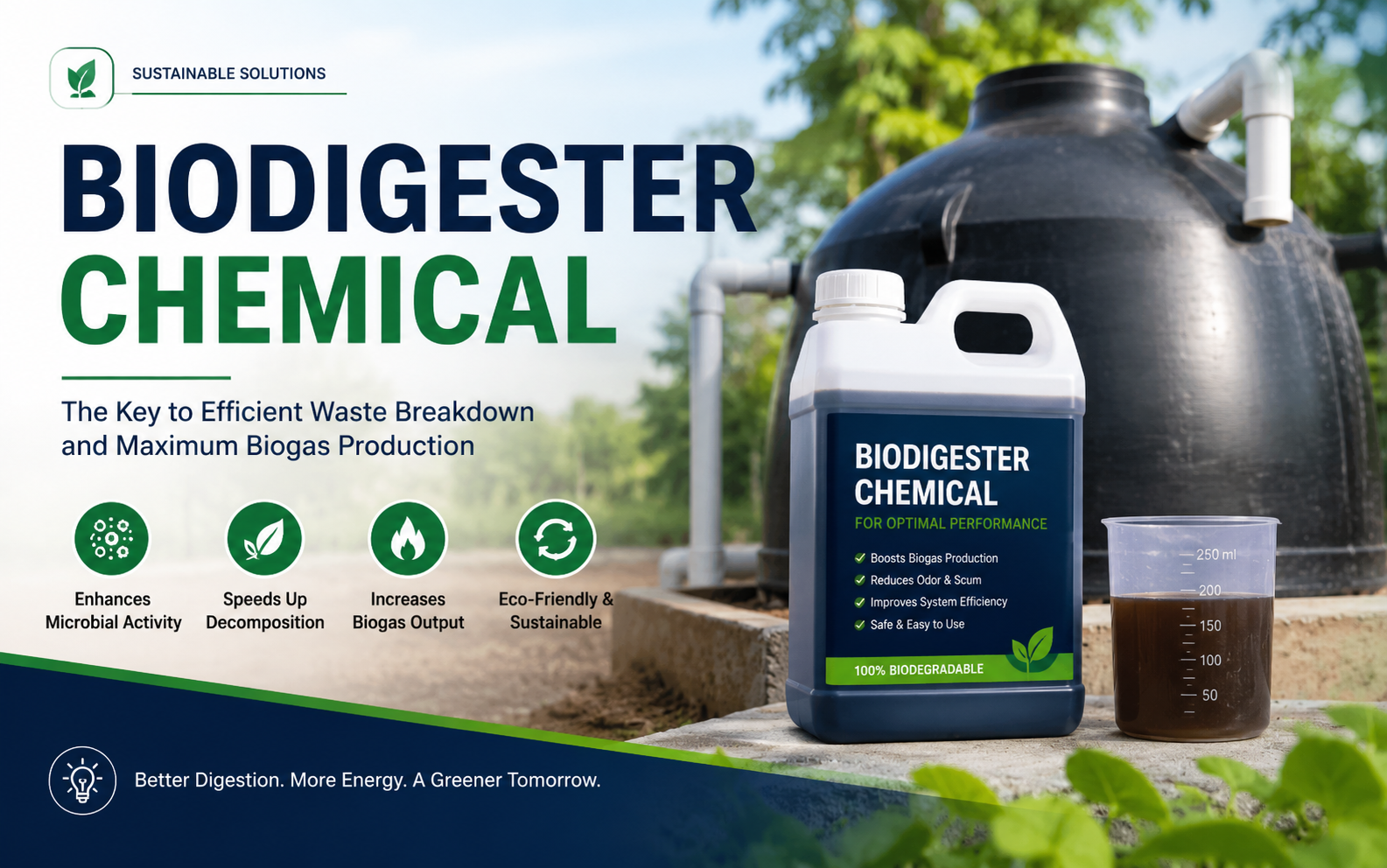
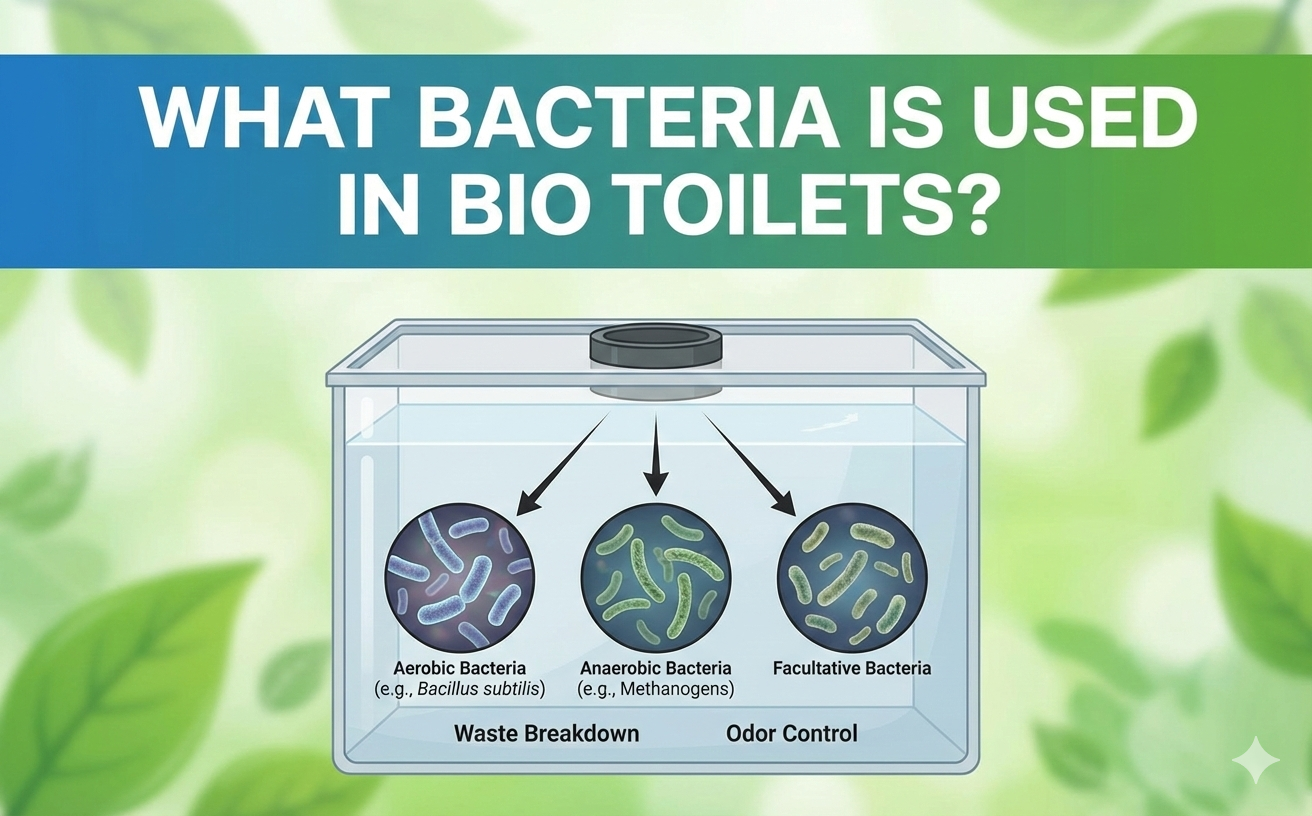
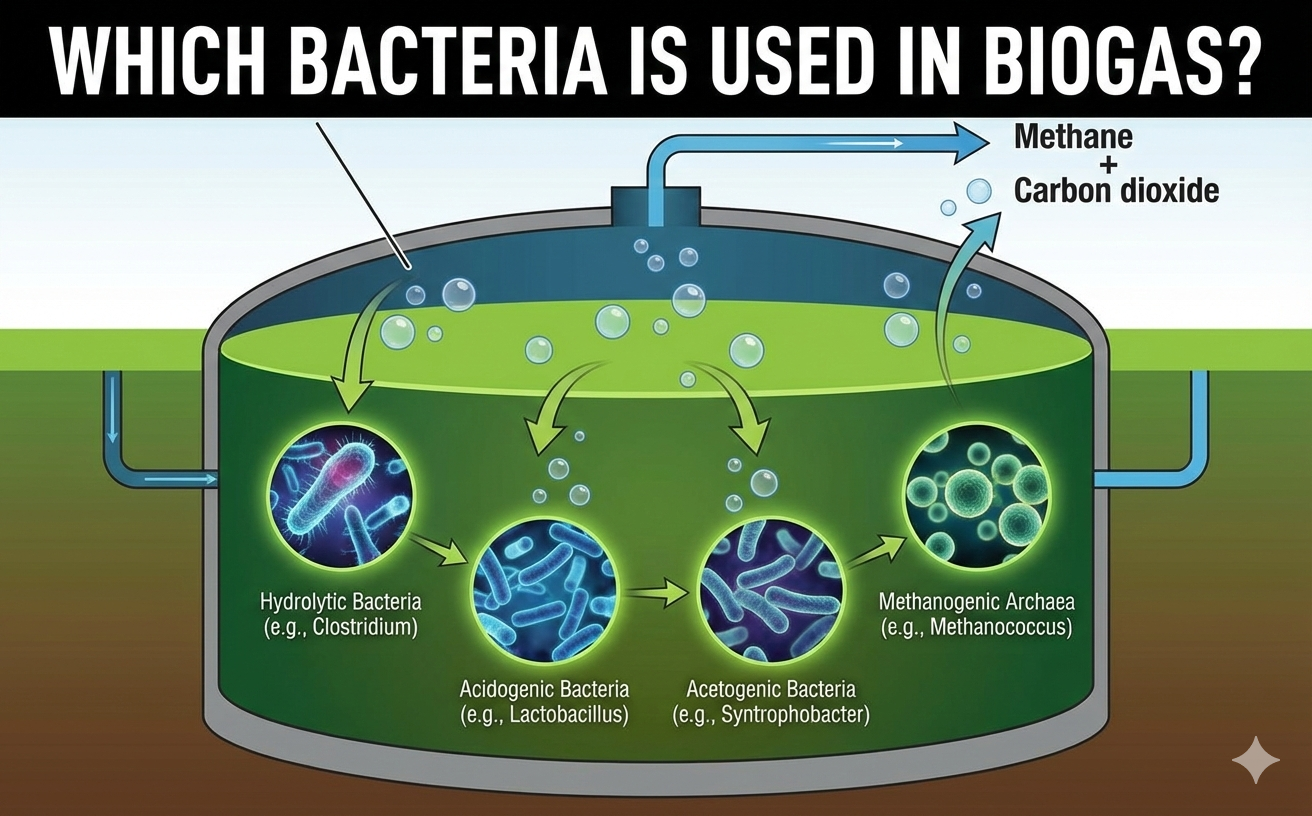
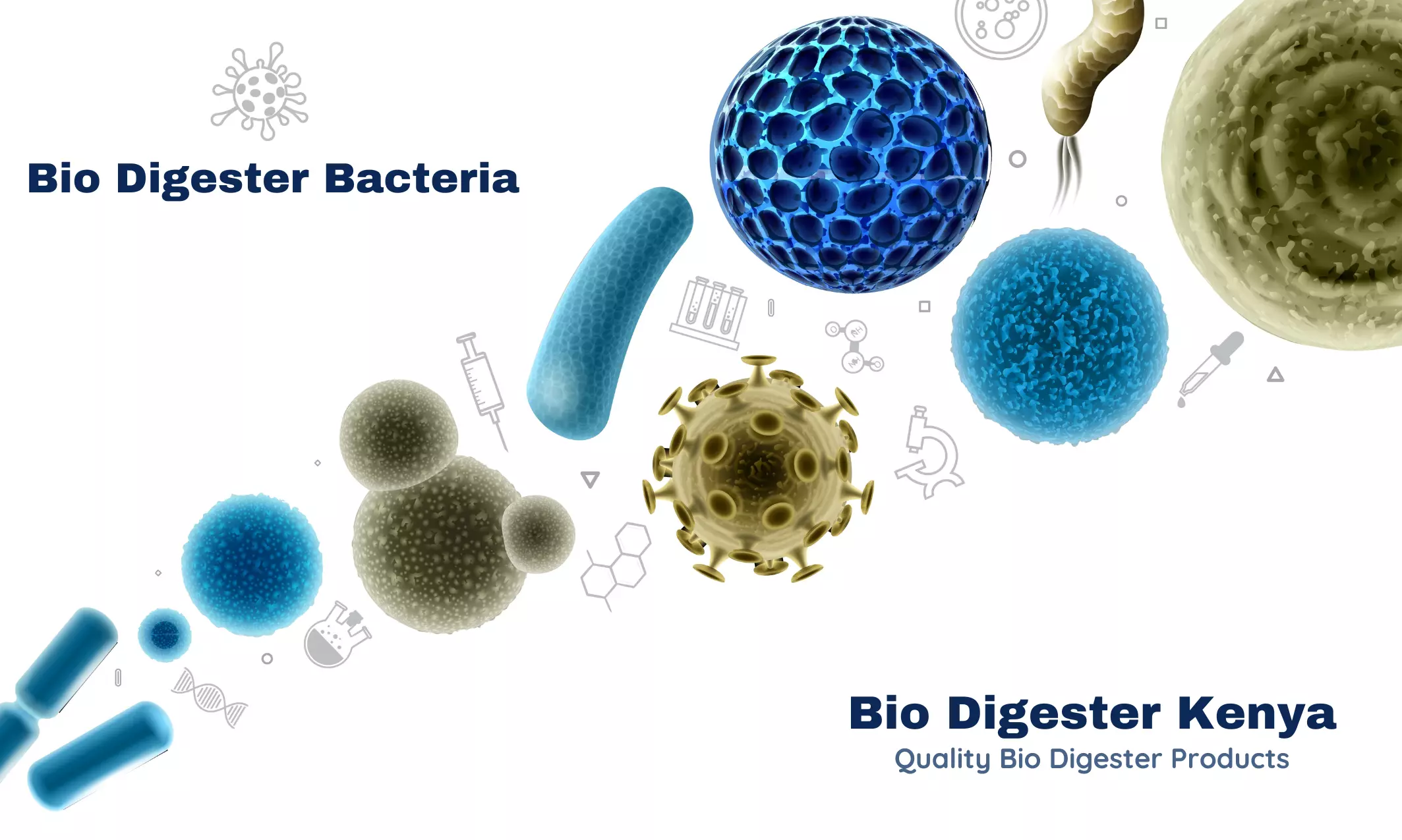
Instead of using artificial compounds to dissolve waste, we use specialized Bio Digester Bacteria.
These are natural organisms that eat away at organic matter. Think of it as a tiny, invisible army working 24/7 inside your tank to ensure you never have to call a “honey sucker” (exhaust vacuum truck) again.
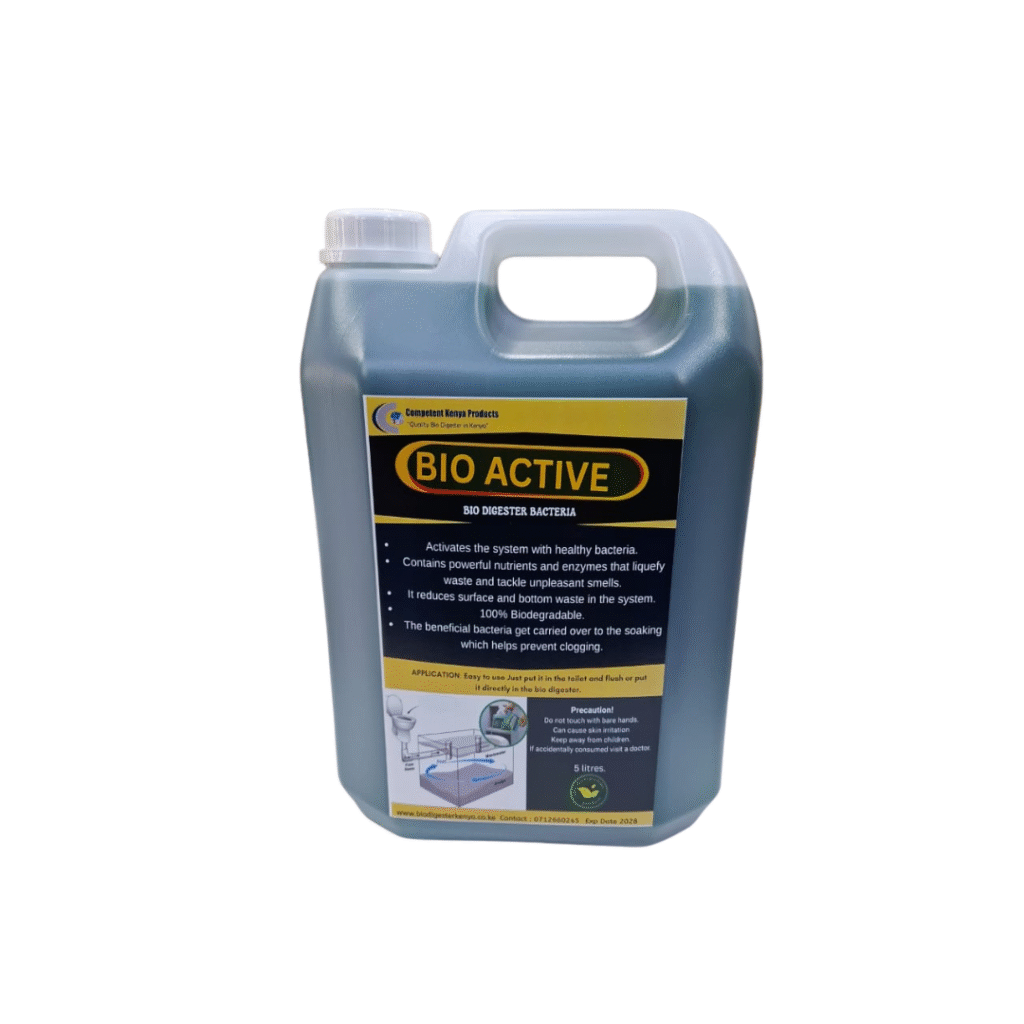
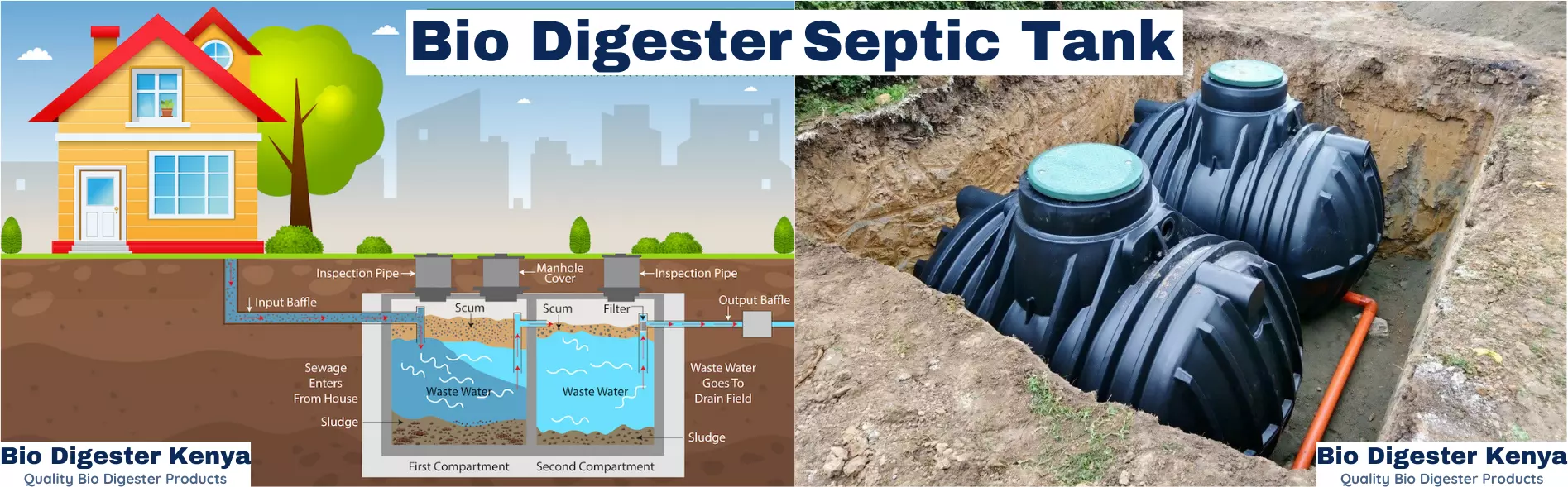
Understanding the Bio Digester Septic Tank Mechanism
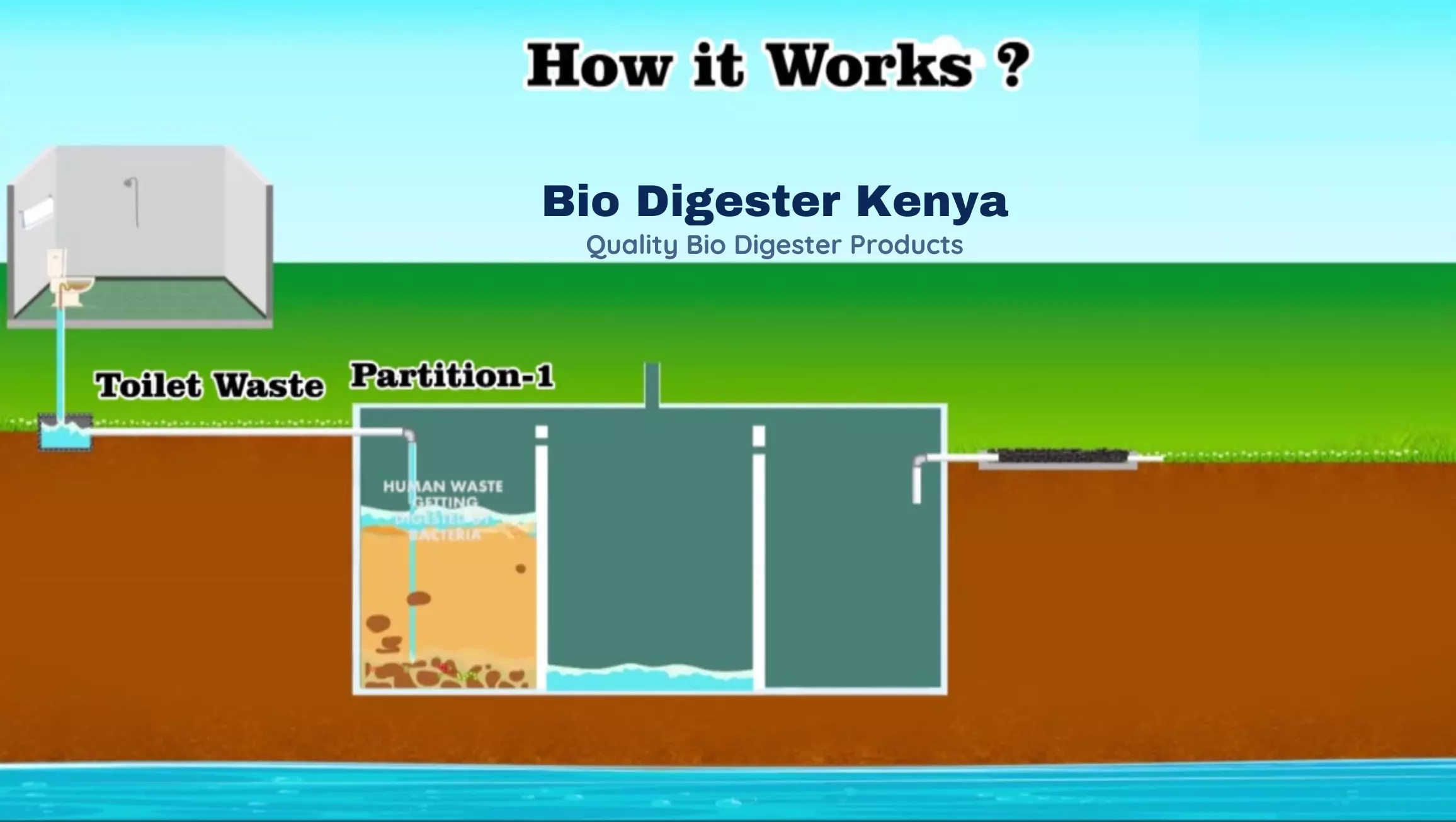
The beauty of the system we design at Bio Digester Kenya lies in its simplicity and efficiency. But how does it actually work?
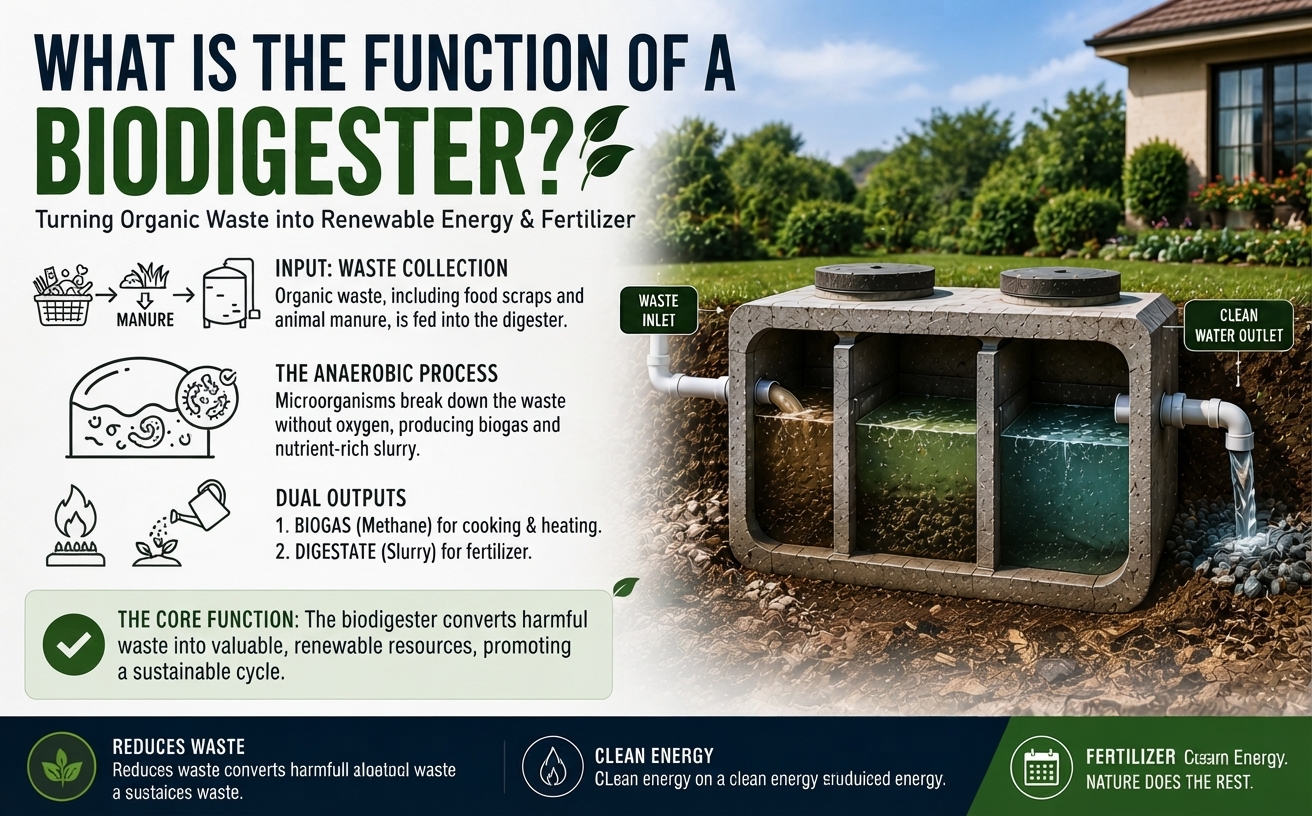
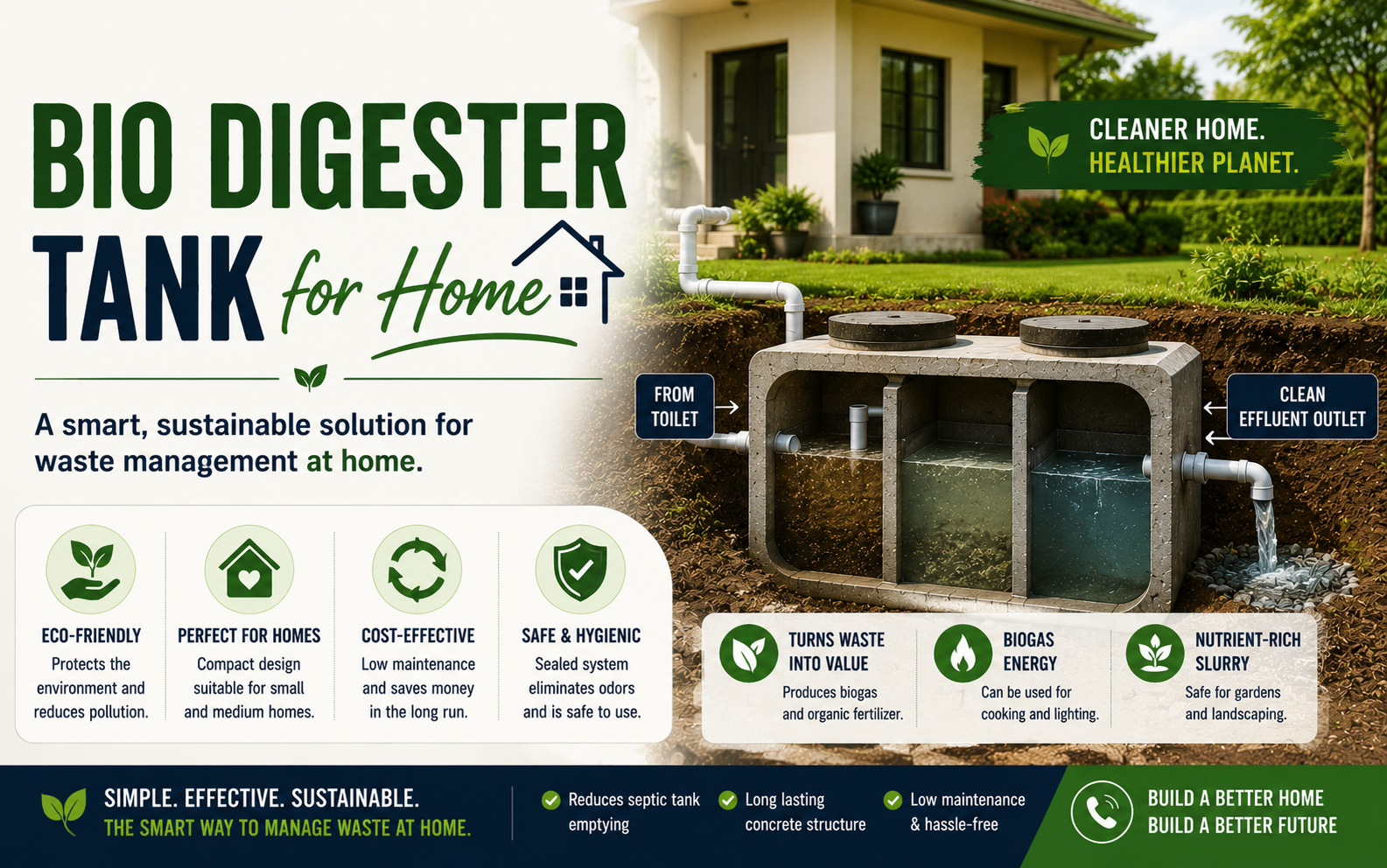
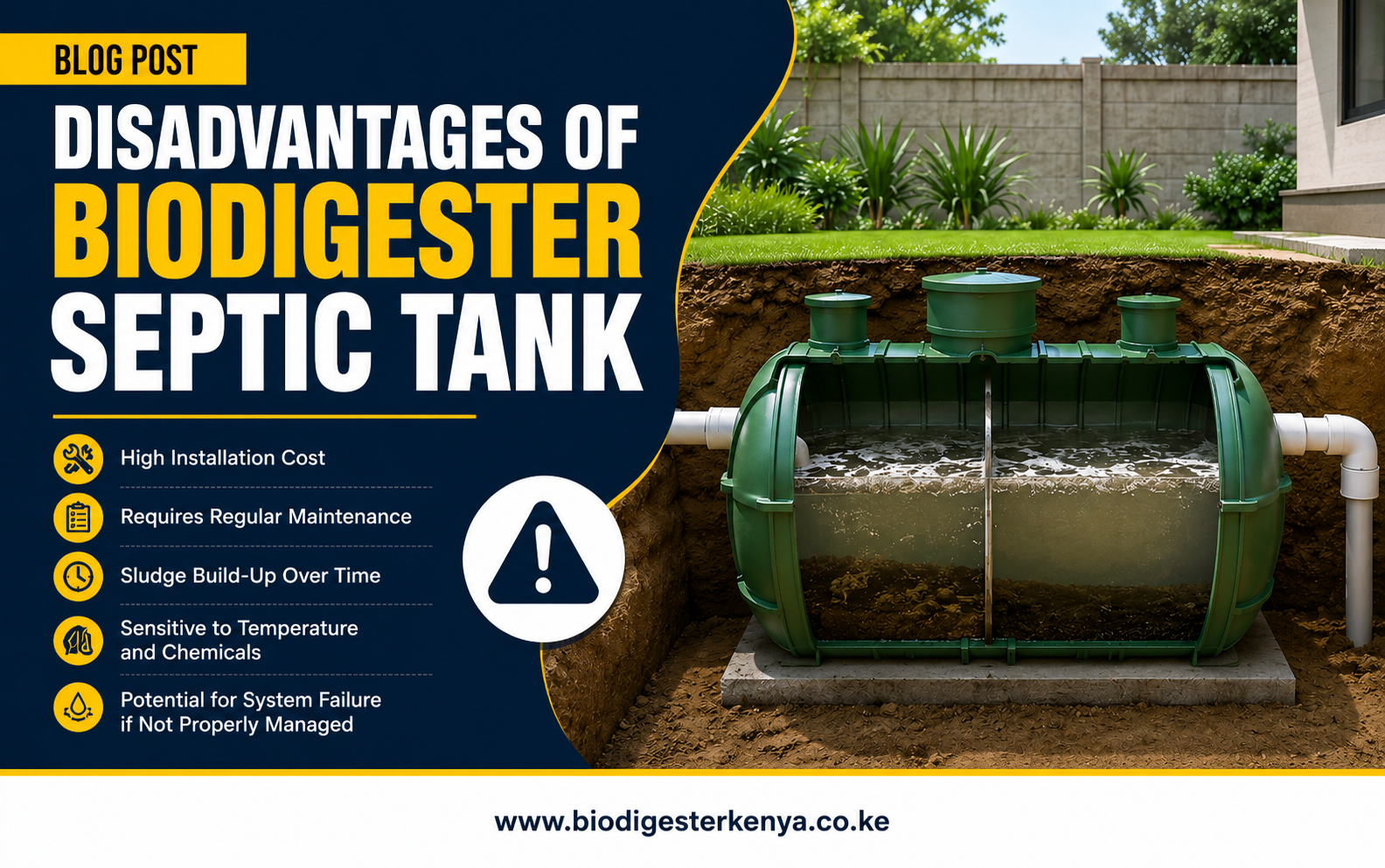
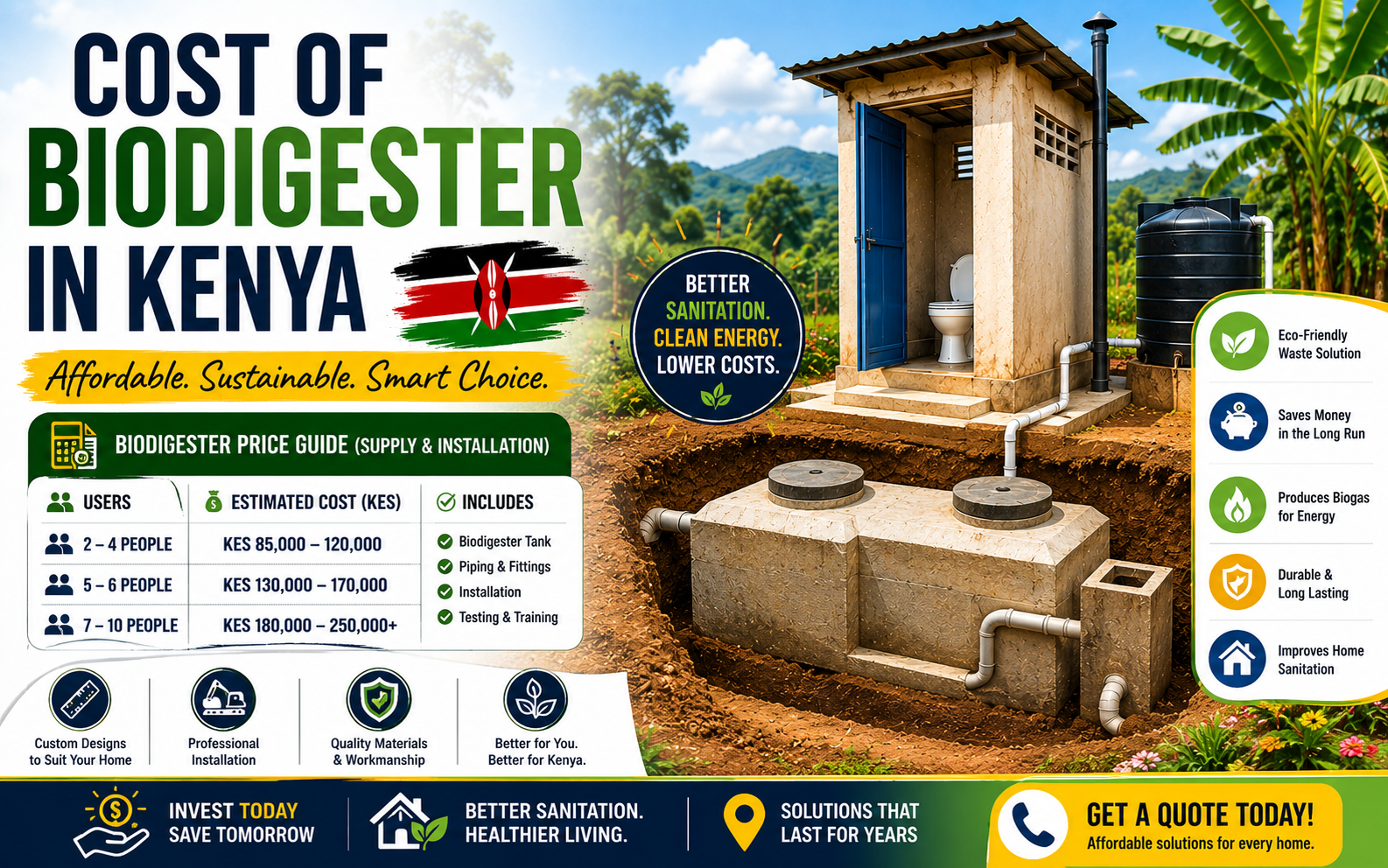
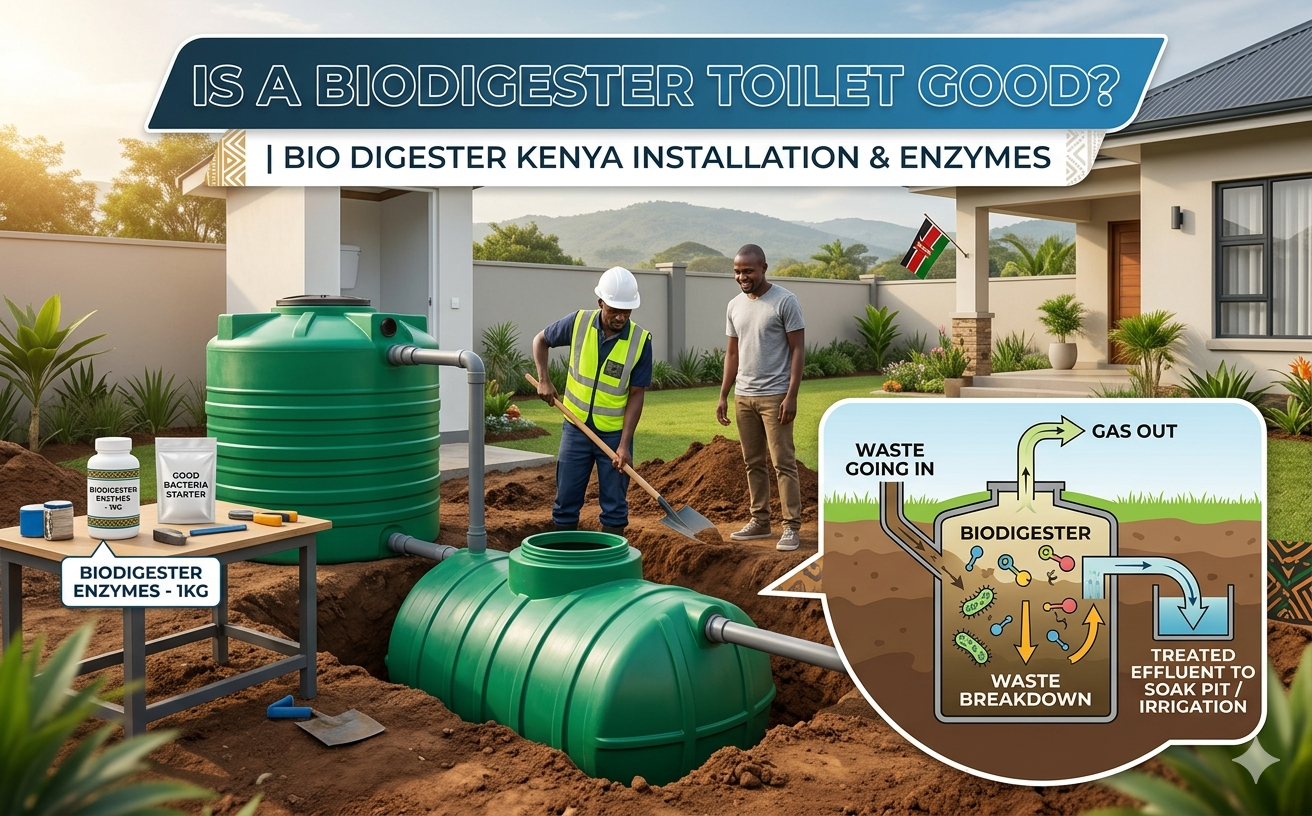
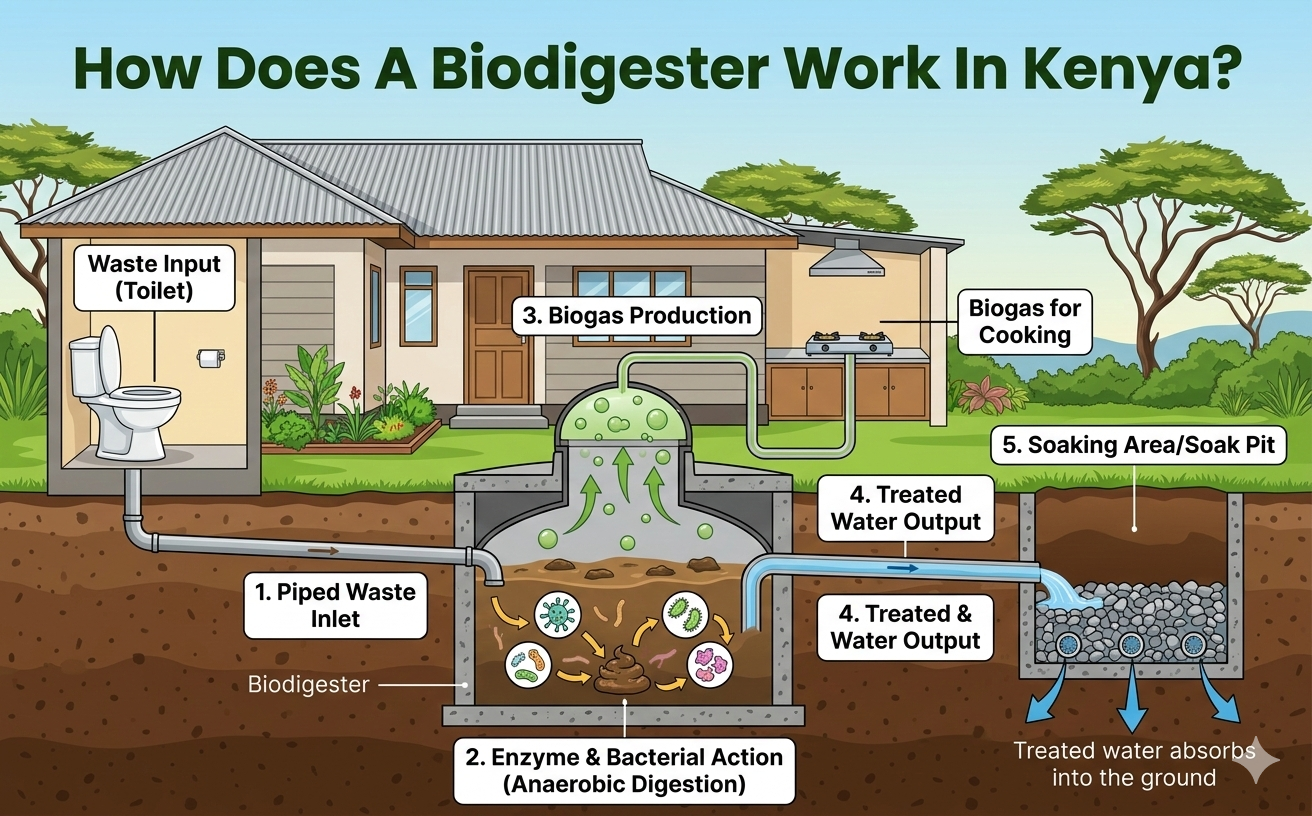
- Piping: All human waste from your toilets and greywater from your sinks/showers is piped directly into the biodigester.
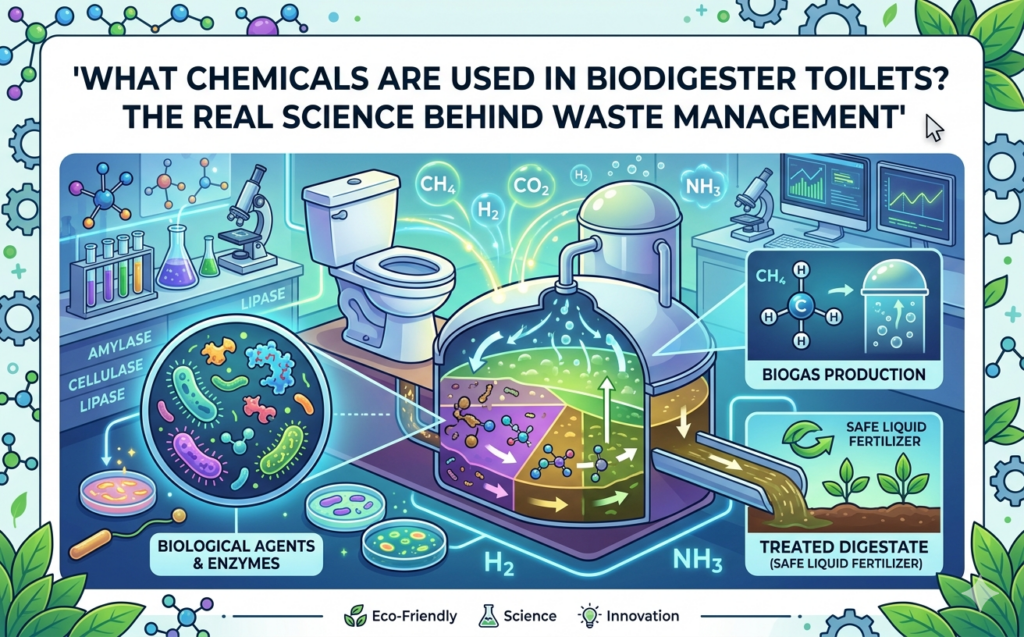
- Digestion: This is where the magic happens. The tank is treated with Bio Digester Bacteria. These enzymes immediately go to work, breaking down solid waste into its simplest forms.
- Transformation: The end result of this biological “feast” is just two things: water and odorless gas (mostly methane and CO2).
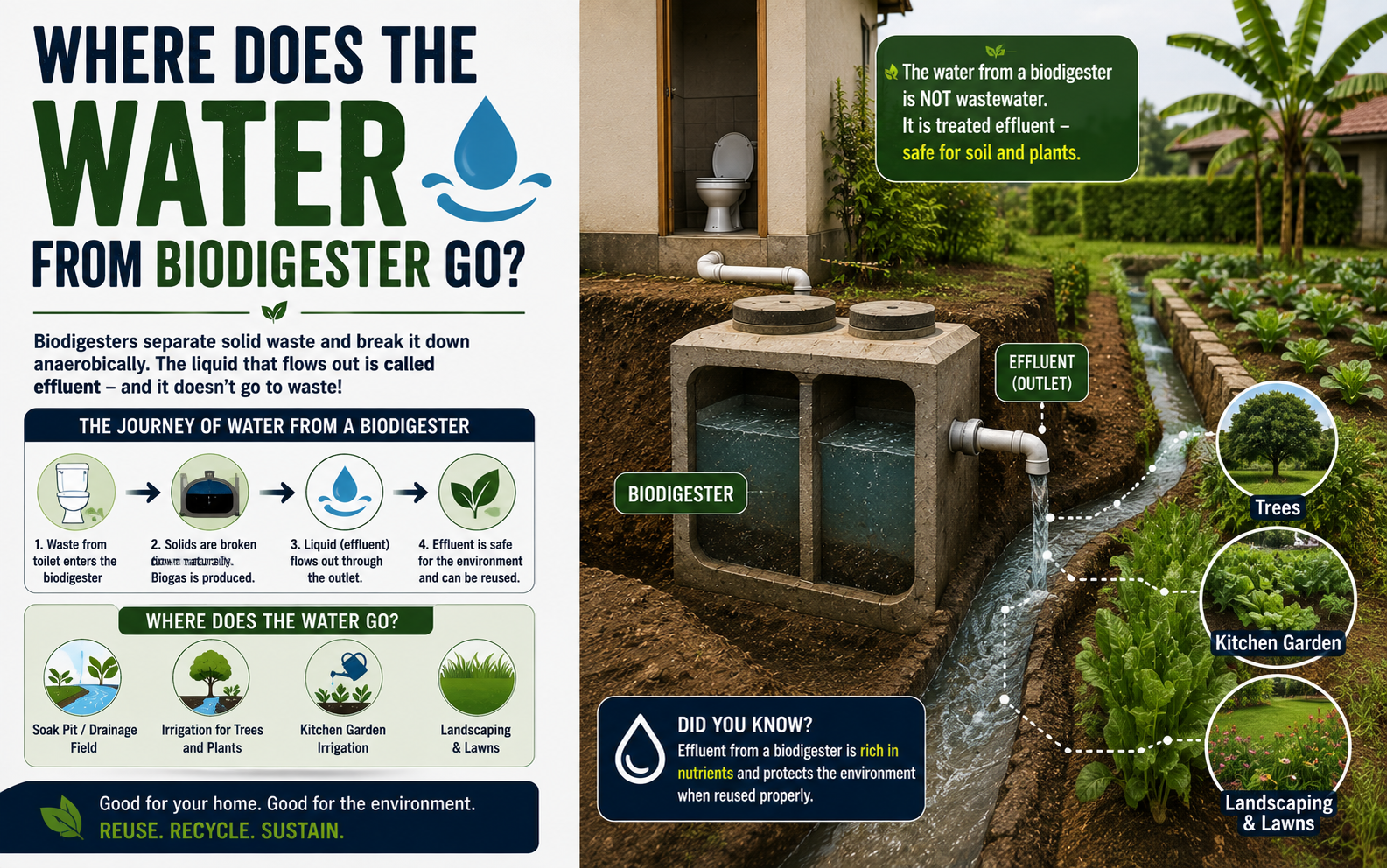
- Disposal: The clear water is then sent to a soaking area (a French drain or soakage pit) where it is safely absorbed back into the ground.
This is the ultimate loop of nature! If you want to see this in action, check out our Bio Digester Gallery to see installations across Kenya.
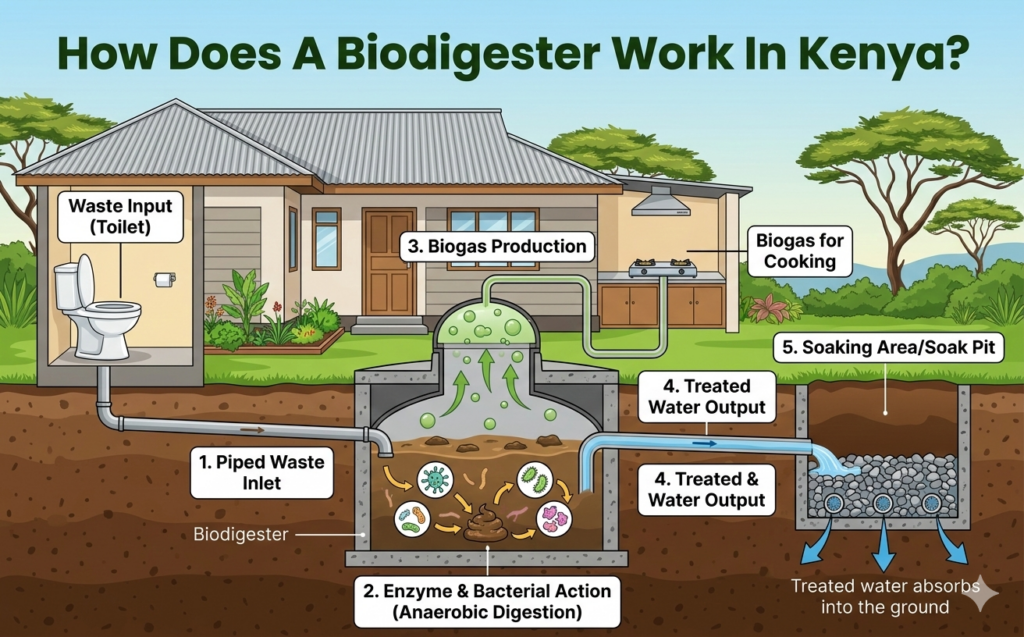
The Secret Sauce: What are Bio Digester Enzymes?
If you want your biodigester vs septic tank debate to end in favor of the biodigester, you need to understand the enzymes.
These aren’t just any bacteria; they are specifically cultured strains designed to thrive in an anaerobic (oxygen-free) environment.
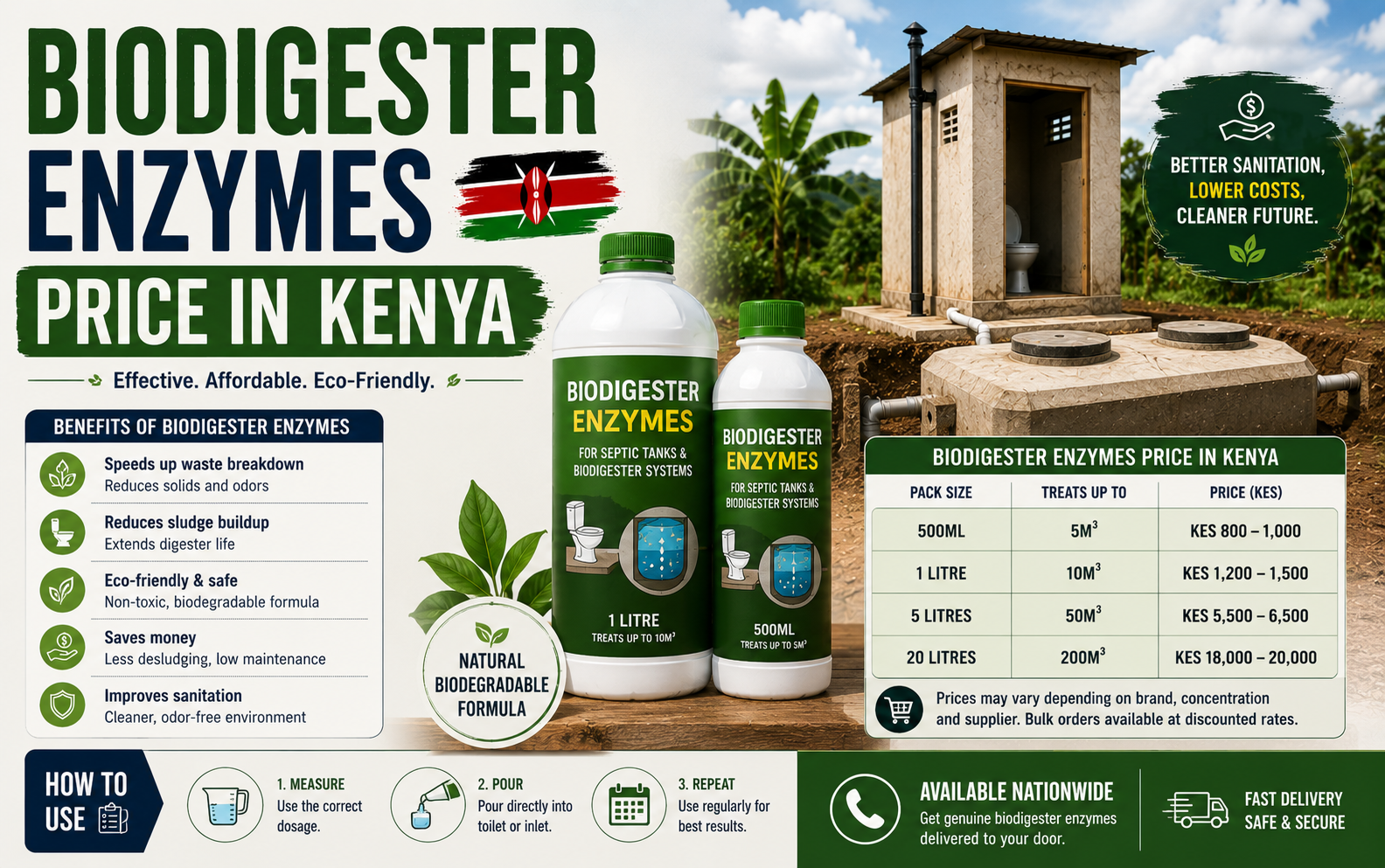
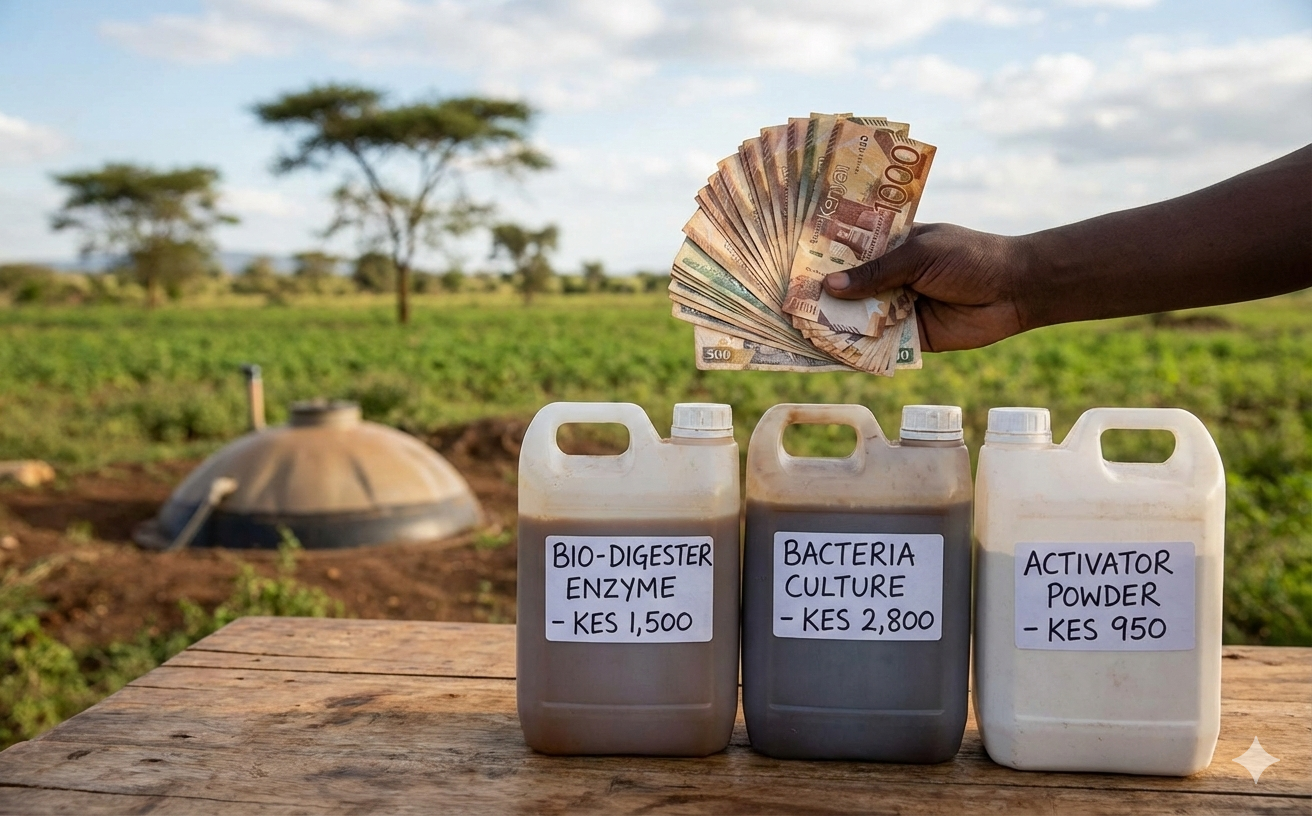
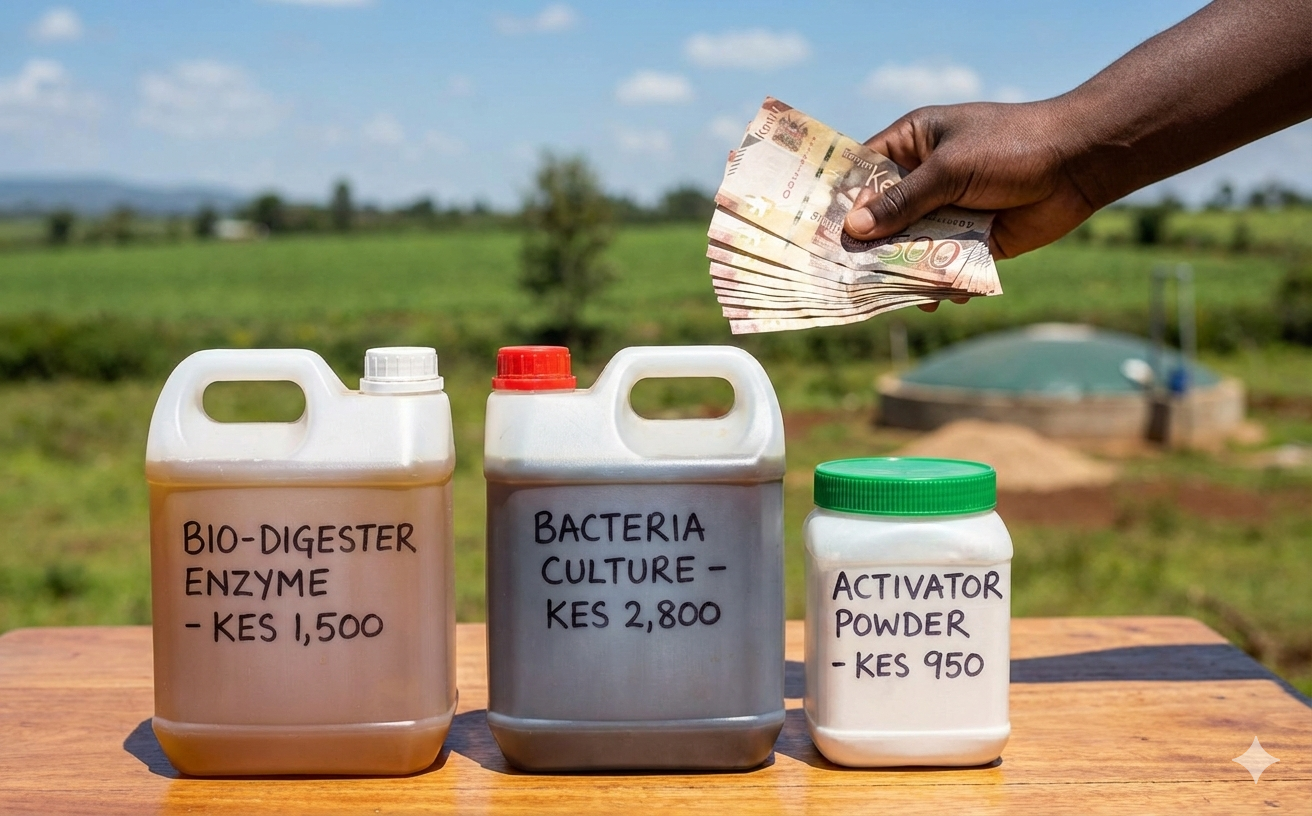
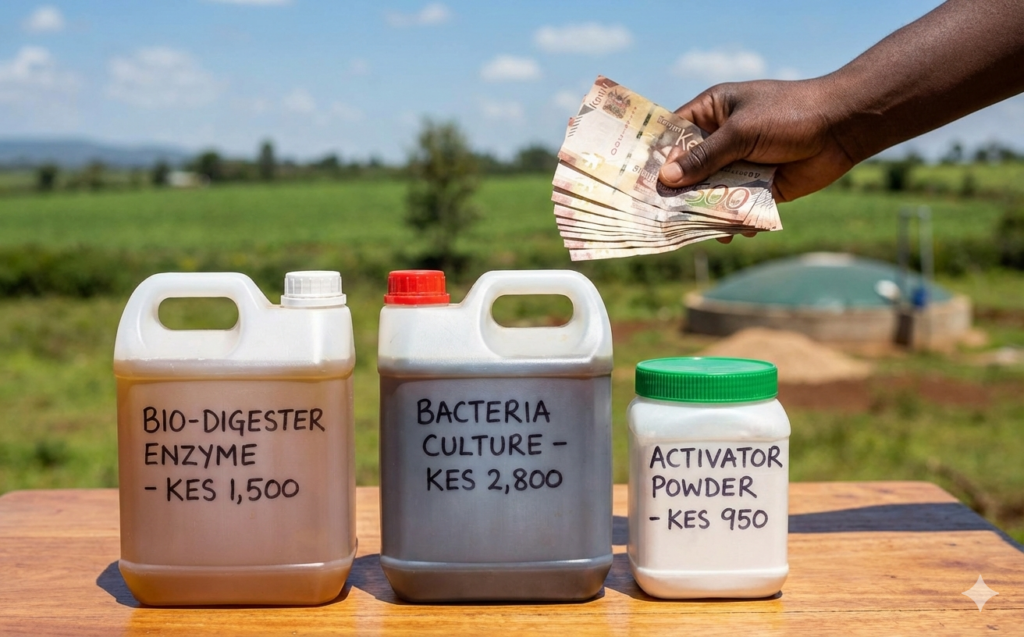
At Bio Digester Kenya, we offer a range of high-quality products to keep your system running perfectly:
- Bio Digester Bacteria – 200g: Perfect for small households.
- Bio Digester Bacteria – 400g: Ideal for larger families.
- Bio Digester Bacteria – 5L: Best for commercial spaces and schools.
These “chemicals” (enzymes) are environmentally friendly and non-corrosive. They don’t eat your pipes; they only eat the waste!
Biodigester vs Septic Tank: Why the Difference Matters
You might be wondering, “Why shouldn’t I just build a standard concrete septic tank?”
Well, a traditional septic tank is essentially just a storage box.
It holds the waste until it’s full, then you pay thousands of shillings to have it emptied.
A Bio Septic Tank, on the other hand, is a treatment plant.
It processes the waste. Because the solid waste is constantly being converted into water and air, the tank almost never fills up.
This saves you an incredible amount of money over the years.
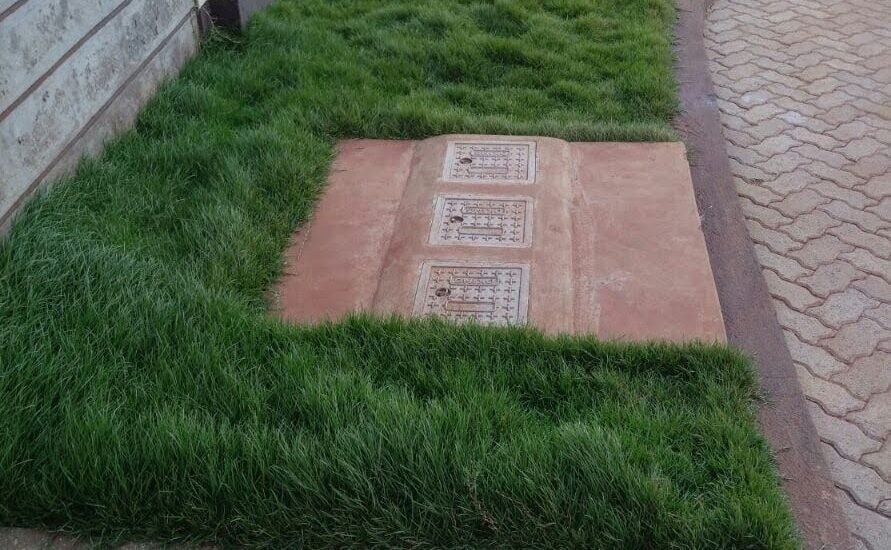
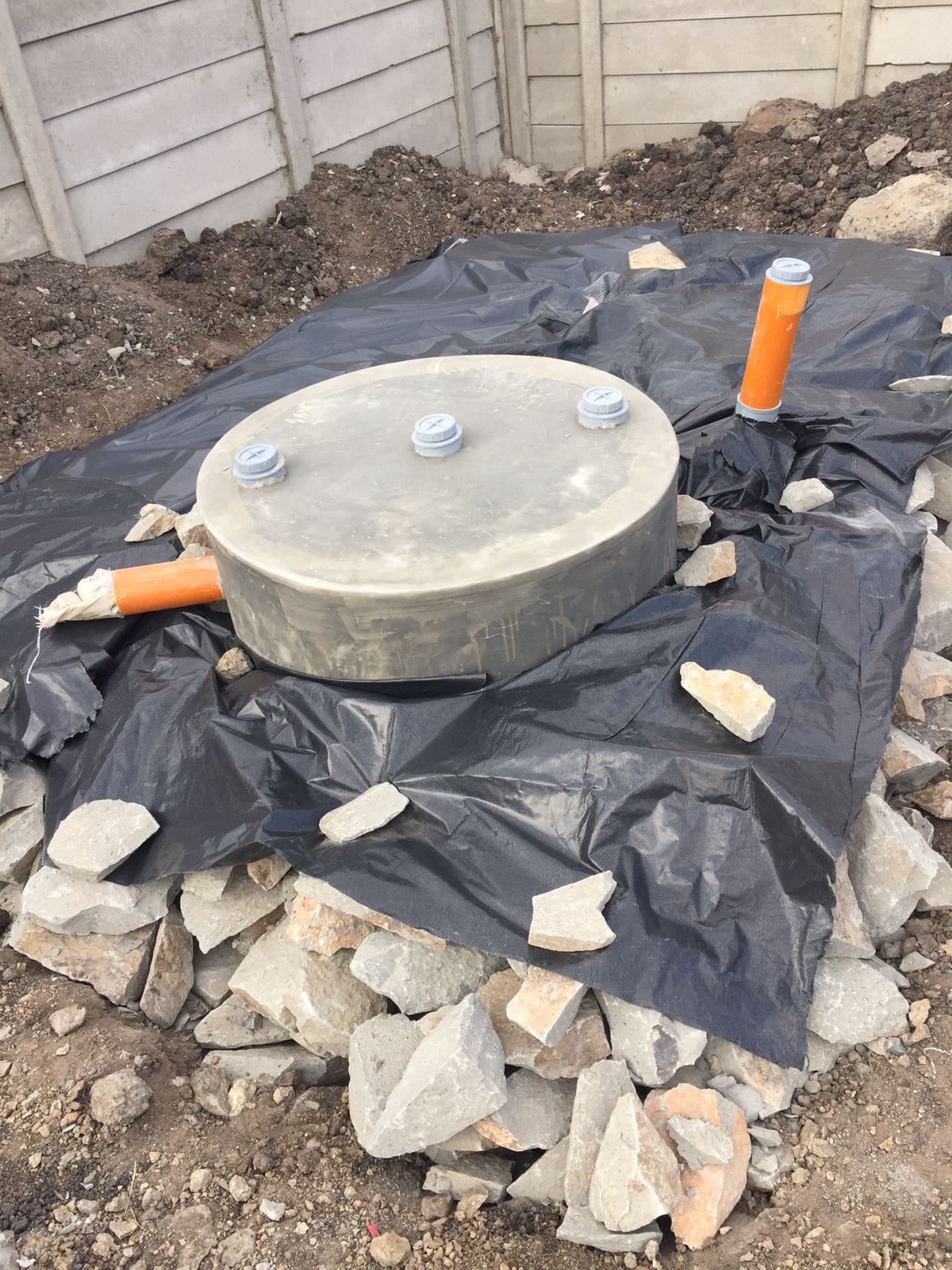
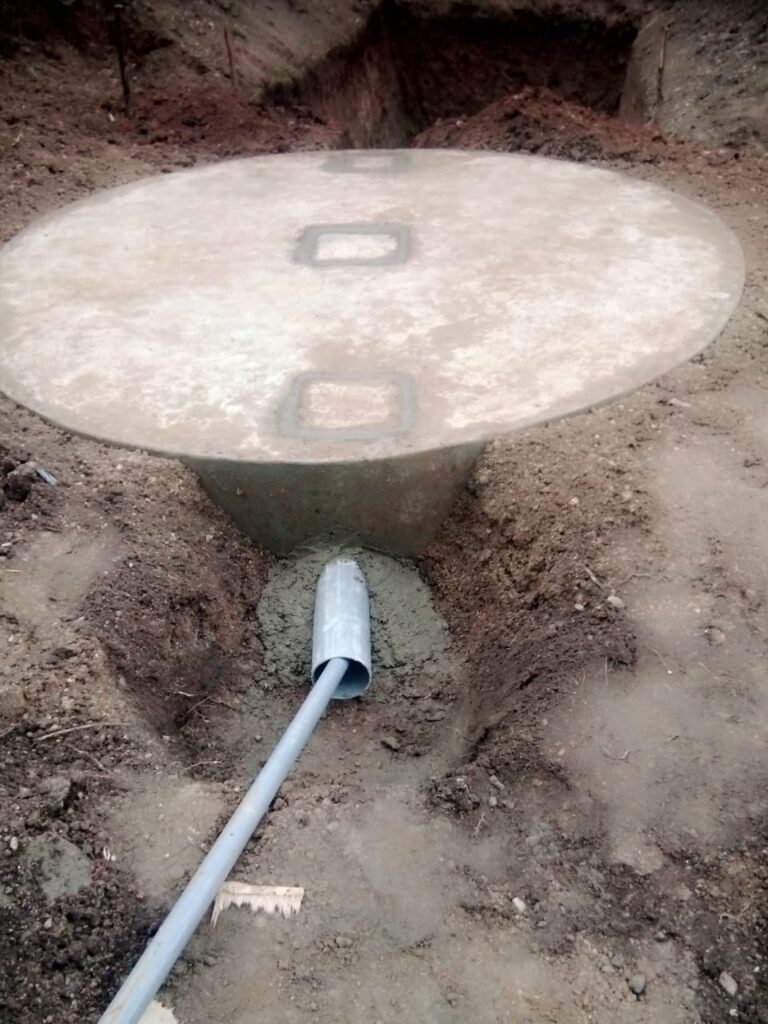
Plus, Precast Bio Digesters take up much less space than those huge old-fashioned tanks, making them perfect for small urban plots.
How Bio Digester Kenya Revolutionizes Human Waste Management
We don’t just sell products; we provide a full-service experience. As a leading provider of Bio Digester Installation in Kenya, we tailor our designs to your specific needs.
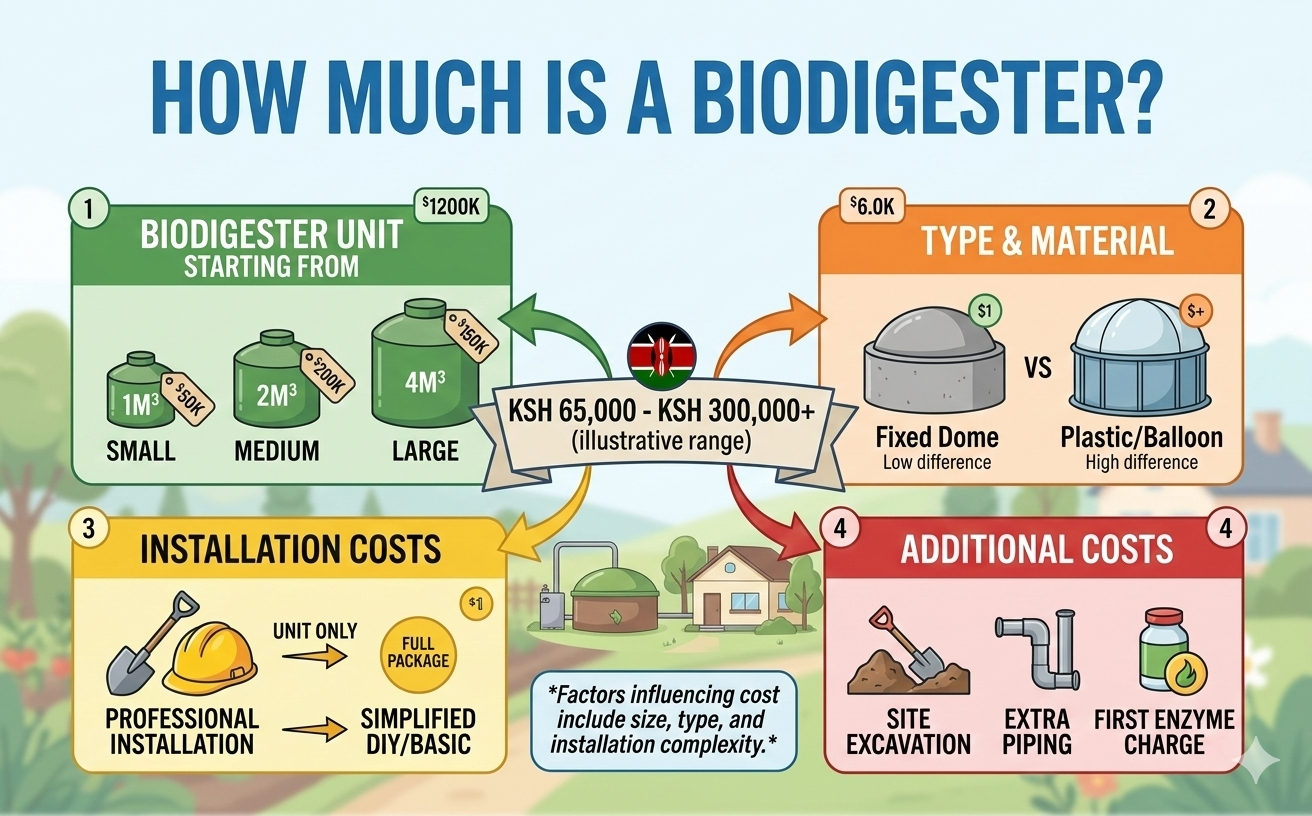
Are you a school with 500 students? We have a 4M³ Bio Digester. Are you a single homeowner? Our 1M³ Bio Digester is the perfect fit. We ensure that the system is installed with the right gradient and ventilation to ensure 100% odor-free operation.
The Breakdown Process: From Waste to Water and Air
Have you ever wondered what happens to the stuff you flush? In our systems, it’s a three-stage party.
First, the solids settle at the bottom. Then, the biodigester septic tank enzymes start their work, liquefying everything.
As the bacteria “eat,” they release gases that escape through a small vent pipe.
Finally, the liquid—now treated and safe—flows out.
It’s like having a tiny, eco-friendly factory in your backyard that turns “yuck” into “useful.” The water going into your soakage area is even beneficial for the trees and grass nearby!
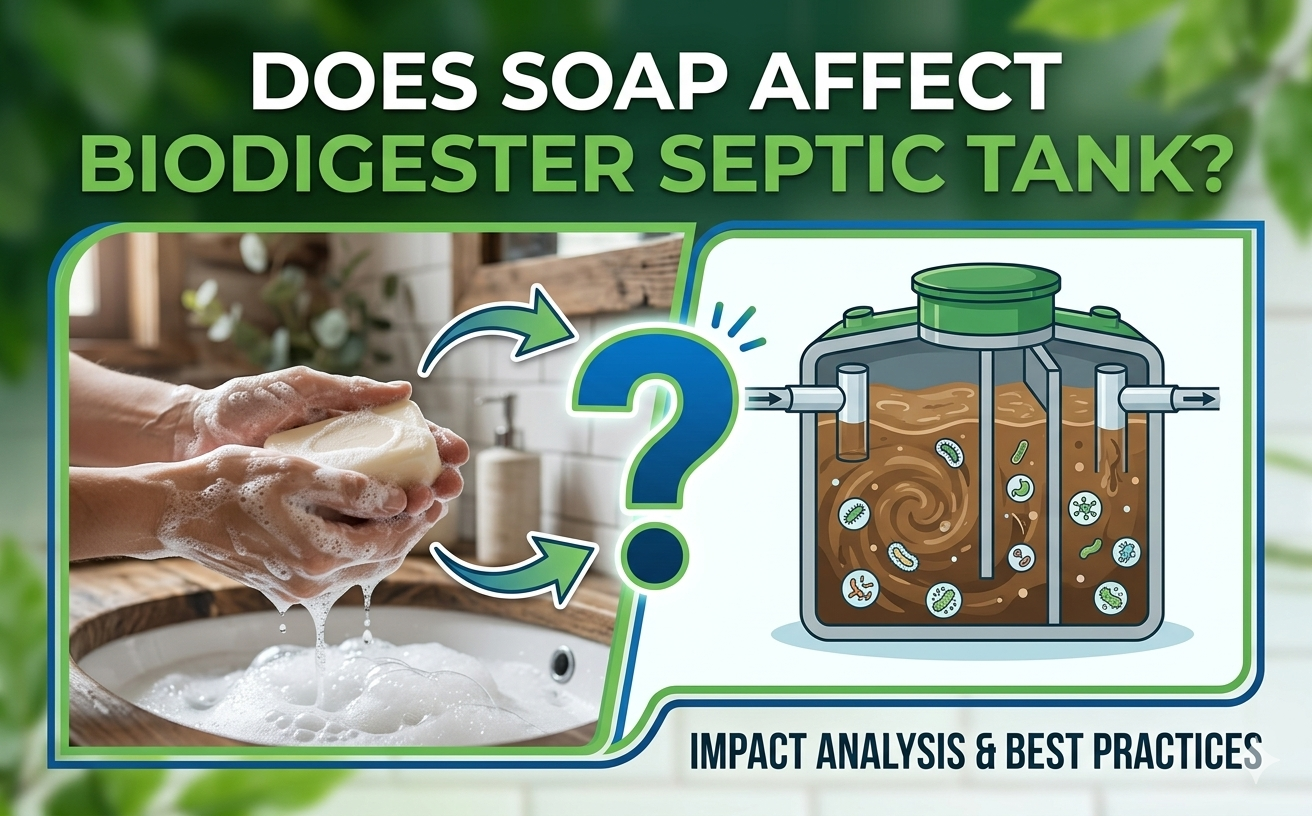
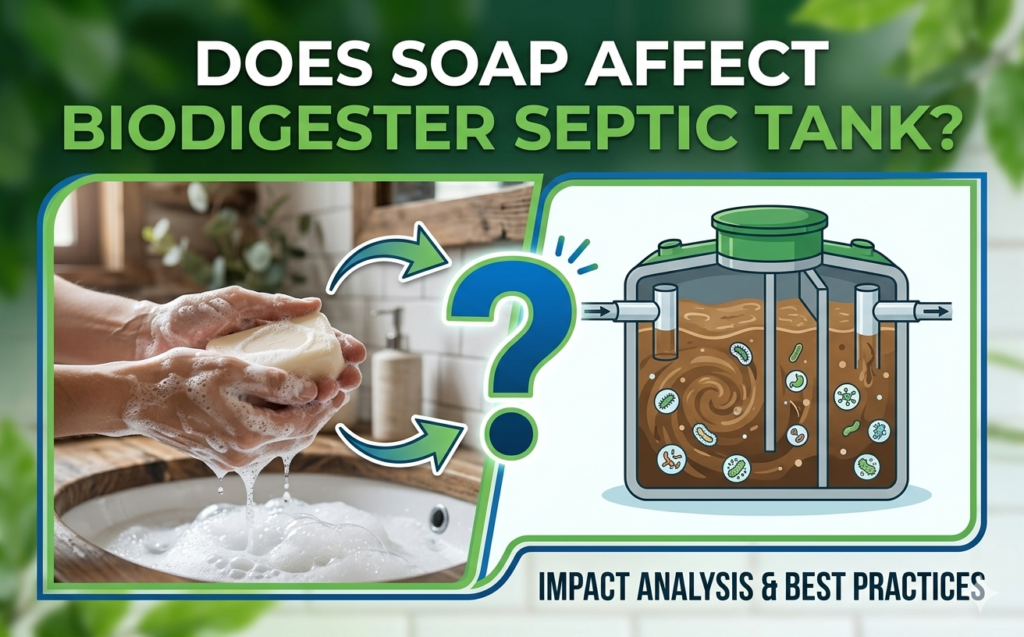
Can You Use Household Chemicals in a Biodigester? (The Big No-No)
This is a crucial point. If you have a Bio Septic Tank, you need to be careful with what you flush down the drain. Excessive use of:
- Strong Bleach
- Antibacterial cleaners (in huge quantities)
- Caustic drain openers
…can kill the bacteria in your tank. If the bacteria die, the digestion stops, and the tank will start to smell and fill up.
Instead, use mild soaps or specifically formulated Septic Tank Cleaner that is “septic-safe.”
If you’ve accidentally “killed” your tank, don’t worry! You can just “re-seed” it by adding a fresh pack of our Septic Tank Bacteria – 250g.
Why Residential and Commercial Spaces in Kenya are Switching
Kenya’s landscape is changing. With more people moving into urban areas like Nairobi, Kiambu, and Machakos, space is at a premium.
A Biodigester is the answer for several reasons:
- Space Saving: They are much smaller than traditional tanks.
- Cost-Effective: No more monthly payments for exhaust services.
- Eco-Friendly: Protects the groundwater from contamination.
- No Odor: When installed correctly by Bio Digester Kenya, there is zero smell.
From plumbing services to full-scale waste management, we handle it all.
Maintenance Tips for Your Bio Septic Tank
Maintaining a biodigester is actually easier than maintaining a traditional one.
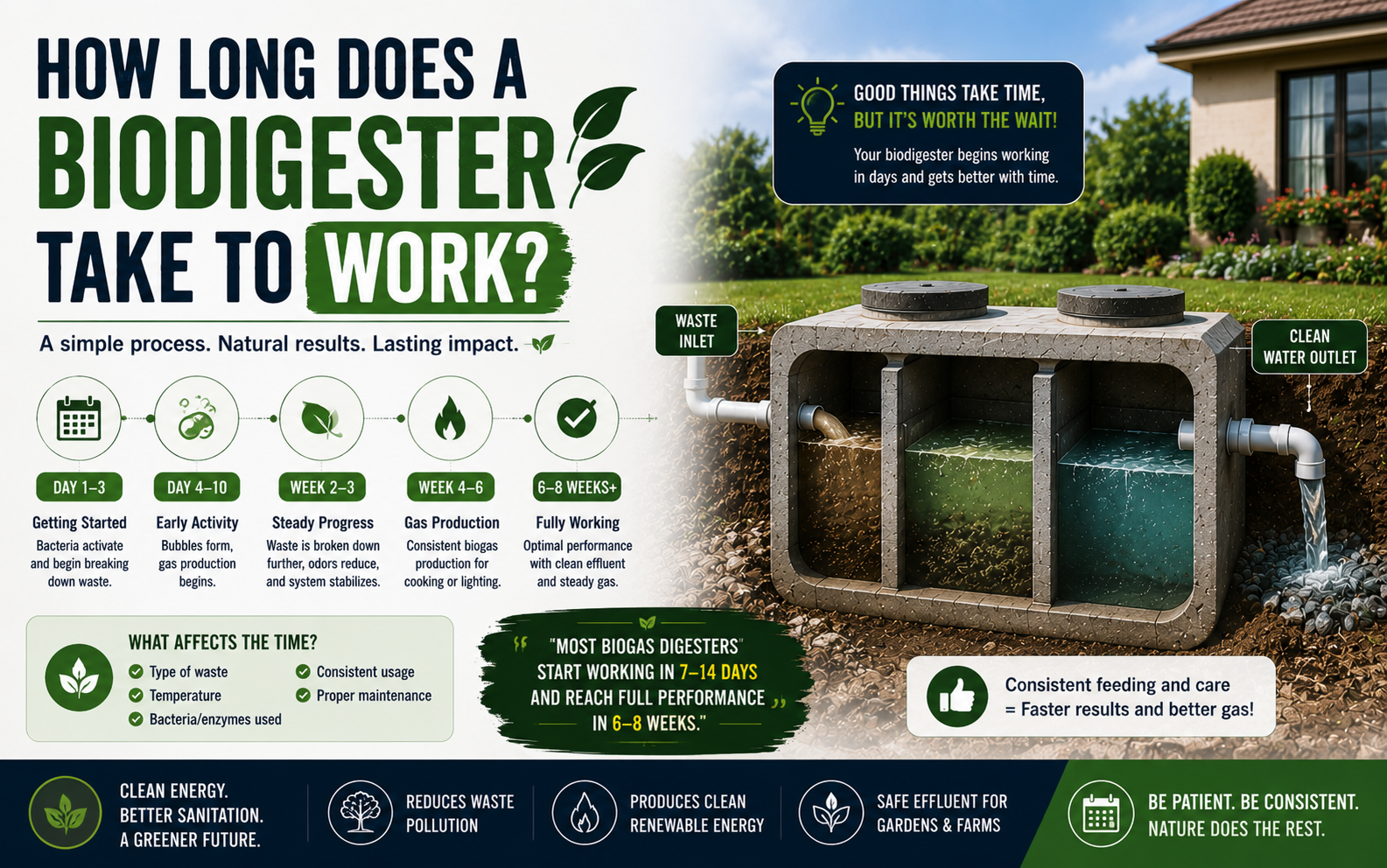
You don’t have to do much! However, we recommend a “top-up” of enzymes every 6 to 12 months to keep the microbial population strong.
If you notice your kitchen sink is getting sluggish, it might be fats and oils.
For that, we recommend our Grease Trap & Kitchen Drain Bacteria.
It prevents that nasty “fatberg” from forming in your pipes before it even reaches the biodigester.
Where to Buy Quality Bio Digester Enzymes in Kenya
Don’t buy generic products from the supermarket that don’t list their ingredients.
You need high-concentration, industrial-grade bacteria. You can find everything you need at our Online Shop.
We stock:
- Bacteria for Pit Latrines (to reduce waste levels and smell).
- Bio Digester Bacteria (various sizes for all tank types).
- Septic Tank Maintenance supplies.
Bio Digester Installation: What to Expect from Bio Digester Kenya
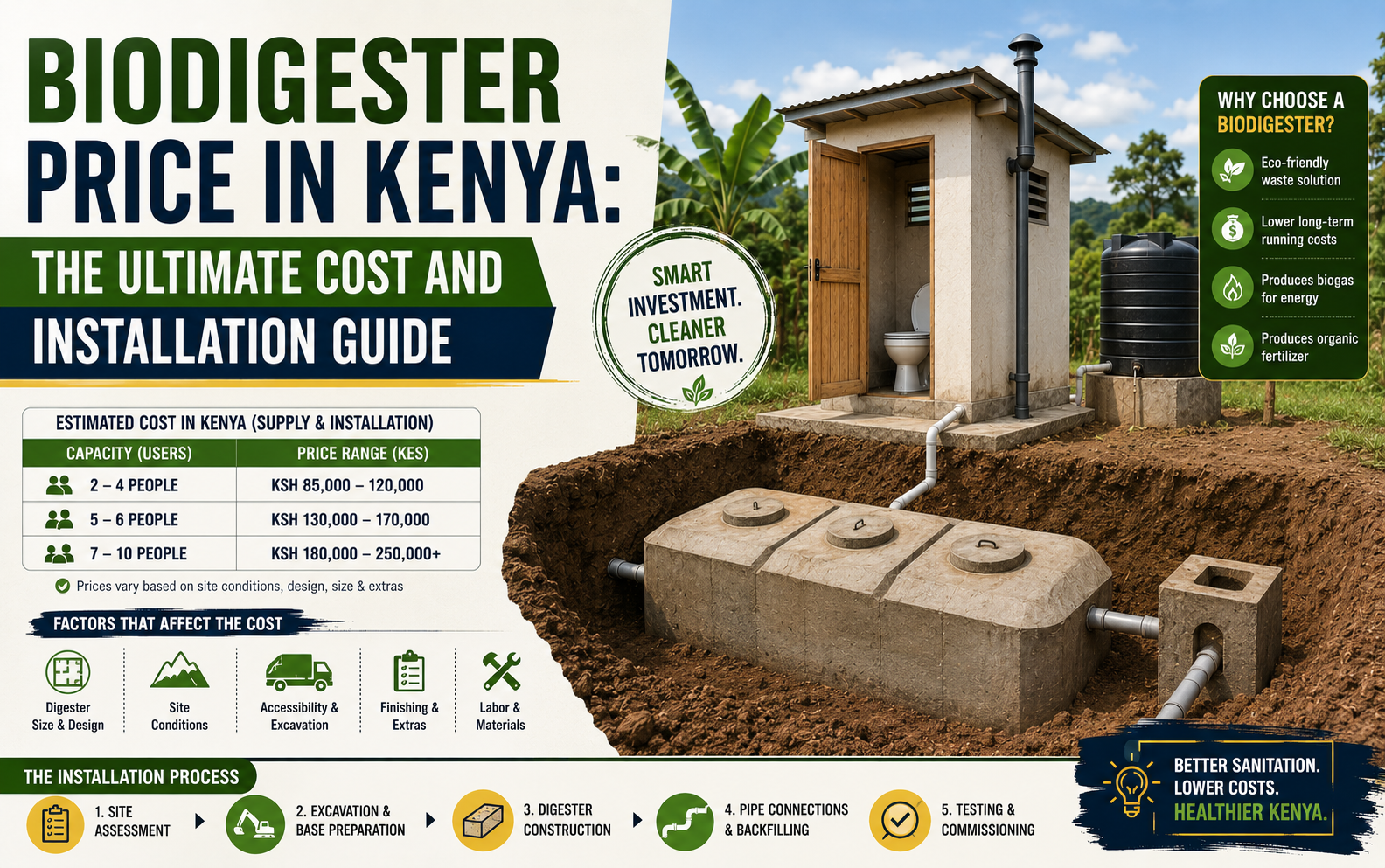
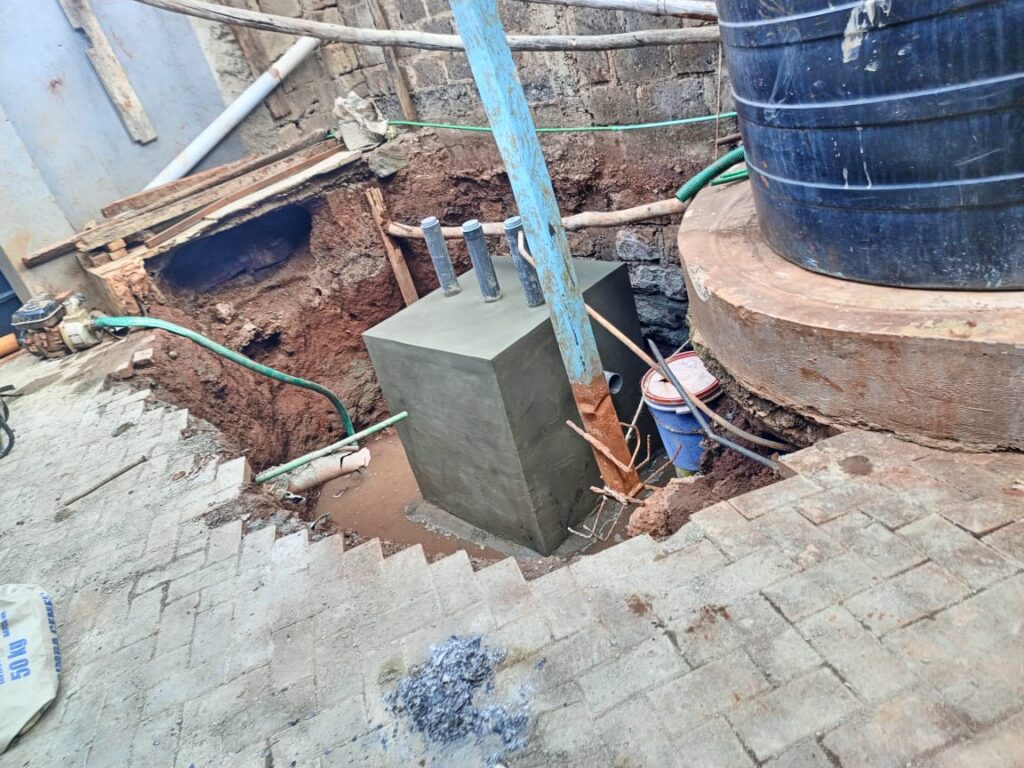
When you choose us for your Bio Digester Installation, we follow a strict professional process.
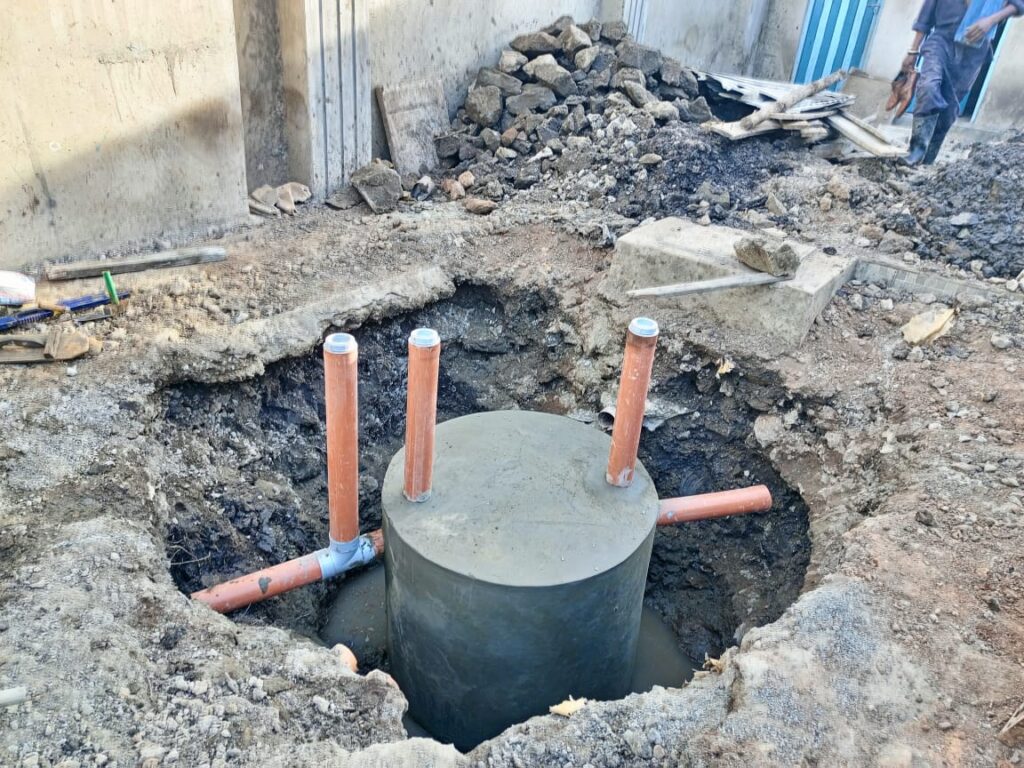
- Site Assessment: We check your soil type and space.
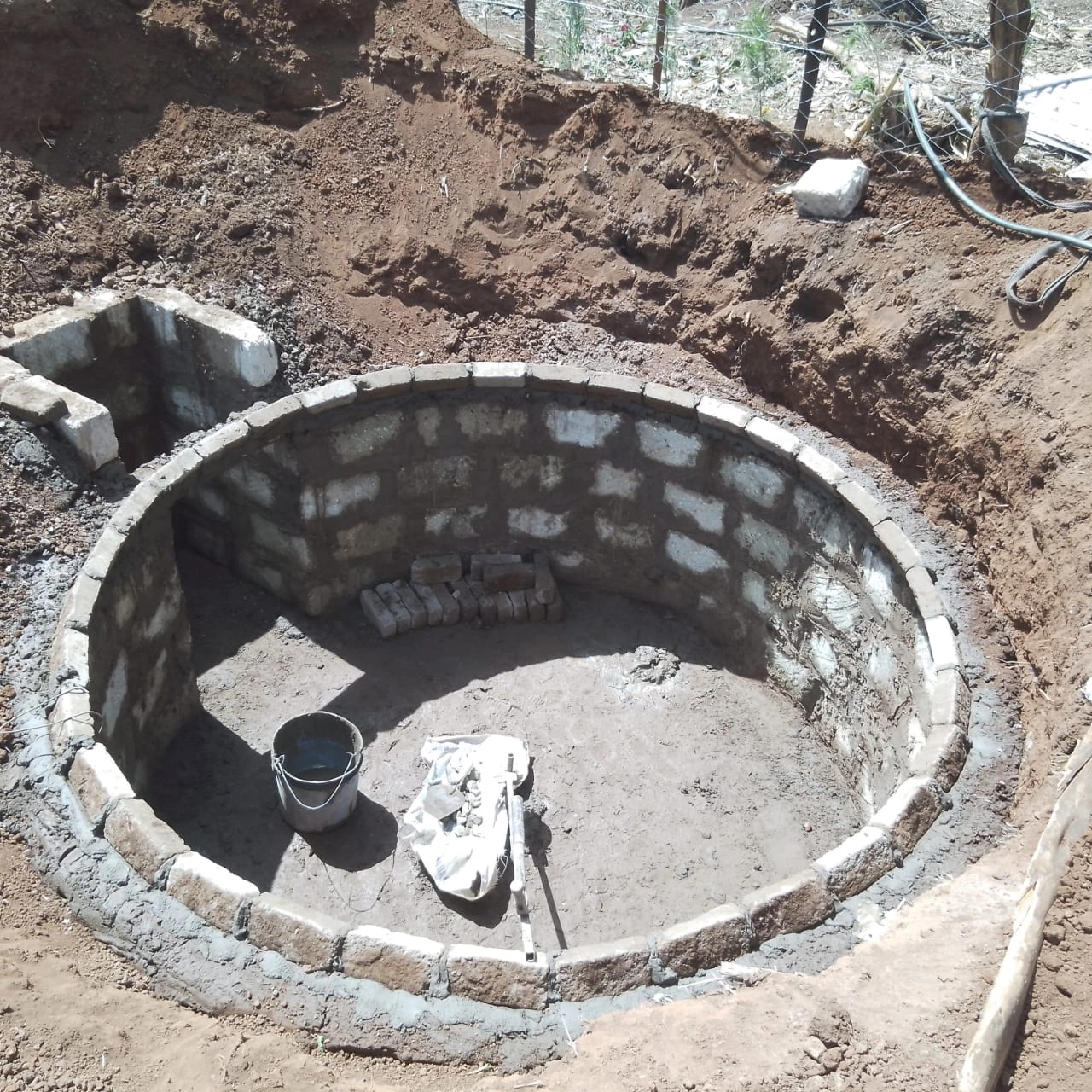
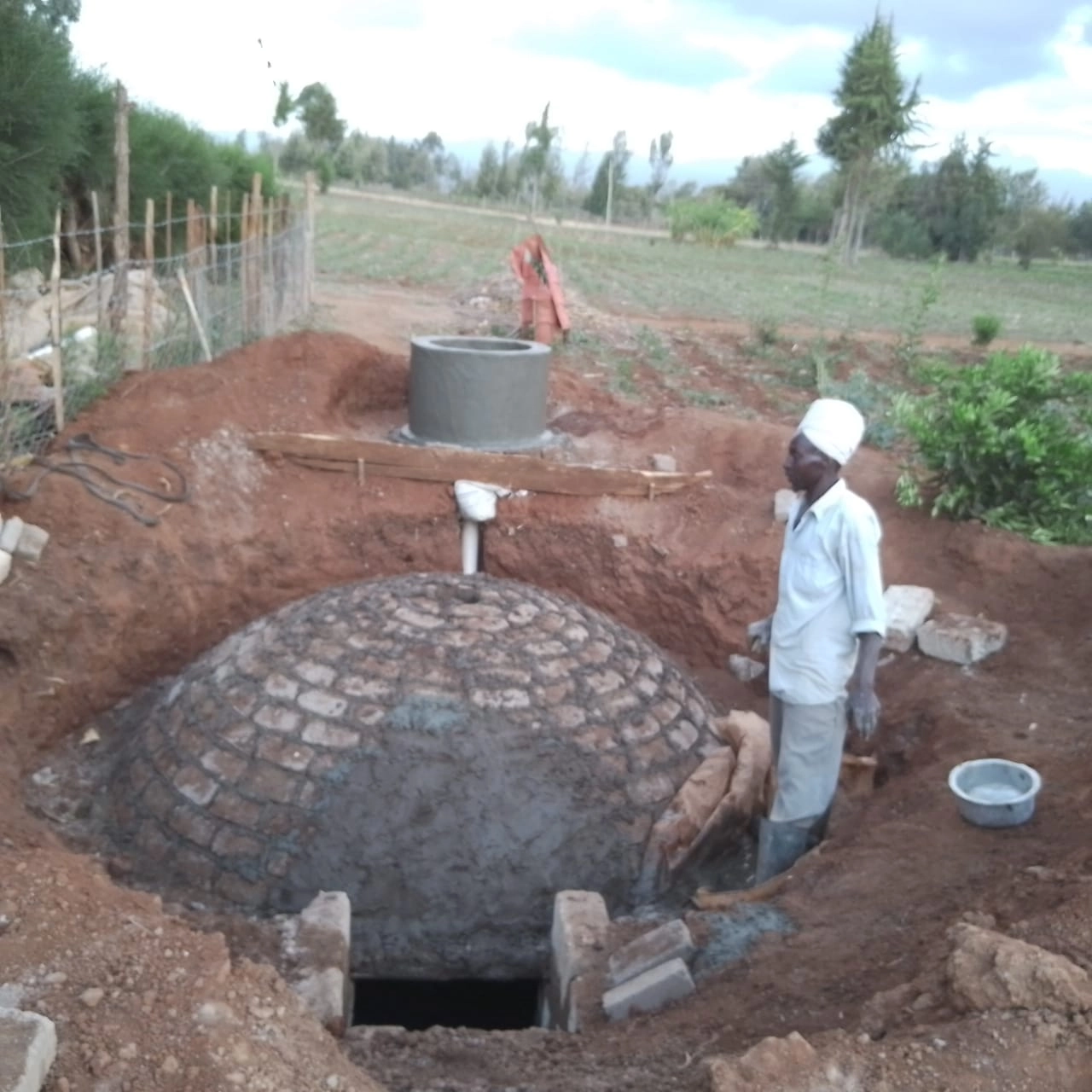
- Excavation: We dig the area for the tank and the soak pit.
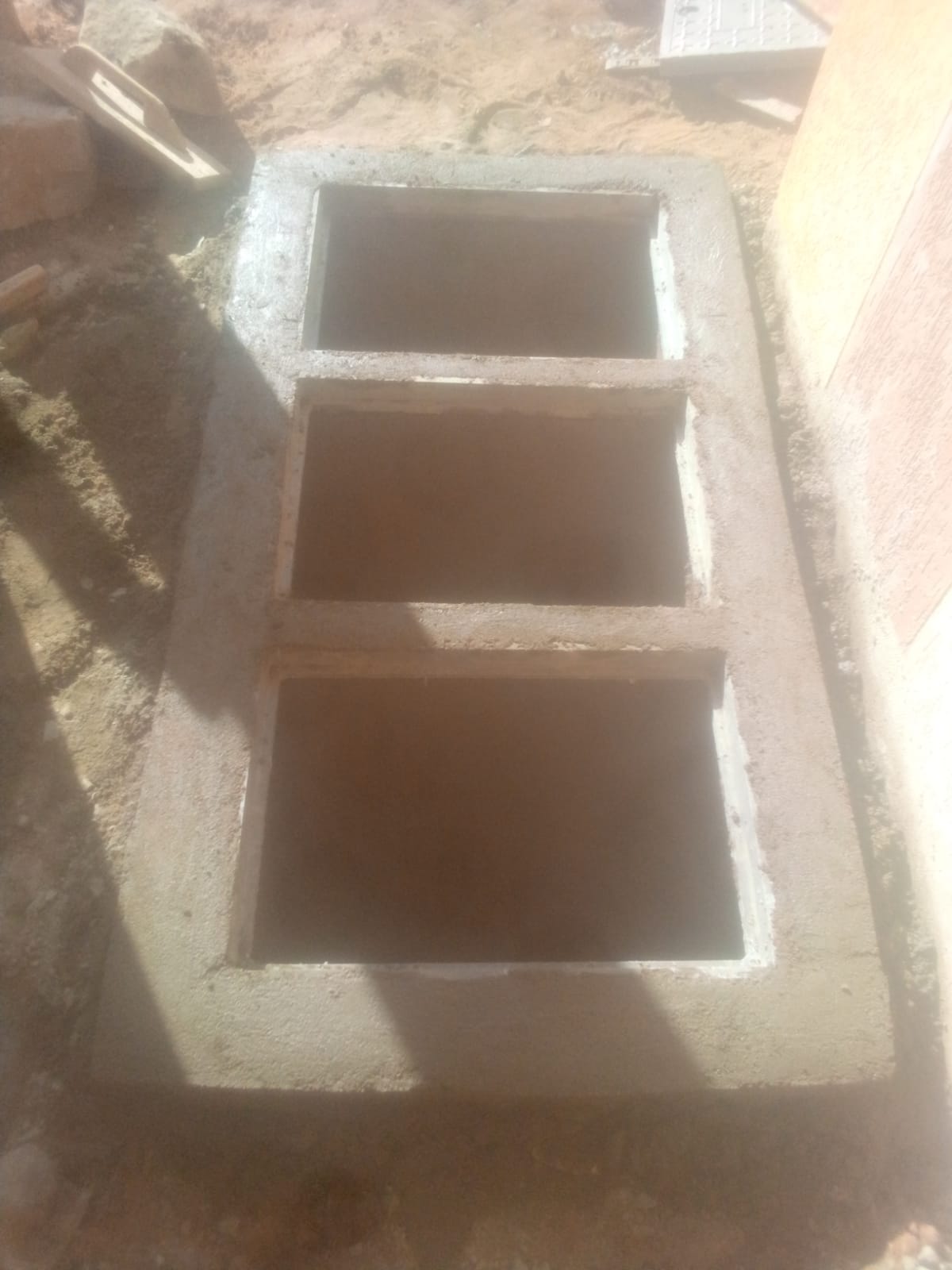
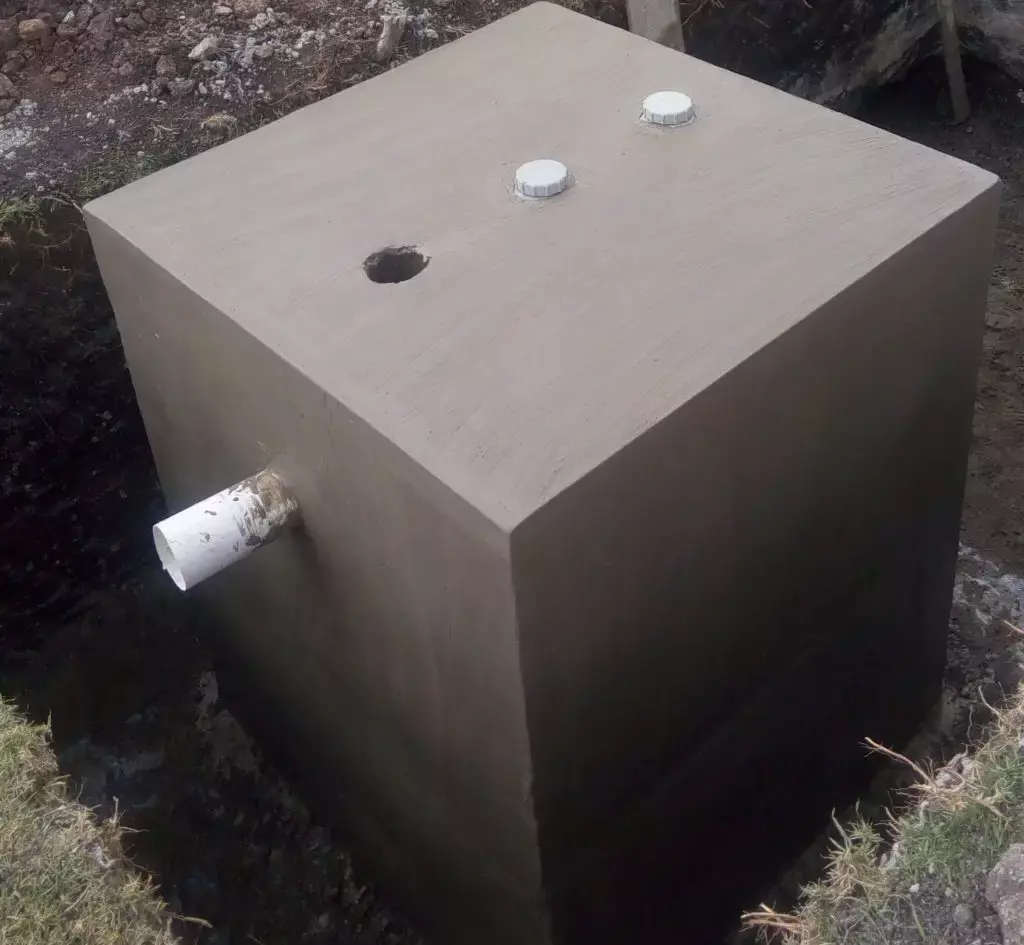
- Installation: We place the precast or onsite-built digester.
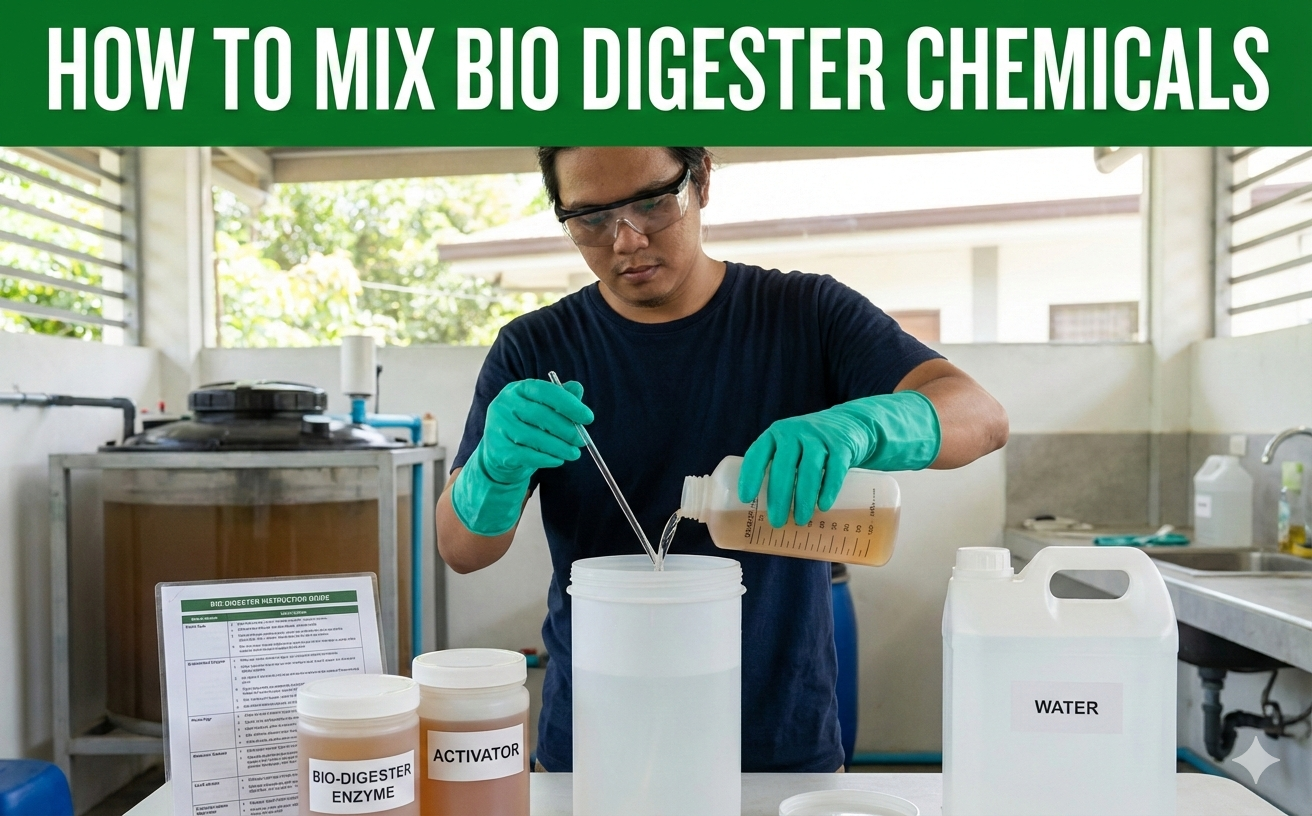
- Commissioning: We add the initial dose of bacteria to “jumpstart” the system.
We pride ourselves on being the best in the business.
Check out our About Us page to learn more about our mission to clean up Kenya, one toilet at a time!
Conclusion: Making the Smart Choice for Your Property
So, what chemicals are used in biodigester toilets?
The answer is simple: Nature’s own enzymes.
By choosing a Biodigester over a traditional septic tank, you are choosing a cleaner, cheaper, and more sustainable future.
Whether you need a new installation or you just need to buy the best bacteria in the market, Bio Digester Kenya is here to help.
Our systems turn your waste into water and air, ensuring your home remains a sanctuary, not a source of environmental pollution.
Ready to upgrade your waste management system?
Don’t wait until your current septic tank starts overflowing!
Contact Bio Digester Kenya today:
- Phone: Call +254 712 660 245
- Email: Email info@biodigesterkenya.co.ke
- Website: www.biodigesterkenya.co.ke
- Explore our Services: Our Services Page
FAQs
1. Can I use Harpic or Jik in my biodigester toilet?
While small amounts used for cleaning won’t destroy the system, heavy use of strong disinfectants can kill the bio digester bacteria. We recommend using biodegradable or septic-safe cleaners to keep your enzymes healthy.
2. How often do I need to add enzymes to my biodigester?
For a standard residential biodigester septic tank, we recommend adding a maintenance dose of enzymes every 6 months. This ensures the bacterial colony remains active enough to handle all the waste.
3. Does a biodigester ever need to be emptied?
Unlike a traditional septic tank, a well-maintained biodigester should not need emptying for many years (often 10-15+ years), as it continuously converts solid waste into liquid and gas.
4. Can a biodigester be installed in a waterlogged area?
Yes, but it requires a specific design. Bio Digester Kenya specializes in these types of installations, often using a “raised” soakage system or a specialized precast tank to ensure efficiency even in areas with high water tables.
5. Is the water from a biodigester safe to drink?
No. While the water is treated and clear, it still contains some pathogens and is intended for soakage into the ground or for use in sub-surface irrigation (like watering trees). It is not potable for human or animal consumption.