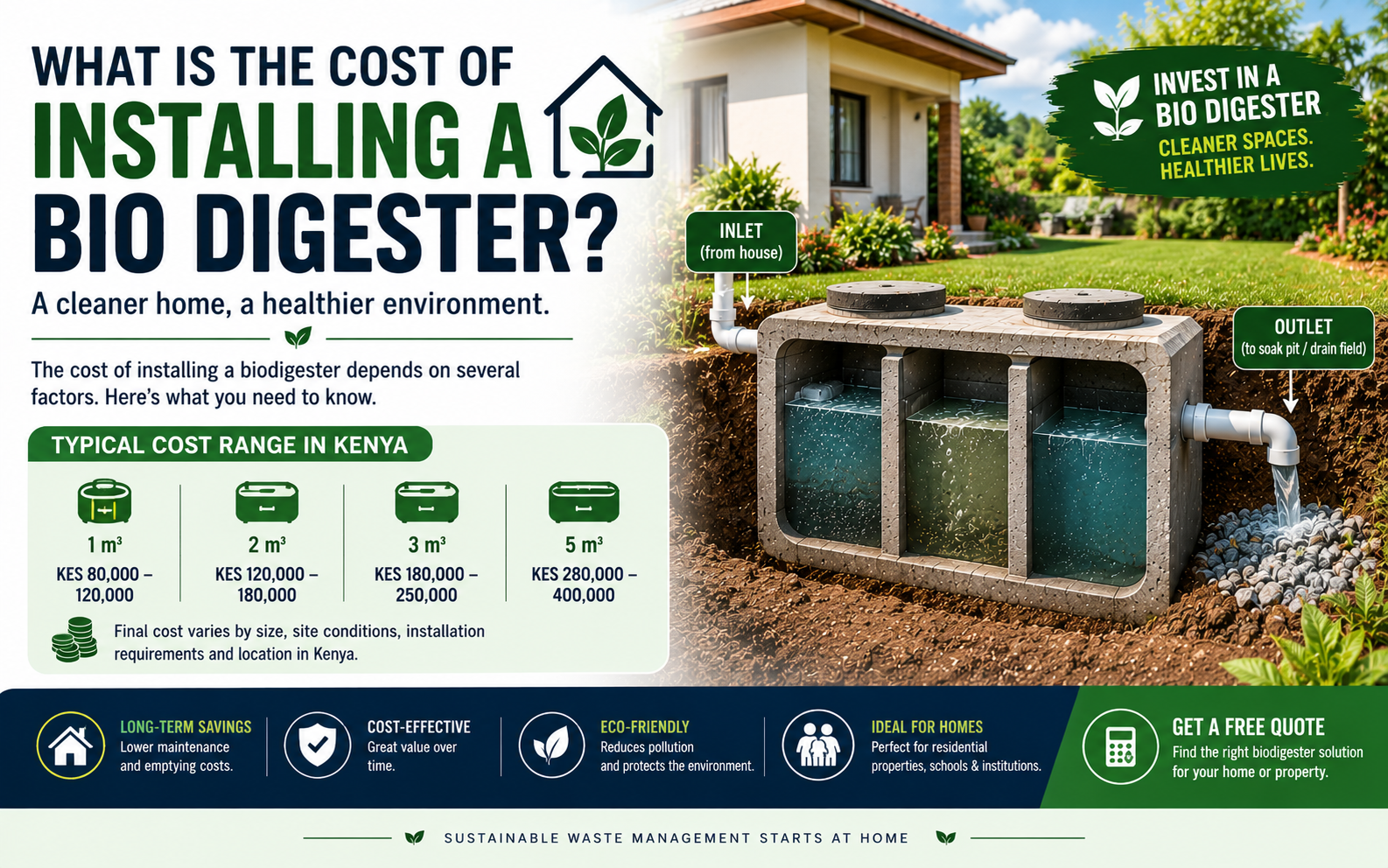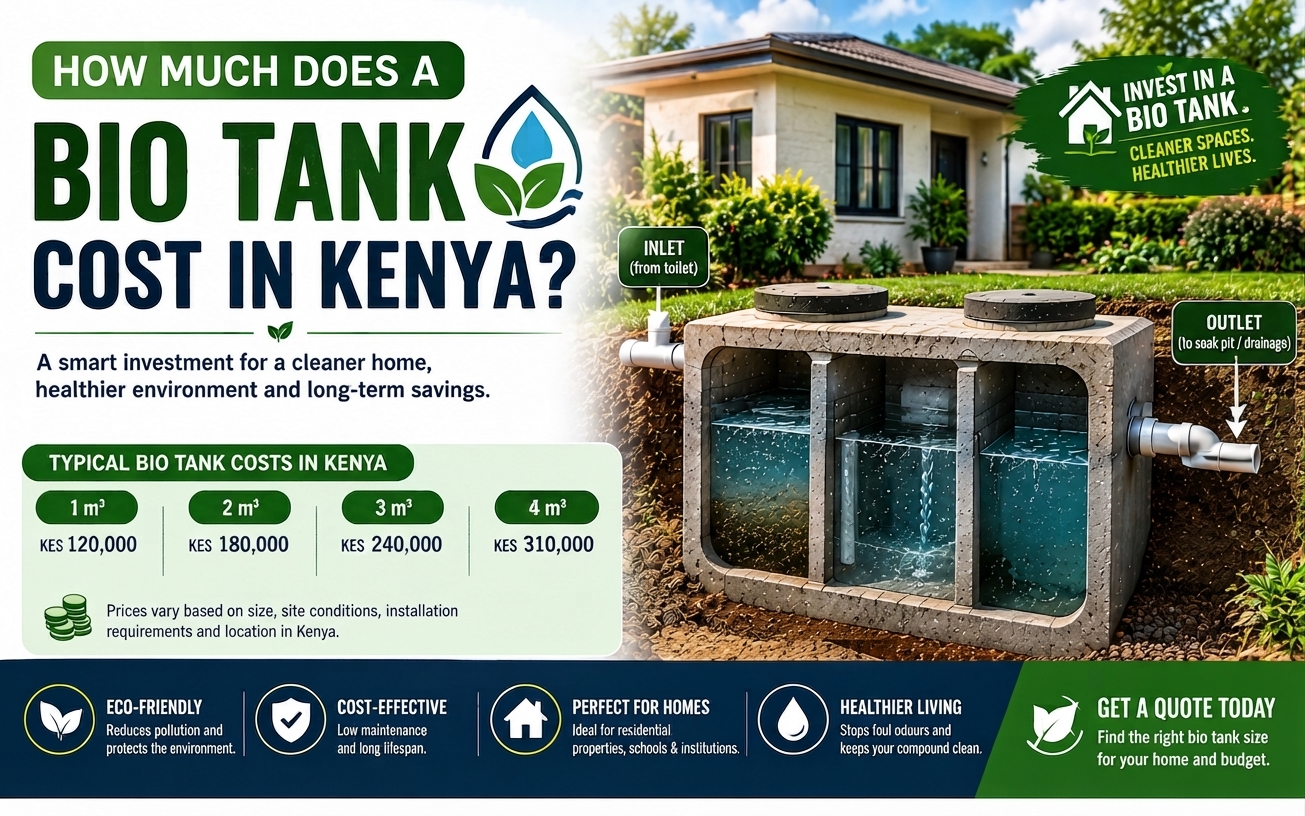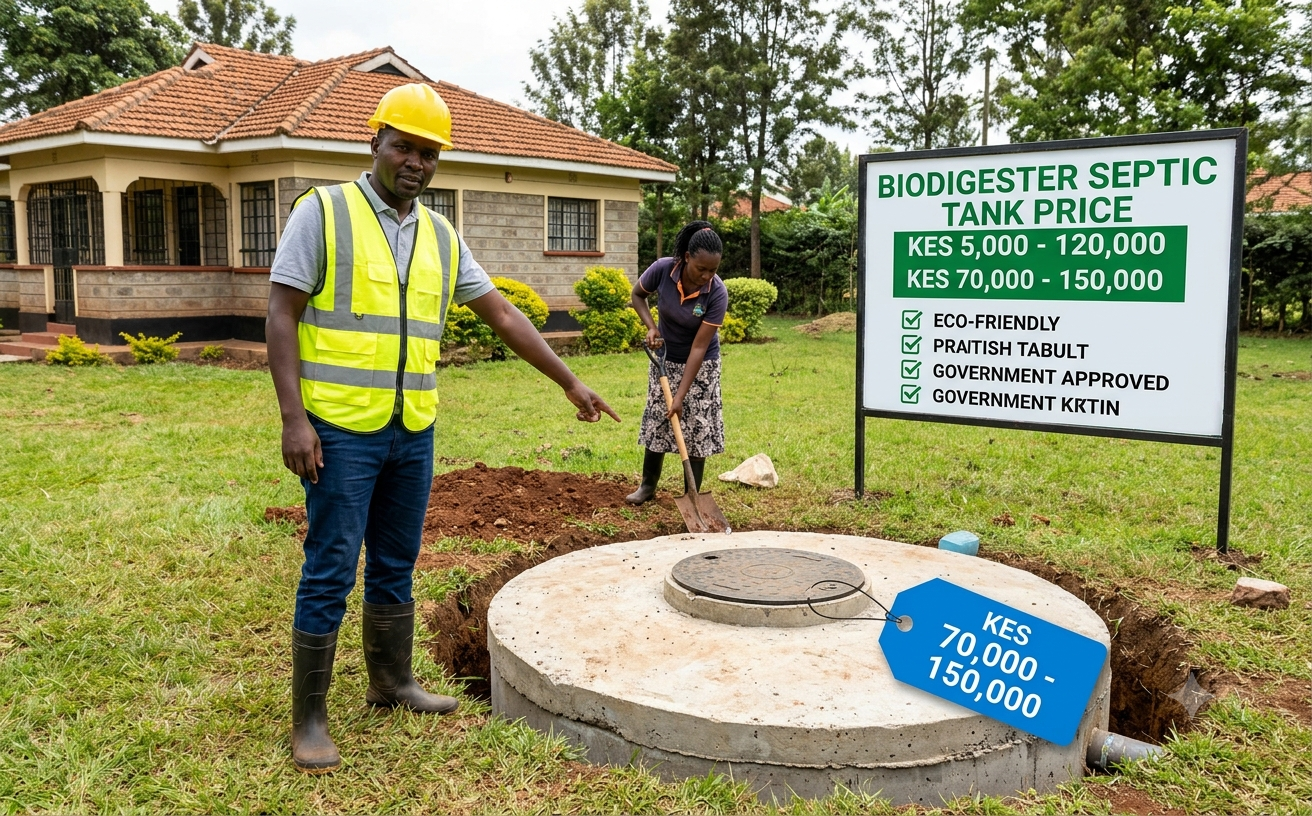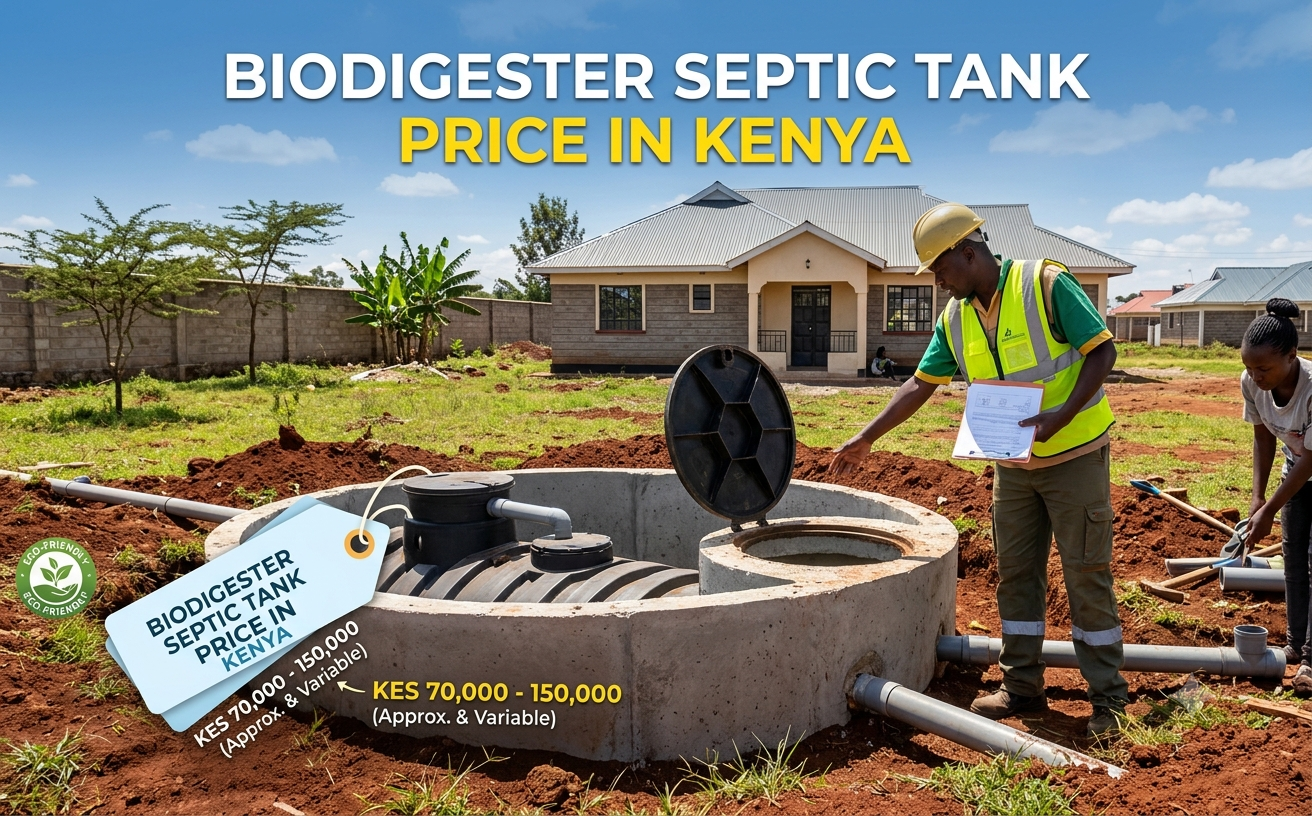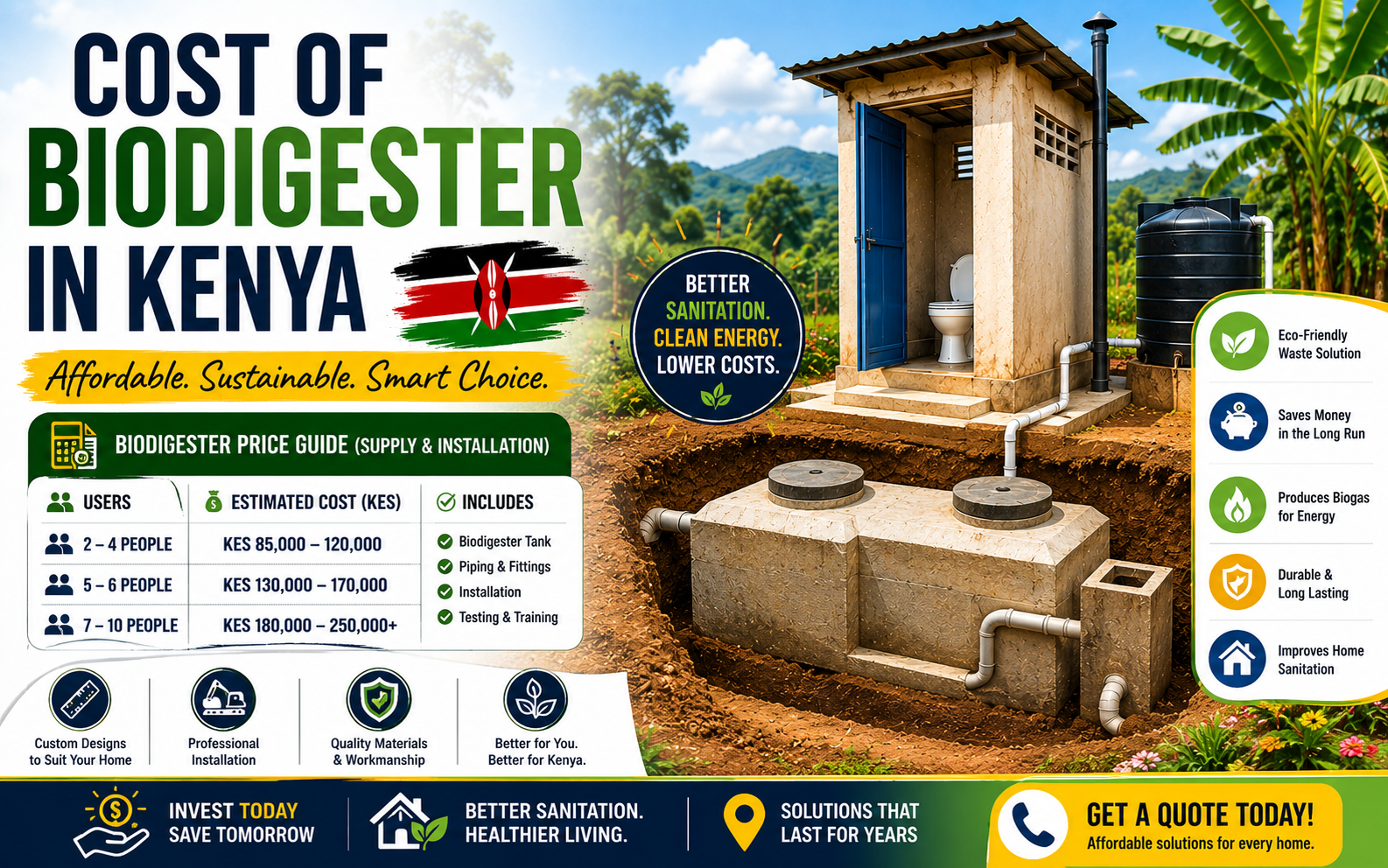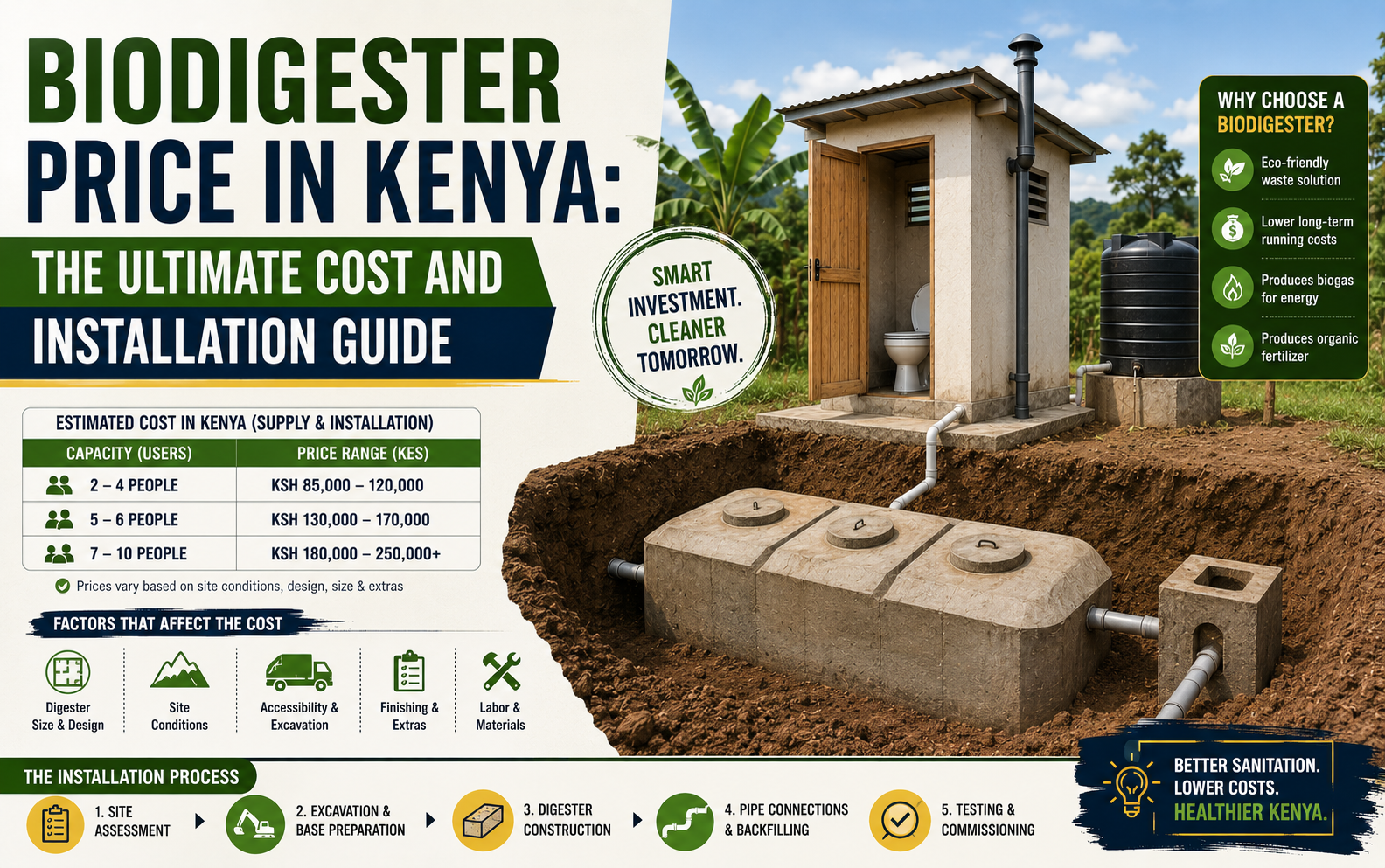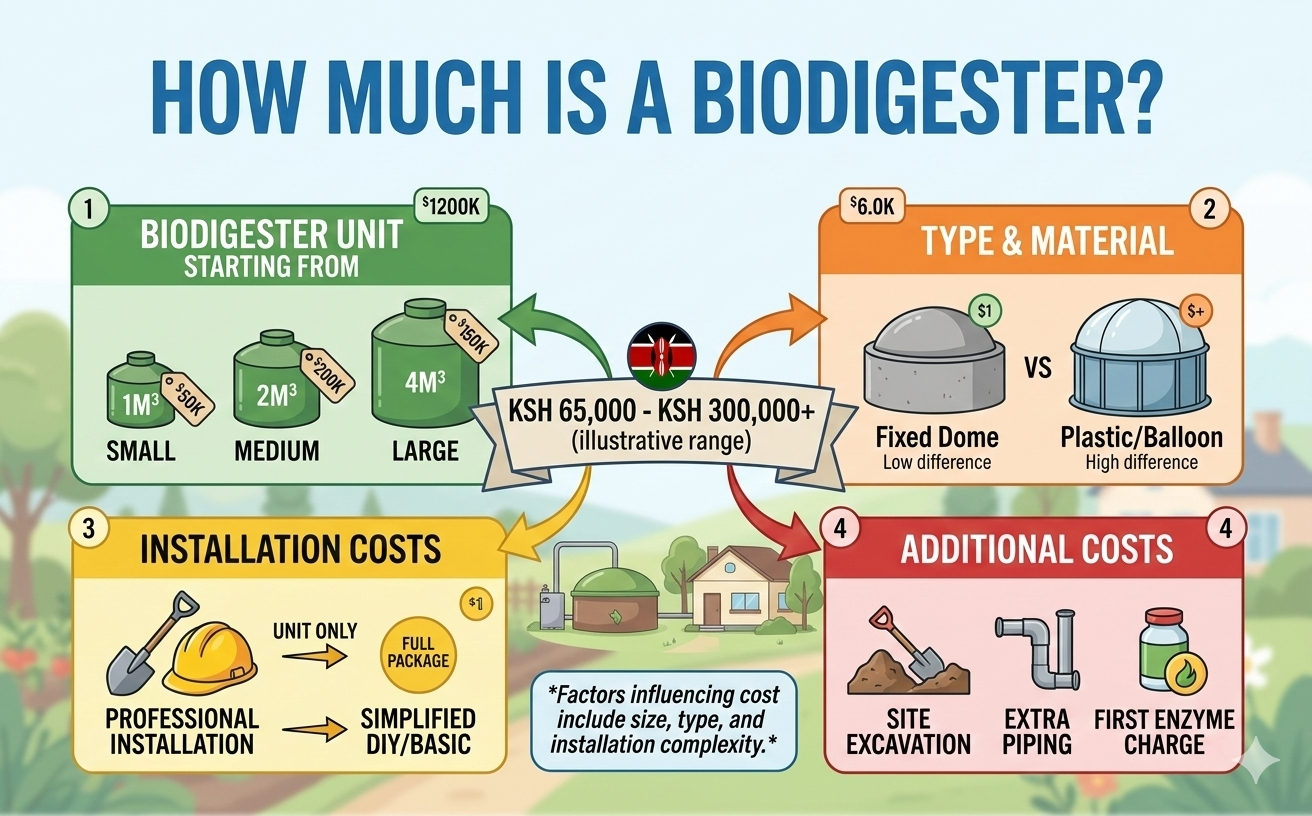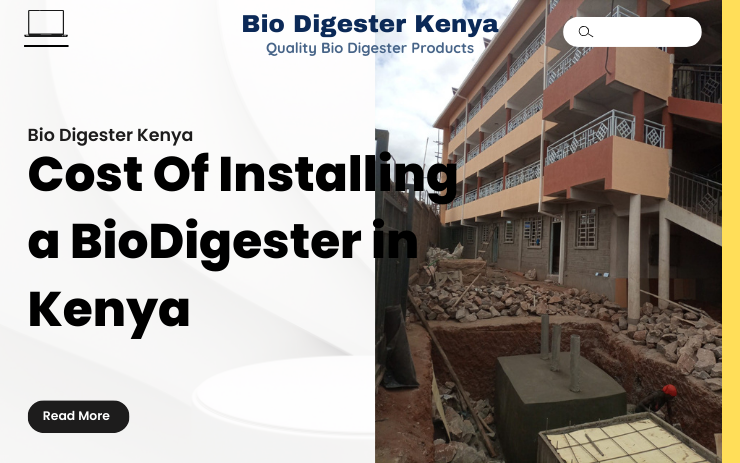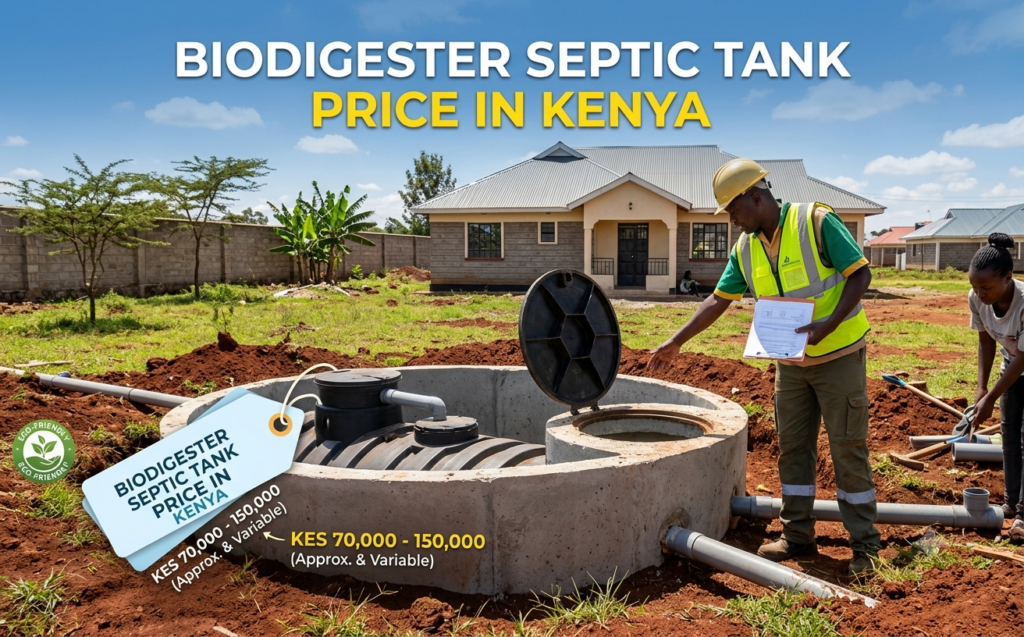
The average biodigester septic tank price in kenya ranges from KES 80,000 to KES 150,000 for standard residential properties (1 to 15 users), while larger commercial systems scale from KES 250,000 to over KES 600,000 depending on soil conditions, structural design, and capacity requirements.
For decades, property developers in Nairobi and surrounding counties built massive, expensive concrete septic tanks.
These traditional setups require continuous land space, cost hundreds of thousands of shillings to construct, and demand regular exhausting by expensive bowser services.
A modern bio-toilet system offers a permanent, self-sustaining alternative that fits perfectly within the tight plots of modern Kenyan estates.

Cost Breakdown of Biodigester Septic Tanks in Kenya
When assessing the financial layout for waste systems, look beyond the upfront purchase. The ultimate cost is shaped by the design architecture, materials used, and excavation labor on-site.
- Standard Residential Biodigester (1–15 Users): KES 80,000 to KES 120,000. This is the ideal option for a single-family home in areas like Ruiru, Kamulu, or Kikuyu.
- Medium Residential / Apartments (15–30 Users): KES 130,000 to KES 200,000. Best suited for multi-dwelling units, small apartments, or commercial offices.
- Large Commercial Systems (50+ Users): KES 250,000 to KES 600,000+. These are customized systems designed for schools, gated communities, hospitals, or major apartment blocks in high-density areas.
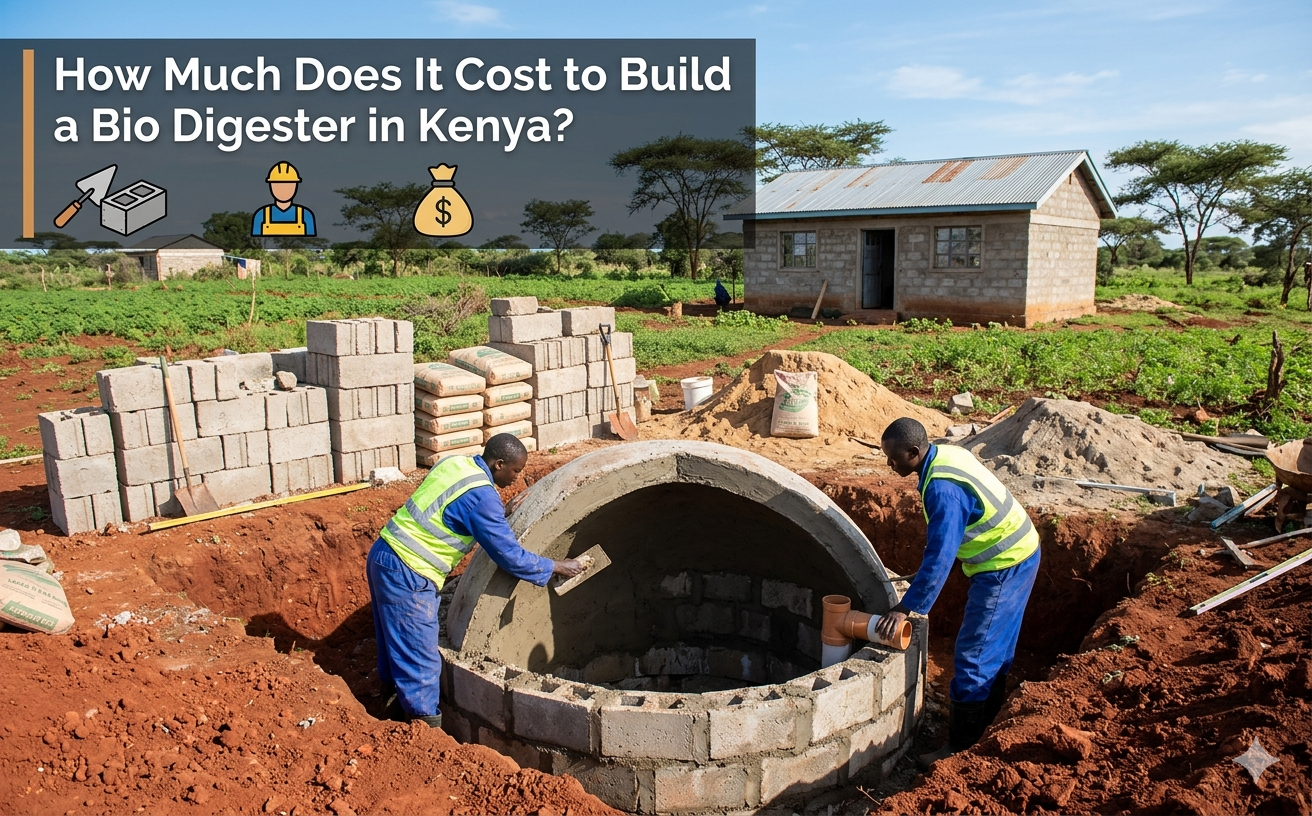
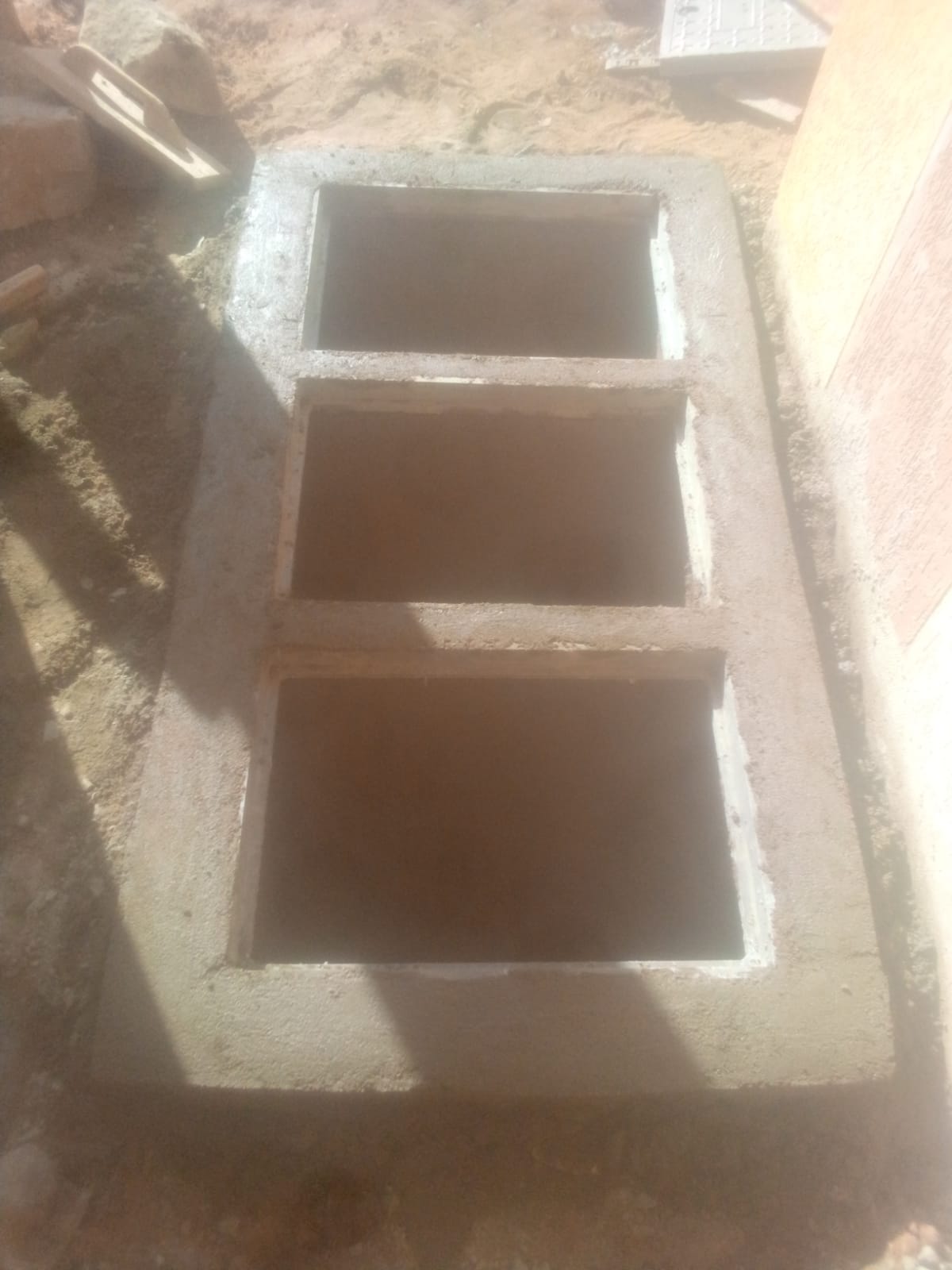
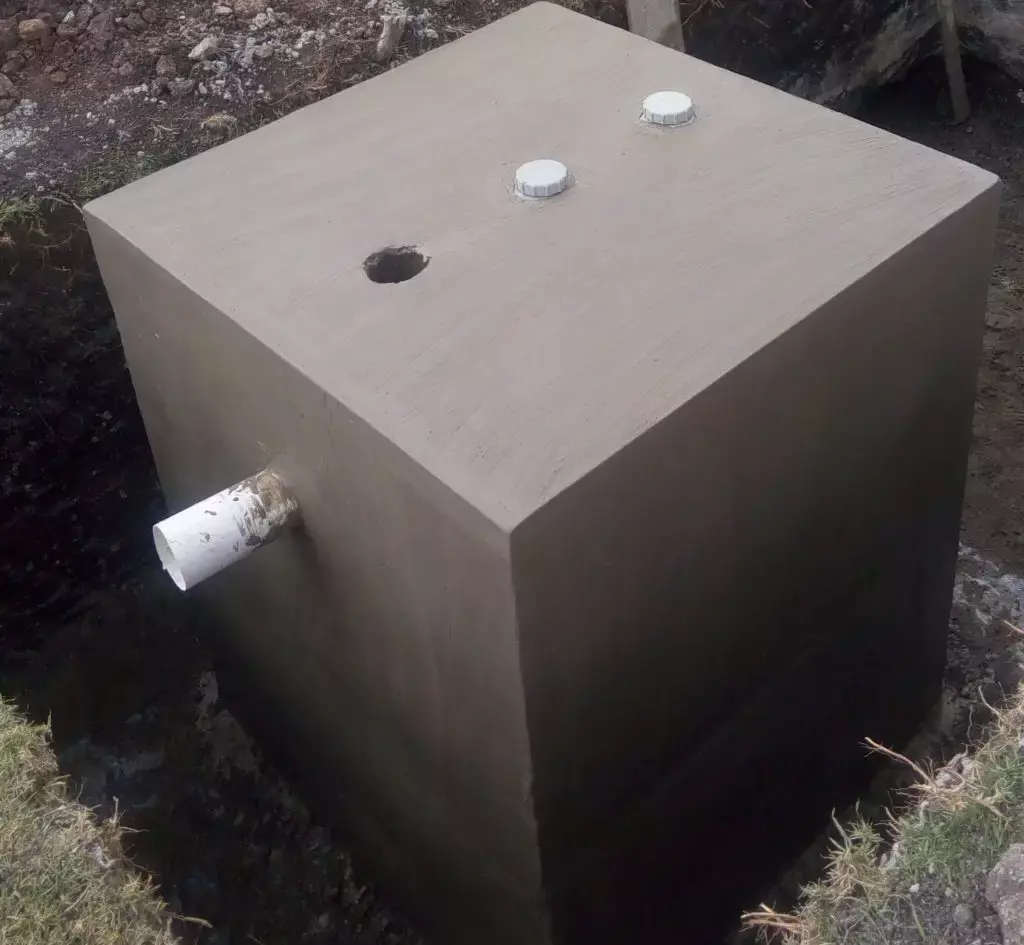
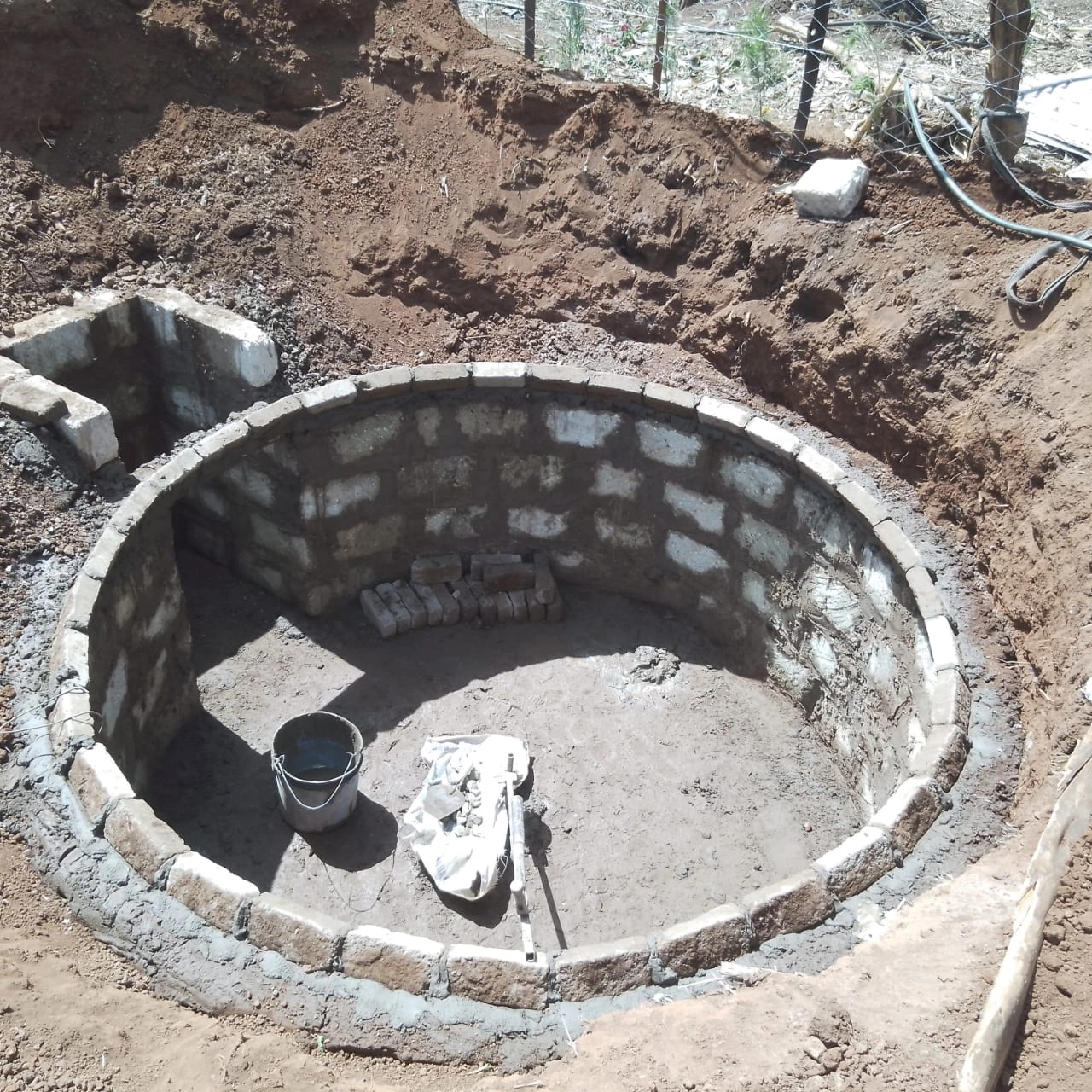
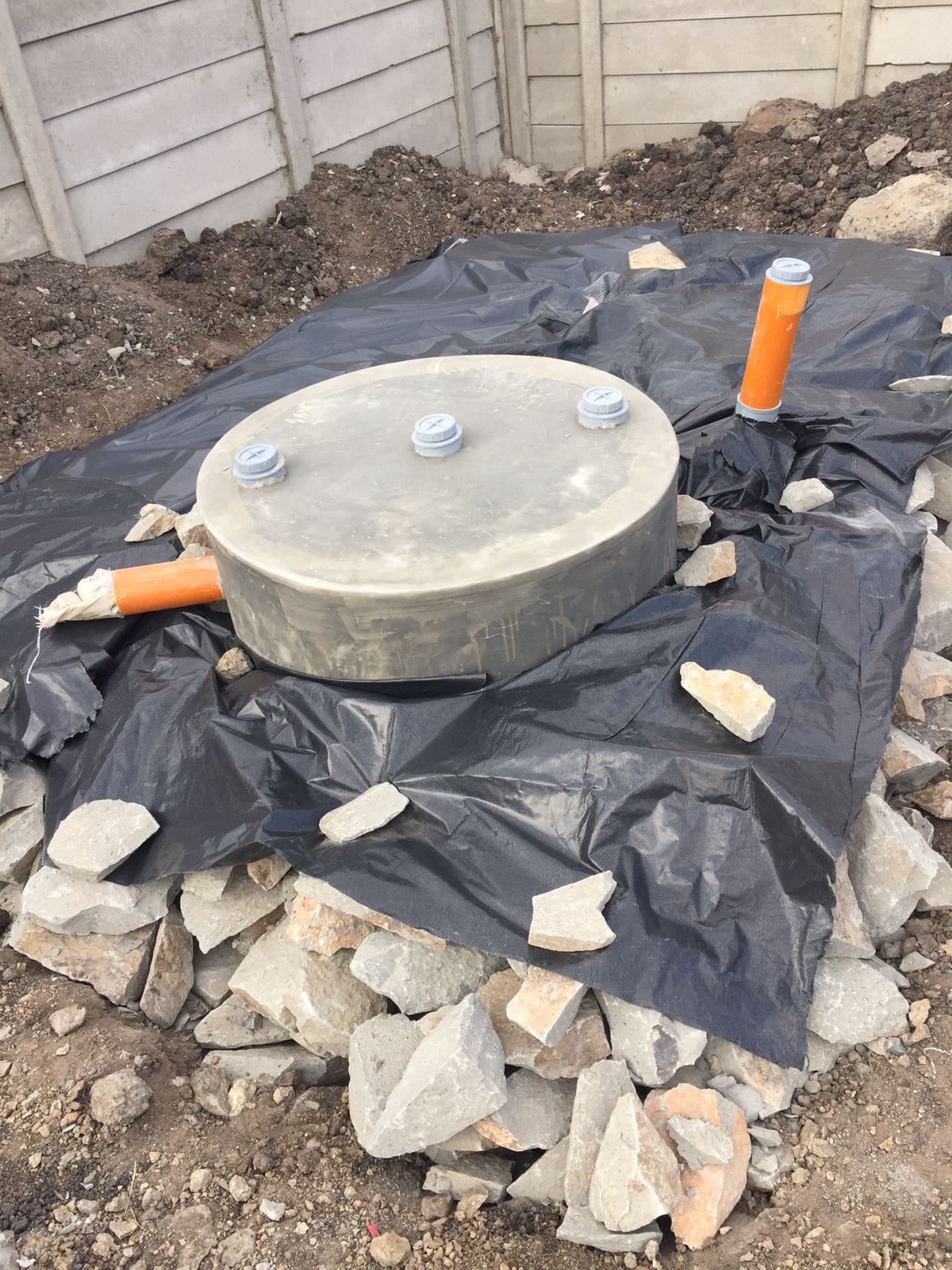
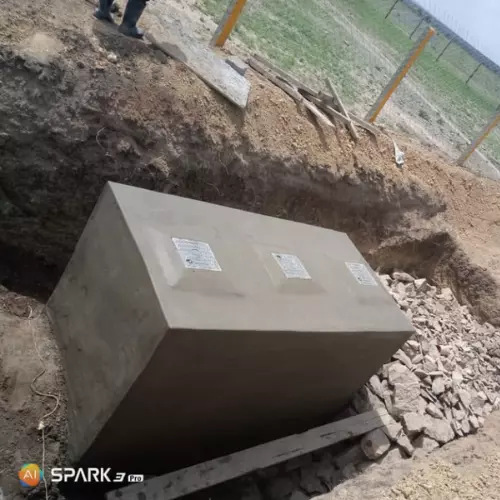
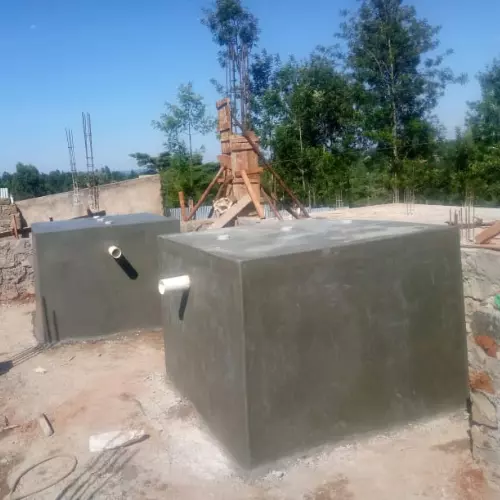
The design format also heavily impacts the overall price. Heavy-duty Precast Bio Digesters manufactured under controlled factory environments often cost slightly more upfront than basic masonry ring systems. However, they install in a single day and offer superior durability against shifting soils.
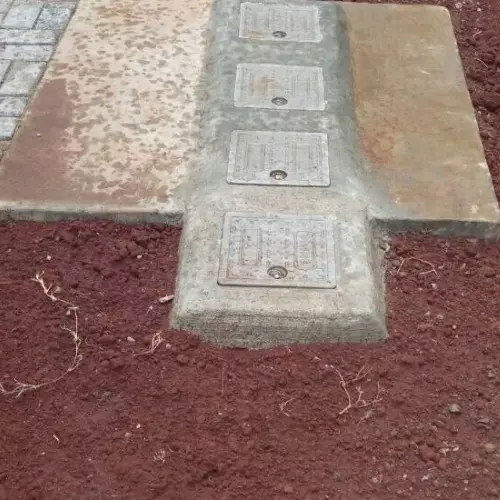
If you want a flawless, long-lasting setup, choosing a professional Bio Digester Installation ensures the excavation, leveling, and structural plumbing are done right the first time, preventing premature failure or sinkage.
Need a customized quote for your site? Contact our engineering team today:
Phone: +254 712 660 245
Email: info@biodigesterkenya.co.ke
How the Biodigester System Works
To understand why the investment is worthwhile, you must understand how the system functions.
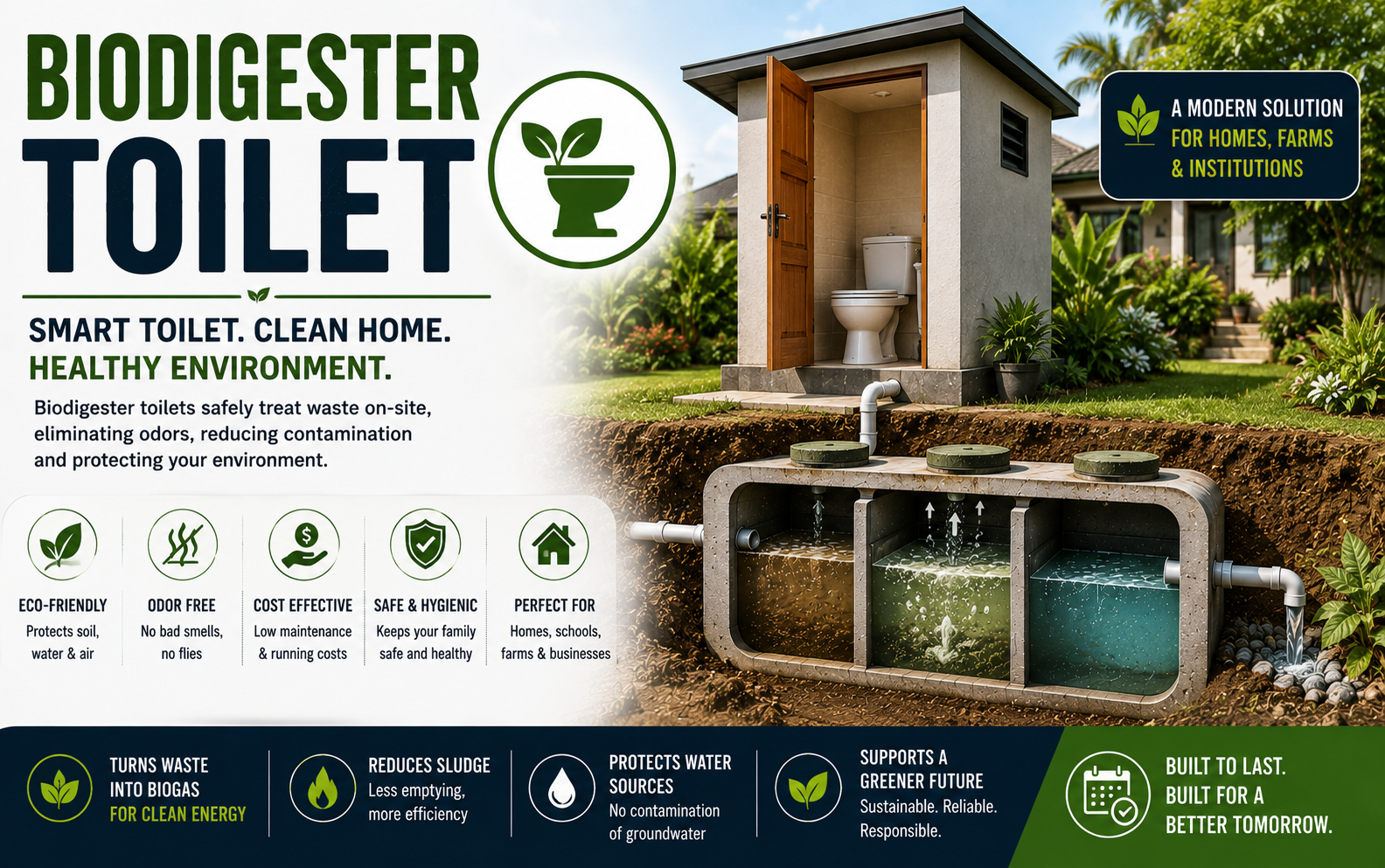
This is not just a storage tank; it is an active biological treatment facility operating beneath your property.
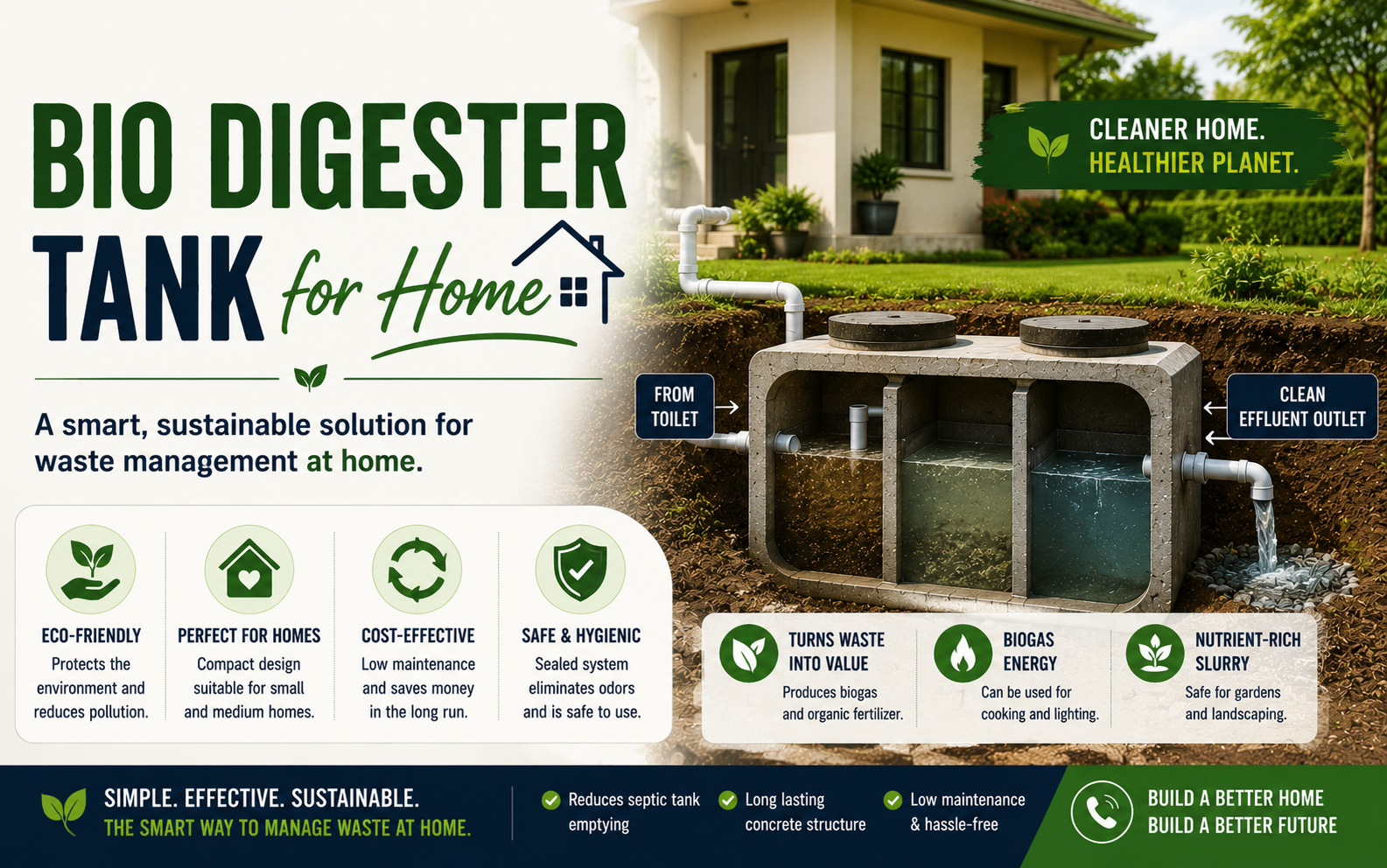
The system functions as a modern human waste management solution for residential homes and commercial spaces.
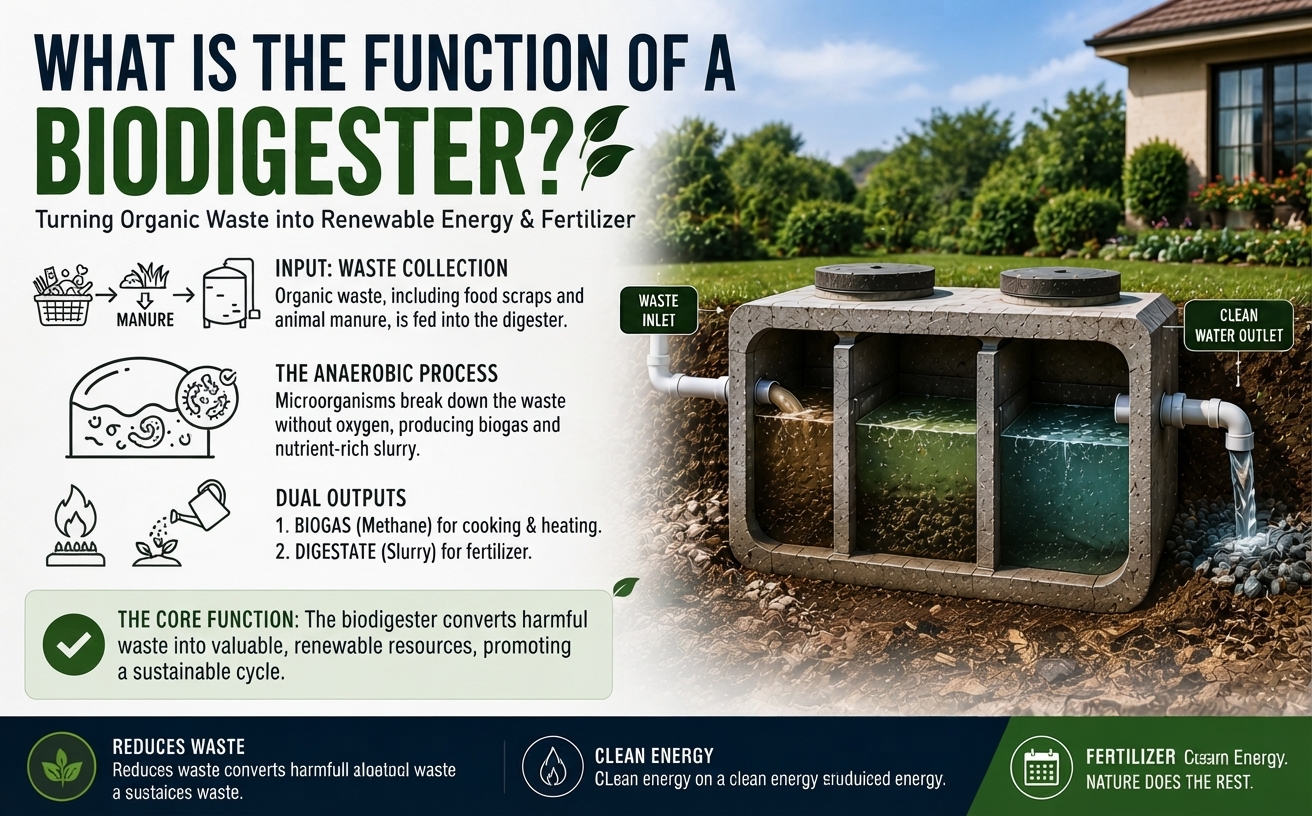
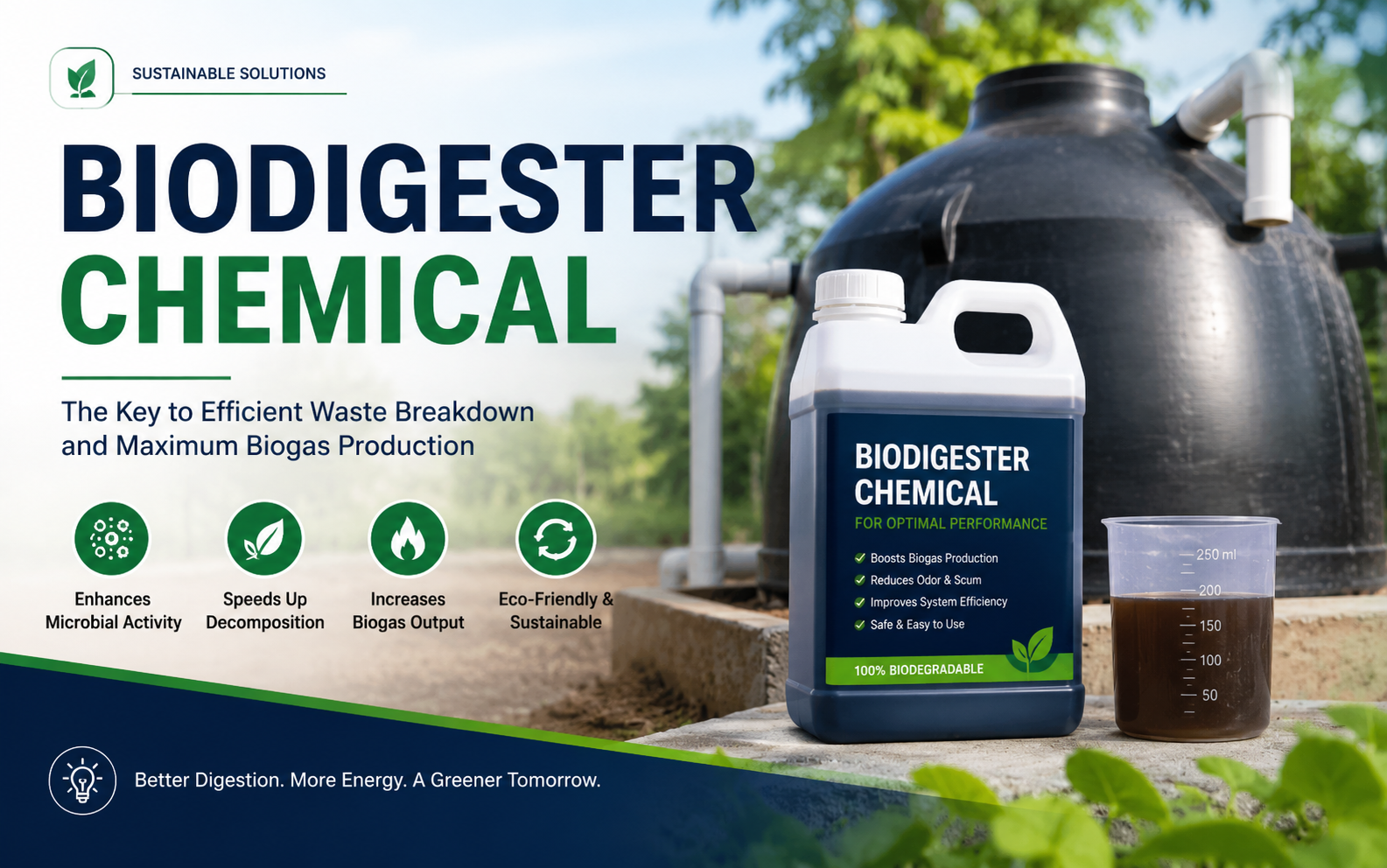
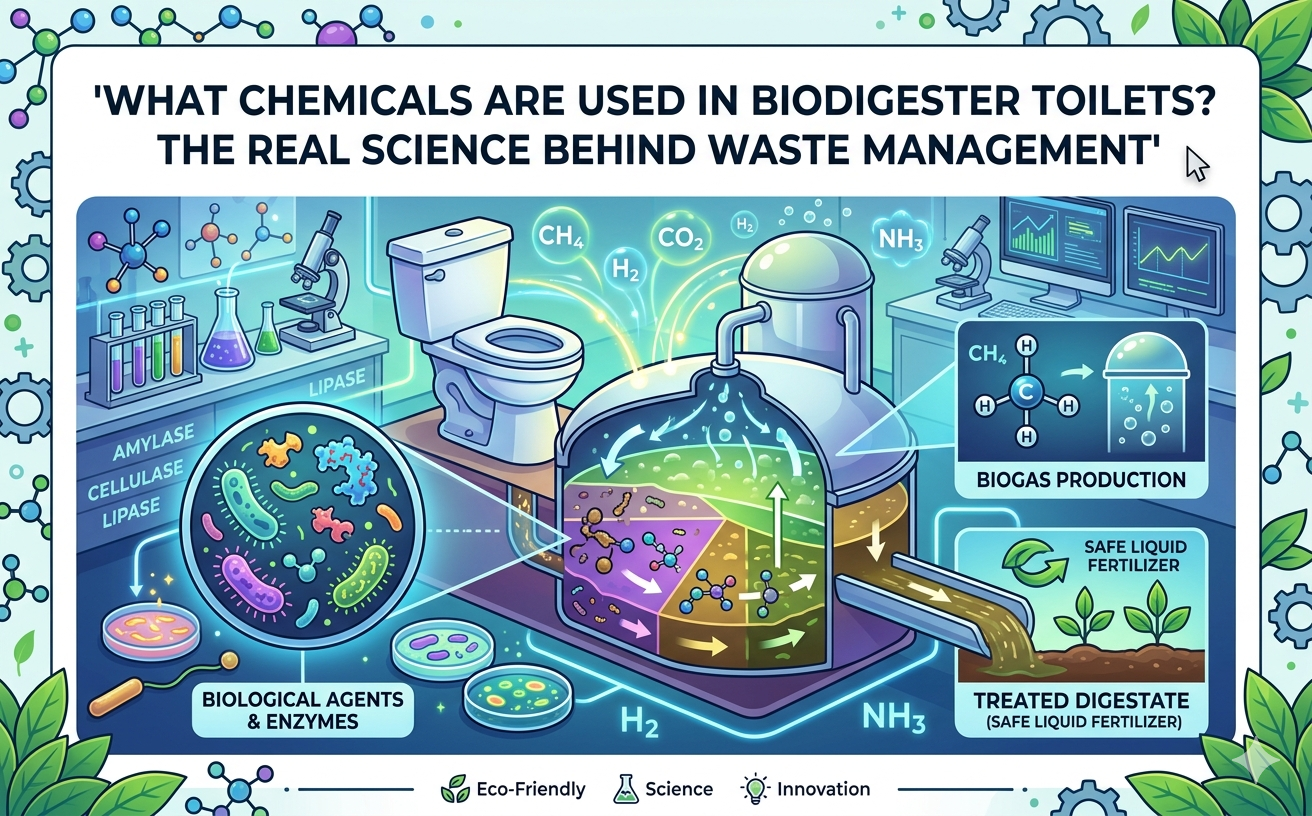
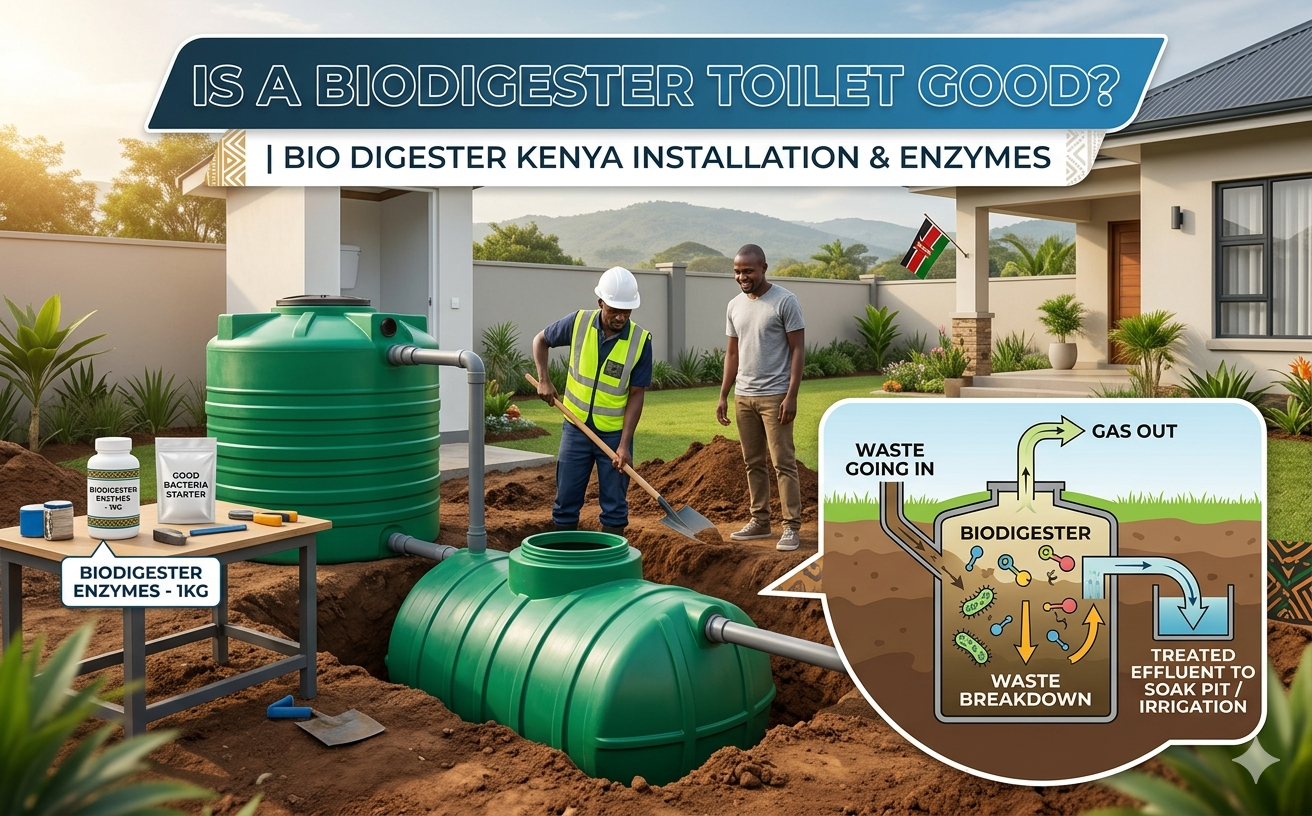
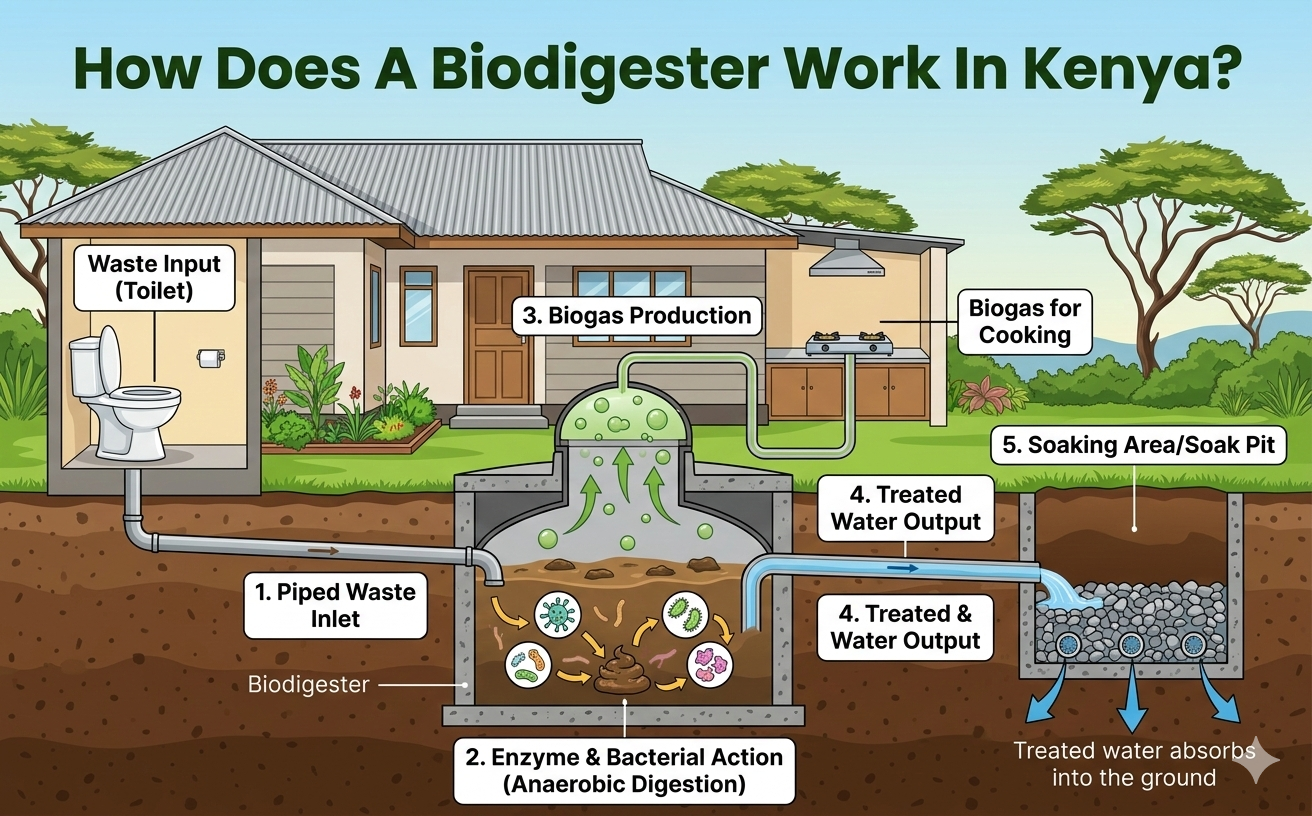
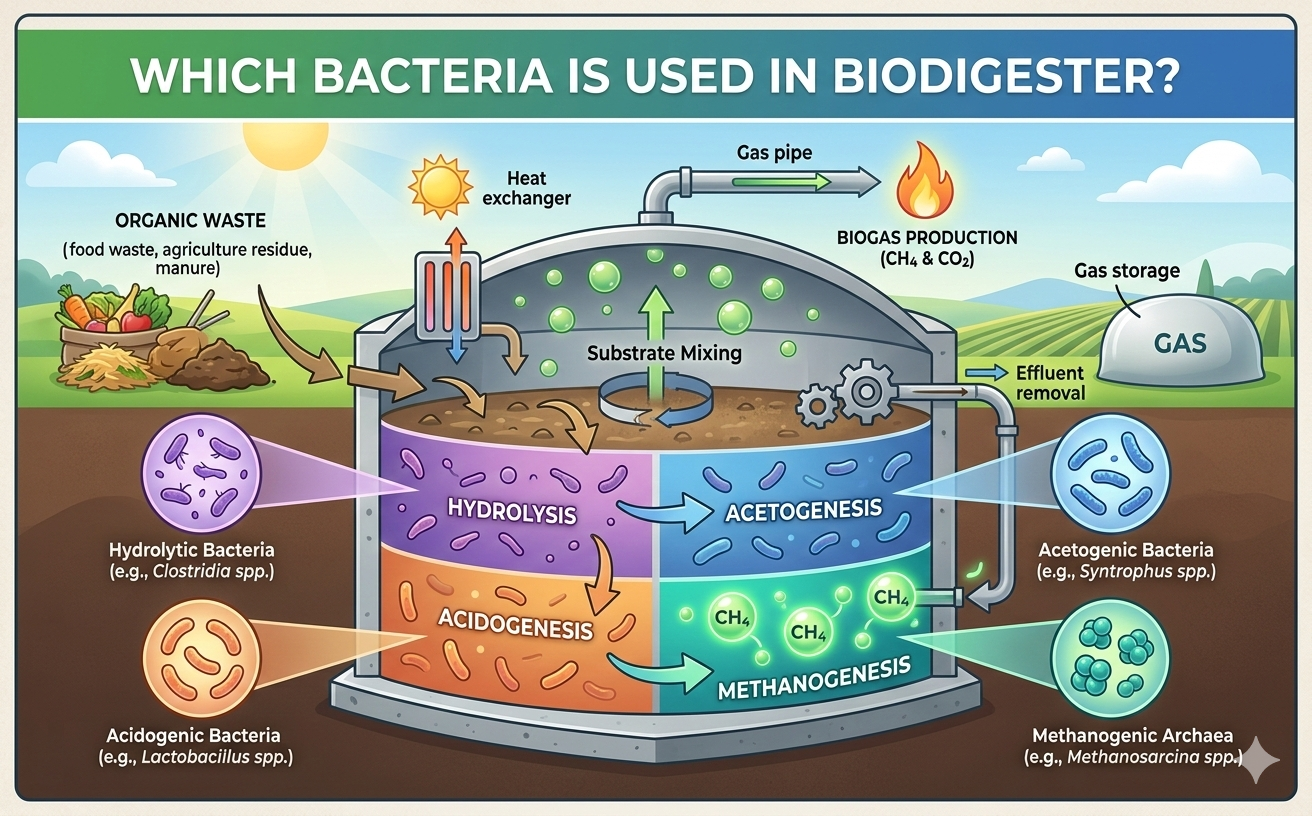
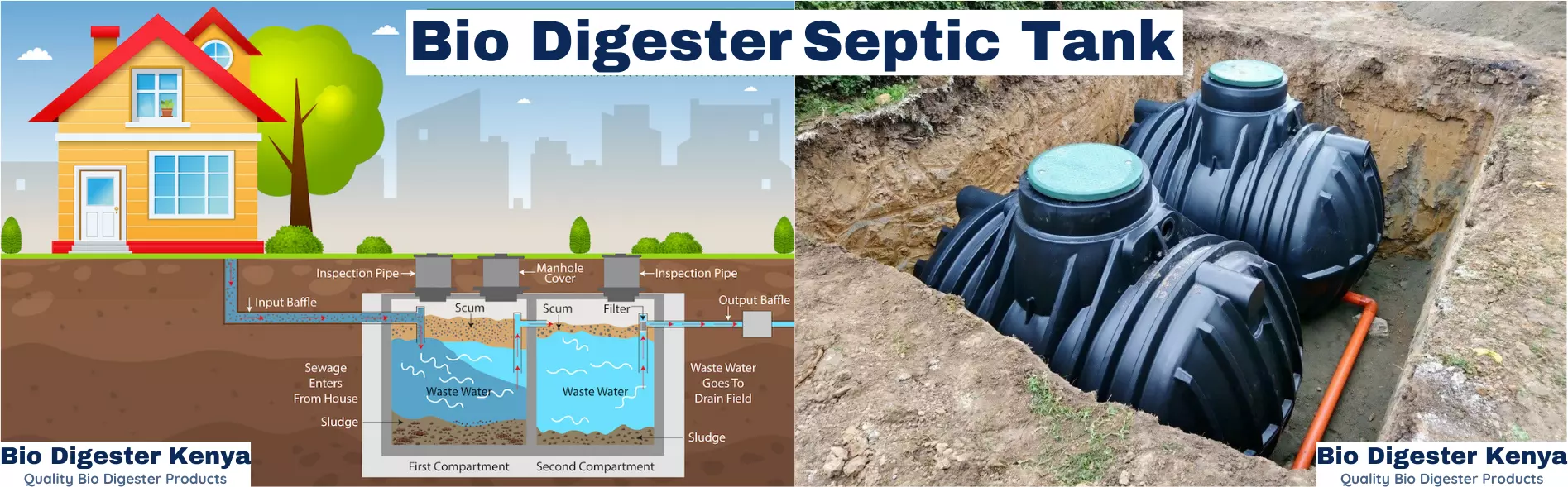
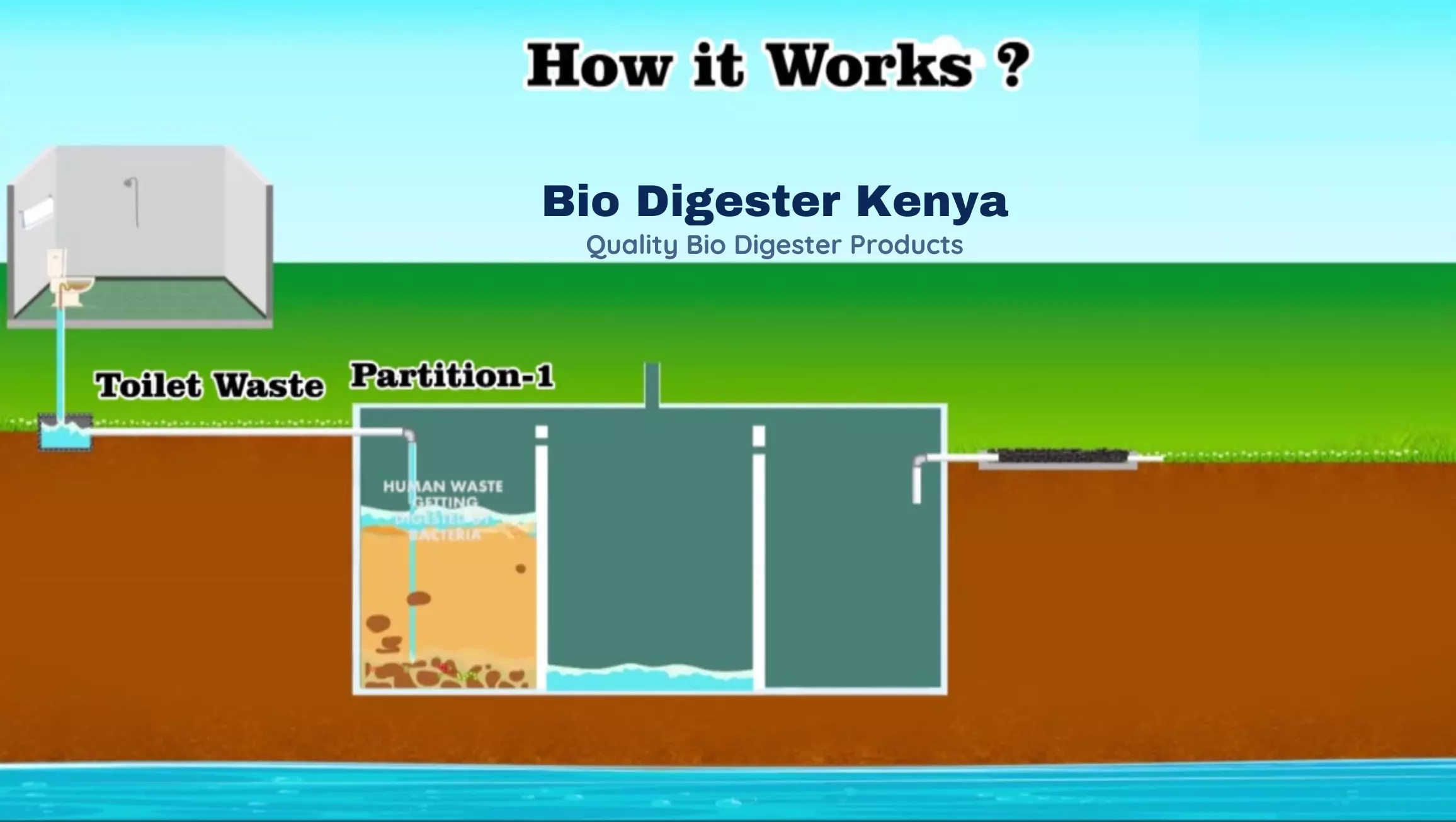
Waste is piped directly into the biodigester where specialized biodigester enzymes break down and consume the solid waste.
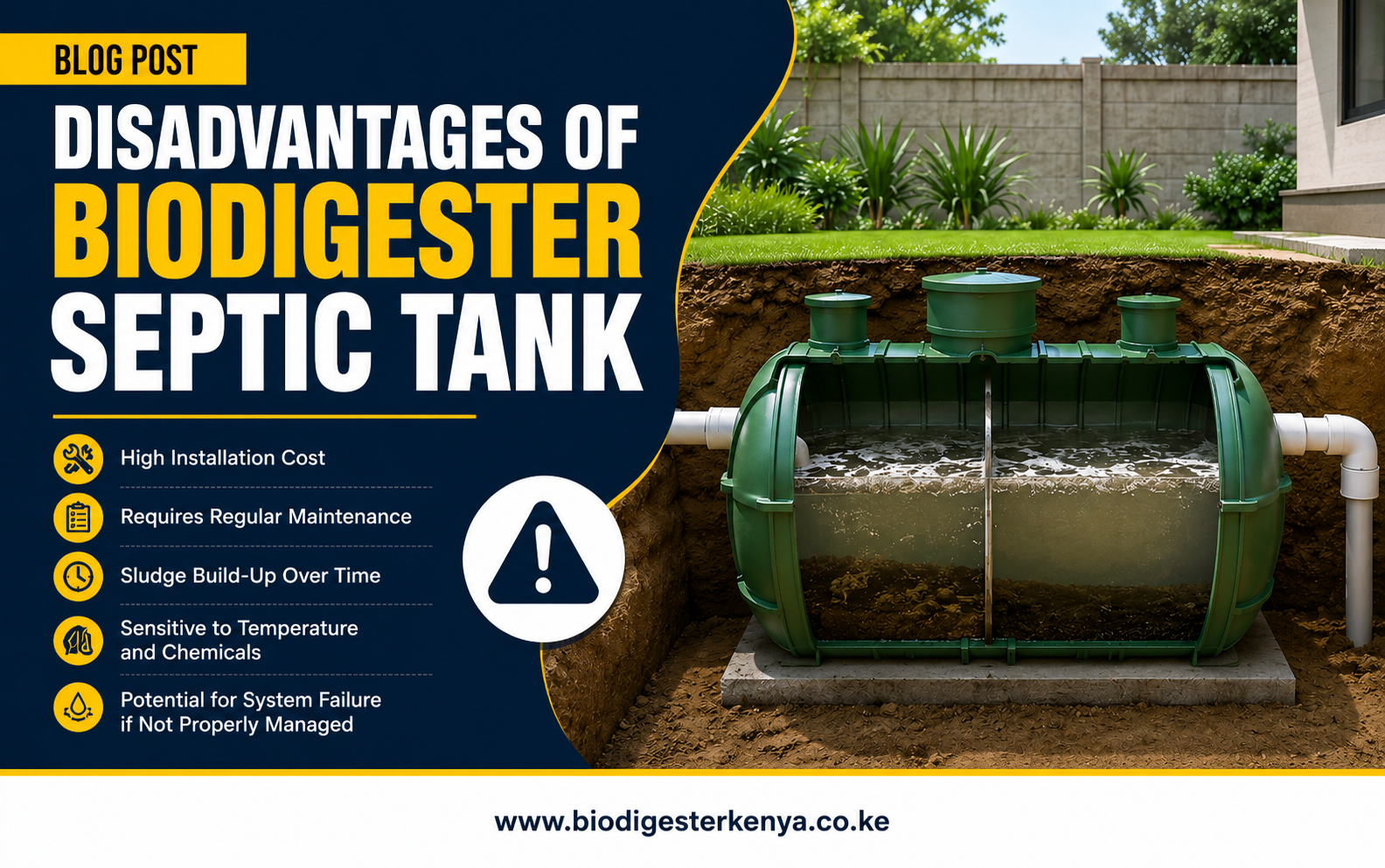
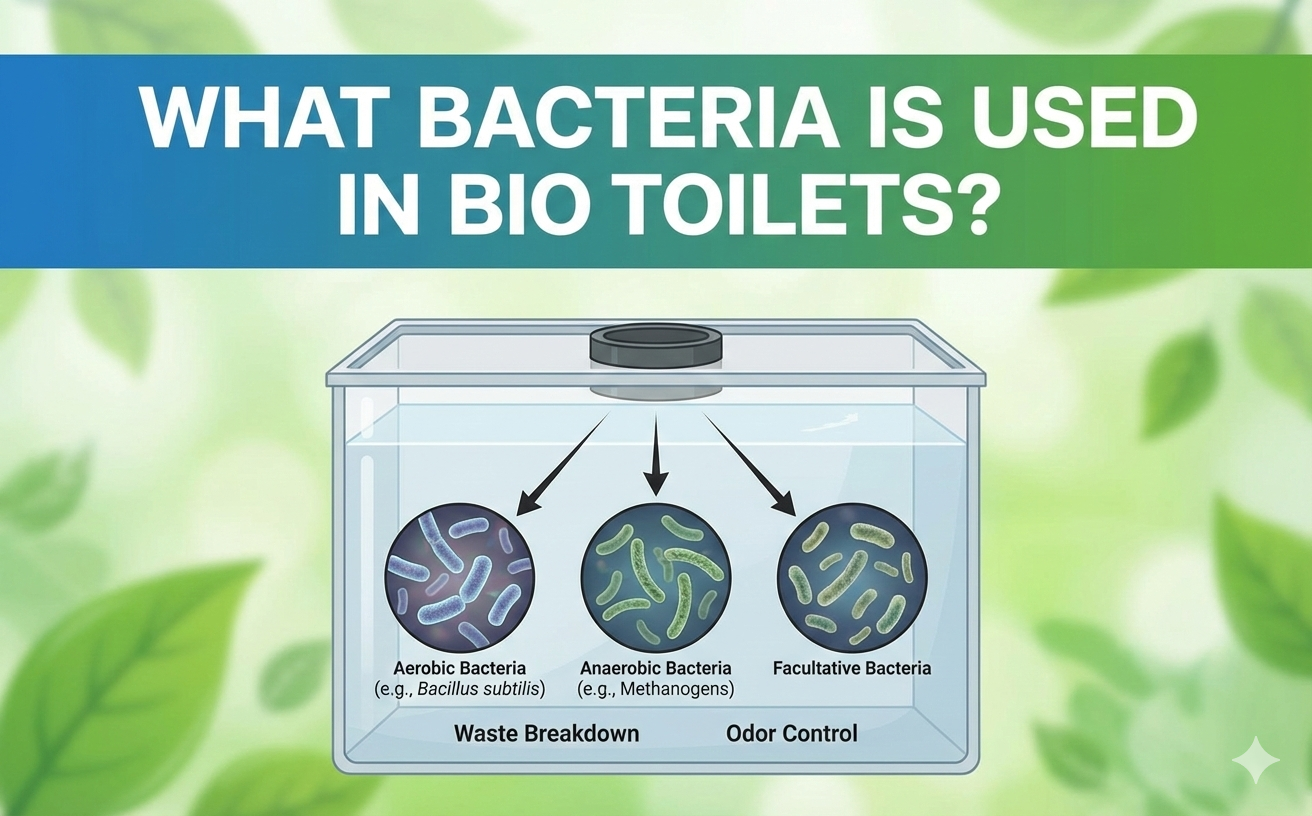
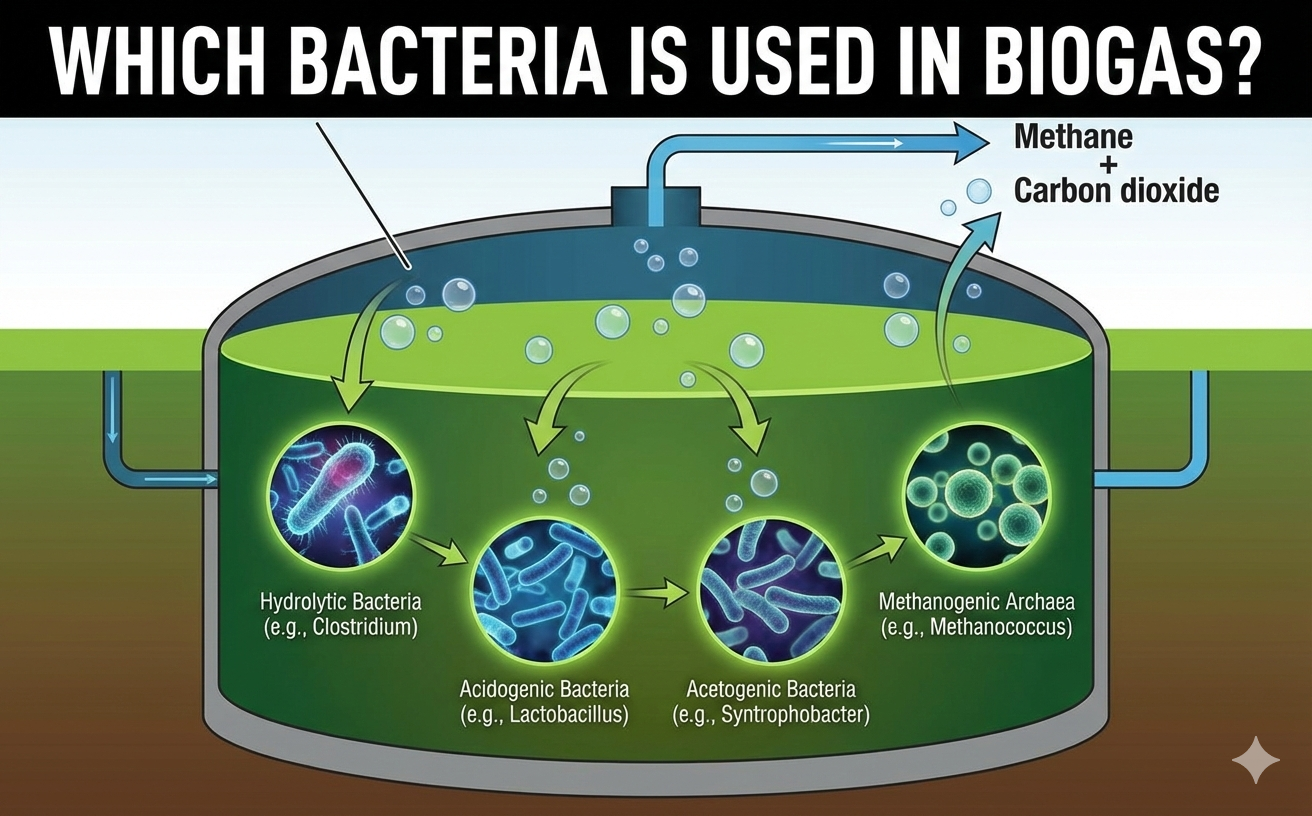
Inside the oxygen-depleted chambers of the digester, billions of active anaerobic bacteria feed on the organic matter, converting it into liquids and gases. The biological end result is strictly treated water and odorless air.
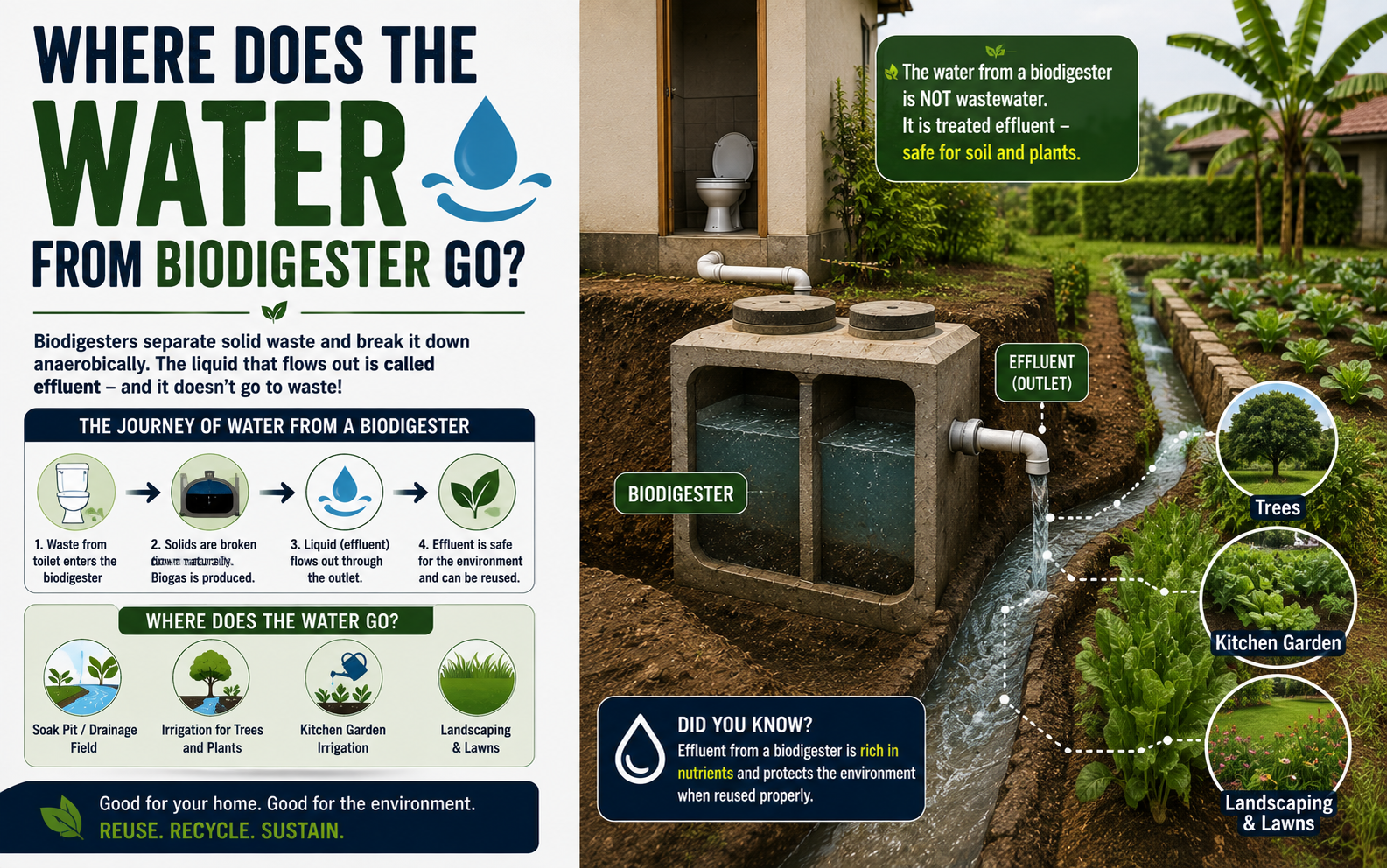
Instead of storing sludge that requires manual removal, the treated water is directed to a localized soaking area or French drain where it is safely absorbed into the ground, eliminating the need for recurring exhaust tank emptying.
This continuous breakdown means your waste footprint is reduced to virtually zero, offering an eco-friendly drainage alternative that satisfies NEMA standards.
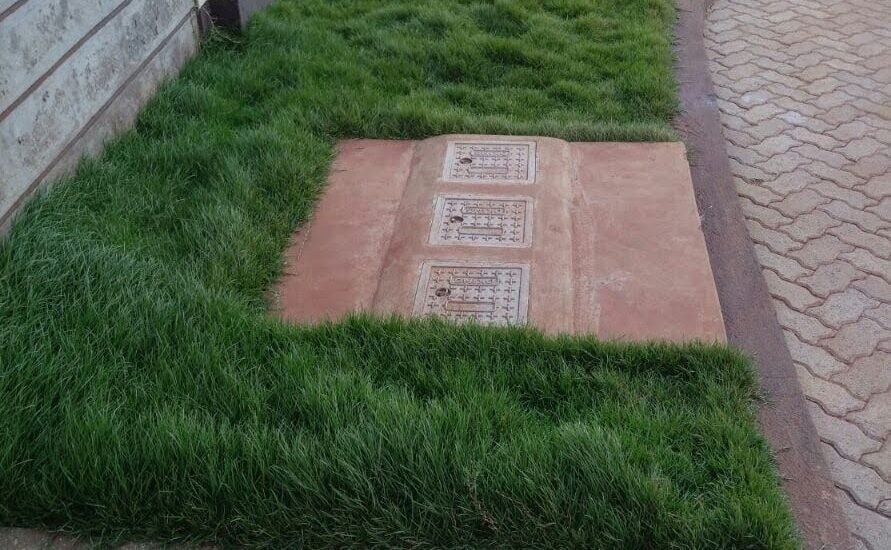
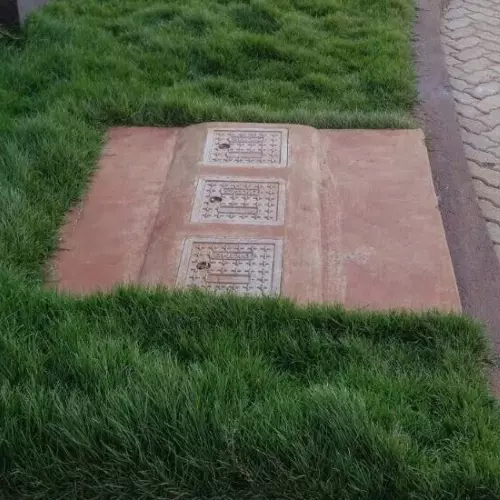
By partnering with Bio Digester Kenya, you transition from a high-maintenance, smelly concrete pit to an invisible, odorless asset that respects your budget and the environment.

Biodigester vs. Septic Tank: Financial Comparison
Property owners often hesitate at the initial price tag of a biodigester compared to a simple pit latrine or unlined septic tank.
However, a detailed biodigester vs septic tank comparison reveals that traditional systems are financial traps over the long term.
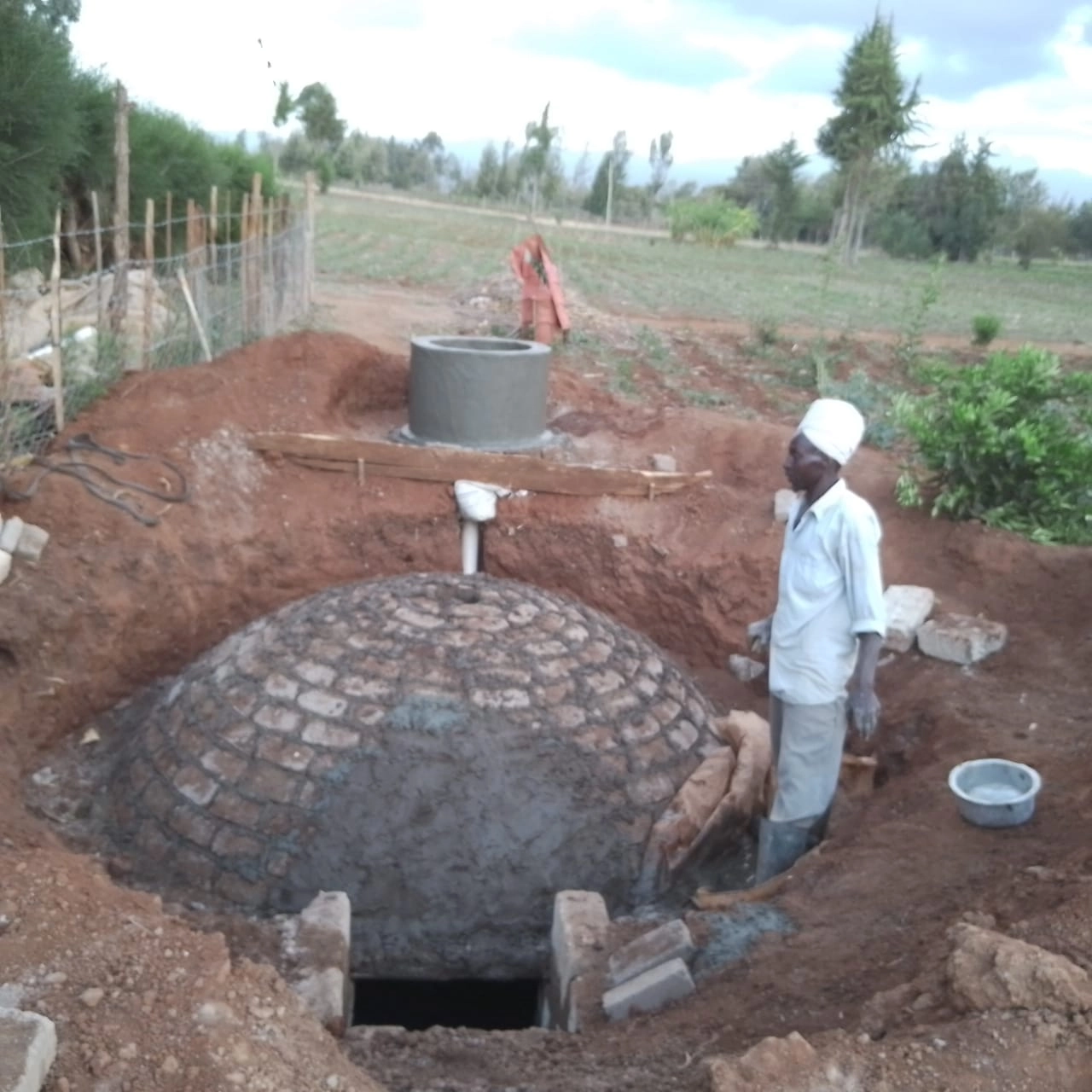
A traditional concrete septic tank requires massive excavation, tons of cement, steel reinforcement bars (y12/y10), and weeks of masonry labor.
Total construction costs easily exceed KES 150,000 to KES 250,000. Furthermore, because traditional septic tanks simply store wastewater rather than treat it, they fill up quickly.
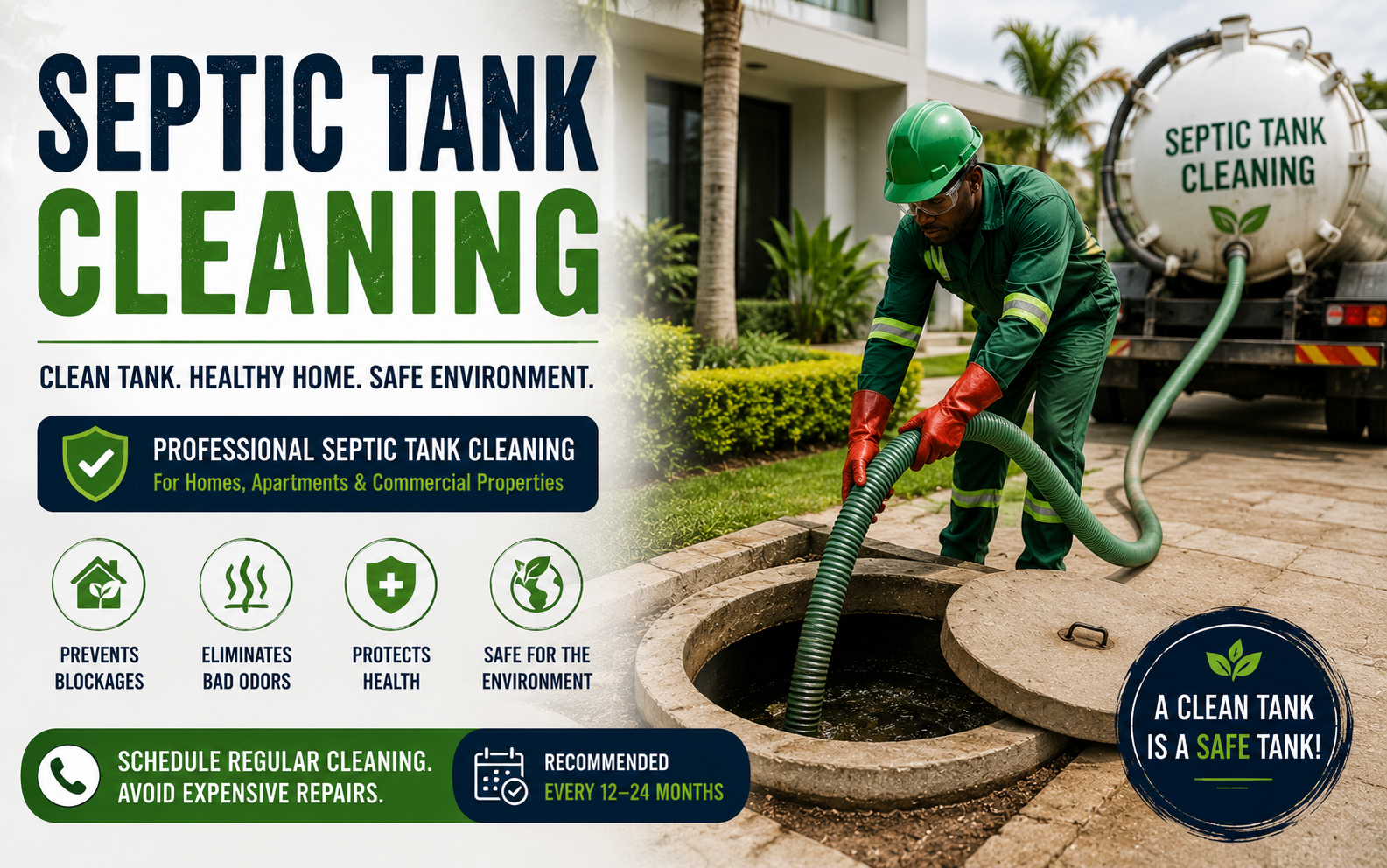
In places like Kitengela or Syokimau, exhausting services cost between KES 10,000 and KES 15,000 per trip.
If you exhaust four times a year, you spend up to KES 60,000 annually just to keep your toilets flushing.
In contrast, a biodigester requires a small footprint, minimal excavation, and finishes installation within one to two days.
Because it utilizes natural biological action to treat the water and discharge it into a French drain, you avoid those continuous ex-exhaust bowser bills.
The unit pays for itself within its first 18 to 24 months of operation.
For active advice on optimizing your existing setup or selecting the right capacity, speak to our consultants:
Phone: Call +254 712 660 245
Email: Email info@biodigesterkenya.co.ke
Geographical Realities: How Kenyan Soil Affects Pricing
Soil geology across Kenya varies wildly, and this directly influences the structural design and final installation price of your biodigester.
Heavy Black Cotton Soil (Kitengela, Kamulu, Athi River, Ruai)
Black cotton soil is notoriously challenging. It expands aggressively when wet and contracts when dry, creating immense pressure on subterranean structures.
It also has poor water percolation rates, meaning standard French drains will fail if not designed correctly.
In these areas, we must use reinforced precast concrete systems rather than basic plastic tanks.
The soakage area must be dug deeper, backfilled with porous gravel, and sometimes designed as an elevated mound. This additional labor and materials can add KES 15,000 to KES 30,000 to the project cost.
Red Volcanic Soils (Kiambu, Runda, Karen, Limuru, Kikuyu)
Red volcanic soils are highly porous and stable. They drain water exceptionally well and do not shift or expand.
For properties built on red soil, excavation is straightforward, and the French drain can be compact and simple.
The structural pressure on the biodigester is minimal, allowing for standard pricing with no extra structural reinforcement required.

Maintenance Costs and Biological Boosters
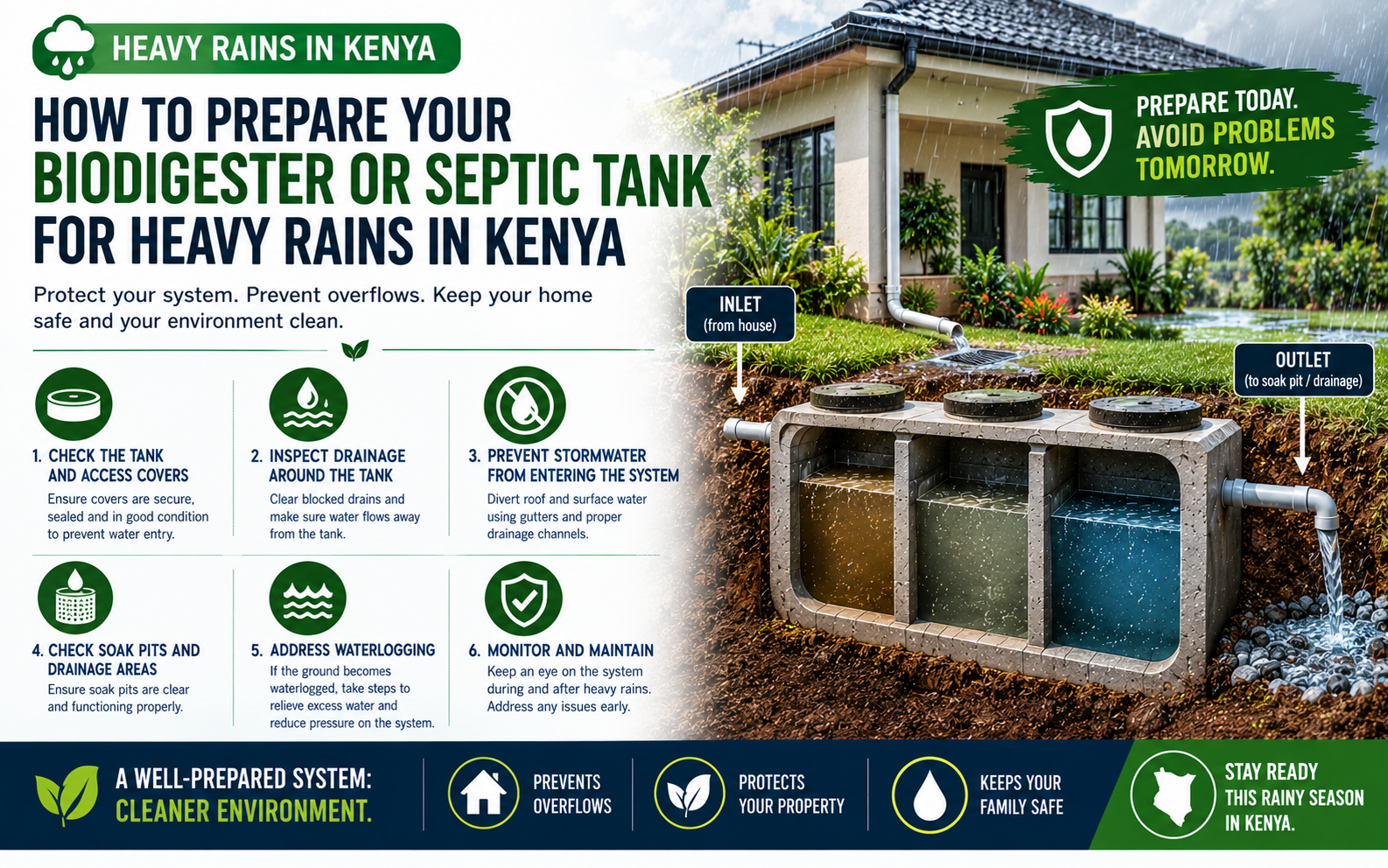
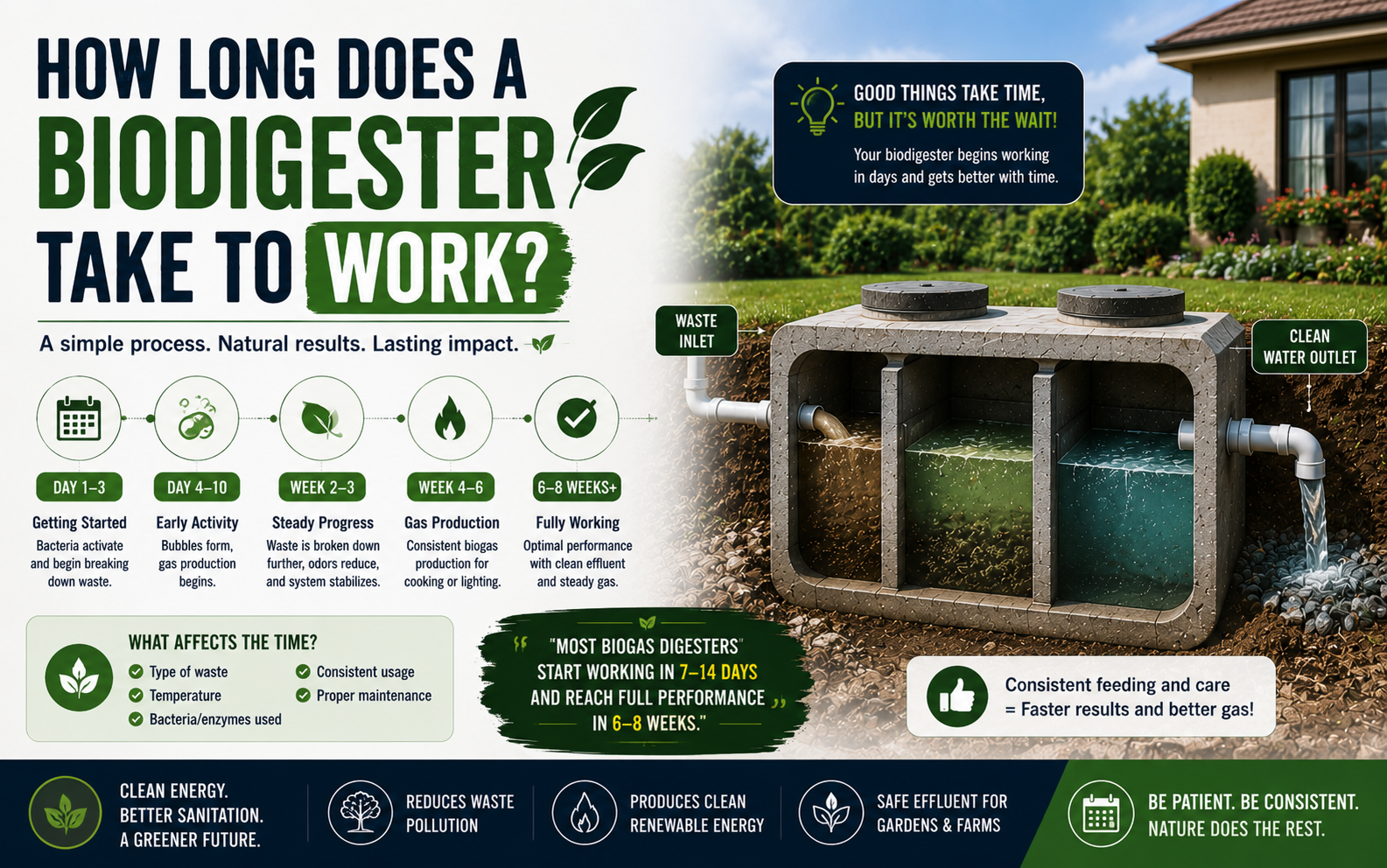
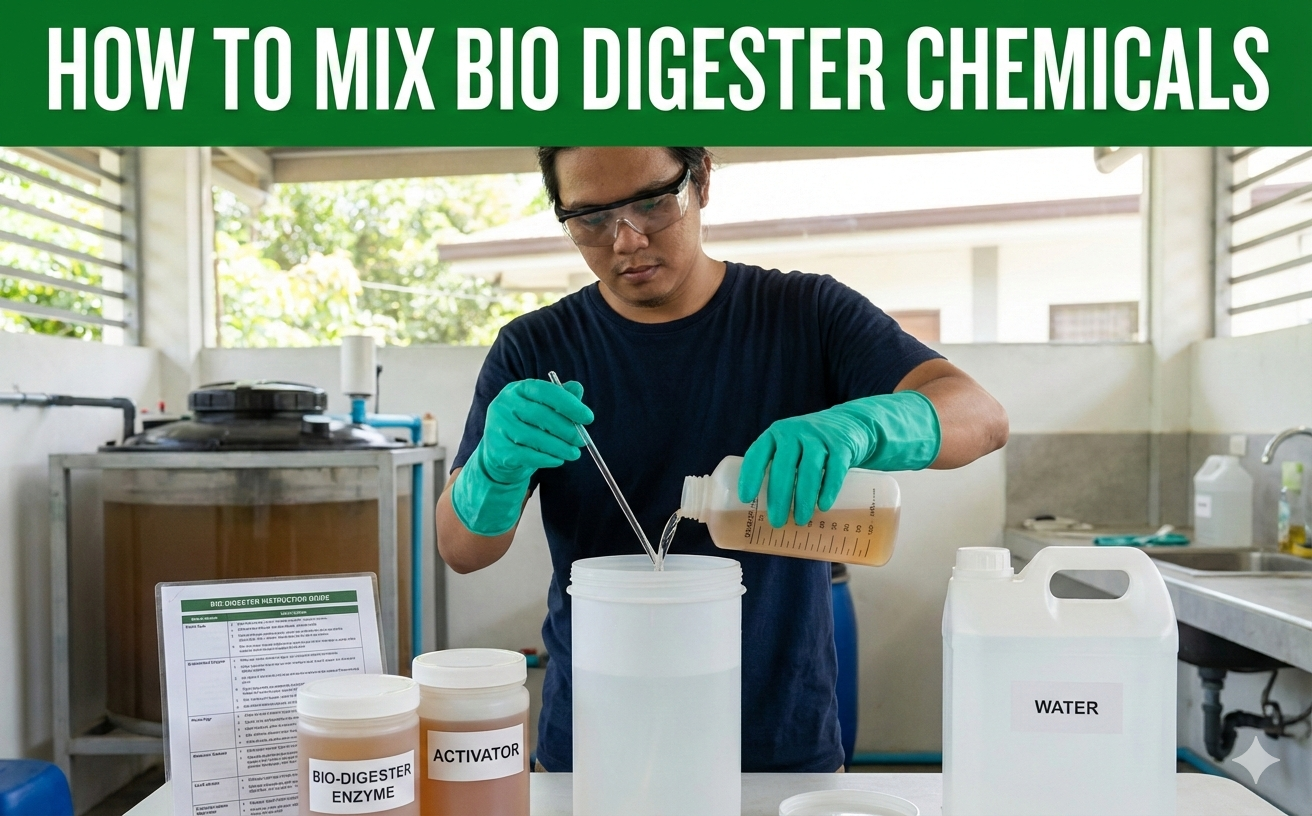
To keep the anaerobic digestion process running at peak efficiency, the bacterial colony inside the digester must remain healthy.
Regular household chemicals, bleach, and harsh acid-based toilet cleaners can kill these beneficial microbes, causing solid waste to accumulate and produce odors.
This is where proactive Septic Tank Maintenance becomes critical.
To avoid system failures, we recommend dosing your system periodically with high-quality biological treatments.
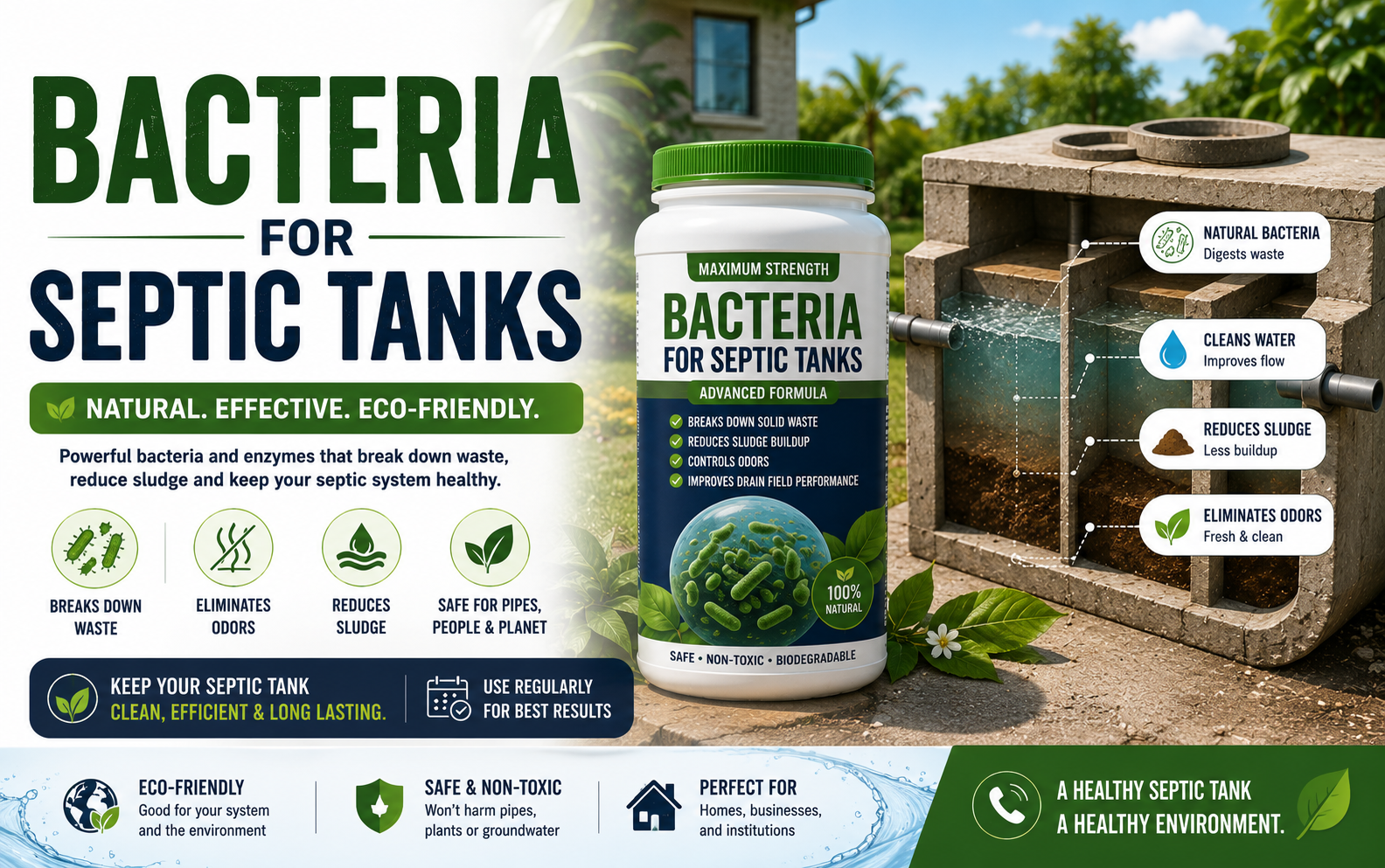
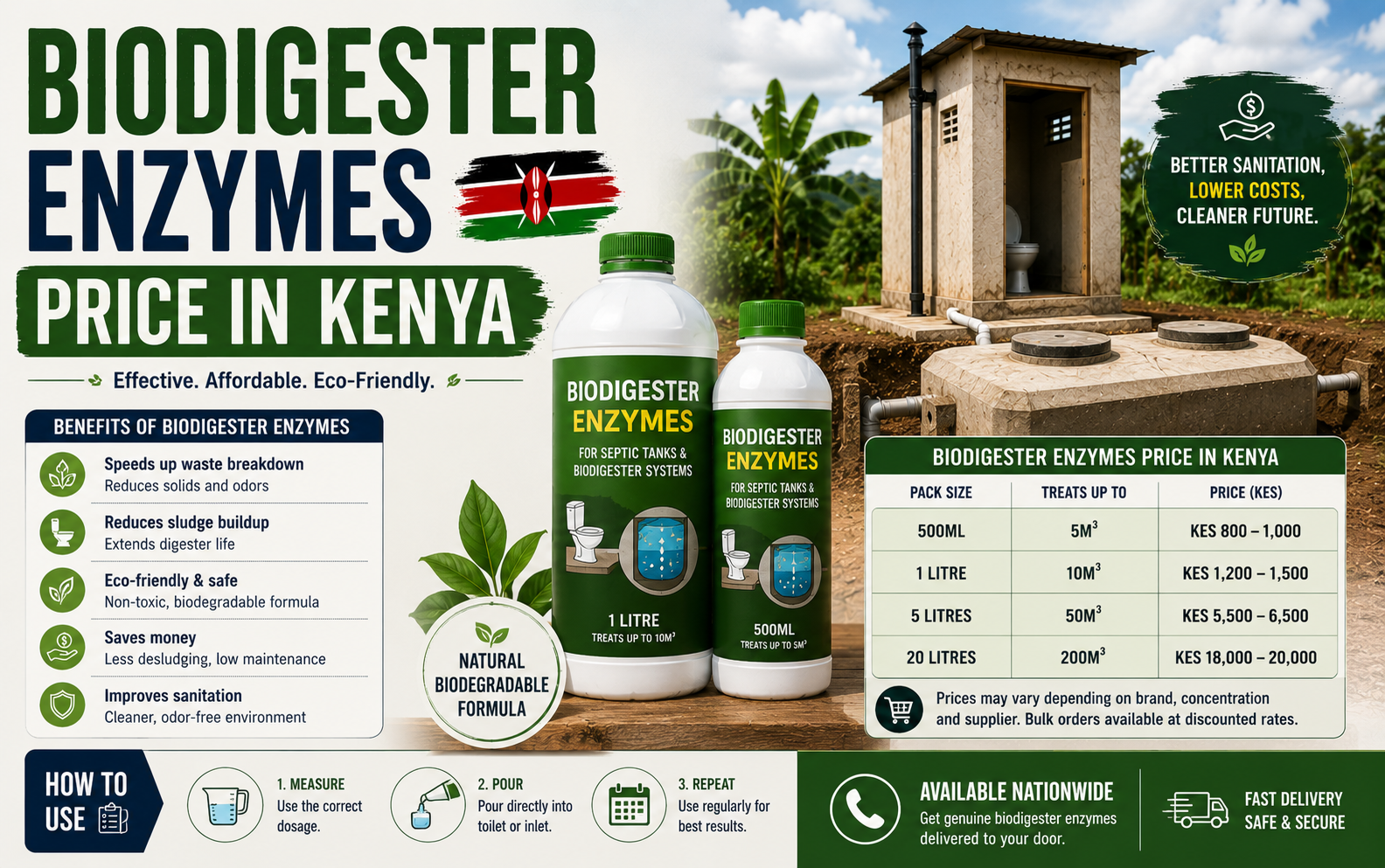
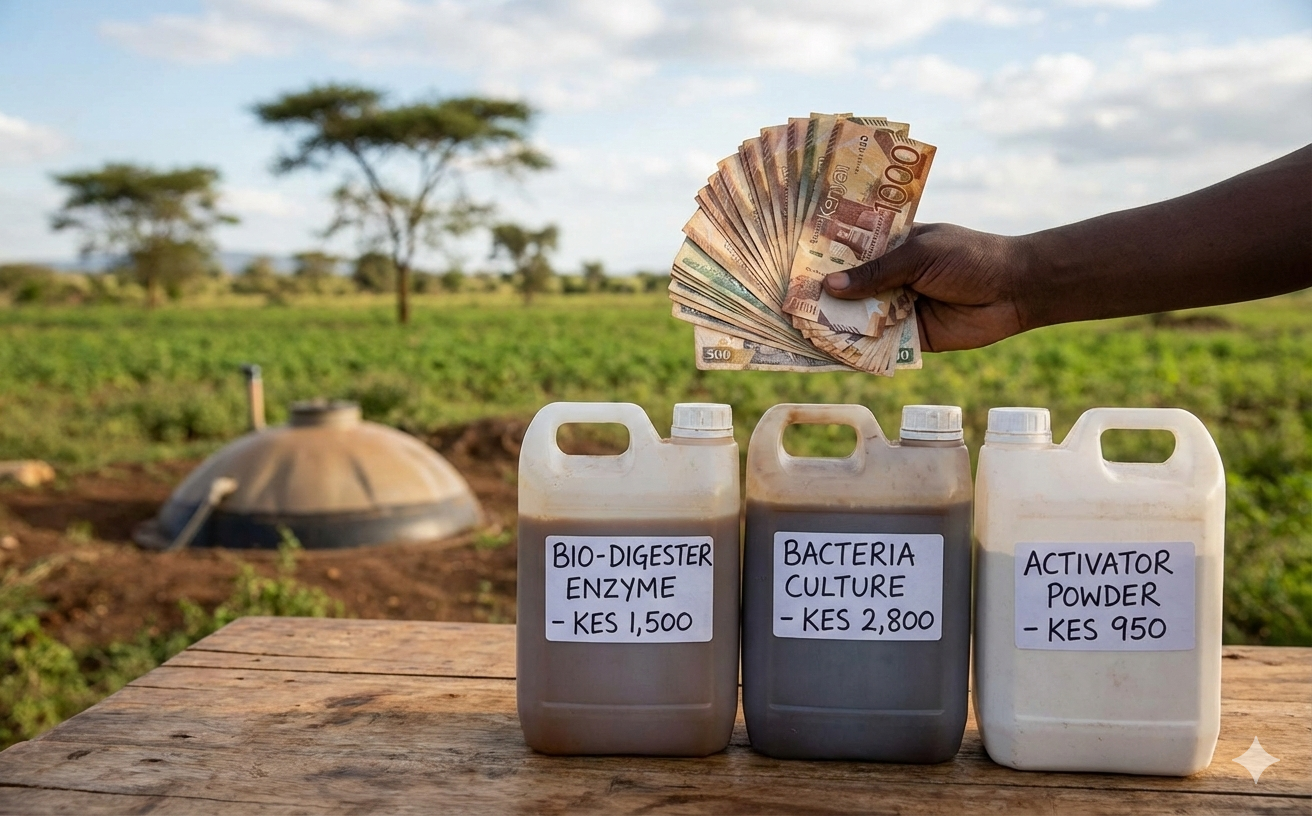
Adding Bio Digester Bacteria once or twice a year keeps the waste digestion process running optimally.
For general maintenance and regular upkeep, applying a dedicated Septic Tank Cleaner or a concentrated dose of Bio Digester Bacteria – 400g ensures that fats, oils, grease, and tissue paper are rapidly liquefied, preserving the life of your soakage area indefinitely.
Conclusion
Investing in a modern biodigester is the most financially sound and environmentally responsible decision a Kenyan property owner can make.
While the initial biodigester septic tank price in kenya might seem comparable to or slightly lower than a traditional brick septic tank, the long-term savings are massive.
By eliminating the perpetual cycle of hiring exhaust bowsers, preserving valuable plot space, and preventing soil contamination, you achieve absolute sanitation independence.
Are you ready to install a hassle-free, odorless waste management system on your property? Get a detailed, site-specific estimate from our lead engineers today.
Contact Bio Digester Kenya:
Phone: Call +254 712 660 245
Email: Email info@biodigesterkenya.co.ke
FAQs
- Does a biodigester smell?
No, a properly installed and maintained biodigester is completely odorless because anaerobic bacteria break down waste gases into harmless water vapor and carbon dioxide. - How often do you add enzymes or bacteria to the biodigester?
You only need to replenish the system with bacterial cultures once or twice a year, or immediately after using heavy chemical disinfectants that kill the resident microbes. - Do you ever need to empty a biodigester septic tank?
No, unlike a traditional septic tank, a functional biodigester never needs to be emptied because all solid organic waste is completely liquefied and discharged safely into the ground. - Can a biodigester work in areas with heavy black cotton soil?
Yes, but it requires specialized installation techniques, shored excavation, and reinforced precast structures to withstand soil expansion and optimize water absorption. - What is the typical lifespan of a precast biodigester?
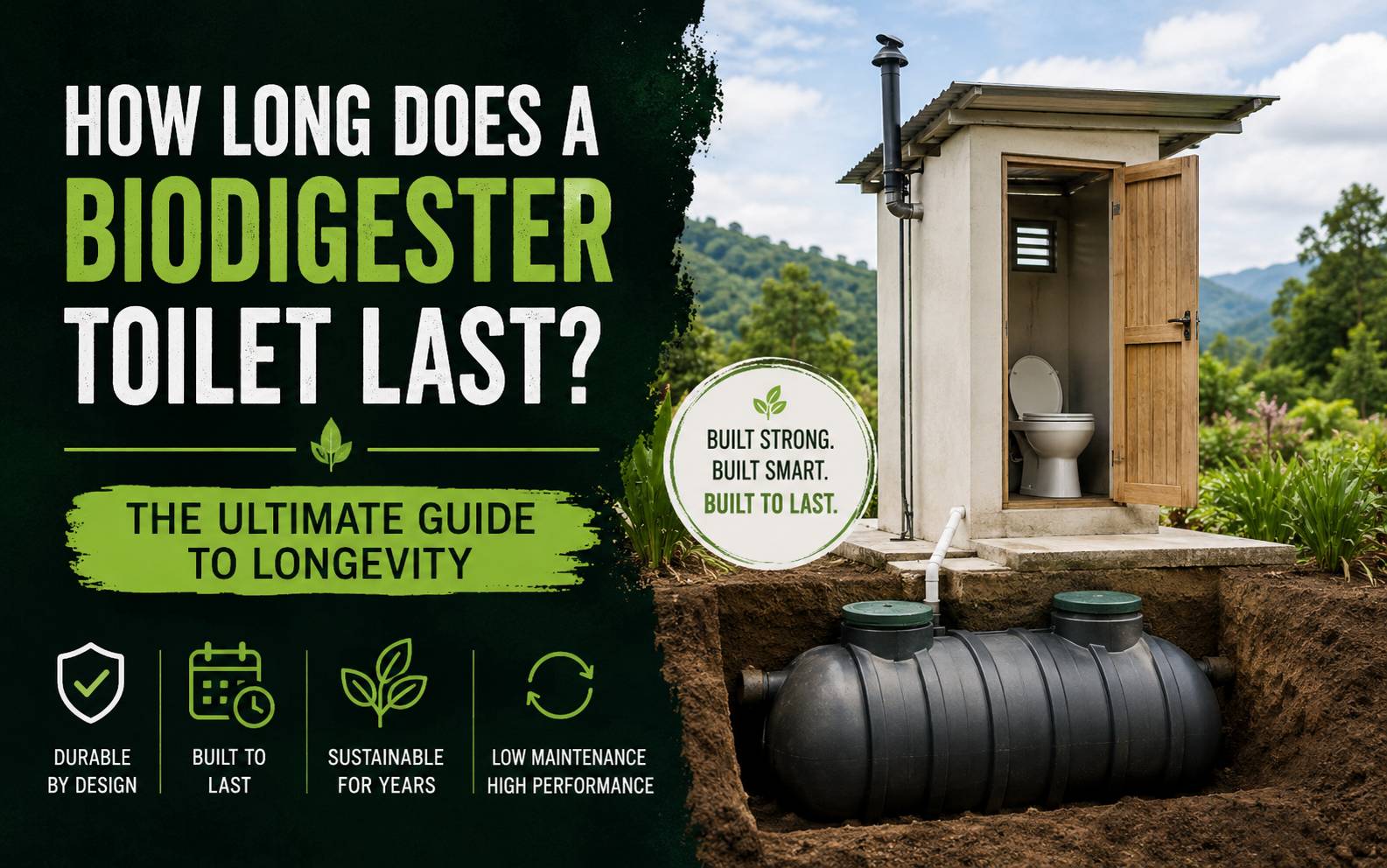
A high-quality precast concrete biodigester is structurally engineered to last for over 30 to 50 years with minimal maintenance.